Soil Erosion and
Conservation
Page 41 - Geoecology
Soil Erosion and Conservation
Exam Brief: Typical Exam Questions
Discuss how human activities can accelerate soil
erosion.(2009)
Examine how overcropping/overgrazing and
desertification can affect soils. (2007)
Examine two ways in which human activities have
impacted on soils. (2010)
Examine the causes of soil erosion and outline
methods used to prevent it. (Sample paper)
See above – the causes of soil erosion are more
important than the solutions – going by past exam
papers.
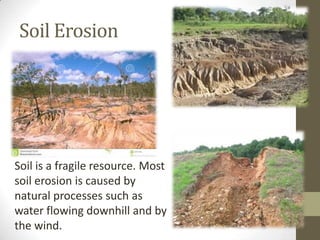
Soil Erosion
Soil is a fragile resource. Most
soil erosion is caused by
natural processes such as
water flowing downhill and by
the wind.
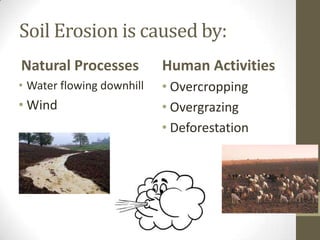
Soil Erosion is caused by:
Natural Processes
• Water flowing downhill
• Wind
Human Activities
• Overcropping
• Overgrazing
• Deforestation
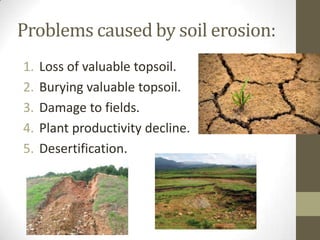
Problems caused by soil erosion:
1. Loss of valuable topsoil.
2. Burying valuable topsoil.
3. Damage to fields.
4. Plant productivity decline.
5. Desertification.
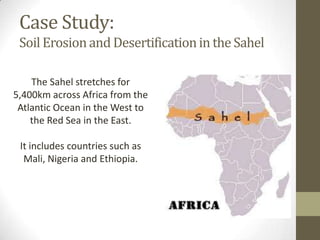
Case Study:
SoilErosionand Desertificationin the Sahel
The Sahel stretches for
5,400km across Africa from the
Atlantic Ocean in the West to
the Red Sea in the East.
It includes countries such as
Mali, Nigeria and Ethiopia.
Case Study:
SoilErosionand Desertificationin the Sahel
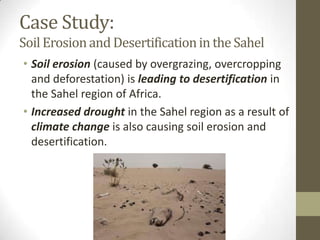
• Soil erosion (caused by overgrazing, overcropping
and deforestation) is leading to desertification in
the Sahel region of Africa.
• Increased drought in the Sahel region as a result of
climate change is also causing soil erosion and
desertification.
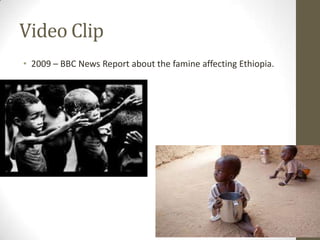
Video Clip
• 2009 – BBC News Report about the famine affecting Ethiopia.
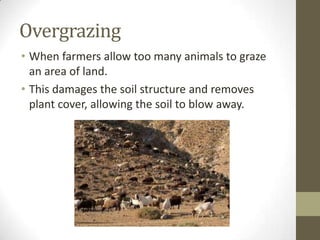
Overgrazing
• When farmers allow too many animals to graze
an area of land.
• This damages the soil structure and removes
plant cover, allowing the soil to blow away.
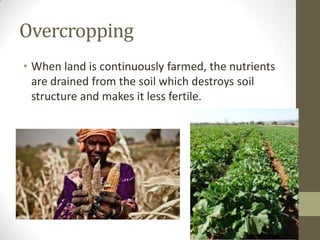
Overcropping
• When land is continuously farmed, the nutrients
are drained from the soil which destroys soil
structure and makes it less fertile.
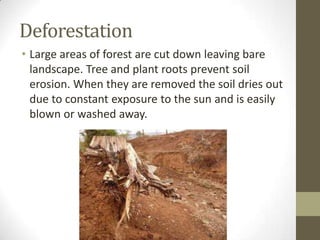
Deforestation
• Large areas of forest are cut down leaving bare
landscape. Tree and plant roots prevent soil
erosion. When they are removed the soil dries out
due to constant exposure to the sun and is easily
blown or washed away.
Climate Change
• Global warming has
caused a rise in the
temperature of the
atmosphere in the
Sahel region.
• As a result the air
can hold more water
vapour and rain is
less likely to occur.
“The rain doesn’t come on
time anymore. After we
plant, the rain stops just as
our crops start to grow.
And it begins to rain after
the crops have already
been ruined.”
- Quote from an Ethiopian
farmer.
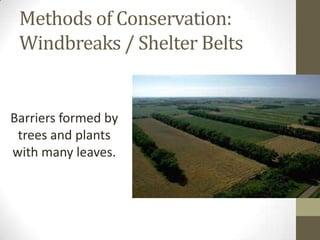
Methods of Conservation:
Windbreaks / Shelter Belts
Barriers formed by
trees and plants
with many leaves.
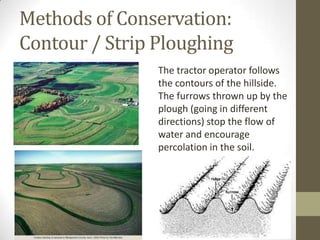
Methods of Conservation:
Contour / Strip Ploughing
The tractor operator follows
the contours of the hillside.
The furrows thrown up by the
plough (going in different
directions) stop the flow of
water and encourage
percolation in the soil.
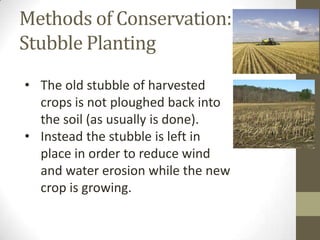
Methods of Conservation:
Stubble Planting
• The old stubble of harvested
crops is not ploughed back into
the soil (as usually is done).
• Instead the stubble is left in
place in order to reduce wind
and water erosion while the new
crop is growing.
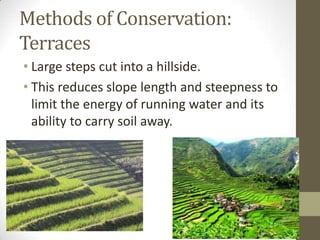
Methods of Conservation:
Terraces
• Large steps cut into a hillside.
• This reduces slope length and steepness to
limit the energy of running water and its
ability to carry soil away.
Methods of Conservation:
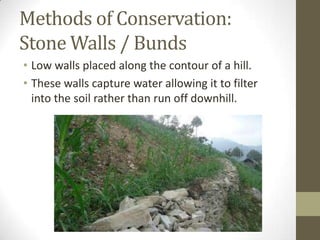
Stone Walls / Bunds
• Low walls placed along the contour of a hill.
• These walls capture water allowing it to filter
into the soil rather than run off downhill.
Methods of Conservation:
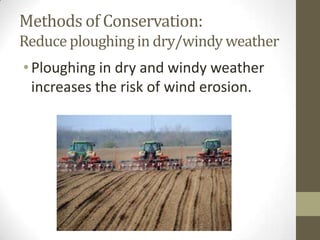
Reduce ploughing in dry/windy weather
•Ploughing in dry and windy weather
increases the risk of wind erosion.
Homework:
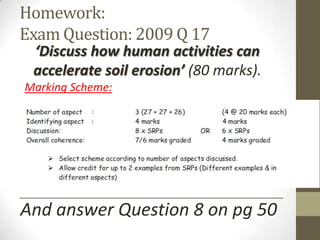
Exam Question: 2009 Q 17
‘Discuss how human activities can
accelerate soil erosion’ (80 marks).
Marking Scheme:
And answer Question 8 on pg 50
__________________________________________________________________

Soil Erosion and Conservation

  • 1.
  • 2.
    Soil Erosion andConservation Exam Brief: Typical Exam Questions Discuss how human activities can accelerate soil erosion.(2009) Examine how overcropping/overgrazing and desertification can affect soils. (2007) Examine two ways in which human activities have impacted on soils. (2010) Examine the causes of soil erosion and outline methods used to prevent it. (Sample paper) See above – the causes of soil erosion are more important than the solutions – going by past exam papers.
  • 3.
    Soil Erosion Soil isa fragile resource. Most soil erosion is caused by natural processes such as water flowing downhill and by the wind.
  • 4.
    Soil Erosion iscaused by: Natural Processes • Water flowing downhill • Wind Human Activities • Overcropping • Overgrazing • Deforestation
  • 5.
    Problems caused bysoil erosion: 1. Loss of valuable topsoil. 2. Burying valuable topsoil. 3. Damage to fields. 4. Plant productivity decline. 5. Desertification.
  • 6.
    Case Study: SoilErosionand Desertificationinthe Sahel The Sahel stretches for 5,400km across Africa from the Atlantic Ocean in the West to the Red Sea in the East. It includes countries such as Mali, Nigeria and Ethiopia.
  • 7.
    Case Study: SoilErosionand Desertificationinthe Sahel • Soil erosion (caused by overgrazing, overcropping and deforestation) is leading to desertification in the Sahel region of Africa. • Increased drought in the Sahel region as a result of climate change is also causing soil erosion and desertification.
  • 8.
    Video Clip • 2009– BBC News Report about the famine affecting Ethiopia.
  • 9.
    Overgrazing • When farmersallow too many animals to graze an area of land. • This damages the soil structure and removes plant cover, allowing the soil to blow away.
  • 10.
    Overcropping • When landis continuously farmed, the nutrients are drained from the soil which destroys soil structure and makes it less fertile.
  • 11.
    Deforestation • Large areasof forest are cut down leaving bare landscape. Tree and plant roots prevent soil erosion. When they are removed the soil dries out due to constant exposure to the sun and is easily blown or washed away.
  • 12.
    Climate Change • Globalwarming has caused a rise in the temperature of the atmosphere in the Sahel region. • As a result the air can hold more water vapour and rain is less likely to occur. “The rain doesn’t come on time anymore. After we plant, the rain stops just as our crops start to grow. And it begins to rain after the crops have already been ruined.” - Quote from an Ethiopian farmer.
  • 13.
    Methods of Conservation: Windbreaks/ Shelter Belts Barriers formed by trees and plants with many leaves.
  • 14.
    Methods of Conservation: Contour/ Strip Ploughing The tractor operator follows the contours of the hillside. The furrows thrown up by the plough (going in different directions) stop the flow of water and encourage percolation in the soil.
  • 15.
    Methods of Conservation: StubblePlanting • The old stubble of harvested crops is not ploughed back into the soil (as usually is done). • Instead the stubble is left in place in order to reduce wind and water erosion while the new crop is growing.
  • 16.
    Methods of Conservation: Terraces •Large steps cut into a hillside. • This reduces slope length and steepness to limit the energy of running water and its ability to carry soil away.
  • 17.
    Methods of Conservation: StoneWalls / Bunds • Low walls placed along the contour of a hill. • These walls capture water allowing it to filter into the soil rather than run off downhill.
  • 18.
    Methods of Conservation: Reduceploughing in dry/windy weather •Ploughing in dry and windy weather increases the risk of wind erosion.
  • 19.
    Homework: Exam Question: 2009Q 17 ‘Discuss how human activities can accelerate soil erosion’ (80 marks). Marking Scheme: And answer Question 8 on pg 50 __________________________________________________________________