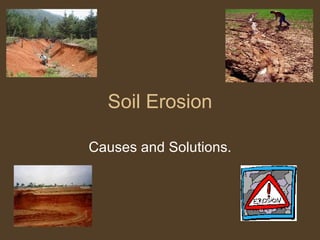
Soil Erosion Causes and Solutions.
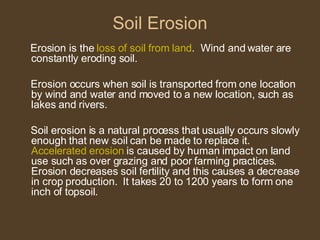
Soil Erosion Erosion is the  loss of soil from land .  Wind and water are constantly eroding soil.  Erosion occurs when soil is transported from one location by wind and water and moved to a new location, such as lakes and rivers.  Soil erosion is a natural process that usually occurs slowly enough that new soil can be made to replace it.  Accelerated erosion  is caused by human impact on land use such as over grazing and poor farming practices.  Erosion decreases soil fertility and this causes a decrease in crop production.  It takes 20 to 1200 years to form one inch of topsoil.
Once the soil  has been left bare it is vulnerable  to erosion Ploughing - ploughing with machinery compacts (squashes) the soil. This creates channels for rapid water flow, especially on slopes. Deforestation-  when trees are deforested this means the roots holding soil are removed which then leaves the bare top soil vulnerable to extensive wind and water damage.  Monoculture/ Fertilisers Soils are not given time to recover naturally when soil is used intensively.
Removal of hedgerows and windbreaks makes to exposed soil vulnerable to wind erosion Overgrazing When large numbers of animals are grazed in a small area the vegetation is removed faster than it can re-grow- leaving the top soil exposed to the elements Causes of soil erosion
How can soil erosion be limited? Terracing- slopes are made into flat step areas or ‘terraces’ which means that water and soil is held by the walls- thus minimising erosion.
How can soil erosion be limited? Contour ploughing- This is when ploughing takes place across hillsides rather than up and down them. This reduces the flow of water (runoff) across the land surface, thus reducing erosion. What are its benefits? Soil erosion can be reduced by as much as 50%  Increased water infiltration promotes better water quality.  Increased soil retention encourages root development, binding the soil and preventing erosion.  Limits the release of nutrients/particulates into nearby river systems or lakes, minimising harmful effects such as eutrophication.  Can disrupt wind currents, therefore reducing wind erosion.
How can soil erosion be limited? Shelter belts- Planting trees means that the roots hold soil and water and also as a wind break, meaning topsoil is less vulnerable to erosion.
How can soil erosion be limited? Strip farming Different crops are planted and harvested at different times meaning that the amount of bare soil is minimised.
How can soil erosion be limited? Stone Lines (Magic Stones)- these are put in place following contour lines- meaning run off is reduced and soil can be collected and redistributed. This is a cheap and easy method especially suited to LEDC
Summary Causes of soil erosion Deforestation Ploughing Monoculture Removal of hedges Overgrazing. Methods used to limit soil erosion Terracing Contour ploughing Shelter belts Strip faming Magic stones

soil erosion

  • 1.
    Soil Erosion Causesand Solutions.
  • 2.
    Soil Erosion Erosionis the loss of soil from land . Wind and water are constantly eroding soil. Erosion occurs when soil is transported from one location by wind and water and moved to a new location, such as lakes and rivers. Soil erosion is a natural process that usually occurs slowly enough that new soil can be made to replace it. Accelerated erosion is caused by human impact on land use such as over grazing and poor farming practices. Erosion decreases soil fertility and this causes a decrease in crop production. It takes 20 to 1200 years to form one inch of topsoil.
  • 3.
    Once the soil has been left bare it is vulnerable to erosion Ploughing - ploughing with machinery compacts (squashes) the soil. This creates channels for rapid water flow, especially on slopes. Deforestation- when trees are deforested this means the roots holding soil are removed which then leaves the bare top soil vulnerable to extensive wind and water damage. Monoculture/ Fertilisers Soils are not given time to recover naturally when soil is used intensively.
  • 4.
    Removal of hedgerowsand windbreaks makes to exposed soil vulnerable to wind erosion Overgrazing When large numbers of animals are grazed in a small area the vegetation is removed faster than it can re-grow- leaving the top soil exposed to the elements Causes of soil erosion
  • 5.
    How can soilerosion be limited? Terracing- slopes are made into flat step areas or ‘terraces’ which means that water and soil is held by the walls- thus minimising erosion.
  • 6.
    How can soilerosion be limited? Contour ploughing- This is when ploughing takes place across hillsides rather than up and down them. This reduces the flow of water (runoff) across the land surface, thus reducing erosion. What are its benefits? Soil erosion can be reduced by as much as 50% Increased water infiltration promotes better water quality. Increased soil retention encourages root development, binding the soil and preventing erosion. Limits the release of nutrients/particulates into nearby river systems or lakes, minimising harmful effects such as eutrophication. Can disrupt wind currents, therefore reducing wind erosion.
  • 7.
    How can soilerosion be limited? Shelter belts- Planting trees means that the roots hold soil and water and also as a wind break, meaning topsoil is less vulnerable to erosion.
  • 8.
    How can soilerosion be limited? Strip farming Different crops are planted and harvested at different times meaning that the amount of bare soil is minimised.
  • 9.
    How can soilerosion be limited? Stone Lines (Magic Stones)- these are put in place following contour lines- meaning run off is reduced and soil can be collected and redistributed. This is a cheap and easy method especially suited to LEDC
  • 10.
    Summary Causes ofsoil erosion Deforestation Ploughing Monoculture Removal of hedges Overgrazing. Methods used to limit soil erosion Terracing Contour ploughing Shelter belts Strip faming Magic stones