Made By: Samyak Jain - 04
SOIL CONSERVATION
• Soil conservation is a set of management
  strategies for prevention
  of soil being eroded from the Earth’s surface
  or becoming chemically altered by
  overuse, acidification, salinization, soil
  erosion or other chemical soil contamination
  to retain the fertility of soil.


         Made By: Samyak Jain - 04
METHODS FOR SOIL CONSERVATION
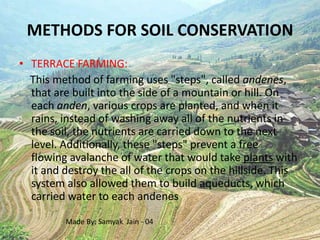
• TERRACE FARMING:
  This method of farming uses "steps", called andenes,
  that are built into the side of a mountain or hill. On
  each anden, various crops are planted, and when it
  rains, instead of washing away all of the nutrients in
  the soil, the nutrients are carried down to the next
  level. Additionally, these "steps" prevent a free
  flowing avalanche of water that would take plants with
  it and destroy the all of the crops on the hillside. This
  system also allowed them to build aqueducts, which
  carried water to each andenes

         Made By: Samyak Jain - 04
CONTOUR PLOUGHING
• Contour farming is the farming practice
  of ploughing across a slope following its
  elevation contour lines. The rows form slow
  water run-off during rainstorms to prevent soil
  erosion and allow the water time to settle into
  the soil. In contour ploughing, the ruts made by
  the plough run perpendicular rather than
  parallel to slopes, generally resulting in furrows
  that curve around the land and are level.
         Made By: Samyak Jain - 04
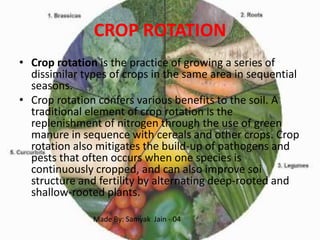
CROP ROTATION
• Crop rotation is the practice of growing a series of
  dissimilar types of crops in the same area in sequential
  seasons.
• Crop rotation confers various benefits to the soil. A
  traditional element of crop rotation is the
  replenishment of nitrogen through the use of green
  manure in sequence with cereals and other crops. Crop
  rotation also mitigates the build-up of pathogens and
  pests that often occurs when one species is
  continuously cropped, and can also improve soi
  structure and fertility by alternating deep-rooted and
  shallow-rooted plants.

               Made By: Samyak Jain - 04
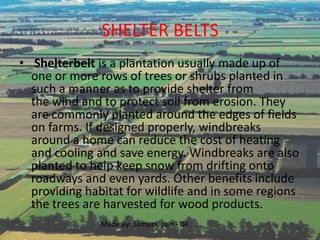
SHELTER BELTS
• Shelterbelt is a plantation usually made up of
  one or more rows of trees or shrubs planted in
  such a manner as to provide shelter from
  the wind and to protect soil from erosion. They
  are commonly planted around the edges of fields
  on farms. If designed properly, windbreaks
  around a home can reduce the cost of heating
  and cooling and save energy. Windbreaks are also
  planted to help keep snow from drifting onto
  roadways and even yards. Other benefits include
  providing habitat for wildlife and in some regions
  the trees are harvested for wood products.
               Made By: Samyak Jain - 04
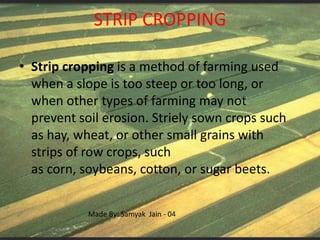
STRIP CROPPING

• Strip cropping is a method of farming used
  when a slope is too steep or too long, or
  when other types of farming may not
  prevent soil erosion. Striely sown crops such
  as hay, wheat, or other small grains with
  strips of row crops, such
  as corn, soybeans, cotton, or sugar beets.


            Made By: Samyak Jain - 04
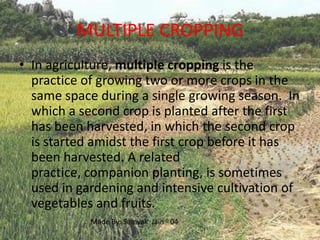
MULTIPLE CROPPING
• In agriculture, multiple cropping is the
  practice of growing two or more crops in the
  same space during a single growing season. In
  which a second crop is planted after the first
  has been harvested, in which the second crop
  is started amidst the first crop before it has
  been harvested. A related
  practice, companion planting, is sometimes
  used in gardening and intensive cultivation of
  vegetables and fruits.
            Made By: Samyak Jain - 04

SOIL CONSERVATION

  • 1.
    Made By: SamyakJain - 04
  • 2.
    SOIL CONSERVATION • Soilconservation is a set of management strategies for prevention of soil being eroded from the Earth’s surface or becoming chemically altered by overuse, acidification, salinization, soil erosion or other chemical soil contamination to retain the fertility of soil. Made By: Samyak Jain - 04
  • 3.
    METHODS FOR SOILCONSERVATION • TERRACE FARMING: This method of farming uses "steps", called andenes, that are built into the side of a mountain or hill. On each anden, various crops are planted, and when it rains, instead of washing away all of the nutrients in the soil, the nutrients are carried down to the next level. Additionally, these "steps" prevent a free flowing avalanche of water that would take plants with it and destroy the all of the crops on the hillside. This system also allowed them to build aqueducts, which carried water to each andenes Made By: Samyak Jain - 04
  • 4.
    CONTOUR PLOUGHING • Contourfarming is the farming practice of ploughing across a slope following its elevation contour lines. The rows form slow water run-off during rainstorms to prevent soil erosion and allow the water time to settle into the soil. In contour ploughing, the ruts made by the plough run perpendicular rather than parallel to slopes, generally resulting in furrows that curve around the land and are level. Made By: Samyak Jain - 04
  • 5.
    CROP ROTATION • Croprotation is the practice of growing a series of dissimilar types of crops in the same area in sequential seasons. • Crop rotation confers various benefits to the soil. A traditional element of crop rotation is the replenishment of nitrogen through the use of green manure in sequence with cereals and other crops. Crop rotation also mitigates the build-up of pathogens and pests that often occurs when one species is continuously cropped, and can also improve soi structure and fertility by alternating deep-rooted and shallow-rooted plants. Made By: Samyak Jain - 04
  • 6.
    SHELTER BELTS • Shelterbeltis a plantation usually made up of one or more rows of trees or shrubs planted in such a manner as to provide shelter from the wind and to protect soil from erosion. They are commonly planted around the edges of fields on farms. If designed properly, windbreaks around a home can reduce the cost of heating and cooling and save energy. Windbreaks are also planted to help keep snow from drifting onto roadways and even yards. Other benefits include providing habitat for wildlife and in some regions the trees are harvested for wood products. Made By: Samyak Jain - 04
  • 7.
    STRIP CROPPING • Stripcropping is a method of farming used when a slope is too steep or too long, or when other types of farming may not prevent soil erosion. Striely sown crops such as hay, wheat, or other small grains with strips of row crops, such as corn, soybeans, cotton, or sugar beets. Made By: Samyak Jain - 04
  • 8.
    MULTIPLE CROPPING • Inagriculture, multiple cropping is the practice of growing two or more crops in the same space during a single growing season. In which a second crop is planted after the first has been harvested, in which the second crop is started amidst the first crop before it has been harvested. A related practice, companion planting, is sometimes used in gardening and intensive cultivation of vegetables and fruits. Made By: Samyak Jain - 04