


1
2
By: Ronak Sutariya
The adverse effects caused by
development,
industrial,
or by the release of a substances in the environment
or by any other human activity…
AND HUMAN IMPACT
ON ENVIRONMENT
MEANS
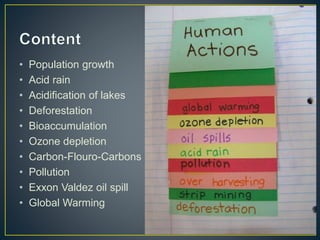
• Population growth
• Acid rain
• Acidification of lakes
• Deforestation
• Bioaccumulation
• Ozone depletion
• Carbon-Flouro-Carbons
• Pollution
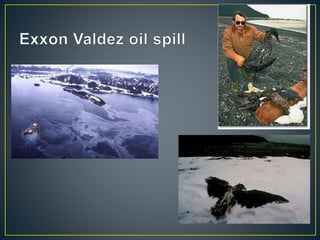
• Exxon Valdez oil spill
• Global Warming
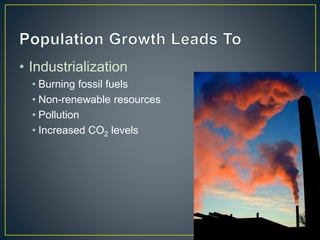
• Industrialization
• Burning fossil fuels
• Non-renewable resources
• Pollution
• Increased CO2 levels
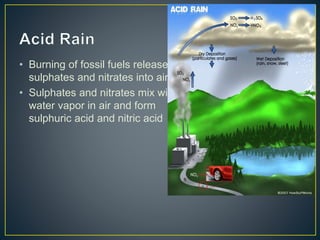
• Burning of fossil fuels releases
sulphates and nitrates into air
• Sulphates and nitrates mix with
water vapor in air and form
sulphuric acid and nitric acid
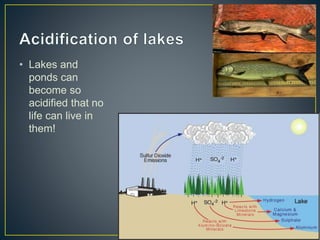
• Lakes and
ponds can
become so
acidified that no
life can live in
them!
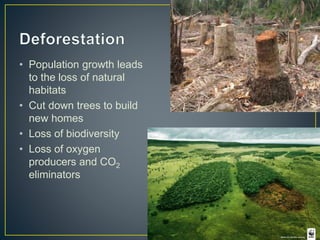
• Population growth leads
to the loss of natural
habitats
• Cut down trees to build
new homes
• Loss of biodiversity
• Loss of oxygen
producers and CO2
eliminators
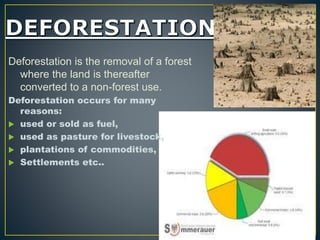
Deforestation is the removal of a forest
where the land is thereafter
converted to a non-forest use.
Deforestation occurs for many
reasons:
 used or sold as fuel,
 used as pasture for livestock,
 plantations of commodities,
 Settlements etc..
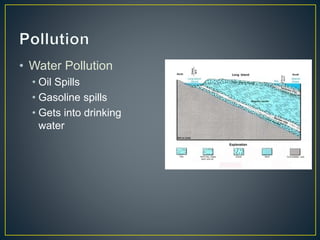
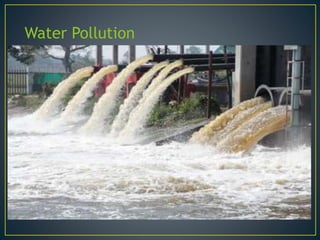
• Water Pollution
• Oil Spills
• Gasoline spills
• Gets into drinking
water
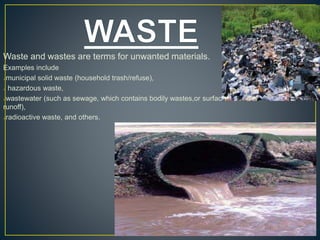
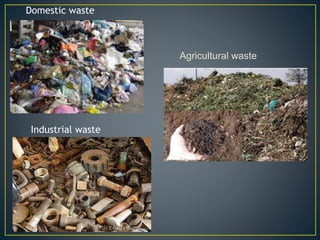
Waste and wastes are terms for unwanted materials.
Examples include
municipal solid waste (household trash/refuse),
 hazardous waste,
wastewater (such as sewage, which contains bodily wastes,or surface
runoff),
radioactive waste, and others.
Agricultural waste
Industrial waste
Domestic waste
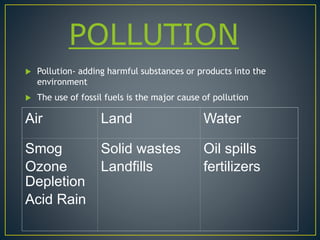
POLLUTION
 Pollution- adding harmful substances or products into the
environment
 The use of fossil fuels is the major cause of pollution
Air Land Water
Smog
Ozone
Depletion
Acid Rain
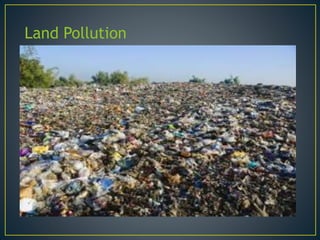
Solid wastes
Landfills
Oil spills
fertilizers
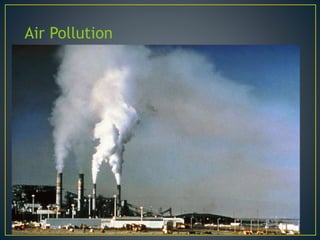
Air Pollution
Water Pollution
Land Pollution
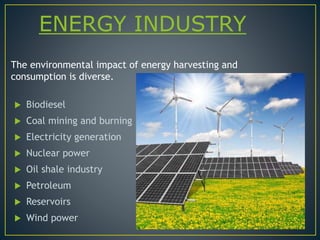
ENERGY INDUSTRY
 Biodiesel
 Coal mining and burning
 Electricity generation
 Nuclear power
 Oil shale industry
 Petroleum
 Reservoirs
 Wind power
The environmental impact of energy harvesting and
consumption is diverse.
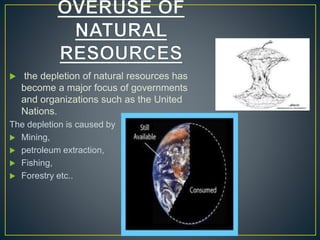
 the depletion of natural resources has
become a major focus of governments
and organizations such as the United
Nations.
The depletion is caused by
 Mining,
 petroleum extraction,
 Fishing,
 Forestry etc..
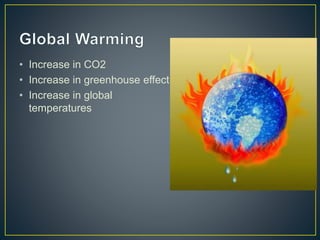
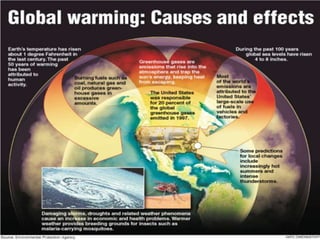
• Increase in CO2
• Increase in greenhouse effect
• Increase in global
temperatures
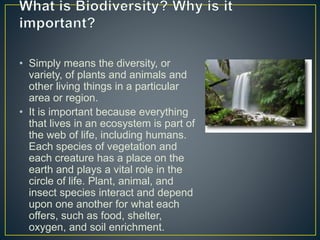
• Simply means the diversity, or
variety, of plants and animals and
other living things in a particular
area or region.
• It is important because everything
that lives in an ecosystem is part of
the web of life, including humans.
Each species of vegetation and
each creature has a place on the
earth and plays a vital role in the
circle of life. Plant, animal, and
insect species interact and depend
upon one another for what each
offers, such as food, shelter,
oxygen, and soil enrichment.
• Climate change, brought about by emissions of
greenhouse gases when fossil fuels are burnt, is making
life uncomfortably hot for some species and
uncomfortably cold for others.
• Pollution is currently poisoning all forms of life, both on
land and in the water, and contributing to climate change.
• Habitat loss and destruction, usually as a direct result
of human activity and population growth, is a major force
in the loss of species, populations, and ecosystems.
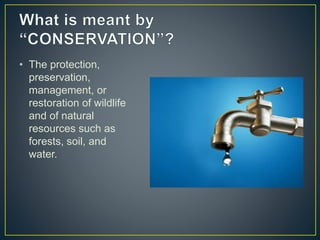
• The protection,
preservation,
management, or
restoration of wildlife
and of natural
resources such as
forests, soil, and
water.
• Do not waste paper, use only as much as
you require. Do not scribble on it or
tearing it off after writing just a line or two.
• Use recycle paper as far as possible.
• Try to reuse the envelopes where ever
possible.
• 75% of all fisheries are fully exploited or
over-fished. Species like cod, haddock
and halibut are already threatened. If we
do not move towards sustainable use,
there will be no fish left for our
grandchildren.
• Climate change is considered to be the
greatest challenge for humanity. With
changing conditions, ecosystems and
habitats will change as well. It is an
obligation to fight climate change and
make sure that species can migrate or
adapt to new surroundings.
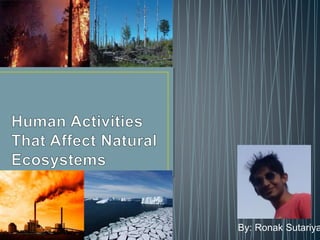
Human activities that  affect natural ecosystems

Human activities that affect natural ecosystems

  • 1.
  • 2.
  • 3.
  • 5.
    The adverse effectscaused by development, industrial, or by the release of a substances in the environment or by any other human activity… AND HUMAN IMPACT ON ENVIRONMENT MEANS
  • 6.
    • Population growth •Acid rain • Acidification of lakes • Deforestation • Bioaccumulation • Ozone depletion • Carbon-Flouro-Carbons • Pollution • Exxon Valdez oil spill • Global Warming
  • 7.
    • Industrialization • Burningfossil fuels • Non-renewable resources • Pollution • Increased CO2 levels
  • 8.
    • Burning offossil fuels releases sulphates and nitrates into air • Sulphates and nitrates mix with water vapor in air and form sulphuric acid and nitric acid
  • 9.
    • Lakes and pondscan become so acidified that no life can live in them!
  • 10.
    • Population growthleads to the loss of natural habitats • Cut down trees to build new homes • Loss of biodiversity • Loss of oxygen producers and CO2 eliminators
  • 11.
    Deforestation is theremoval of a forest where the land is thereafter converted to a non-forest use. Deforestation occurs for many reasons:  used or sold as fuel,  used as pasture for livestock,  plantations of commodities,  Settlements etc..
  • 12.
    • Water Pollution •Oil Spills • Gasoline spills • Gets into drinking water
  • 14.
    Waste and wastesare terms for unwanted materials. Examples include municipal solid waste (household trash/refuse),  hazardous waste, wastewater (such as sewage, which contains bodily wastes,or surface runoff), radioactive waste, and others.
  • 15.
  • 17.
    POLLUTION  Pollution- addingharmful substances or products into the environment  The use of fossil fuels is the major cause of pollution Air Land Water Smog Ozone Depletion Acid Rain Solid wastes Landfills Oil spills fertilizers
  • 18.
  • 19.
  • 20.
  • 21.
    ENERGY INDUSTRY  Biodiesel Coal mining and burning  Electricity generation  Nuclear power  Oil shale industry  Petroleum  Reservoirs  Wind power The environmental impact of energy harvesting and consumption is diverse.
  • 23.
     the depletionof natural resources has become a major focus of governments and organizations such as the United Nations. The depletion is caused by  Mining,  petroleum extraction,  Fishing,  Forestry etc..
  • 24.
    • Increase inCO2 • Increase in greenhouse effect • Increase in global temperatures
  • 26.
    • Simply meansthe diversity, or variety, of plants and animals and other living things in a particular area or region. • It is important because everything that lives in an ecosystem is part of the web of life, including humans. Each species of vegetation and each creature has a place on the earth and plays a vital role in the circle of life. Plant, animal, and insect species interact and depend upon one another for what each offers, such as food, shelter, oxygen, and soil enrichment.
  • 27.
    • Climate change,brought about by emissions of greenhouse gases when fossil fuels are burnt, is making life uncomfortably hot for some species and uncomfortably cold for others. • Pollution is currently poisoning all forms of life, both on land and in the water, and contributing to climate change. • Habitat loss and destruction, usually as a direct result of human activity and population growth, is a major force in the loss of species, populations, and ecosystems.
  • 28.
    • The protection, preservation, management,or restoration of wildlife and of natural resources such as forests, soil, and water.
  • 29.
    • Do notwaste paper, use only as much as you require. Do not scribble on it or tearing it off after writing just a line or two. • Use recycle paper as far as possible. • Try to reuse the envelopes where ever possible. • 75% of all fisheries are fully exploited or over-fished. Species like cod, haddock and halibut are already threatened. If we do not move towards sustainable use, there will be no fish left for our grandchildren. • Climate change is considered to be the greatest challenge for humanity. With changing conditions, ecosystems and habitats will change as well. It is an obligation to fight climate change and make sure that species can migrate or adapt to new surroundings.