
Soil conservation problems &
their management
INTRODUCTION
Soil water and biodiversity are critical natural
resources that must be conserved effectively as
possible. Geologic erosion by wind and water has
created some of the world’s most productive soils
(e.g., the Indo-Gangetic Plains, Nile Delta), but
accelerated erosion, induced by human activities
has had drastic effects on ecosystem.Accelerated
erosion results in loss of top fertile soil & water that
needs to be used to recharge ground water.
Soil conservation is using and
managing the land based on the capabilities of the
land itself involving application of the best
management practices leading to profitable crop
production without land degradation.
Factors causing soil
erosion
Soil erosion:
Soil erosion is the process of
deattachment of soil particles from the
top soil & transportation of the
deattached particles by wind or water.
There are two major causes of Soil
erosion
A. Natural Factors.
B. Human Factors.
TYPES OF SOIL EROSION
 Natural factors/Geologic erosion
It occurs under normal natural conditions
by itself without the interference of man .
It is a very slow process.It is in equilibrium
with the soil forming process.
 Human factors/Accelerated erosion
This is the most serious types of loss
generally caused by an interference of
any agencies like man & animals. It is a
rapid process.Soil erosion is more than that
soil formation.
Natural Factors
Rainfall
Soils
Topography
Soil cover
Human Factors
 Overgrazing
 Overcropping
 Deforestation
 Mining activities
 Imbalance use of inorganic chemicals
like fertilisers,pesticides and
insecticides
 Defective methods of farming
Major problems occuring due to
poor soil conservation
Land degradation
Floods
Decline in productivity of agricultural land
Loss of rainwater
Environmental pollution
Loss of biodiversity
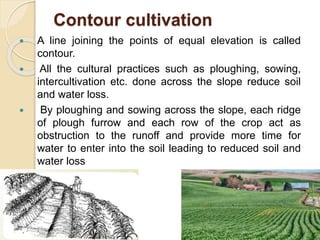
Contour cultivation
 A line joining the points of equal elevation is called
contour.
 All the cultural practices such as ploughing, sowing,
intercultivation etc. done across the slope reduce soil
and water loss.
 By ploughing and sowing across the slope, each ridge
of plough furrow and each row of the crop act as
obstruction to the runoff and provide more time for
water to enter into the soil leading to reduced soil and
water loss
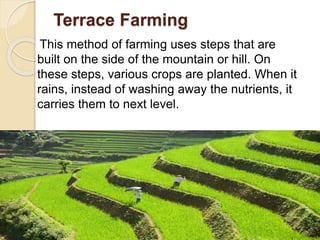
Terrace Farming
This method of farming uses steps that are
built on the side of the mountain or hill. On
these steps, various crops are planted. When it
rains, instead of washing away the nutrients, it
carries them to next level.
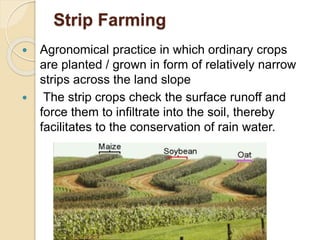
Strip Farming
 Agronomical practice in which ordinary crops
are planted / grown in form of relatively narrow
strips across the land slope
 The strip crops check the surface runoff and
force them to infiltrate into the soil, thereby
facilitates to the conservation of rain water.
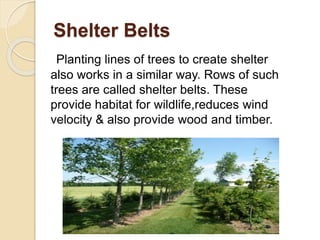
Shelter Belts
Planting lines of trees to create shelter
also works in a similar way. Rows of such
trees are called shelter belts. These
provide habitat for wildlife,reduces wind
velocity & also provide wood and timber.
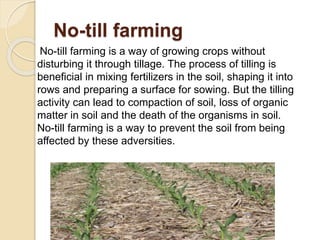
No-till farming
No-till farming is a way of growing crops without
disturbing it through tillage. The process of tilling is
beneficial in mixing fertilizers in the soil, shaping it into
rows and preparing a surface for sowing. But the tilling
activity can lead to compaction of soil, loss of organic
matter in soil and the death of the organisms in soil.
No-till farming is a way to prevent the soil from being
affected by these adversities.
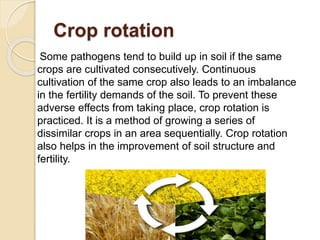
Crop rotation
Some pathogens tend to build up in soil if the same
crops are cultivated consecutively. Continuous
cultivation of the same crop also leads to an imbalance
in the fertility demands of the soil. To prevent these
adverse effects from taking place, crop rotation is
practiced. It is a method of growing a series of
dissimilar crops in an area sequentially. Crop rotation
also helps in the improvement of soil structure and
fertility.
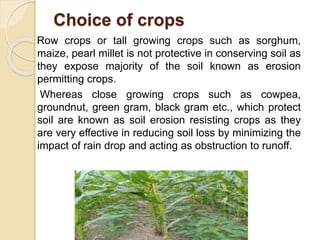
Choice of crops
Row crops or tall growing crops such as sorghum,
maize, pearl millet is not protective in conserving soil as
they expose majority of the soil known as erosion
permitting crops.
Whereas close growing crops such as cowpea,
groundnut, green gram, black gram etc., which protect
soil are known as soil erosion resisting crops as they
are very effective in reducing soil loss by minimizing the
impact of rain drop and acting as obstruction to runoff.
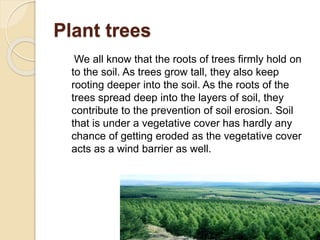
Plant trees
We all know that the roots of trees firmly hold on
to the soil. As trees grow tall, they also keep
rooting deeper into the soil. As the roots of the
trees spread deep into the layers of soil, they
contribute to the prevention of soil erosion. Soil
that is under a vegetative cover has hardly any
chance of getting eroded as the vegetative cover
acts as a wind barrier as well.
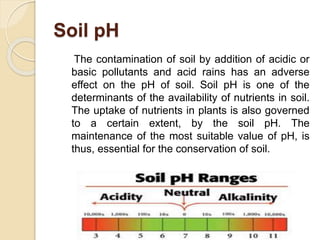
Soil pH
The contamination of soil by addition of acidic or
basic pollutants and acid rains has an adverse
effect on the pH of soil. Soil pH is one of the
determinants of the availability of nutrients in soil.
The uptake of nutrients in plants is also governed
to a certain extent, by the soil pH. The
maintenance of the most suitable value of pH, is
thus, essential for the conservation of soil.
Mulching
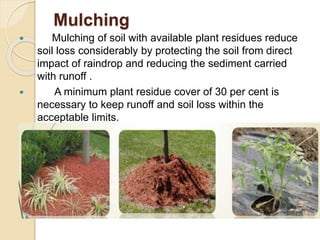
 Mulching of soil with available plant residues reduce
soil loss considerably by protecting the soil from direct
impact of raindrop and reducing the sediment carried
with runoff .
 A minimum plant residue cover of 30 per cent is
necessary to keep runoff and soil loss within the
acceptable limits.
Soil conservation problems and their management

Soil conservation problems and their management

  • 1.
    Soil conservation problems& their management
  • 2.
    INTRODUCTION Soil water andbiodiversity are critical natural resources that must be conserved effectively as possible. Geologic erosion by wind and water has created some of the world’s most productive soils (e.g., the Indo-Gangetic Plains, Nile Delta), but accelerated erosion, induced by human activities has had drastic effects on ecosystem.Accelerated erosion results in loss of top fertile soil & water that needs to be used to recharge ground water. Soil conservation is using and managing the land based on the capabilities of the land itself involving application of the best management practices leading to profitable crop production without land degradation.
  • 3.
    Factors causing soil erosion Soilerosion: Soil erosion is the process of deattachment of soil particles from the top soil & transportation of the deattached particles by wind or water. There are two major causes of Soil erosion A. Natural Factors. B. Human Factors.
  • 4.
    TYPES OF SOILEROSION  Natural factors/Geologic erosion It occurs under normal natural conditions by itself without the interference of man . It is a very slow process.It is in equilibrium with the soil forming process.  Human factors/Accelerated erosion This is the most serious types of loss generally caused by an interference of any agencies like man & animals. It is a rapid process.Soil erosion is more than that soil formation.
  • 5.
  • 6.
    Human Factors  Overgrazing Overcropping  Deforestation  Mining activities  Imbalance use of inorganic chemicals like fertilisers,pesticides and insecticides  Defective methods of farming
  • 7.
    Major problems occuringdue to poor soil conservation Land degradation Floods Decline in productivity of agricultural land Loss of rainwater Environmental pollution Loss of biodiversity
  • 9.
    Contour cultivation  Aline joining the points of equal elevation is called contour.  All the cultural practices such as ploughing, sowing, intercultivation etc. done across the slope reduce soil and water loss.  By ploughing and sowing across the slope, each ridge of plough furrow and each row of the crop act as obstruction to the runoff and provide more time for water to enter into the soil leading to reduced soil and water loss
  • 10.
    Terrace Farming This methodof farming uses steps that are built on the side of the mountain or hill. On these steps, various crops are planted. When it rains, instead of washing away the nutrients, it carries them to next level.
  • 11.
    Strip Farming  Agronomicalpractice in which ordinary crops are planted / grown in form of relatively narrow strips across the land slope  The strip crops check the surface runoff and force them to infiltrate into the soil, thereby facilitates to the conservation of rain water.
  • 12.
    Shelter Belts Planting linesof trees to create shelter also works in a similar way. Rows of such trees are called shelter belts. These provide habitat for wildlife,reduces wind velocity & also provide wood and timber.
  • 13.
    No-till farming No-till farmingis a way of growing crops without disturbing it through tillage. The process of tilling is beneficial in mixing fertilizers in the soil, shaping it into rows and preparing a surface for sowing. But the tilling activity can lead to compaction of soil, loss of organic matter in soil and the death of the organisms in soil. No-till farming is a way to prevent the soil from being affected by these adversities.
  • 14.
    Crop rotation Some pathogenstend to build up in soil if the same crops are cultivated consecutively. Continuous cultivation of the same crop also leads to an imbalance in the fertility demands of the soil. To prevent these adverse effects from taking place, crop rotation is practiced. It is a method of growing a series of dissimilar crops in an area sequentially. Crop rotation also helps in the improvement of soil structure and fertility.
  • 15.
    Choice of crops Rowcrops or tall growing crops such as sorghum, maize, pearl millet is not protective in conserving soil as they expose majority of the soil known as erosion permitting crops. Whereas close growing crops such as cowpea, groundnut, green gram, black gram etc., which protect soil are known as soil erosion resisting crops as they are very effective in reducing soil loss by minimizing the impact of rain drop and acting as obstruction to runoff.
  • 16.
    Plant trees We allknow that the roots of trees firmly hold on to the soil. As trees grow tall, they also keep rooting deeper into the soil. As the roots of the trees spread deep into the layers of soil, they contribute to the prevention of soil erosion. Soil that is under a vegetative cover has hardly any chance of getting eroded as the vegetative cover acts as a wind barrier as well.
  • 17.
    Soil pH The contaminationof soil by addition of acidic or basic pollutants and acid rains has an adverse effect on the pH of soil. Soil pH is one of the determinants of the availability of nutrients in soil. The uptake of nutrients in plants is also governed to a certain extent, by the soil pH. The maintenance of the most suitable value of pH, is thus, essential for the conservation of soil.
  • 18.
    Mulching  Mulching ofsoil with available plant residues reduce soil loss considerably by protecting the soil from direct impact of raindrop and reducing the sediment carried with runoff .  A minimum plant residue cover of 30 per cent is necessary to keep runoff and soil loss within the acceptable limits.