SOIL CONSERVATION PRACTICES
By
RAFIULLAH
The University Of Agriculture Peshawar
Pakistan
rafiutmani@gmail.com
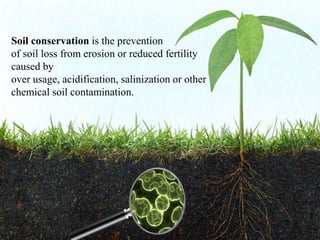
Soil conservation is the prevention
of soil loss from erosion or reduced fertility
caused by
over usage, acidification, salinization or other
chemical soil contamination.
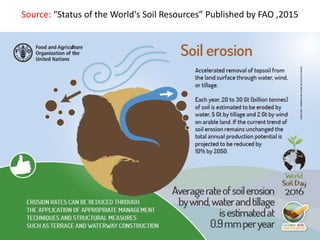
Source: “Status of the World's Soil Resources” Published by FAO ,2015
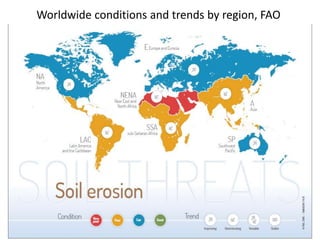
Worldwide conditions and trends by region, FAO
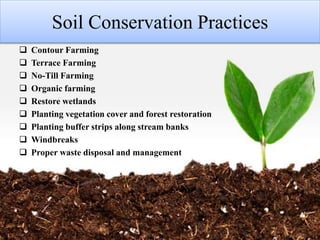
Soil Conservation Practices
 Contour Farming
 Terrace Farming
 No-Till Farming
 Organic farming
 Restore wetlands
 Planting vegetation cover and forest restoration
 Planting buffer strips along stream banks
 Windbreaks
 Proper waste disposal and management
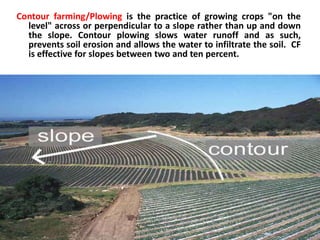
Contour farming/Plowing is the practice of growing crops "on the
level" across or perpendicular to a slope rather than up and down
the slope. Contour plowing slows water runoff and as such,
prevents soil erosion and allows the water to infiltrate the soil. CF
is effective for slopes between two and ten percent.
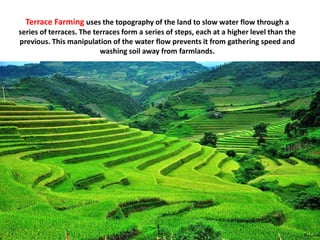
Terrace Farming uses the topography of the land to slow water flow through a
series of terraces. The terraces form a series of steps, each at a higher level than the
previous. This manipulation of the water flow prevents it from gathering speed and
washing soil away from farmlands.
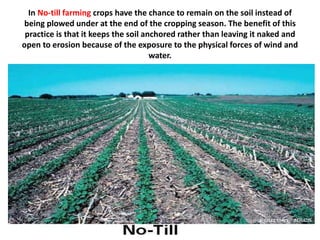
In No-till farming crops have the chance to remain on the soil instead of
being plowed under at the end of the cropping season. The benefit of this
practice is that it keeps the soil anchored rather than leaving it naked and
open to erosion because of the exposure to the physical forces of wind and
water.
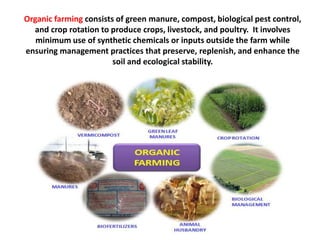
Organic farming consists of green manure, compost, biological pest control,
and crop rotation to produce crops, livestock, and poultry. It involves
minimum use of synthetic chemicals or inputs outside the farm while
ensuring management practices that preserve, replenish, and enhance the
soil and ecological stability.
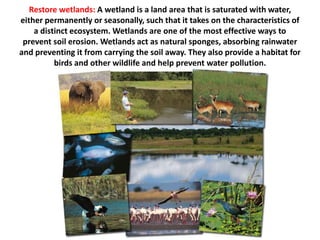
Restore wetlands: A wetland is a land area that is saturated with water,
either permanently or seasonally, such that it takes on the characteristics of
a distinct ecosystem. Wetlands are one of the most effective ways to
prevent soil erosion. Wetlands act as natural sponges, absorbing rainwater
and preventing it from carrying the soil away. They also provide a habitat for
birds and other wildlife and help prevent water pollution.
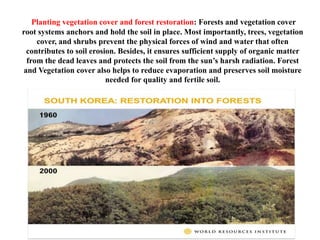
Planting vegetation cover and forest restoration: Forests and vegetation cover
root systems anchors and hold the soil in place. Most importantly, trees, vegetation
cover, and shrubs prevent the physical forces of wind and water that often
contributes to soil erosion. Besides, it ensures sufficient supply of organic matter
from the dead leaves and protects the soil from the sun’s harsh radiation. Forest
and Vegetation cover also helps to reduce evaporation and preserves soil moisture
needed for quality and fertile soil.
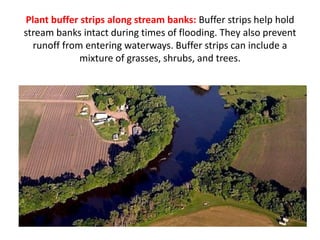
Plant buffer strips along stream banks: Buffer strips help hold
stream banks intact during times of flooding. They also prevent
runoff from entering waterways. Buffer strips can include a
mixture of grasses, shrubs, and trees.
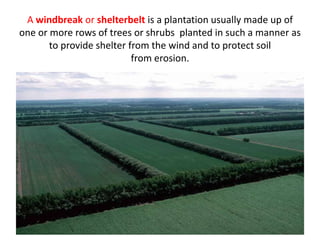
A windbreak or shelterbelt is a plantation usually made up of
one or more rows of trees or shrubs planted in such a manner as
to provide shelter from the wind and to protect soil
from erosion.
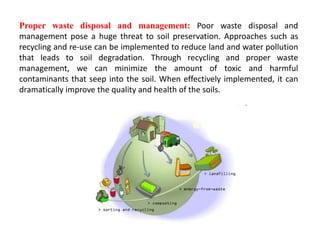
Proper waste disposal and management: Poor waste disposal and
management pose a huge threat to soil preservation. Approaches such as
recycling and re-use can be implemented to reduce land and water pollution
that leads to soil degradation. Through recycling and proper waste
management, we can minimize the amount of toxic and harmful
contaminants that seep into the soil. When effectively implemented, it can
dramatically improve the quality and health of the soils.
Soil conservation

Soil conservation

  • 2.
    SOIL CONSERVATION PRACTICES By RAFIULLAH TheUniversity Of Agriculture Peshawar Pakistan rafiutmani@gmail.com
  • 3.
    Soil conservation isthe prevention of soil loss from erosion or reduced fertility caused by over usage, acidification, salinization or other chemical soil contamination.
  • 4.
    Source: “Status ofthe World's Soil Resources” Published by FAO ,2015
  • 5.
    Worldwide conditions andtrends by region, FAO
  • 6.
    Soil Conservation Practices Contour Farming  Terrace Farming  No-Till Farming  Organic farming  Restore wetlands  Planting vegetation cover and forest restoration  Planting buffer strips along stream banks  Windbreaks  Proper waste disposal and management
  • 7.
    Contour farming/Plowing isthe practice of growing crops "on the level" across or perpendicular to a slope rather than up and down the slope. Contour plowing slows water runoff and as such, prevents soil erosion and allows the water to infiltrate the soil. CF is effective for slopes between two and ten percent.
  • 8.
    Terrace Farming usesthe topography of the land to slow water flow through a series of terraces. The terraces form a series of steps, each at a higher level than the previous. This manipulation of the water flow prevents it from gathering speed and washing soil away from farmlands.
  • 9.
    In No-till farmingcrops have the chance to remain on the soil instead of being plowed under at the end of the cropping season. The benefit of this practice is that it keeps the soil anchored rather than leaving it naked and open to erosion because of the exposure to the physical forces of wind and water.
  • 10.
    Organic farming consistsof green manure, compost, biological pest control, and crop rotation to produce crops, livestock, and poultry. It involves minimum use of synthetic chemicals or inputs outside the farm while ensuring management practices that preserve, replenish, and enhance the soil and ecological stability.
  • 11.
    Restore wetlands: Awetland is a land area that is saturated with water, either permanently or seasonally, such that it takes on the characteristics of a distinct ecosystem. Wetlands are one of the most effective ways to prevent soil erosion. Wetlands act as natural sponges, absorbing rainwater and preventing it from carrying the soil away. They also provide a habitat for birds and other wildlife and help prevent water pollution.
  • 12.
    Planting vegetation coverand forest restoration: Forests and vegetation cover root systems anchors and hold the soil in place. Most importantly, trees, vegetation cover, and shrubs prevent the physical forces of wind and water that often contributes to soil erosion. Besides, it ensures sufficient supply of organic matter from the dead leaves and protects the soil from the sun’s harsh radiation. Forest and Vegetation cover also helps to reduce evaporation and preserves soil moisture needed for quality and fertile soil.
  • 13.
    Plant buffer stripsalong stream banks: Buffer strips help hold stream banks intact during times of flooding. They also prevent runoff from entering waterways. Buffer strips can include a mixture of grasses, shrubs, and trees.
  • 14.
    A windbreak orshelterbelt is a plantation usually made up of one or more rows of trees or shrubs planted in such a manner as to provide shelter from the wind and to protect soil from erosion.
  • 15.
    Proper waste disposaland management: Poor waste disposal and management pose a huge threat to soil preservation. Approaches such as recycling and re-use can be implemented to reduce land and water pollution that leads to soil degradation. Through recycling and proper waste management, we can minimize the amount of toxic and harmful contaminants that seep into the soil. When effectively implemented, it can dramatically improve the quality and health of the soils.