BASIC RULES OFTENSES

   Made By: Samyak Jain
Abbreviations used in the presentation
•   S - Subject
•   O - Object
•   V1 - First form of the verb
•   V2 - Second form of the verb
•   V3 - Third form of the verb
Simple Present
1.If Subject is Singular:
  S + V1 + s/es + O
  E.g.: Alec sells toffees.
2.If Subject is Plural:
 S + V1 + O
 E.g.: Children perform on the stage.
Present Continuous
1. If Subject is singular:
    S + is/am + V1 + ing + O
    E.g.: He is flying the kite.
2. If Subject is plural:
   S + are+ V1 + ing + O
   E.g.: They are flying kites.
‘am’ is used with ‘I’. ‘is’ is used with ‘he/she’.
    ‘are’ is used with ‘we/they/you’.
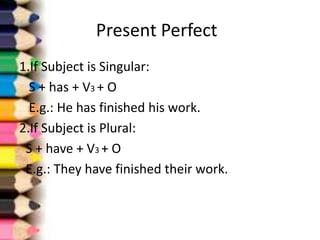
Present Perfect
1.If Subject is Singular:
  S + has + V3 + O
  E.g.: He has finished his work.
2.If Subject is Plural:
 S + have + V3 + O
 E.g.: They have finished their work.
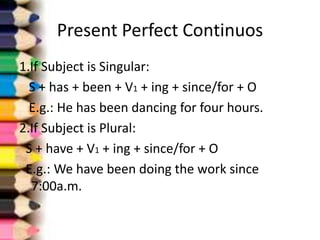
Present Perfect Continuos
1.If Subject is Singular:
  S + has + been + V1 + ing + since/for + O
  E.g.: He has been dancing for four hours.
2.If Subject is Plural:
 S + have + V1 + ing + since/for + O
 E.g.: We have been doing the work since
  7:00a.m.
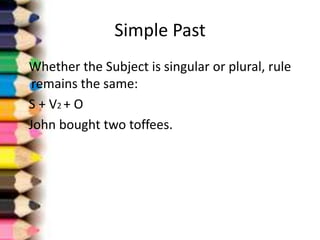
Simple Past
Whether the Subject is singular or plural, rule
 remains the same:
S + V2 + O
John bought two toffees.
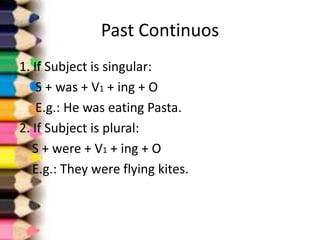
Past Continuos
1. If Subject is singular:
    S + was + V1 + ing + O
    E.g.: He was eating Pasta.
2. If Subject is plural:
   S + were + V1 + ing + O
   E.g.: They were flying kites.
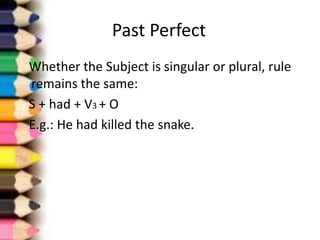
Past Perfect
Whether the Subject is singular or plural, rule
remains the same:
S + had + V3 + O
E.g.: He had killed the snake.
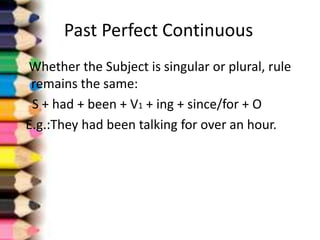
Past Perfect Continuous
Whether the Subject is singular or plural, rule
 remains the same:
 S + had + been + V1 + ing + since/for + O
E.g.:They had been talking for over an hour.
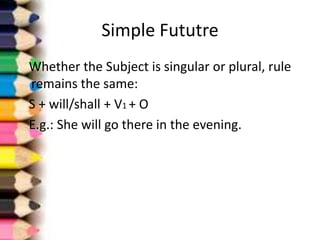
Simple Fututre
Whether the Subject is singular or plural, rule
remains the same:
S + will/shall + V1 + O
E.g.: She will go there in the evening.
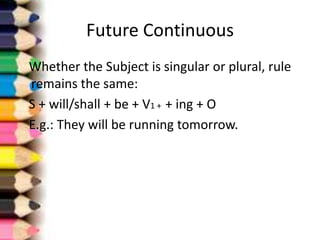
Future Continuous
Whether the Subject is singular or plural, rule
remains the same:
S + will/shall + be + V1 + + ing + O
E.g.: They will be running tomorrow.
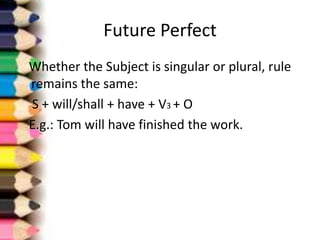
Future Perfect
Whether the Subject is singular or plural, rule
remains the same:
S + will/shall + have + V3 + O
E.g.: Tom will have finished the work.
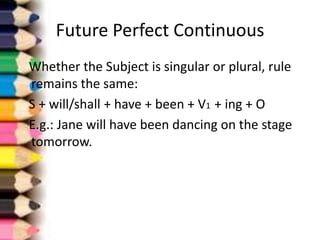
Future Perfect Continuous
Whether the Subject is singular or plural, rule
remains the same:
S + will/shall + have + been + V1 + ing + O
E.g.: Jane will have been dancing on the stage
tomorrow.
Made by : Samyak Jain

Tenses (Basic Rules of Tenses)

  • 1.
    BASIC RULES OFTENSES Made By: Samyak Jain
  • 2.
    Abbreviations used inthe presentation • S - Subject • O - Object • V1 - First form of the verb • V2 - Second form of the verb • V3 - Third form of the verb
  • 3.
    Simple Present 1.If Subjectis Singular: S + V1 + s/es + O E.g.: Alec sells toffees. 2.If Subject is Plural: S + V1 + O E.g.: Children perform on the stage.
  • 4.
    Present Continuous 1. IfSubject is singular: S + is/am + V1 + ing + O E.g.: He is flying the kite. 2. If Subject is plural: S + are+ V1 + ing + O E.g.: They are flying kites. ‘am’ is used with ‘I’. ‘is’ is used with ‘he/she’. ‘are’ is used with ‘we/they/you’.
  • 5.
    Present Perfect 1.If Subjectis Singular: S + has + V3 + O E.g.: He has finished his work. 2.If Subject is Plural: S + have + V3 + O E.g.: They have finished their work.
  • 6.
    Present Perfect Continuos 1.IfSubject is Singular: S + has + been + V1 + ing + since/for + O E.g.: He has been dancing for four hours. 2.If Subject is Plural: S + have + V1 + ing + since/for + O E.g.: We have been doing the work since 7:00a.m.
  • 7.
    Simple Past Whether theSubject is singular or plural, rule remains the same: S + V2 + O John bought two toffees.
  • 8.
    Past Continuos 1. IfSubject is singular: S + was + V1 + ing + O E.g.: He was eating Pasta. 2. If Subject is plural: S + were + V1 + ing + O E.g.: They were flying kites.
  • 9.
    Past Perfect Whether theSubject is singular or plural, rule remains the same: S + had + V3 + O E.g.: He had killed the snake.
  • 10.
    Past Perfect Continuous Whetherthe Subject is singular or plural, rule remains the same: S + had + been + V1 + ing + since/for + O E.g.:They had been talking for over an hour.
  • 11.
    Simple Fututre Whether theSubject is singular or plural, rule remains the same: S + will/shall + V1 + O E.g.: She will go there in the evening.
  • 12.
    Future Continuous Whether theSubject is singular or plural, rule remains the same: S + will/shall + be + V1 + + ing + O E.g.: They will be running tomorrow.
  • 13.
    Future Perfect Whether theSubject is singular or plural, rule remains the same: S + will/shall + have + V3 + O E.g.: Tom will have finished the work.
  • 14.
    Future Perfect Continuous Whetherthe Subject is singular or plural, rule remains the same: S + will/shall + have + been + V1 + ing + O E.g.: Jane will have been dancing on the stage tomorrow.
  • 15.
    Made by :Samyak Jain