





By
Faisal Khalid
Forestry and Wildlife
Management
University of Haripur
fkcbuneri@gmail.com
Presentation topic
Soil Conservation
Techniques
Soil conservation:
Soil conservation is the
preventing of soil loss from
erosion or reduced fertility
caused by over usage,
acidification, salinization or
other chemical soil
contamination.
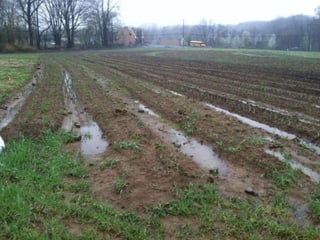
Soil erosion:
 Soil erosion removes the top soil that is necessary
for organic matter, nutrients, micro-organisms
that are requires for plants to grow and shine. Soil
conservation is one such step that protects the
soil from being washed away.
 Healthy soil is important for plants to grow and
flourish. Taking necessary steps to conserve the
soil is part of environmentally friendly lifestyle.
Methods and Techniques of
Soil Conservation:
Many different techniques have been
invented throughout the years with
the aim of preserving the nutrient
level of the soil and preventing
erosion.
Contour Plowing:
 Contour plowing or contour farming or Contour
ploughing is the farming practice
of plowing and/or planting across a slope
following its elevation contour lines. These contour
lines create a water break which reduces the
formation of rills and gullies during times of heavy
water run-off; which is a major cause of soil
erosion. It a very effective way for farmland on
slopes to prevent run off improve crop yields.
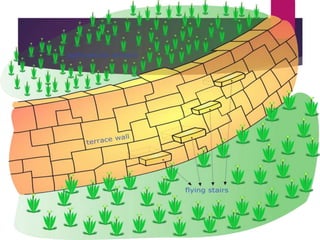
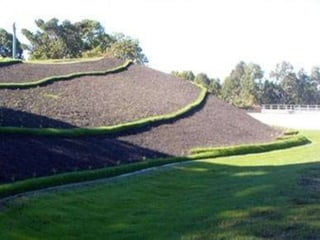
Terrace Farming
A terrace is a piece of sloped plane
that has been cut into a series of
successively receding flat surfaces
or platforms, which resemble steps,
for the purposes of more effective
farming. This type of landscaping is
therefore called terracing.
Keyline Design
The Keyline refers to
topographic feature linked to
water flow. This allows the water
run off to run directly into an
existing water channel, and
prevent soil erosion caused by
the water.
Perimeter Runoff Control
This is the practice of planting
trees, shrubs and ground cover
around the perimeter of your
farmland which slow down
surface flows and keeps
nutrients in the farmed soil.
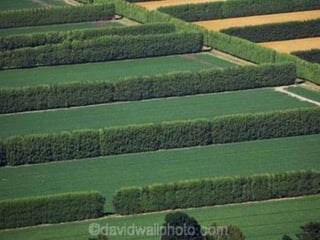
Windbreaks
 Rows of tall trees are used in dense
patterns around the farmland and
prevents wind erosion. Evergreen trees
can provide year round protection
but deciduous trees can be adequate as
long as foliage is apparent during the
seasons when the soil is bare.
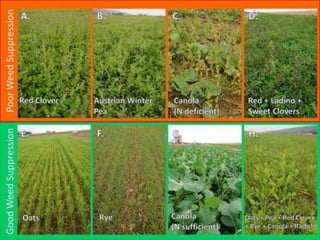
Crop Rotation
 Crop rotation is the practice of
growing a series of dissimilar or
different types of crops in the same
area in sequenced seasons. It is done
so that the soil of farms is not used for
only one set of nutrients. It helps in
reducing soil erosion and increases soil
fertility and crop yield.
Soil Conservation Farming
These practices can
be used to prevent
erosion and even
restore damaged soil
and encourage plant
growth.
Prevent Overgrazing
Try not to let overgrazing
happen by moving herds
around often. If overgrazing
occurs, plant hardier and more
nutritious species of forage in
order to rebuild the soil.
Re-establish Forest Cover
 – A dense amount of trees in a
forest leads to a vast network
of deep roots that offer a long
term solution to soil erosion,
another benefit is the
windbreak that these trees can
provide.
Maintaining PH levels of soil
Contamination of soils due to acid
rains and other pollutants can
lead to loss of soil fertility. Use a
Ph indicator monthly to check the
levels of acids in the soil and treat
the soils with eco-friendly
chemicals to prevent a loss of
crops and low yields
Mulching:
It means covering the soil surface
by straw, leaves or grasses.
Mulches of different kinds check
soil erosion, increase soil fertility
and also minimize moisture
evaporation from the top soils.
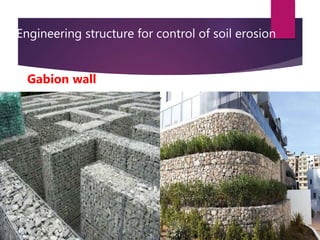
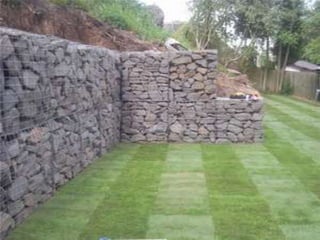
Engineering structure for control of soil erosion
Gabion wall
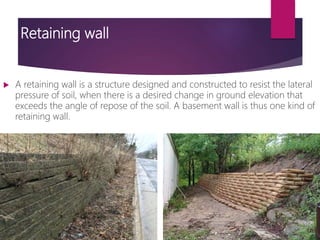
Retaining wall
 A retaining wall is a structure designed and constructed to resist the lateral
pressure of soil, when there is a desired change in ground elevation that
exceeds the angle of repose of the soil. A basement wall is thus one kind of
retaining wall.
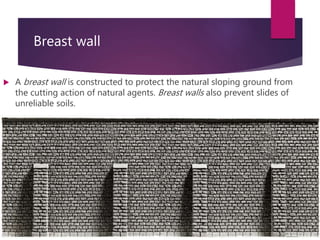
Breast wall
 A breast wall is constructed to protect the natural sloping ground from
the cutting action of natural agents. Breast walls also prevent slides of
unreliable soils.
Check dame .
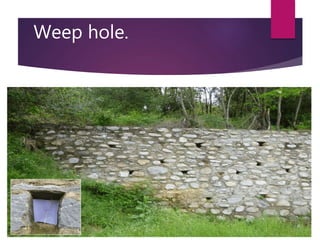
Weep hole.
Soil conservation techniques

Soil conservation techniques

  • 2.
    By Faisal Khalid Forestry andWildlife Management University of Haripur fkcbuneri@gmail.com
  • 3.
  • 4.
    Soil conservation: Soil conservationis the preventing of soil loss from erosion or reduced fertility caused by over usage, acidification, salinization or other chemical soil contamination.
  • 5.
    Soil erosion:  Soilerosion removes the top soil that is necessary for organic matter, nutrients, micro-organisms that are requires for plants to grow and shine. Soil conservation is one such step that protects the soil from being washed away.  Healthy soil is important for plants to grow and flourish. Taking necessary steps to conserve the soil is part of environmentally friendly lifestyle.
  • 6.
    Methods and Techniquesof Soil Conservation: Many different techniques have been invented throughout the years with the aim of preserving the nutrient level of the soil and preventing erosion.
  • 7.
    Contour Plowing:  Contourplowing or contour farming or Contour ploughing is the farming practice of plowing and/or planting across a slope following its elevation contour lines. These contour lines create a water break which reduces the formation of rills and gullies during times of heavy water run-off; which is a major cause of soil erosion. It a very effective way for farmland on slopes to prevent run off improve crop yields.
  • 9.
    Terrace Farming A terraceis a piece of sloped plane that has been cut into a series of successively receding flat surfaces or platforms, which resemble steps, for the purposes of more effective farming. This type of landscaping is therefore called terracing.
  • 11.
    Keyline Design The Keylinerefers to topographic feature linked to water flow. This allows the water run off to run directly into an existing water channel, and prevent soil erosion caused by the water.
  • 13.
    Perimeter Runoff Control Thisis the practice of planting trees, shrubs and ground cover around the perimeter of your farmland which slow down surface flows and keeps nutrients in the farmed soil.
  • 15.
    Windbreaks  Rows oftall trees are used in dense patterns around the farmland and prevents wind erosion. Evergreen trees can provide year round protection but deciduous trees can be adequate as long as foliage is apparent during the seasons when the soil is bare.
  • 17.
    Crop Rotation  Croprotation is the practice of growing a series of dissimilar or different types of crops in the same area in sequenced seasons. It is done so that the soil of farms is not used for only one set of nutrients. It helps in reducing soil erosion and increases soil fertility and crop yield.
  • 19.
    Soil Conservation Farming Thesepractices can be used to prevent erosion and even restore damaged soil and encourage plant growth.
  • 21.
    Prevent Overgrazing Try notto let overgrazing happen by moving herds around often. If overgrazing occurs, plant hardier and more nutritious species of forage in order to rebuild the soil.
  • 23.
    Re-establish Forest Cover – A dense amount of trees in a forest leads to a vast network of deep roots that offer a long term solution to soil erosion, another benefit is the windbreak that these trees can provide.
  • 24.
    Maintaining PH levelsof soil Contamination of soils due to acid rains and other pollutants can lead to loss of soil fertility. Use a Ph indicator monthly to check the levels of acids in the soil and treat the soils with eco-friendly chemicals to prevent a loss of crops and low yields
  • 25.
    Mulching: It means coveringthe soil surface by straw, leaves or grasses. Mulches of different kinds check soil erosion, increase soil fertility and also minimize moisture evaporation from the top soils.
  • 30.
    Engineering structure forcontrol of soil erosion Gabion wall
  • 32.
    Retaining wall  Aretaining wall is a structure designed and constructed to resist the lateral pressure of soil, when there is a desired change in ground elevation that exceeds the angle of repose of the soil. A basement wall is thus one kind of retaining wall.
  • 33.
    Breast wall  Abreast wall is constructed to protect the natural sloping ground from the cutting action of natural agents. Breast walls also prevent slides of unreliable soils.
  • 34.
  • 35.