Lokhesh
Mithuna Maran
Mogan Prasad
Mohamed
Abbas
Nandhakumar
Nandhini
Priyanka
 E.V.S Project
 B.Arch (1st year)
 Section ‘B’
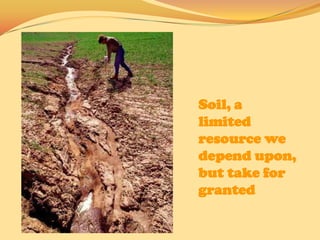
Soil, a
limited
resource we
depend upon,
but take for
granted
Soil Erosion
 What causes soil erosion?
 How serious of a problem is it?
 Good news and bad news from the U.S.
 What is desertification?
 How do salts degrade the soil?
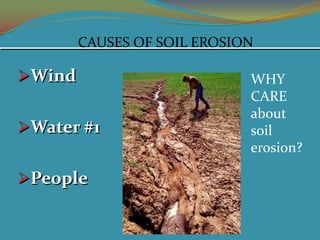
CAUSES OF SOIL EROSION

Wind                        WHY
                             CARE
                             about
Water #1                    soil
                             erosion?

People
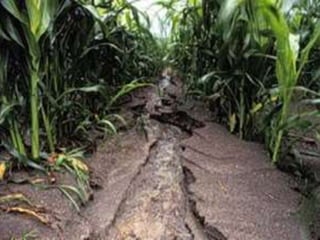
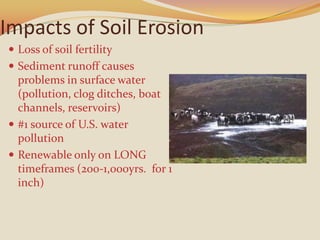
Impacts of Soil Erosion
 Loss of soil fertility
 Sediment runoff causes
  problems in surface water
  (pollution, clog ditches, boat
  channels, reservoirs)
 #1 source of U.S. water
  pollution
 Renewable only on LONG
  timeframes (200-1,000yrs. for 1
  inch)
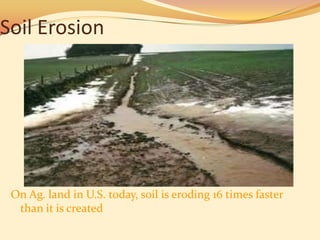
Soil Erosion


 On Ag. land in U.S. today, soil is eroding 16 times faster
  than it is created
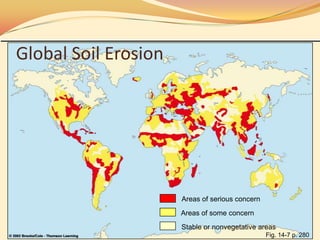
Global Soil Erosion


                      Areas of serious concern
                      Areas of some concern
                      Stable or nonvegetative areas
                                                 Fig. 14-7 p. 280
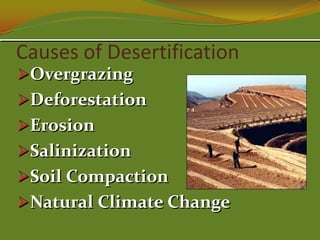
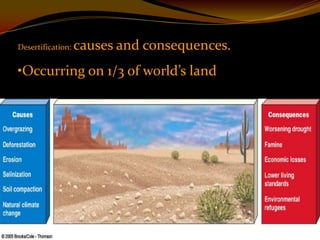
Causes of Desertification
Overgrazing
Deforestation
Erosion
Salinization
Soil Compaction
Natural Climate Change
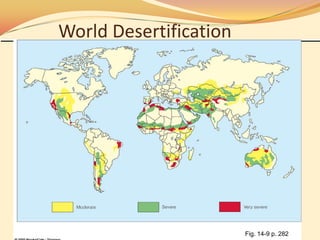
World Desertification


                        Fig. 14-9 p. 282
Desertification:   causes and consequences.
•Occurring on 1/3 of world’s land
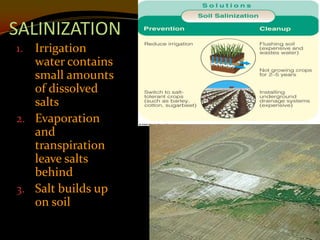
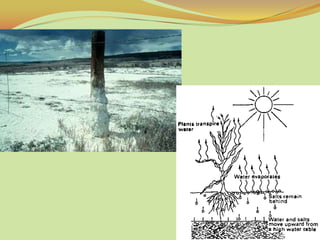
SALINIZATION
1. Irrigation
   water contains
   small amounts
   of dissolved
   salts
2. Evaporation
   and
   transpiration
   leave salts
   behind
3. Salt builds up
   on soil
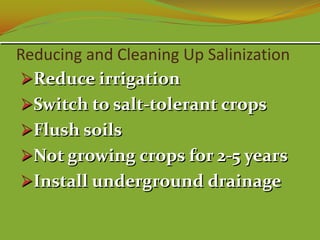
Reducing and Cleaning Up Salinization
Reduce irrigation
Switch to salt-tolerant crops
Flush soils
Not growing crops for 2-5 years
Install underground drainage
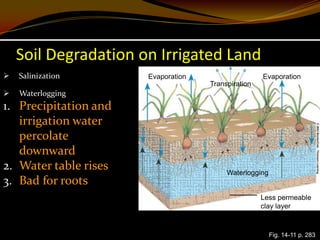
Soil Degradation on Irrigated Land
   Salinization       Evaporation                   Evaporation
                                     Transpiration
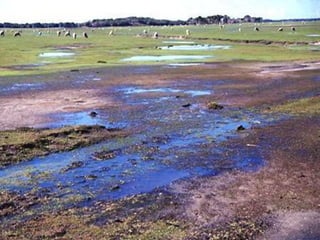
   Waterlogging
1. Precipitation and
   irrigation water
   percolate
   downward
2. Water table rises                      Waterlogging
3. Bad for roots
                                                     Less permeable
                                                     clay layer


                                                         Fig. 14-11 p. 283
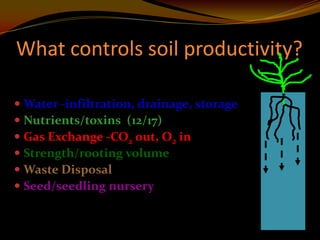
What controls soil productivity?

 Water -infiltration, drainage, storage
 Nutrients/toxins (12/17)
 Gas Exchange -CO2 out, O2 in
 Strength/rooting volume
 Waste Disposal
 Seed/seedling nursery
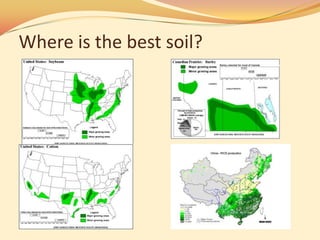
Where is the best soil?
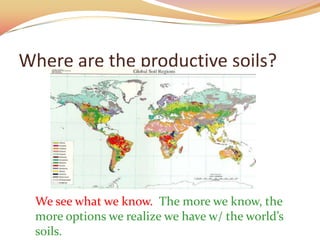
Where are the productive soils?


 We see what we know. The more we know, the
 more options we realize we have w/ the world’s
 soils.
What are some threats?
 Finite arable land: 1.1 billion hectares
     1961 0.32 ha/p; today 0.15 ha/p; 2050 0.12 ha/p
 Erosion – today 12-40 Mg/ha                 30% agricultural
    lands irreversibly damaged.
   Desertification – e.g., 27% China affected w/ new
    2500 km2/yr.
   Salinization- affects 20% of world’s 250+ million
    hectares of irrigated lands.
   Contamination w/ heavy metals.
   Urbanization and other competing uses.
   Problematic off-site issues & competing uses.
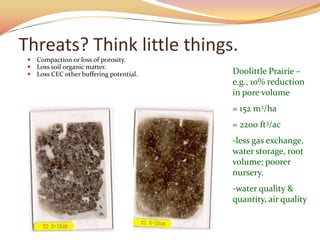
Threats? Think little things.
  Compaction or loss of porosity.
  Loss soil organic matter.
  Loss CEC other buffering potential.   Doolittle Prairie –
                                         e.g., 10% reduction
                                         in pore volume
                                         = 152 m3/ha
                                         = 2200 ft3/ac
                                         -less gas exchange,
                                         water storage, root
                                         volume; poorer
                                         nursery.
                                         -water quality &
                                         quantity, air quality
Soil Conservation
 What is soil conservation and how does it work?
 What are some methods for reducing soil erosion?
 Inorganic versus organic fertilizers
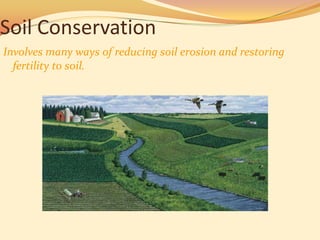
Soil Conservation
Involves many ways of reducing soil erosion and restoring
  fertility to soil.
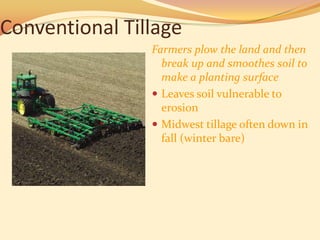
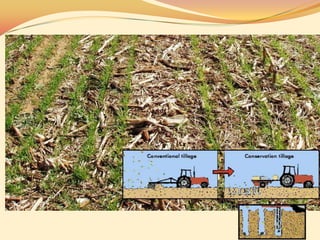
Conventional Tillage
                Farmers plow the land and then
                  break up and smoothes soil to
                  make a planting surface
                 Leaves soil vulnerable to
                  erosion
                 Midwest tillage often down in
                  fall (winter bare)
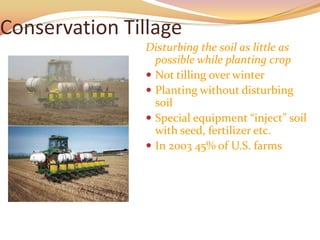
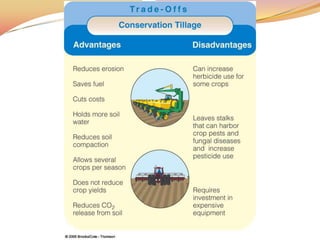
Conservation Tillage
               Disturbing the soil as little as
                 possible while planting crop
                Not tilling over winter
                Planting without disturbing
                 soil
                Special equipment “inject” soil
                 with seed, fertilizer etc.
                In 2003 45% of U.S. farms
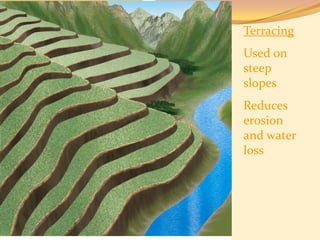
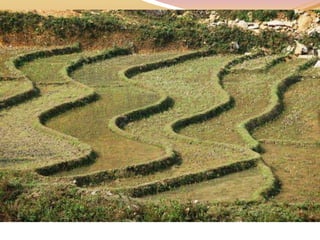
Terracing
Used on
steep
slopes
Reduces
erosion
and water
loss
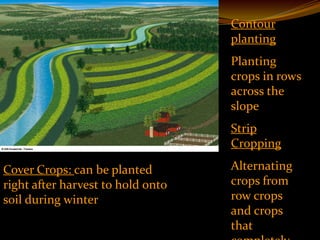
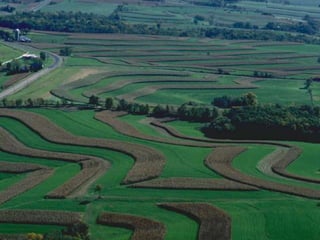
Contour
                                   planting
                                   Planting
                                   crops in rows
                                   across the
                                   slope
                                   Strip
                                   Cropping

Cover Crops: can be planted        Alternating
right after harvest to hold onto   crops from
soil during winter                 row crops
                                   and crops
                                   that
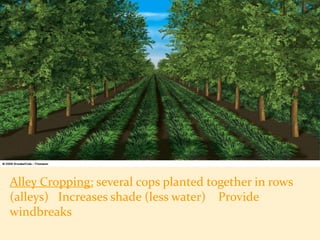
Alley Cropping: several cops planted together in rows
(alleys) Increases shade (less water) Provide
windbreaks
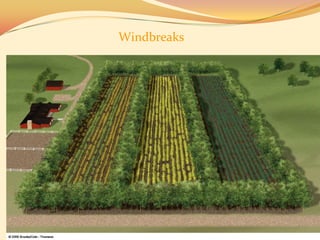
Windbreaks
SOIL RESTORATION
 Organic fertilizer

 Animal manure

 Compost


 Crop rotation

 Commercial inorganic fertilizer
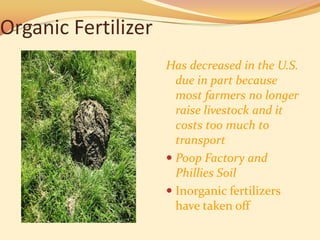
Organic Fertilizer
                     Has decreased in the U.S.
                       due in part because
                       most farmers no longer
                       raise livestock and it
                       costs too much to
                       transport
                      Poop Factory and
                       Phillies Soil
                      Inorganic fertilizers
                       have taken off
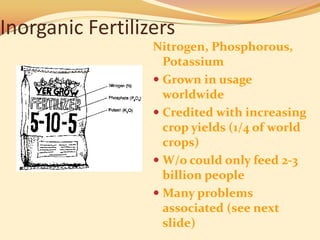
Inorganic Fertilizers
                  Nitrogen, Phosphorous,
                    Potassium
                   Grown in usage
                    worldwide
                   Credited with increasing
                    crop yields (1/4 of world
                    crops)
                   W/o could only feed 2-3
                    billion people
                   Many problems
                    associated (see next
                    slide)
“Conservation is a state of harmony between men and
land.”
                                                    - Ibid.


“What greater grief than the loss of one's native
land.”
                                              -Euripides


“The land belongs to the future”
                                           -Willa Cather
Land resources

Land resources

  • 1.
  • 8.
    Soil, a limited resource we dependupon, but take for granted
  • 9.
    Soil Erosion  Whatcauses soil erosion?  How serious of a problem is it?  Good news and bad news from the U.S.  What is desertification?  How do salts degrade the soil?
  • 10.
    CAUSES OF SOILEROSION Wind WHY CARE about Water #1 soil erosion? People
  • 12.
    Impacts of SoilErosion  Loss of soil fertility  Sediment runoff causes problems in surface water (pollution, clog ditches, boat channels, reservoirs)  #1 source of U.S. water pollution  Renewable only on LONG timeframes (200-1,000yrs. for 1 inch)
  • 13.
    Soil Erosion OnAg. land in U.S. today, soil is eroding 16 times faster than it is created
  • 14.
    Global Soil Erosion Areas of serious concern Areas of some concern Stable or nonvegetative areas Fig. 14-7 p. 280
  • 15.
  • 16.
    World Desertification Fig. 14-9 p. 282
  • 17.
    Desertification: causes and consequences. •Occurring on 1/3 of world’s land
  • 18.
    SALINIZATION 1. Irrigation water contains small amounts of dissolved salts 2. Evaporation and transpiration leave salts behind 3. Salt builds up on soil
  • 20.
    Reducing and CleaningUp Salinization Reduce irrigation Switch to salt-tolerant crops Flush soils Not growing crops for 2-5 years Install underground drainage
  • 21.
    Soil Degradation onIrrigated Land  Salinization Evaporation Evaporation Transpiration  Waterlogging 1. Precipitation and irrigation water percolate downward 2. Water table rises Waterlogging 3. Bad for roots Less permeable clay layer Fig. 14-11 p. 283
  • 24.
    What controls soilproductivity?  Water -infiltration, drainage, storage  Nutrients/toxins (12/17)  Gas Exchange -CO2 out, O2 in  Strength/rooting volume  Waste Disposal  Seed/seedling nursery
  • 25.
    Where is thebest soil?
  • 26.
    Where are theproductive soils? We see what we know. The more we know, the more options we realize we have w/ the world’s soils.
  • 27.
    What are somethreats?  Finite arable land: 1.1 billion hectares  1961 0.32 ha/p; today 0.15 ha/p; 2050 0.12 ha/p  Erosion – today 12-40 Mg/ha 30% agricultural lands irreversibly damaged.  Desertification – e.g., 27% China affected w/ new 2500 km2/yr.  Salinization- affects 20% of world’s 250+ million hectares of irrigated lands.  Contamination w/ heavy metals.  Urbanization and other competing uses.  Problematic off-site issues & competing uses.
  • 28.
    Threats? Think littlethings.  Compaction or loss of porosity.  Loss soil organic matter.  Loss CEC other buffering potential. Doolittle Prairie – e.g., 10% reduction in pore volume = 152 m3/ha = 2200 ft3/ac -less gas exchange, water storage, root volume; poorer nursery. -water quality & quantity, air quality
  • 29.
    Soil Conservation  Whatis soil conservation and how does it work?  What are some methods for reducing soil erosion?  Inorganic versus organic fertilizers
  • 30.
    Soil Conservation Involves manyways of reducing soil erosion and restoring fertility to soil.
  • 31.
    Conventional Tillage Farmers plow the land and then break up and smoothes soil to make a planting surface  Leaves soil vulnerable to erosion  Midwest tillage often down in fall (winter bare)
  • 32.
    Conservation Tillage Disturbing the soil as little as possible while planting crop  Not tilling over winter  Planting without disturbing soil  Special equipment “inject” soil with seed, fertilizer etc.  In 2003 45% of U.S. farms
  • 35.
  • 37.
    Contour planting Planting crops in rows across the slope Strip Cropping Cover Crops: can be planted Alternating right after harvest to hold onto crops from soil during winter row crops and crops that
  • 39.
    Alley Cropping: severalcops planted together in rows (alleys) Increases shade (less water) Provide windbreaks
  • 40.
  • 41.
    SOIL RESTORATION  Organicfertilizer  Animal manure  Compost  Crop rotation  Commercial inorganic fertilizer
  • 42.
    Organic Fertilizer Has decreased in the U.S. due in part because most farmers no longer raise livestock and it costs too much to transport  Poop Factory and Phillies Soil  Inorganic fertilizers have taken off
  • 43.
    Inorganic Fertilizers Nitrogen, Phosphorous, Potassium  Grown in usage worldwide  Credited with increasing crop yields (1/4 of world crops)  W/o could only feed 2-3 billion people  Many problems associated (see next slide)
  • 44.
    “Conservation is astate of harmony between men and land.” - Ibid. “What greater grief than the loss of one's native land.” -Euripides “The land belongs to the future” -Willa Cather