TOPICS
 What is smart grid?
 Conventional Power System.
 Comparison between smart grid and conventional.
 Importance of Smart Grid.
 Electric Transportation.
 Present Scenario of Indian Energy System.
 Disadvantages of Smart Grid.
What Is Smart Grid?
 It is a power system architecture that permits two-
way communication between the grid and
essentially all devices that connect to it.
 Under smart grid model , traditional generation still
has a large role, but it is augmented by distributed
generation in the form of wind , solar and various
other customer- owned generation sources that not
only generate electricity for end customers, but can
also sell electricity back to utility.
Today’s electrical grid suffers from a number of
problems, including :
 Polluted (More than half of our electricity is generated
from coal).
 Less efficient (The delivered efficiency of electricity is
only 35%).
 Vulnerable (The 2003 blackout in the Northeast
affected 55M people for up to two days).
Why do we need smart grid?
Conventional Power System
 Cannot fully support the integration of renewable energy.
 Major source is fossil fuel.
 System is not much efficient.
 Almost zero customer participation.
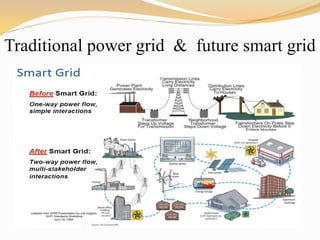
Traditional power grid & future smart grid
Comparison
Existing Grid Smart Grid
 One-way communication Two-way communication
 Centralized generation Distributed generation
 Few sensors Sensors throughout
 Manual monitoring Self-monitoring
 Manual restoration Self-healing
 Few customer choices Many customer choices
Importance of Smart Grid
 Improving energy efficiency.
 Renewable energy sources.
 Reduce carbon foot prints.
 Reduce peak demand.
 Proper management of energy.
 Reduce electricity bill.
 No blackouts.
 Consumers can earn money.
Electric Transportation
Plug In Hybrid Electric Vehicles
 Capable of both generating and storing electricity through
gasoline engine and battery.
 Can be recharged at night during low cost periods.
 Efficient means of transportation.
 Reduces oil consumption.
 Reduces pollution.
Present Scenario of Indian Energy
System
AT&C LOSS
Varies between 20% to 45%
Average in between 30 to 35%
Priority areas to build smart grid
technology (Identified by NIST)
 Demand Response and Consumer Energy Efficiency.
 Energy Storage.
 Electric Transportation.
 Advanced Metering Infrastructure.
 Distribution Grid Management.
 Cyber Security.
 Network Communications.
Renewable Energy sources (2014)
Disadvantages of Smart Grid
 Network is not simple.
 Smart meters can be hacked.
 Installation is expensive.
References
 https://www.youtube.com/watch?v=JwRTpWZReJk
 http://smartgrid.ieee.org/ieee-smart-grid
 http://indiasmartgrid.org/en/Pages/Index.aspx
 http://www.businessweek.com/articles/2014-06-05/india-
fights-electricity-theft-as-modi-pledges-energy-upgrade
 http://en.wikipedia.org/wiki/Smart_grid
 https://www.smartgrid.gov/the_smart_grid
Thank you

Smart Grid Technology

  • 2.
    TOPICS  What issmart grid?  Conventional Power System.  Comparison between smart grid and conventional.  Importance of Smart Grid.  Electric Transportation.  Present Scenario of Indian Energy System.  Disadvantages of Smart Grid.
  • 3.
    What Is SmartGrid?  It is a power system architecture that permits two- way communication between the grid and essentially all devices that connect to it.  Under smart grid model , traditional generation still has a large role, but it is augmented by distributed generation in the form of wind , solar and various other customer- owned generation sources that not only generate electricity for end customers, but can also sell electricity back to utility.
  • 4.
    Today’s electrical gridsuffers from a number of problems, including :  Polluted (More than half of our electricity is generated from coal).  Less efficient (The delivered efficiency of electricity is only 35%).  Vulnerable (The 2003 blackout in the Northeast affected 55M people for up to two days). Why do we need smart grid?
  • 5.
    Conventional Power System Cannot fully support the integration of renewable energy.  Major source is fossil fuel.  System is not much efficient.  Almost zero customer participation.
  • 6.
    Traditional power grid& future smart grid
  • 7.
    Comparison Existing Grid SmartGrid  One-way communication Two-way communication  Centralized generation Distributed generation  Few sensors Sensors throughout  Manual monitoring Self-monitoring  Manual restoration Self-healing  Few customer choices Many customer choices
  • 8.
    Importance of SmartGrid  Improving energy efficiency.  Renewable energy sources.  Reduce carbon foot prints.  Reduce peak demand.  Proper management of energy.  Reduce electricity bill.  No blackouts.  Consumers can earn money.
  • 9.
    Electric Transportation Plug InHybrid Electric Vehicles  Capable of both generating and storing electricity through gasoline engine and battery.  Can be recharged at night during low cost periods.  Efficient means of transportation.  Reduces oil consumption.  Reduces pollution.
  • 10.
    Present Scenario ofIndian Energy System
  • 11.
    AT&C LOSS Varies between20% to 45% Average in between 30 to 35%
  • 12.
    Priority areas tobuild smart grid technology (Identified by NIST)  Demand Response and Consumer Energy Efficiency.  Energy Storage.  Electric Transportation.  Advanced Metering Infrastructure.  Distribution Grid Management.  Cyber Security.  Network Communications.
  • 13.
  • 15.
    Disadvantages of SmartGrid  Network is not simple.  Smart meters can be hacked.  Installation is expensive.
  • 16.
    References  https://www.youtube.com/watch?v=JwRTpWZReJk  http://smartgrid.ieee.org/ieee-smart-grid http://indiasmartgrid.org/en/Pages/Index.aspx  http://www.businessweek.com/articles/2014-06-05/india- fights-electricity-theft-as-modi-pledges-energy-upgrade  http://en.wikipedia.org/wiki/Smart_grid  https://www.smartgrid.gov/the_smart_grid
  • 17.