A blueprint for a connected,
intelligent power grid
community
PRESENTED BY
2
ABSTRACT
“ANALOG” GRID / “SMART” GRID
NECESSITY OF SMART GRID
FEATURES
SMART SUBSTATION
SMART HOUSE
SMART GRID BENEFITS
CONCLUSION
CONTENTS
ABSTRACT
Ǿ The development and implementation of a smart grid for power
supply is one of the pressing issues in modern energy economy,
given high national priority and massive investments, although
the entire subject is still in its infancy stage.
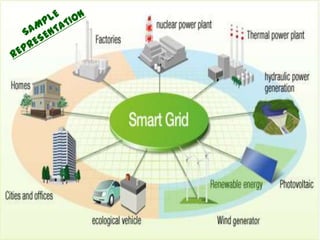
Ǿ The smart grid delivers electricity from producers to consumers
using two-way digital technology, and allows control of
appliances in the consumers' houses and of machines in factories
to save energy, while reducing costs and increasing reliability and
transparency.
Ǿ In principle, the smart grid is an upgrade of the common
electricity grids that operate mostly to provide one-way power
from several major power plants to a large number of Consumers.
Ǿ The smart grid could be at the city level, integrate into a national
grid, or at the plant level, integrated into the urban grid ready for
the future.
3
4
THE GRID TODAY
Utilities committed to proving safe,
reliable power.
Must provide quality service with an aging
infrastructure.
Supplying energy in a carbon constrained
world.
Working with non-integrated systems
and processes.
SMART TECHNOLOGIES CAN PROVIDE
SOLUTIONS TO MODERN GRID
CHALLENGES.
5
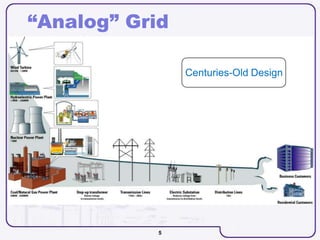
“Analog” Grid
Centuries-Old Design
6
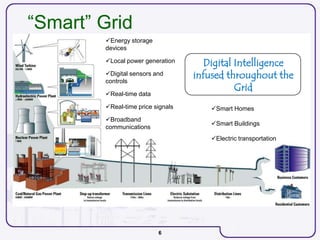
“Smart” Grid
Digital Intelligence
infused throughout the
Grid
Energy storage
devices
Local power generation
Digital sensors and
controls
Real-time data
Real-time price signals
Broadband
communications
Smart Homes
Smart Buildings
Electric transportation
7
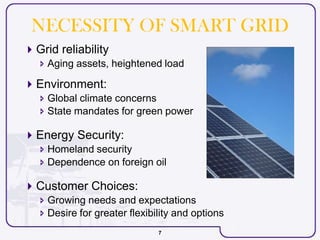
NECESSITY OF SMART GRID
 Grid reliability
 Aging assets, heightened load
 Environment:
 Global climate concerns
 State mandates for green power
 Energy Security:
 Homeland security
 Dependence on foreign oil
 Customer Choices:
 Growing needs and expectations
 Desire for greater flexibility and options
8
FEATURES
The Smart Grid will:
Be more reliable.
Be self-healing and self-monitoring.
Be more secure.
Be cleaner and greener.
Support widespread distributed
generation.
Help customers better control energy use
in their homes and businesses.
Achieve lower throughput, thus lowering
prices.
9
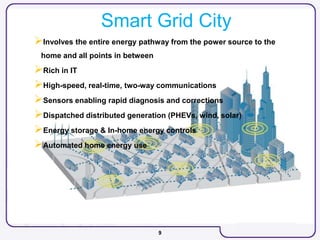
Smart Grid City
Involves the entire energy pathway from the power source to the
home and all points in between
Rich in IT
High-speed, real-time, two-way communications
Sensors enabling rapid diagnosis and corrections
Dispatched distributed generation (PHEVs, wind, solar)
Energy storage & In-home energy controls
Automated home energy use
10
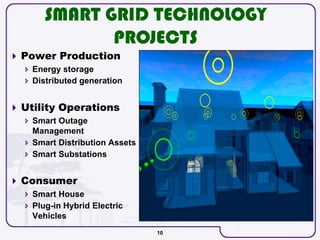
SMART GRID TECHNOLOGY
PROJECTS
 Power Production
 Energy storage
 Distributed generation
 Utility Operations
 Smart Outage
Management
 Smart Distribution Assets
 Smart Substations
 Consumer
 Smart House
 Plug-in Hybrid Electric
Vehicles
11
12
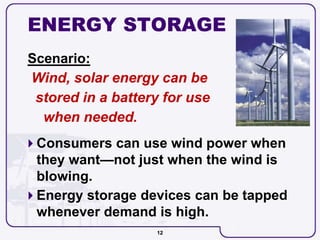
ENERGY STORAGE
Scenario:
Wind, solar energy can be
stored in a battery for use
when needed.
 Consumers can use wind power when
they want—not just when the wind is
blowing.
 Energy storage devices can be tapped
whenever demand is high.
13
SMART SUBSTATION
SCENARIO:
Digital intelligence gives substation
operators remote control of facilities.
Allows faster adjustments to
conditions.
Prevents blackouts, makes for faster
recovery.
More flexibility to re-route power.
Monitors help keep facilities and sites
secure.
14
15
SMART DISTRIBUTION
ASSETS
SCENARIO:
 A smart meter detects an isolated
outage in a residential neighborhood.
The utility pings the meter and is able to send
the right crew, with the right tools, to the right
location to turn power back on quickly, OR
Can remotely re-connect power
Faster restoration time and fewer outage
minutes
16
SMART HOUSE
SCENARIO:
 Home appliances contain onboard
intelligence that receives signals
from power grid control systems
and can reduce demand when the
grid is under stress.
 Consumers automatically pre-program
appliances to turn on when prices are
lower.
 Creates options for managing bills and
energy consumption habits
17
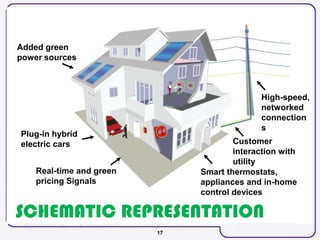
SCHEMATIC REPRESENTATION
Plug-in hybrid
electric cars
Added green
power sources
Smart thermostats,
appliances and in-home
control devices
Real-time and green
pricing Signals
High-speed,
networked
connection
s
Customer
interaction with
utility
18
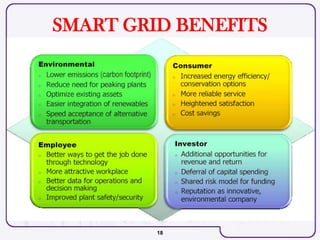
SMART GRID BENEFITS
19
20
INVESTMENT
Approximately $60 to $100 million
Cost is offset by joint funding from
partners and contributions of:
Utility hardware
IT hardware
Software
Labor resources
21
CONCLUSION
It won’t happen all at once:
Smart Grid will be an evolution with long-term
implications.
Start up costs involved; but savings expected
in the long run.
Solid focus will remain on Government’s
response rather than customer choice.
22
23
ANY QUESTIONS ?

Intelligent Substation & its applications

  • 1.
    A blueprint fora connected, intelligent power grid community PRESENTED BY
  • 2.
    2 ABSTRACT “ANALOG” GRID /“SMART” GRID NECESSITY OF SMART GRID FEATURES SMART SUBSTATION SMART HOUSE SMART GRID BENEFITS CONCLUSION CONTENTS
  • 3.
    ABSTRACT Ǿ The developmentand implementation of a smart grid for power supply is one of the pressing issues in modern energy economy, given high national priority and massive investments, although the entire subject is still in its infancy stage. Ǿ The smart grid delivers electricity from producers to consumers using two-way digital technology, and allows control of appliances in the consumers' houses and of machines in factories to save energy, while reducing costs and increasing reliability and transparency. Ǿ In principle, the smart grid is an upgrade of the common electricity grids that operate mostly to provide one-way power from several major power plants to a large number of Consumers. Ǿ The smart grid could be at the city level, integrate into a national grid, or at the plant level, integrated into the urban grid ready for the future. 3
  • 4.
    4 THE GRID TODAY Utilitiescommitted to proving safe, reliable power. Must provide quality service with an aging infrastructure. Supplying energy in a carbon constrained world. Working with non-integrated systems and processes. SMART TECHNOLOGIES CAN PROVIDE SOLUTIONS TO MODERN GRID CHALLENGES.
  • 5.
  • 6.
    6 “Smart” Grid Digital Intelligence infusedthroughout the Grid Energy storage devices Local power generation Digital sensors and controls Real-time data Real-time price signals Broadband communications Smart Homes Smart Buildings Electric transportation
  • 7.
    7 NECESSITY OF SMARTGRID  Grid reliability  Aging assets, heightened load  Environment:  Global climate concerns  State mandates for green power  Energy Security:  Homeland security  Dependence on foreign oil  Customer Choices:  Growing needs and expectations  Desire for greater flexibility and options
  • 8.
    8 FEATURES The Smart Gridwill: Be more reliable. Be self-healing and self-monitoring. Be more secure. Be cleaner and greener. Support widespread distributed generation. Help customers better control energy use in their homes and businesses. Achieve lower throughput, thus lowering prices.
  • 9.
    9 Smart Grid City Involvesthe entire energy pathway from the power source to the home and all points in between Rich in IT High-speed, real-time, two-way communications Sensors enabling rapid diagnosis and corrections Dispatched distributed generation (PHEVs, wind, solar) Energy storage & In-home energy controls Automated home energy use
  • 10.
    10 SMART GRID TECHNOLOGY PROJECTS Power Production  Energy storage  Distributed generation  Utility Operations  Smart Outage Management  Smart Distribution Assets  Smart Substations  Consumer  Smart House  Plug-in Hybrid Electric Vehicles
  • 11.
  • 12.
    12 ENERGY STORAGE Scenario: Wind, solarenergy can be stored in a battery for use when needed.  Consumers can use wind power when they want—not just when the wind is blowing.  Energy storage devices can be tapped whenever demand is high.
  • 13.
    13 SMART SUBSTATION SCENARIO: Digital intelligencegives substation operators remote control of facilities. Allows faster adjustments to conditions. Prevents blackouts, makes for faster recovery. More flexibility to re-route power. Monitors help keep facilities and sites secure.
  • 14.
  • 15.
    15 SMART DISTRIBUTION ASSETS SCENARIO:  Asmart meter detects an isolated outage in a residential neighborhood. The utility pings the meter and is able to send the right crew, with the right tools, to the right location to turn power back on quickly, OR Can remotely re-connect power Faster restoration time and fewer outage minutes
  • 16.
    16 SMART HOUSE SCENARIO:  Homeappliances contain onboard intelligence that receives signals from power grid control systems and can reduce demand when the grid is under stress.  Consumers automatically pre-program appliances to turn on when prices are lower.  Creates options for managing bills and energy consumption habits
  • 17.
    17 SCHEMATIC REPRESENTATION Plug-in hybrid electriccars Added green power sources Smart thermostats, appliances and in-home control devices Real-time and green pricing Signals High-speed, networked connection s Customer interaction with utility
  • 18.
  • 19.
  • 20.
    20 INVESTMENT Approximately $60 to$100 million Cost is offset by joint funding from partners and contributions of: Utility hardware IT hardware Software Labor resources
  • 21.
    21 CONCLUSION It won’t happenall at once: Smart Grid will be an evolution with long-term implications. Start up costs involved; but savings expected in the long run. Solid focus will remain on Government’s response rather than customer choice.
  • 22.
  • 23.