A
Seminar on
SMART GRID
Presented by:
Shivangee
Submitted to:
Mr. Mayank Kumar Gautam
(Assistant Professor)
DEPARTMENT OF ELECTRICAL ENGINEERING
RAJKIYA ENGINEERING COLLEGE,
AMBEDKAR NAGAR (U.P.),224122
CONTENTS
 Objective
 Introduction
 Overview of smart grid
 Need of a smart grid
 Comparison
 Components of smart grid
 Advantages
 Disadvantages
 Future scope
 Conclusion
 Reference
OBJECTIVE
To upgrade the grid in Smart way.
POWER
GENERATION
TRANSMISSION DISTRIBUTION
INTRODUCTION
An electrical grid is an interconnected network for
delivering electricity from suppliers to consumers.
Building the smart grid means adding computer and
communications technology to the existing electricity
grid.
Smart Grid = Information Technology + Electric Grid.
The flow of electricity from utility to consumer
becomes a two-way conversation.
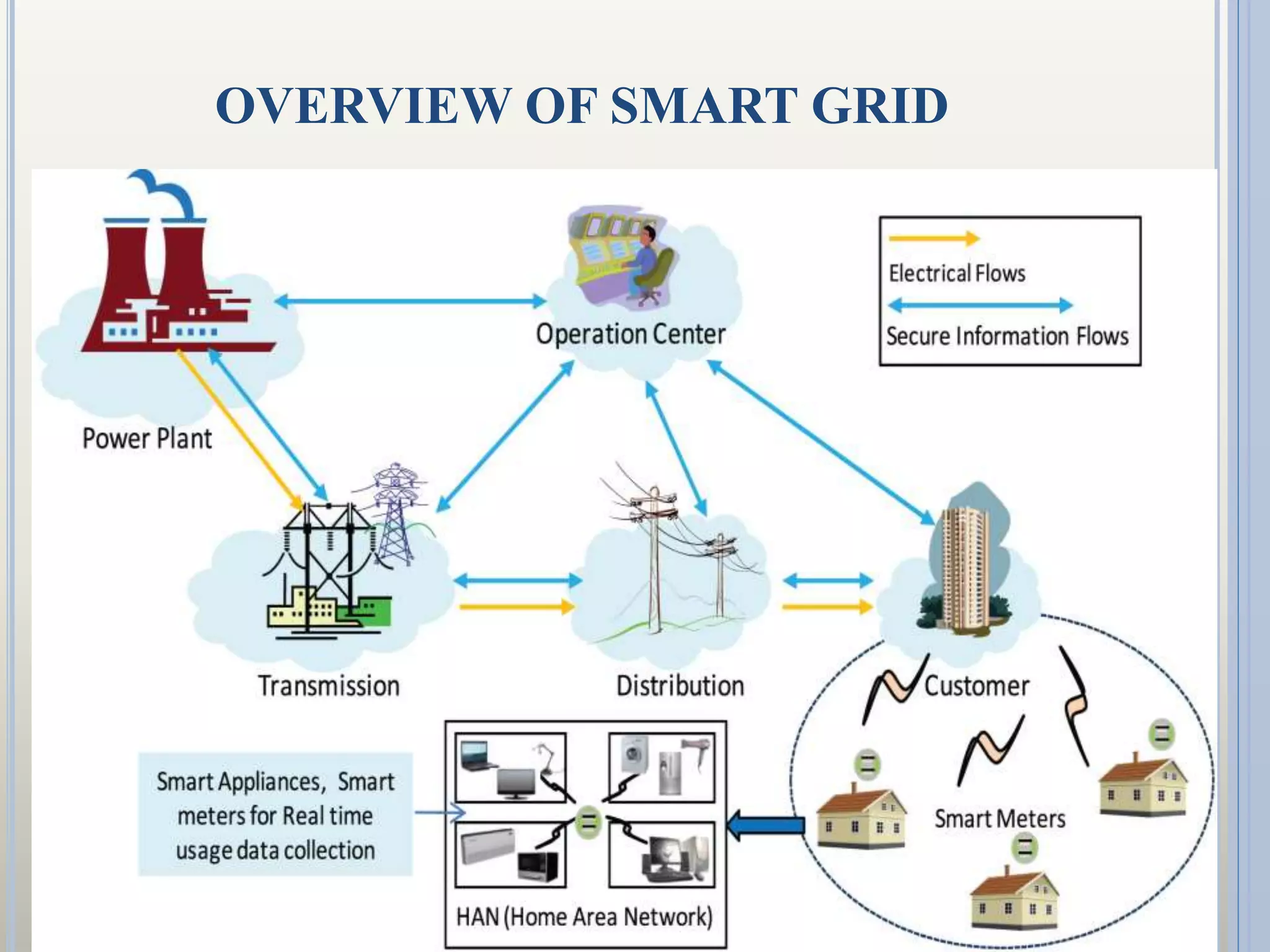
OVERVIEW OF SMART GRID
Adding sensing, embedded processing and digital
communications makes the grid:
 Observable
 Controllable
 Automated
 Fully integrated
SMART GRID
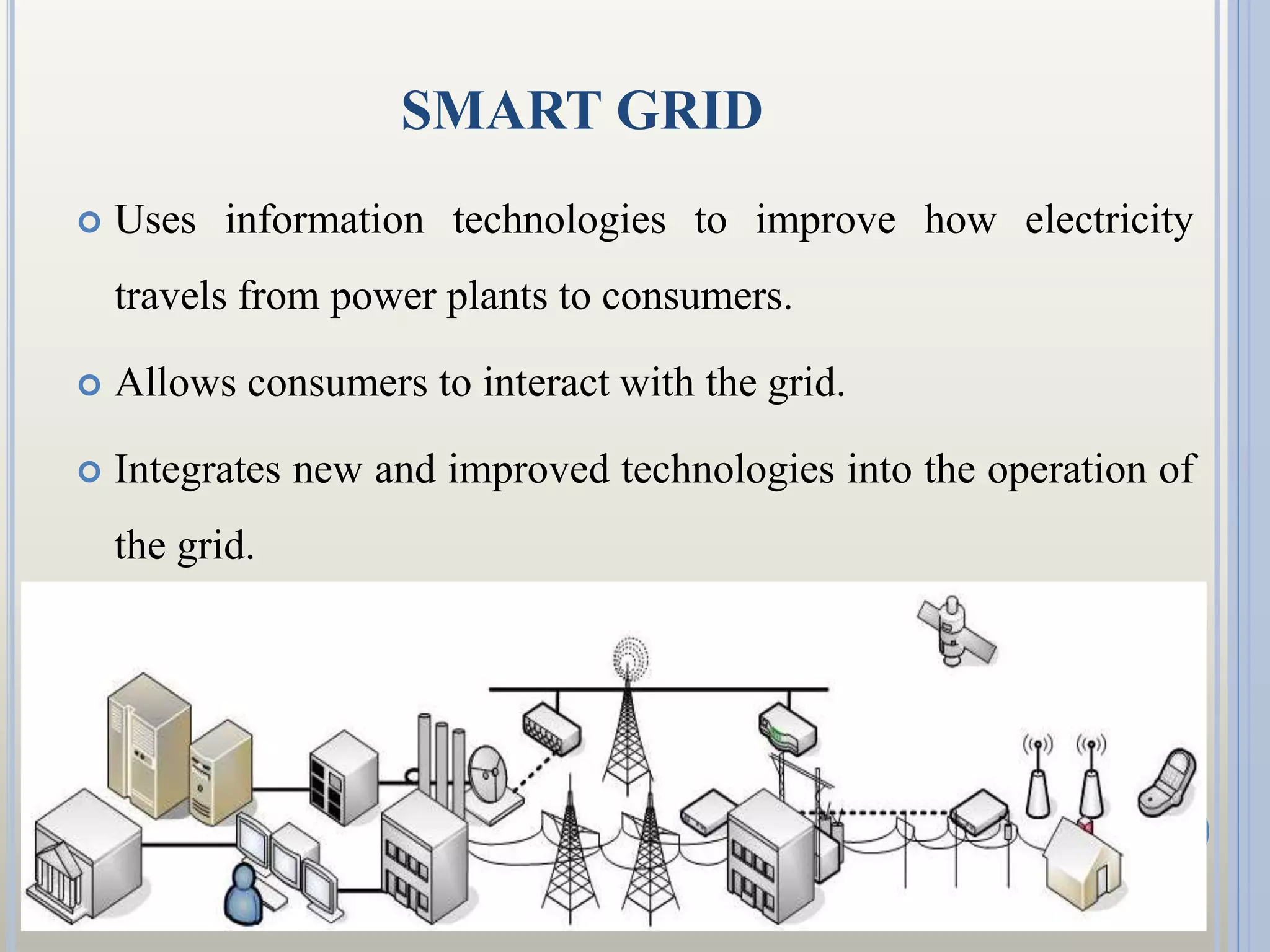
 Uses information technologies to improve how electricity
travels from power plants to consumers.
 Allows consumers to interact with the grid.
 Integrates new and improved technologies into the operation of
the grid.
NEED OF SMART GRID
Smart Grid adds communication and control
capabilities that will optimize the operation of the
entire electric grid.
Adding new transmission lines will help the utilities
get more power from the power plants to your home.
Reduce cost of power cuts.
Increasing demand for power supply.
Smart Grid is also positioned to take advantages of
new technologies.
WHO ARE USING SMART GRID?
Individual consumers
Corporate participation
Government regulators
HOW SMART GRID IS USED?
 Faster communication between the energy companies and the end
consumers.
 Electricity is sent from:
 Allows energy companies to track areas of high use, identify
possible outages, and provide the proper service.
Energy
company
Distribution
center
destination
ONE & TWO WAY COMMUNICATION
COMPARISON
EXISTING GRID SMART GRID
Electromechanical Digital
One-way communication Two-way communication
Centralized generation Distributed generation
Manual monitoring Self monitoring
Manual restoration Self healing
Failures and blackouts Adaptive and islanding
Limited control Universal control
Few customer choices Many customer choices
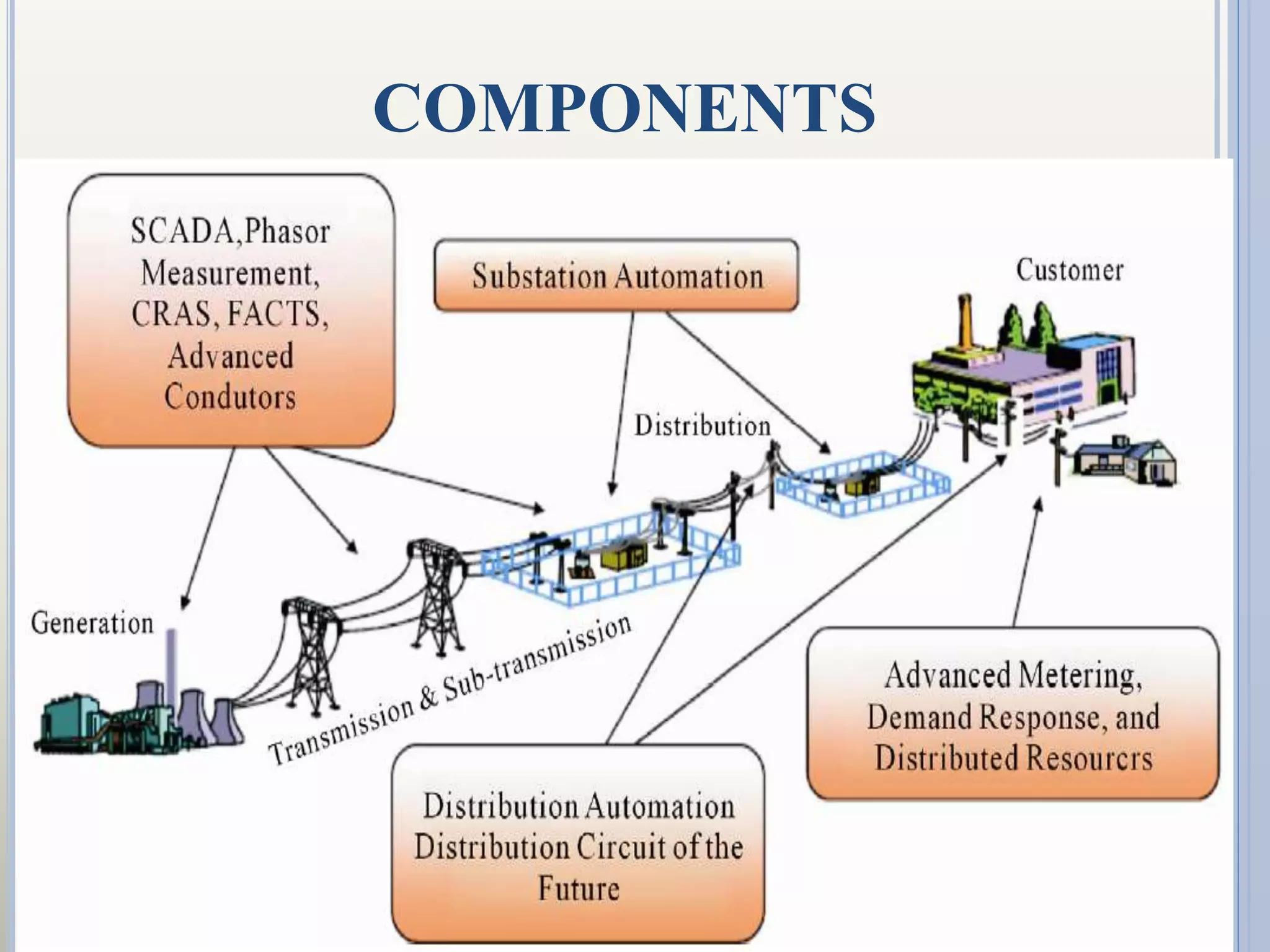
COMPONENS OF THE SMART GRID
 Intelligent Appliances
 Smart Power Meters
 Smart Substations
 Smart Distribution
 Smart Generation
COMPONENTS
SMART GRID ATTRIBUTES
 Information-based
 Communicating
 Secure
 Self-healing
 Reliable
 Flexible
 Cost-effective
 Dynamically controllable
ADVANTAGES
 Economic development.
 Lower costs.
 Higher customer satisfaction.
 Improved reliability.
 Cost saving.
DISADVANTAGES
 Biggest concern: Privacy and security.
 Meters hacking.
 The hackers may gain control over the meters and this may
reduce the demand for power.
 Not simply a single component.
 Various technology component.
 Expansive in terms of installation.
FUTURE SCOPE
 Implementation of the smart grid concept would go a
long way in solving many of today's energy issues and
problems.
 As the new technologies would be invented and
strengthened existing ones to the desired
specifications meet the Smart Grid would be reality
and change the whole pattern of energy in the world.
CONCLUSION
 By using smart grid technology energy can be
utilized to the maximum and would not be wasted.
It refers to the modernized version of the earlier
traditional method of energy supply.
Allows consumers to interact with the grid.
REFERENCE
 http://www.electricity.doe.gov/documents
 http://grouper.ieee.org/groups/scc21
 http://grouper.ieee.org/groups/scc21/dr_shared
 IEC 61850 Standard for Substation Automation. Available:
http://www.iec.ch
 IEEE Std. 2030-2011 on Interoperability
 http://www.ijsret.org/pdf/EE2001.pdf
Any queries ?
Thank You…

Smart grid

  • 1.
    A Seminar on SMART GRID Presentedby: Shivangee Submitted to: Mr. Mayank Kumar Gautam (Assistant Professor) DEPARTMENT OF ELECTRICAL ENGINEERING RAJKIYA ENGINEERING COLLEGE, AMBEDKAR NAGAR (U.P.),224122
  • 2.
    CONTENTS  Objective  Introduction Overview of smart grid  Need of a smart grid  Comparison  Components of smart grid  Advantages  Disadvantages  Future scope  Conclusion  Reference
  • 3.
    OBJECTIVE To upgrade thegrid in Smart way. POWER GENERATION TRANSMISSION DISTRIBUTION
  • 4.
    INTRODUCTION An electrical gridis an interconnected network for delivering electricity from suppliers to consumers. Building the smart grid means adding computer and communications technology to the existing electricity grid. Smart Grid = Information Technology + Electric Grid. The flow of electricity from utility to consumer becomes a two-way conversation.
  • 5.
  • 6.
    Adding sensing, embeddedprocessing and digital communications makes the grid:  Observable  Controllable  Automated  Fully integrated
  • 7.
    SMART GRID  Usesinformation technologies to improve how electricity travels from power plants to consumers.  Allows consumers to interact with the grid.  Integrates new and improved technologies into the operation of the grid.
  • 8.
    NEED OF SMARTGRID Smart Grid adds communication and control capabilities that will optimize the operation of the entire electric grid. Adding new transmission lines will help the utilities get more power from the power plants to your home. Reduce cost of power cuts. Increasing demand for power supply. Smart Grid is also positioned to take advantages of new technologies.
  • 9.
    WHO ARE USINGSMART GRID? Individual consumers Corporate participation Government regulators
  • 10.
    HOW SMART GRIDIS USED?  Faster communication between the energy companies and the end consumers.  Electricity is sent from:  Allows energy companies to track areas of high use, identify possible outages, and provide the proper service. Energy company Distribution center destination
  • 11.
    ONE & TWOWAY COMMUNICATION
  • 12.
    COMPARISON EXISTING GRID SMARTGRID Electromechanical Digital One-way communication Two-way communication Centralized generation Distributed generation Manual monitoring Self monitoring Manual restoration Self healing Failures and blackouts Adaptive and islanding Limited control Universal control Few customer choices Many customer choices
  • 13.
    COMPONENS OF THESMART GRID  Intelligent Appliances  Smart Power Meters  Smart Substations  Smart Distribution  Smart Generation
  • 14.
  • 15.
    SMART GRID ATTRIBUTES Information-based  Communicating  Secure  Self-healing  Reliable  Flexible  Cost-effective  Dynamically controllable
  • 16.
    ADVANTAGES  Economic development. Lower costs.  Higher customer satisfaction.  Improved reliability.  Cost saving.
  • 17.
    DISADVANTAGES  Biggest concern:Privacy and security.  Meters hacking.  The hackers may gain control over the meters and this may reduce the demand for power.  Not simply a single component.  Various technology component.  Expansive in terms of installation.
  • 18.
    FUTURE SCOPE  Implementationof the smart grid concept would go a long way in solving many of today's energy issues and problems.  As the new technologies would be invented and strengthened existing ones to the desired specifications meet the Smart Grid would be reality and change the whole pattern of energy in the world.
  • 19.
    CONCLUSION  By usingsmart grid technology energy can be utilized to the maximum and would not be wasted. It refers to the modernized version of the earlier traditional method of energy supply. Allows consumers to interact with the grid.
  • 20.
    REFERENCE  http://www.electricity.doe.gov/documents  http://grouper.ieee.org/groups/scc21 http://grouper.ieee.org/groups/scc21/dr_shared  IEC 61850 Standard for Substation Automation. Available: http://www.iec.ch  IEEE Std. 2030-2011 on Interoperability  http://www.ijsret.org/pdf/EE2001.pdf
  • 21.