

SMART GRID
Agenda:

    Introduction


    Today’s electrical grid


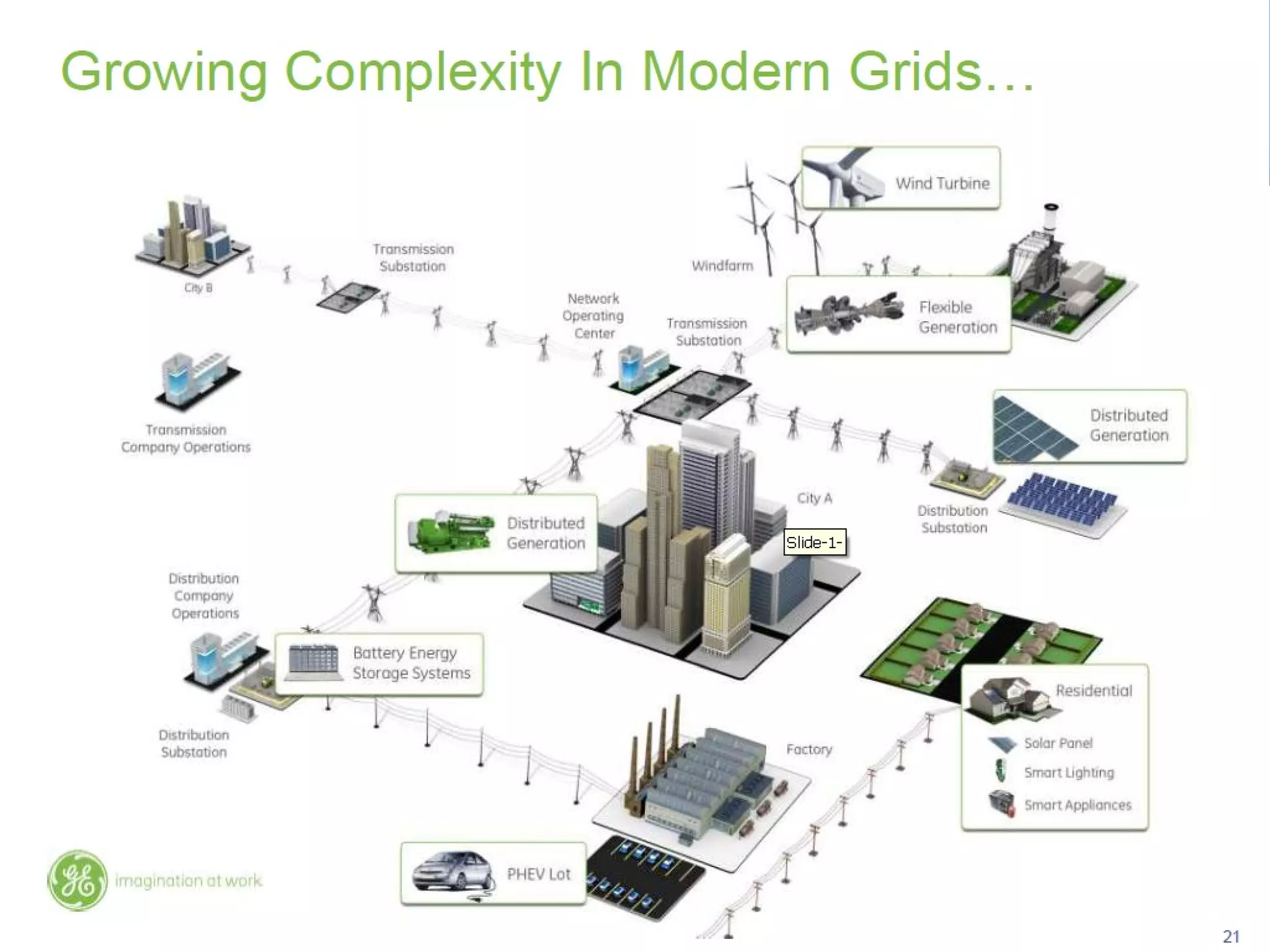
    Why do we need the smart grid?


    Smart grid applications


    Smart meter


    Electric vehicles


    Smart grid partners


    Conclusion
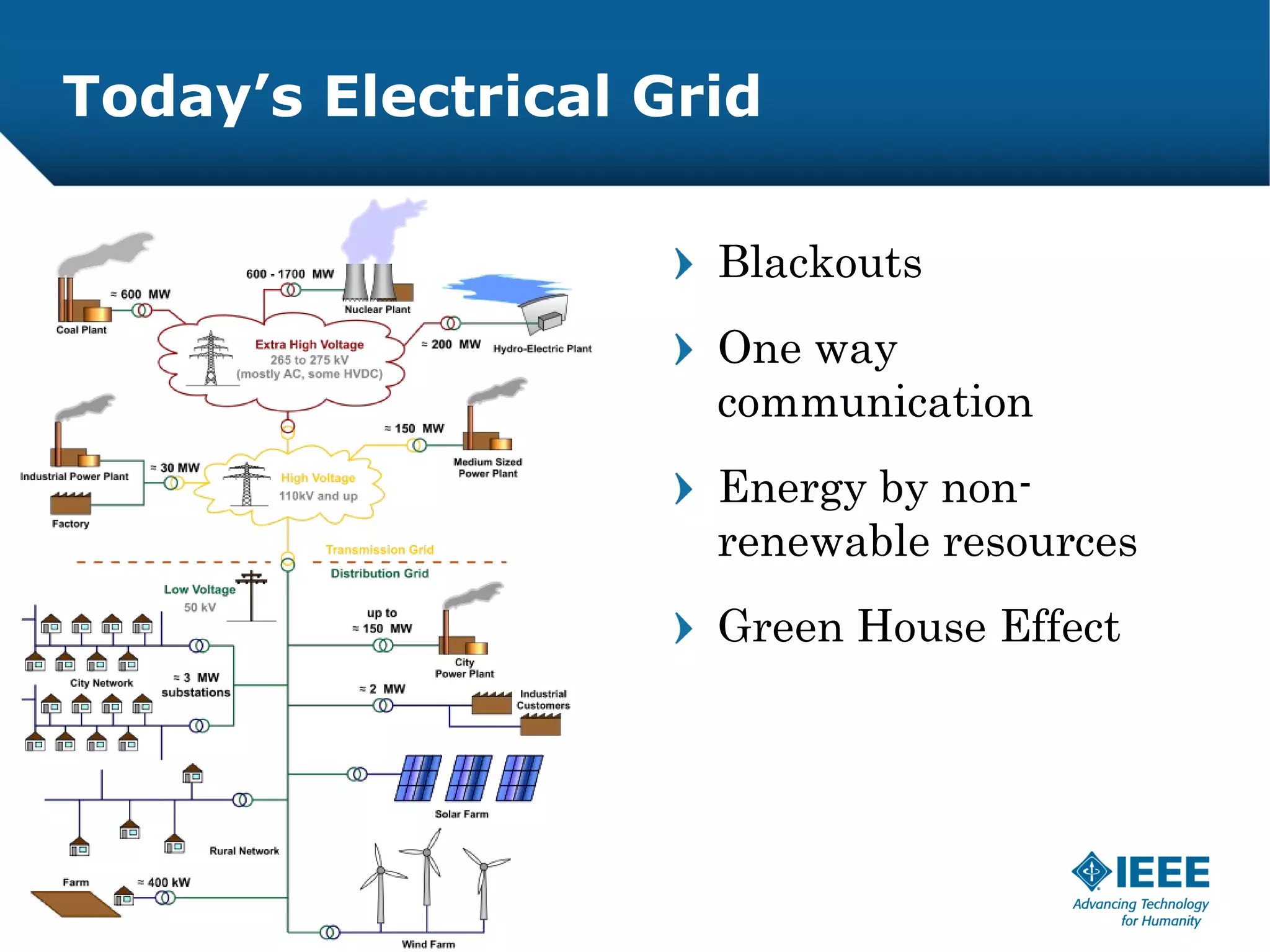
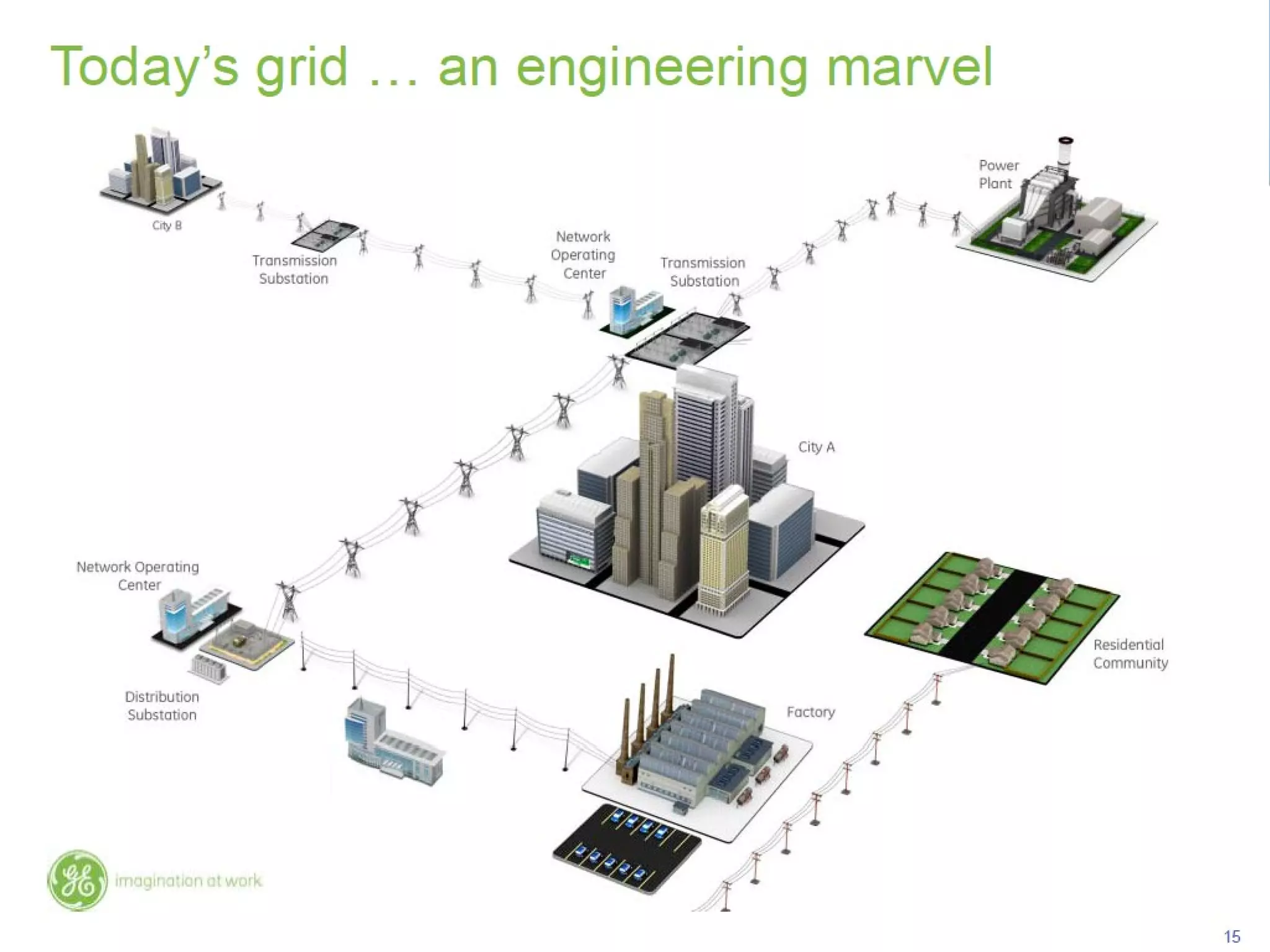
Today’s Electrical Grid

                     Blackouts
                     One way
                     communication
                     Energy by non-
                     renewable resources
                     Green House Effect
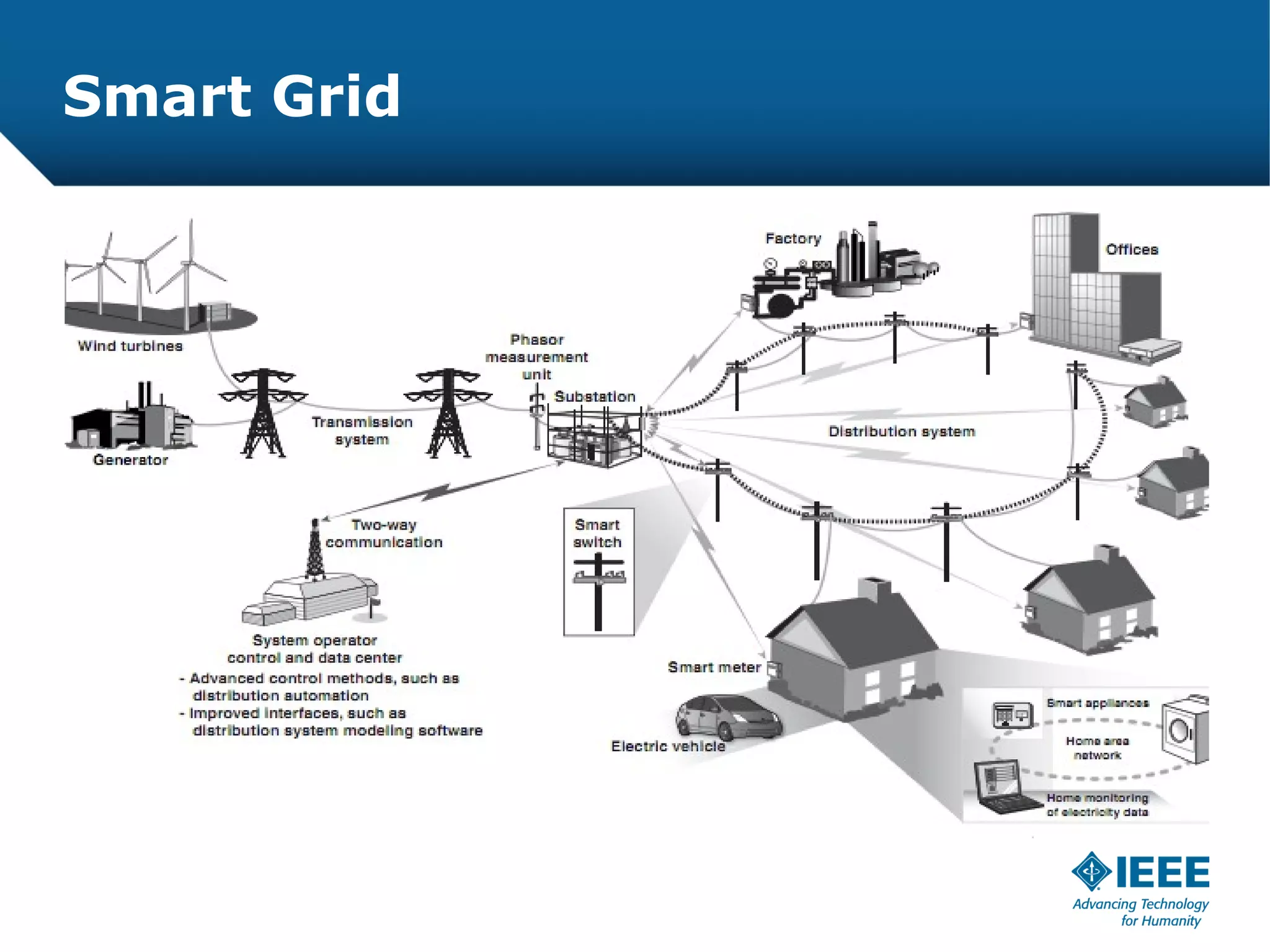
Smart Grid
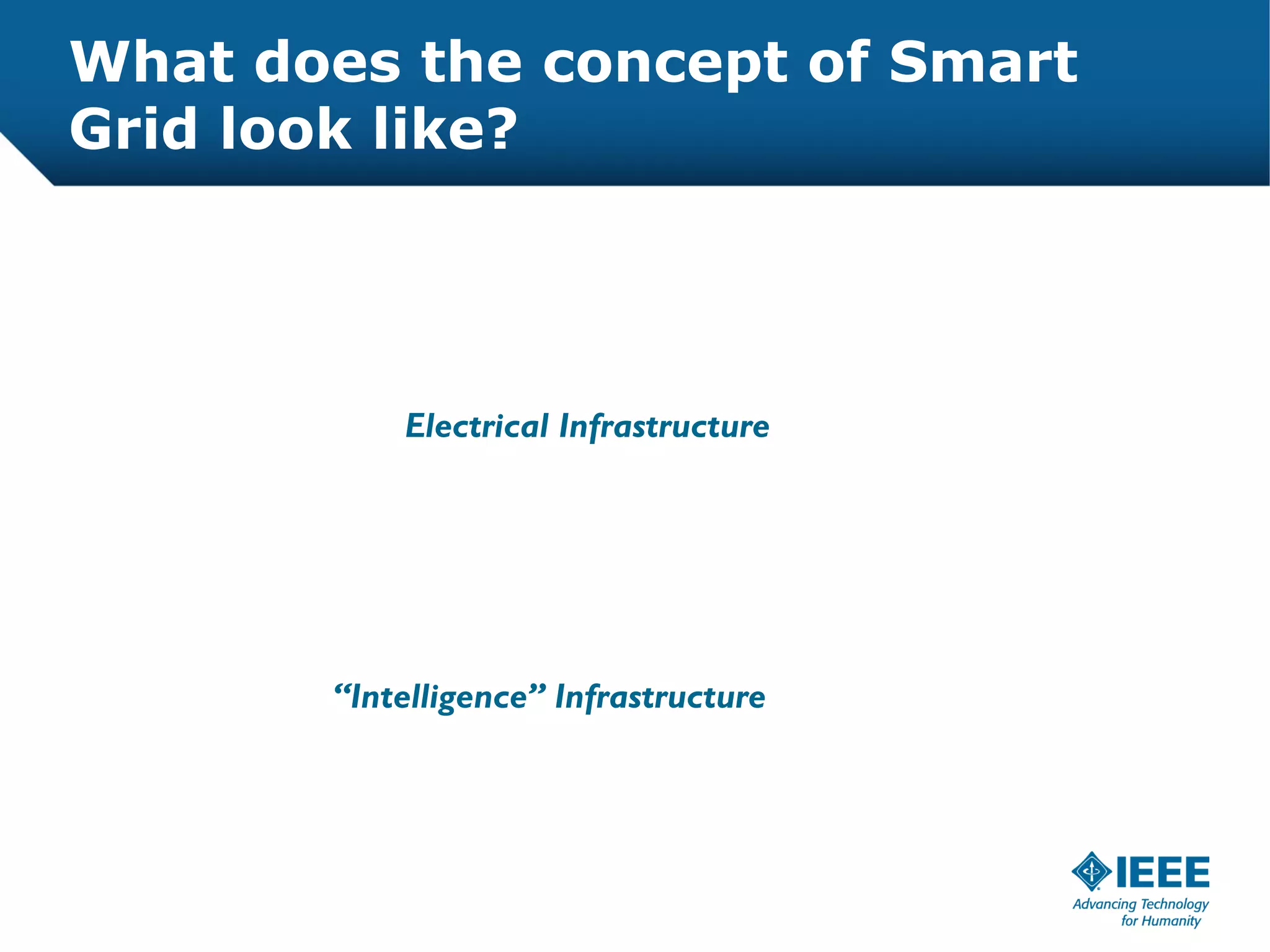
What does the concept of Smart
Grid look like?


           Electrical Infrastructure


       “Intelligence” Infrastructure
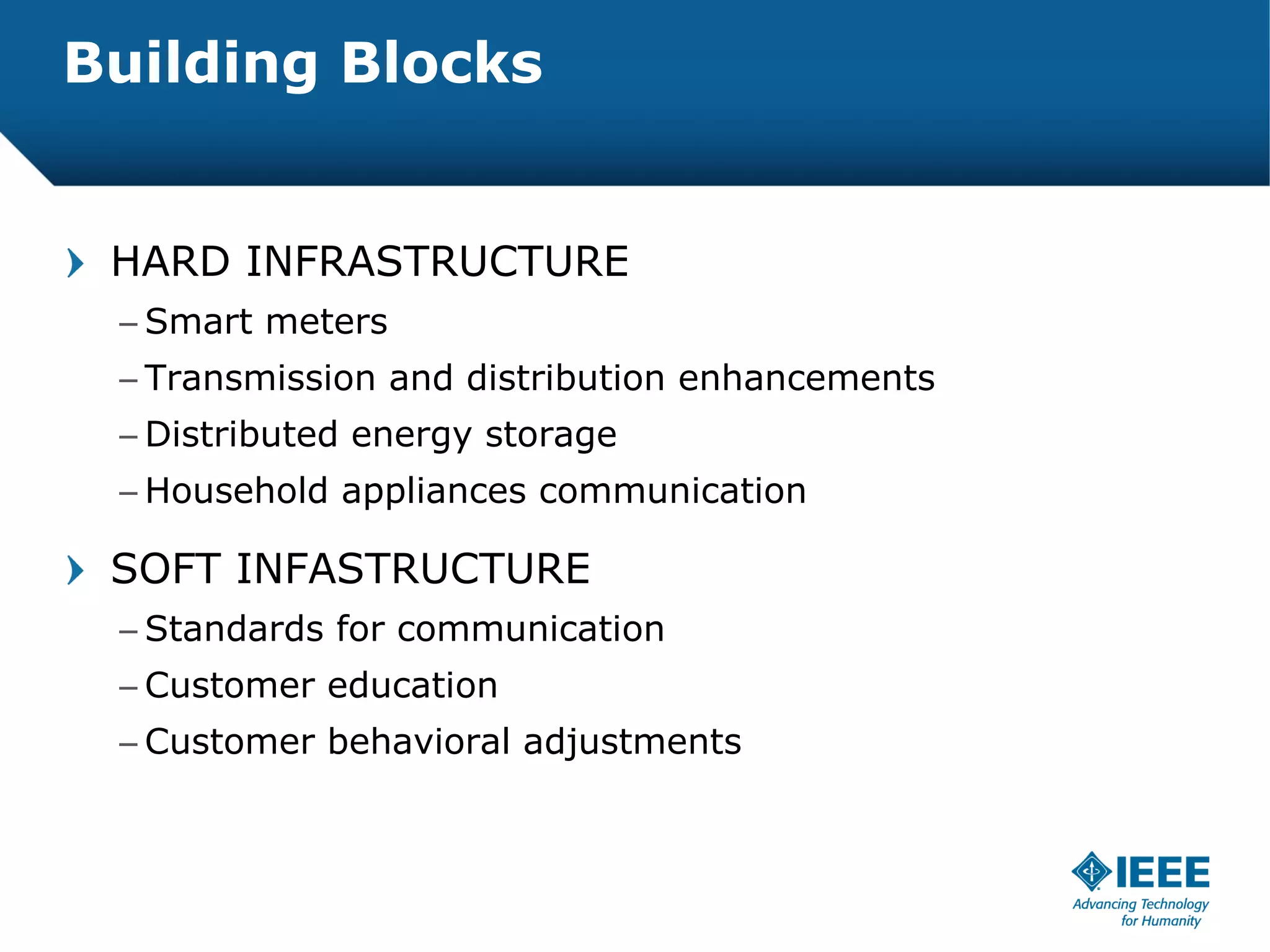
Building Blocks


 HARD INFRASTRUCTURE
 – Smart meters
 – Transmission and distribution enhancements
 – Distributed energy storage
 – Household appliances communication

 SOFT INFASTRUCTURE
 – Standards for communication
 – Customer education
 – Customer behavioral adjustments
Smart Grid Enables…..


 Demand response
 Facilitation of distributed generation
 Facilitation of electric vehicles
 Optimization of asset use
 Problem detection and mitigation
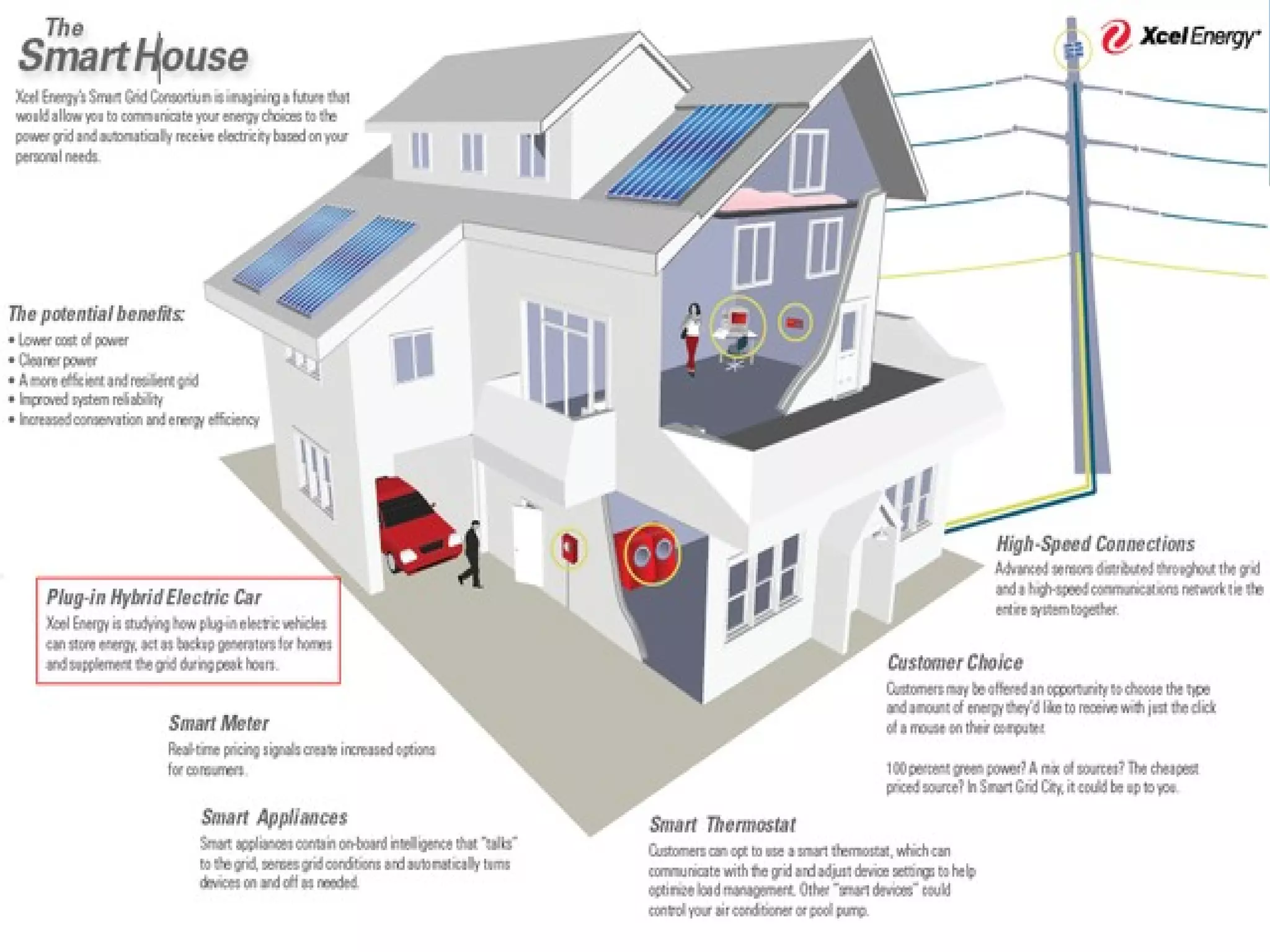
Smart House

 Smart meter
 Thermostat
 Electric vehicle
 Roof top solar plant
 Wind mill
Smart Home
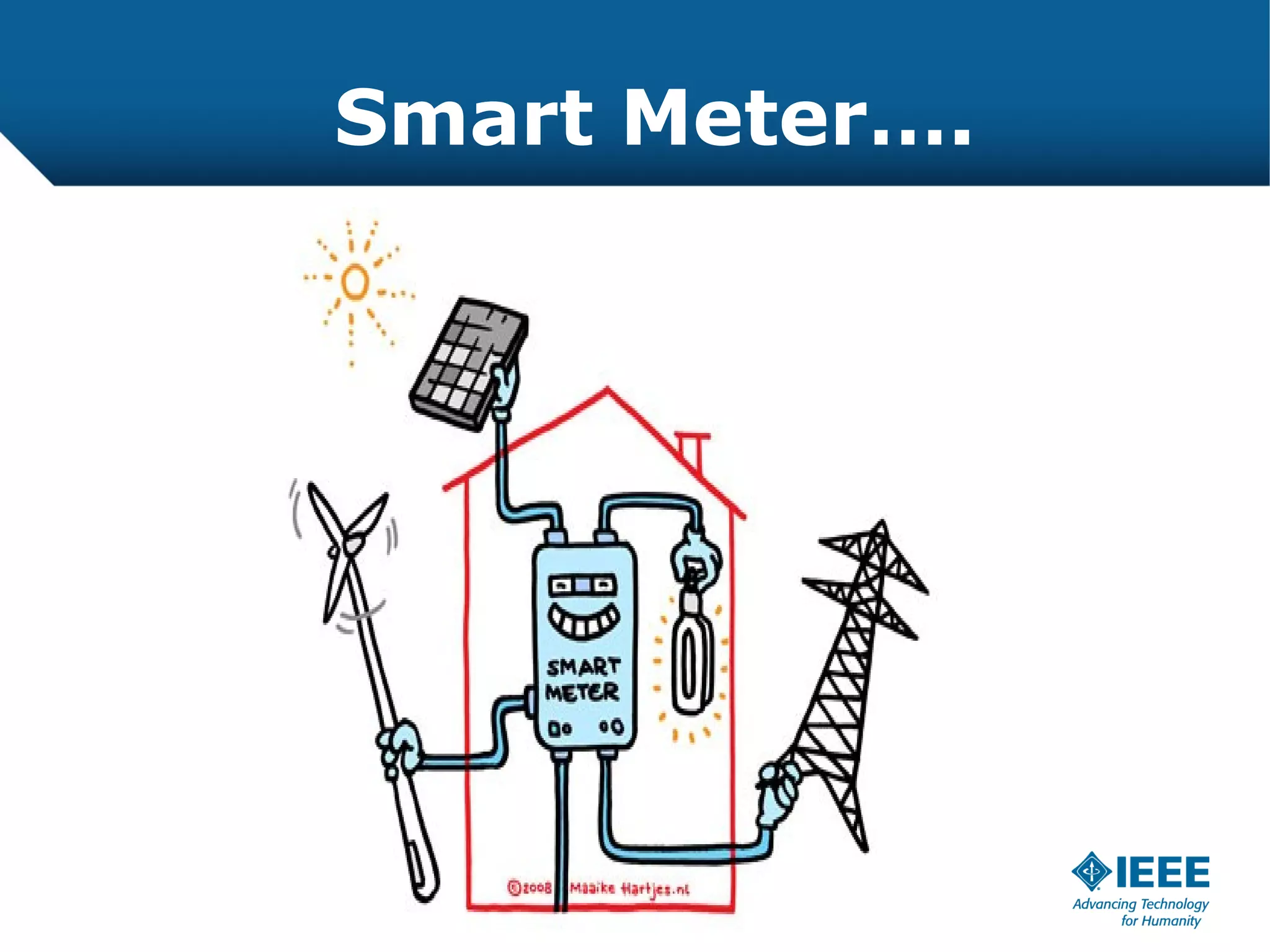
Smart Meter….
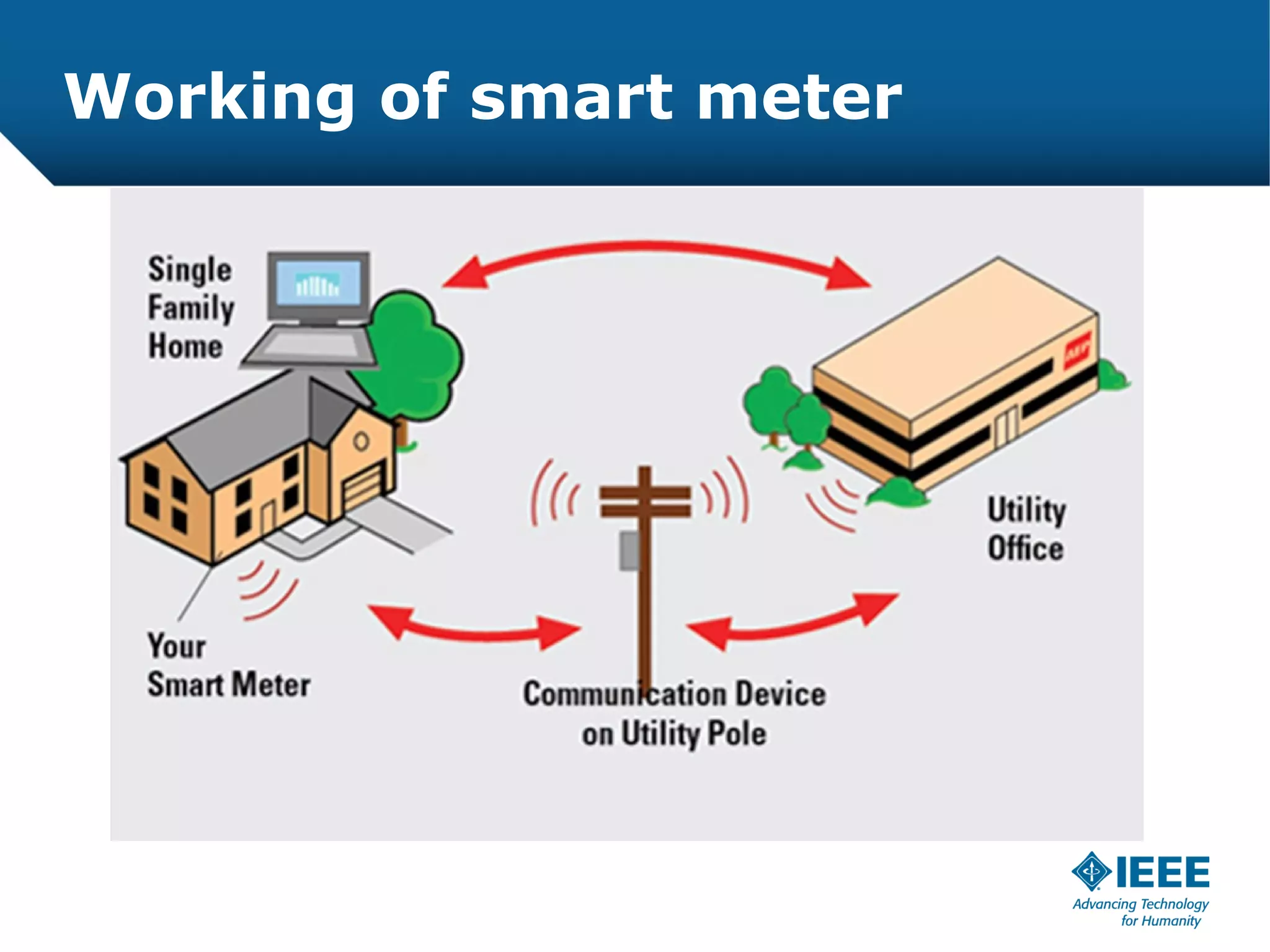
Working of smart meter
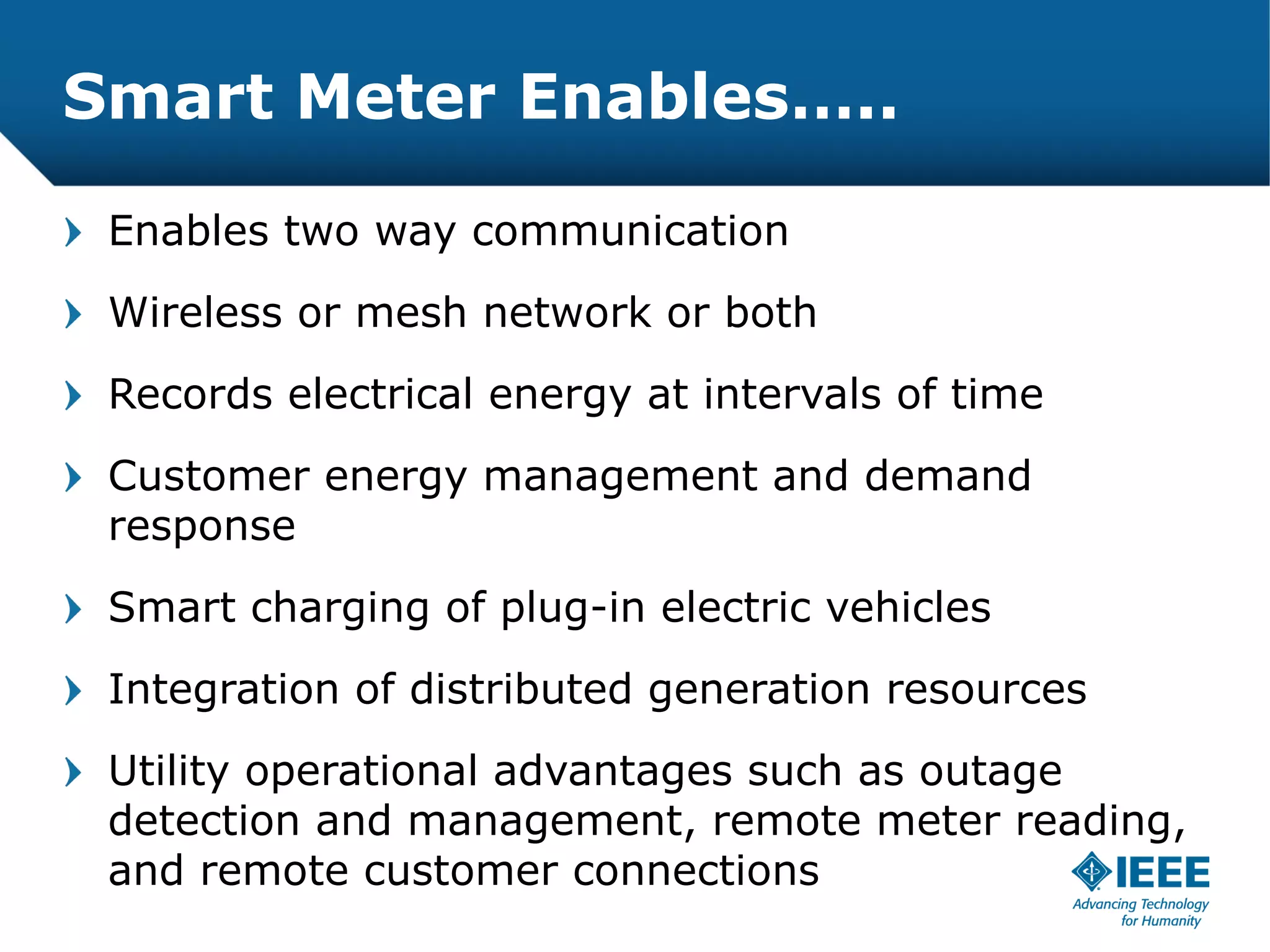
Smart Meter Enables…..

 Enables two way communication
 Wireless or mesh network or both
 Records electrical energy at intervals of time
 Customer energy management and demand
 response
 Smart charging of plug-in electric vehicles
 Integration of distributed generation resources
 Utility operational advantages such as outage
 detection and management, remote meter reading,
 and remote customer connections
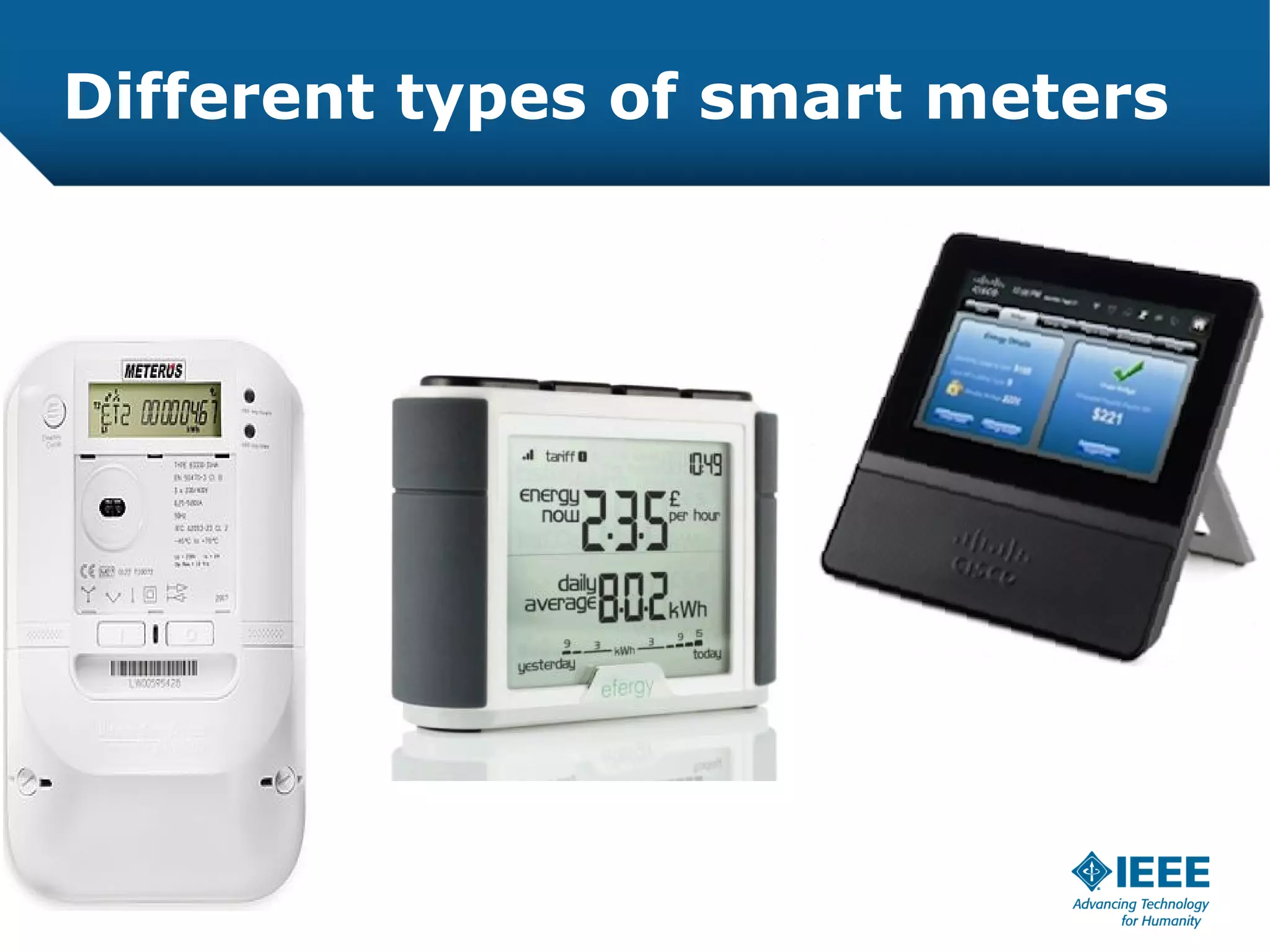
Different types of smart meters
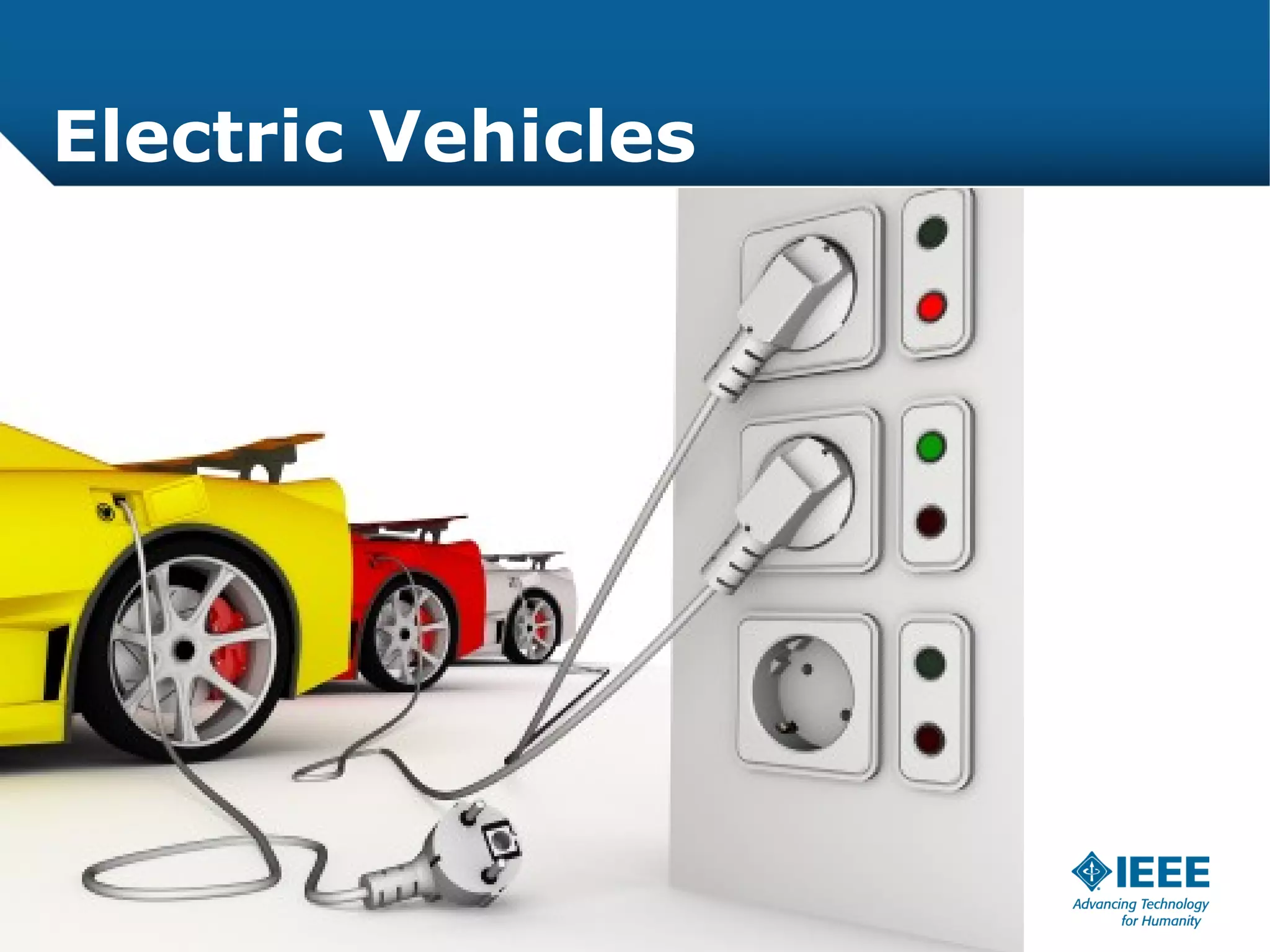
Electric Vehicles
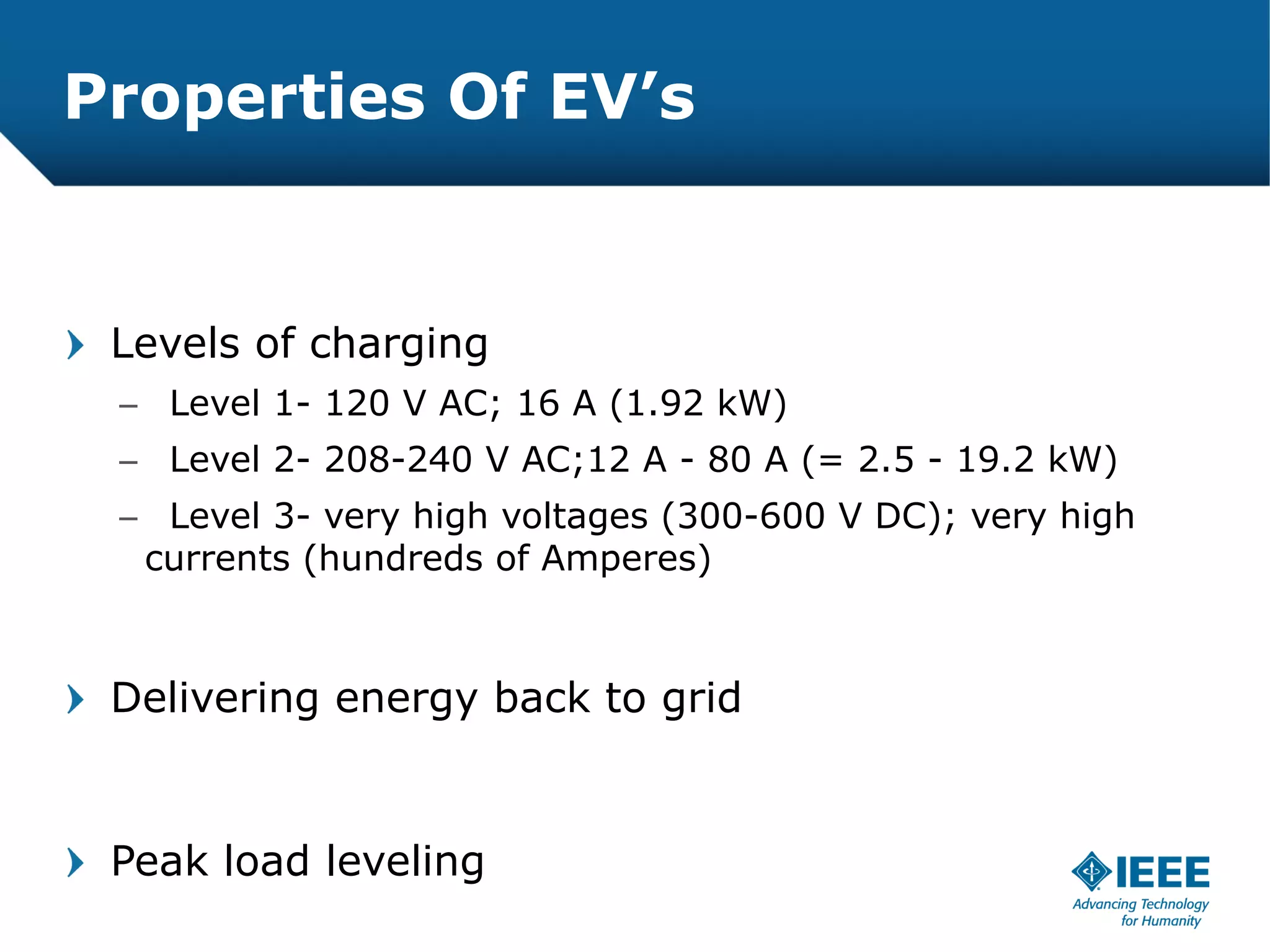
Properties Of EV’s


 Levels of charging
 – Level 1- 120 V AC; 16 A (1.92 kW)
 – Level 2- 208-240 V AC;12 A - 80 A (= 2.5 - 19.2 kW)
 – Level 3- very high voltages (300-600 V DC); very high
  currents (hundreds of Amperes)


 Delivering energy back to grid


 Peak load leveling
Smart grid city partners
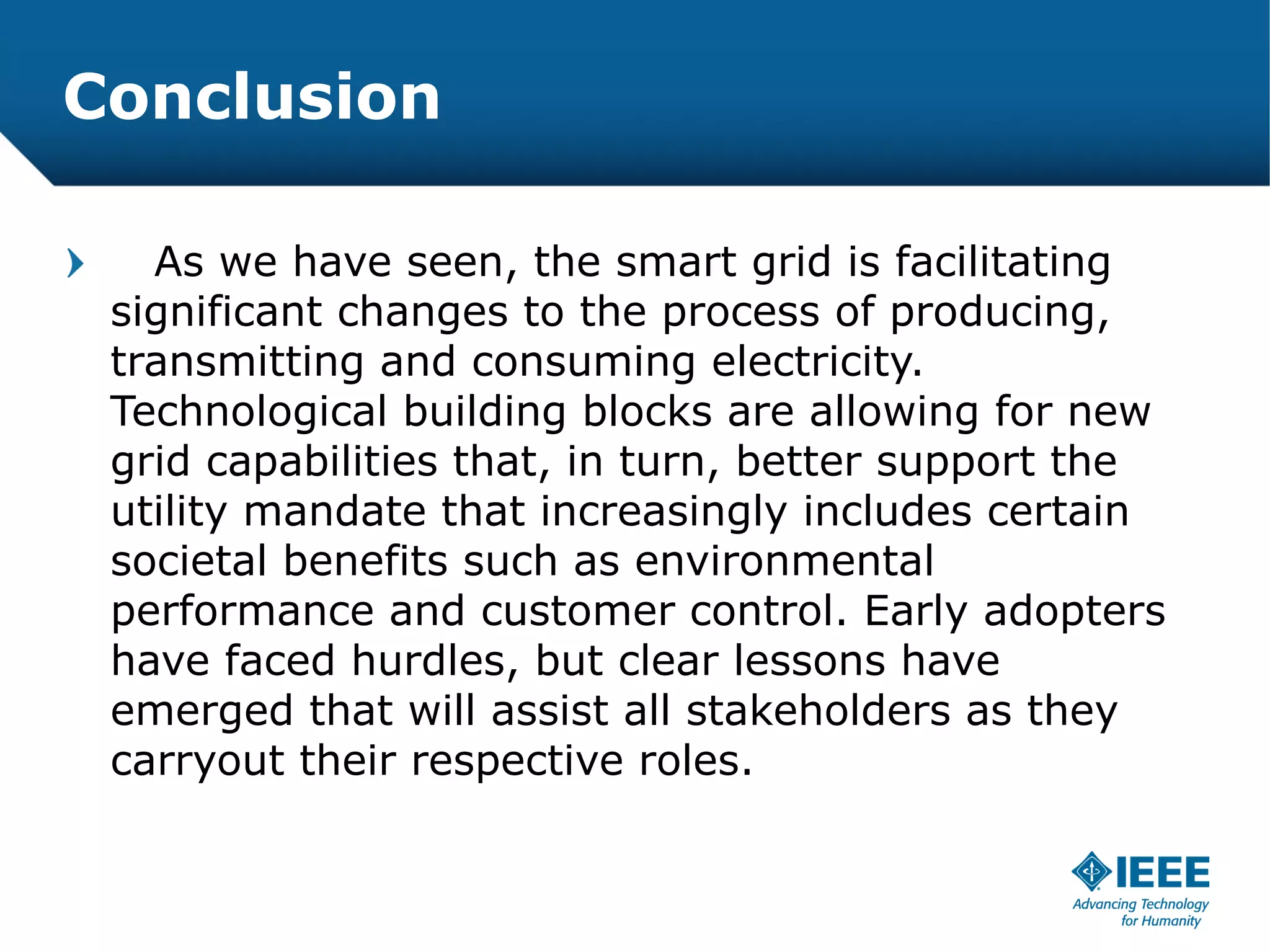
Conclusion

   As we have seen, the smart grid is facilitating
 significant changes to the process of producing,
 transmitting and consuming electricity.
 Technological building blocks are allowing for new
 grid capabilities that, in turn, better support the
 utility mandate that increasingly includes certain
 societal benefits such as environmental
 performance and customer control. Early adopters
 have faced hurdles, but clear lessons have
 emerged that will assist all stakeholders as they
 carryout their respective roles.
References

 http://smartgrid.ieee.org/
 http://www.cisco.com/web/strategy/energy/extern
 al_utilities.html
 http://en.wikipedia.org/wiki/Smart_grid
 http://www.smartgrid.gov/
 http://energy.gov/oe/technologydevelopment/smar
 t-grid
 http://ge.ecomagination.com/smartgrid/
 http://smartgrid-for-india.blogspot.in/
 http://www.smartgridnews.com/
Queries
Smart grid

Smart grid

  • 1.
  • 2.
    Agenda:  Introduction  Today’s electrical grid  Why do we need the smart grid?  Smart grid applications  Smart meter  Electric vehicles  Smart grid partners  Conclusion
  • 3.
    Today’s Electrical Grid Blackouts One way communication Energy by non- renewable resources Green House Effect
  • 6.
  • 7.
    What does theconcept of Smart Grid look like? Electrical Infrastructure “Intelligence” Infrastructure
  • 8.
    Building Blocks HARDINFRASTRUCTURE – Smart meters – Transmission and distribution enhancements – Distributed energy storage – Household appliances communication SOFT INFASTRUCTURE – Standards for communication – Customer education – Customer behavioral adjustments
  • 9.
    Smart Grid Enables….. Demand response Facilitation of distributed generation Facilitation of electric vehicles Optimization of asset use Problem detection and mitigation
  • 10.
    Smart House Smartmeter Thermostat Electric vehicle Roof top solar plant Wind mill
  • 11.
  • 12.
  • 13.
  • 14.
    Smart Meter Enables….. Enables two way communication Wireless or mesh network or both Records electrical energy at intervals of time Customer energy management and demand response Smart charging of plug-in electric vehicles Integration of distributed generation resources Utility operational advantages such as outage detection and management, remote meter reading, and remote customer connections
  • 15.
    Different types ofsmart meters
  • 16.
  • 17.
    Properties Of EV’s Levels of charging – Level 1- 120 V AC; 16 A (1.92 kW) – Level 2- 208-240 V AC;12 A - 80 A (= 2.5 - 19.2 kW) – Level 3- very high voltages (300-600 V DC); very high currents (hundreds of Amperes) Delivering energy back to grid Peak load leveling
  • 18.
  • 19.
    Conclusion As we have seen, the smart grid is facilitating significant changes to the process of producing, transmitting and consuming electricity. Technological building blocks are allowing for new grid capabilities that, in turn, better support the utility mandate that increasingly includes certain societal benefits such as environmental performance and customer control. Early adopters have faced hurdles, but clear lessons have emerged that will assist all stakeholders as they carryout their respective roles.
  • 20.
    References http://smartgrid.ieee.org/ http://www.cisco.com/web/strategy/energy/extern al_utilities.html http://en.wikipedia.org/wiki/Smart_grid http://www.smartgrid.gov/ http://energy.gov/oe/technologydevelopment/smar t-grid http://ge.ecomagination.com/smartgrid/ http://smartgrid-for-india.blogspot.in/ http://www.smartgridnews.com/
  • 21.

Editor's Notes

  • #8 An overlapping of electrical and intelligence\\telecommunications infrastructures… the energy internet . In thinking of the power delivery system of the future, we found it helpful to think of bringing together two distinctly different but highly inter-related infrastructures. The electrical infrastructure (i.e., the poles, towers and wires) that has been created over the last 100 years and the “intelligence” infrastructure (i.e., the communications networks, distributed computing and sensors). The Intelligence infrastructure enhances the operation and maintenance of the electrical infrastructure and adds new functionality to the electrical infrastructure. The electrical infrastructure is very mature (at least in North America and Europe) – that is the processes, tools, standards and fundamental technologies for the electrical infrastructure are well established. New technologies will enhance the electrical infrastructure – and many programs within EPRI are working to develop that technology. The “intelligence infrastructure” is much newer – and companies thinking of this as a tightly integrated (networked) infrastructure is very new. The methods, tools and standards for creating the intelligence infrastructure are only beginning to be created. Essentially, when it comes to the intelligence infrastructure, it’s the wild west – almost completely lawless. In looking at the intelligence infrastructure – we see that it isn’t limited by technology. There is an abundance of technology that has been developed by other industries. Many times, in fact, there is too much technology. Today, pieces of the intelligence are installed in an isolated, fragmented way. this approach will not create an intelligence Infrastructure For the vision of the vision of the power delivery system of the future to be achieved, the intelligence infrastructure needs to be as pervasive and integrated as the electrical infrastructure – incorporating generation, transmission, distribution, energy markets and the consumer. The integration of these two infrastructures is what we see creating the intelligent grid or IntelliGrid.