


CONTENTS:
 INTRODUCTION TO A GRID
 PROBLEMS FACED BY TRADITIONAL GRID
 CHANGES MADE TO THE TRADITIONAL GRID SYSTEM
 SMART GRID ANALYSIS
 Functions
 Features
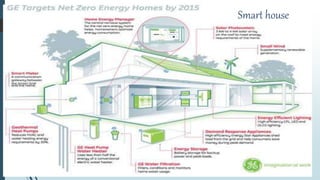
 Smart house using smart devices
 CRITERIA OF USING THIS SYSTEM
 PROBLEMS INVOLVED IN ADOPTING THIS IN INDIA
 CONCLUSION
GRID:
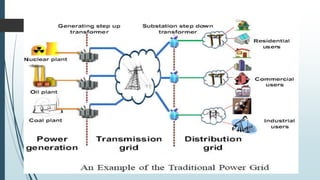
 The term grid is used for an electricity system that may support
all or some of the following four operations:
 Electricity generation
 Electricity transmission
 Electricity distribution
 Electricity control
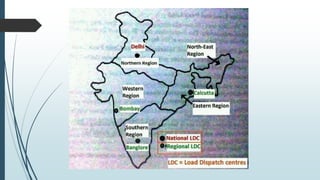
In India,
there are four grids namely-
Northern grid
North-eastern grid
North-western grid
Southern grid
Problems faced by Traditional Grid :
 Increase in demand for electricity
 Black outs
 Less efficiency( Average losses are 26% of total electricity production )
 Use of non-renewable sources of energy
 Power theft ( Total power theft amounted to about 30.56% every year)
 Overloading of system components
 Lack of reactive power support and regulation services
 Low metering efficiency and bill collection
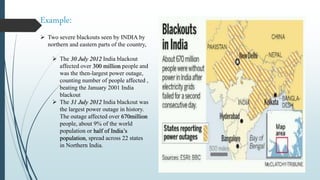
Example:
 Two severe blackouts seen by INDIA by
northern and eastern parts of the country,
 The 30 July 2012 India blackout
affected over 300 million people and
was the then-largest power outage,
counting number of people affected ,
beating the January 2001 India
blackout
 The 31 July 2012 India blackout was
the largest power outage in history.
The outage affected over 670million
people, about 9% of the world
population or half of India’s
population, spread across 22 states
in Northern India.
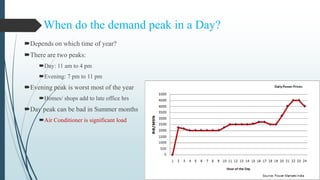
When do the demand peak in a Day?
Depends on which time of year?
There are two peaks:
Day: 11 am to 4 pm
Evening: 7 pm to 11 pm
Evening peak is worst most of the year
Homes/ shops add to late office hrs
Day peak can be bad in Summer months
Air Conditioner is significant load
Smart infrastructure system:
i. Advanced electricity generation, delivery, and consumption;
ii. Advanced information metering, monitoring, and management;
and
iii. Advanced communication technologies
Smart management system:
Sub system in smart grid – provides advanced management and control.
Smart protection system:
Sub system in smart grid – provide advanced grid reliability analysis, failure protection,
security and privacy protection services.
Equipment's & technologies introduced:
Some of the new systems depicted below,
 SCADA( Supervisory Control and Data Acquisition)
 Wide area monitoring systems(WAMS)
 Conductor/compression connector sensors and also sensors that can detect the faults in a
line
 Insulation contamination, leakage current sensor
 Electronic instrument transformer
 Intelligent electronic devices (IEDs)
 Automated metering infrastructure(AMI)
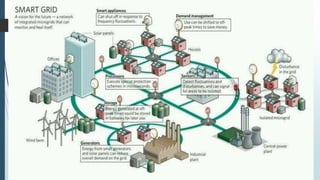
“A smart grid delivers electricity from suppliers to consumers using
digital technology to save energy, reduce cost and increase
reliability.”
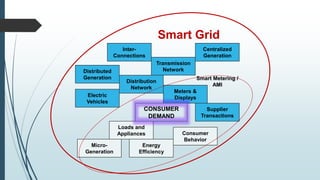
Centralized
Generation
Transmission
Network
Supplier
Transactions
Inter-
Connections
Distribution
Network
Meters &
Displays
Distributed
Generation
Electric
Vehicles
Loads and
Appliances
Energy
Efficiency
Micro-
Generation
Consumer
Behavior
CONSUMER
DEMAND
Smart Grid
Smart Metering /
AMI
Goals of smart technology:
 Delivery optimization :
 Efficiency and reliability of the system and equipment are to be improved for better
power generation.
 Demand optimization :
 To improve the power generation as per the demand of consumers satisfaction and to
give continues supply.
 Asset optimization :
 To manage the health of system and machinery from catastrophic failures( heavy
loads on the transformer due climatic changes like in summer).
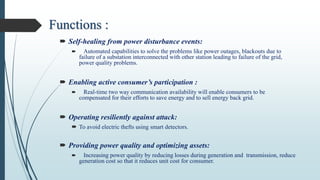
Functions :
 Self-healing from power disturbance events:
 Automated capabilities to solve the problems like power outages, blackouts due to
failure of a substation interconnected with other station leading to failure of the grid,
power quality problems.
 Enabling active consumer’s participation :
 Real-time two way communication availability will enable consumers to be
compensated for their efforts to save energy and to sell energy back grid.
 Operating resiliently against attack:
 To avoid electric thefts using smart detectors.
 Providing power quality and optimizing assets:
 Increasing power quality by reducing losses during generation and transmission, reduce
generation cost so that it reduces unit cost for consumer.
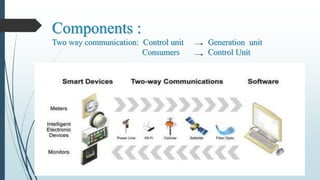
Components :
Two way communication: Control unit Generation unit
Consumers Control Unit
India Smart Grid Forum (ISGF), which is a non-
profit voluntary consortium of public and private
stakeholders, was launched on 26th May 2010.
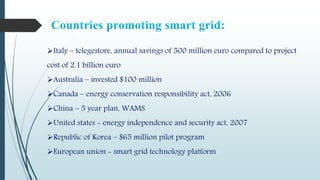
Italy – telegestore, annual savings of 500 million euro compared to project
cost of 2.1 billion euro
Australia – invested $100 million
Canada – energy conservation responsibility act, 2006
China – 5 year plan, WAMS
United states - energy independence and security act, 2007
Republic of Korea – $65 million pilot program
European union - smart grid technology platform
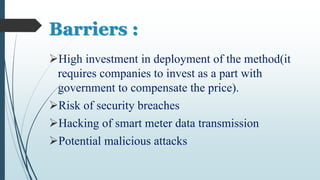
Barriers :
High investment in deployment of the method(it
requires companies to invest as a part with
government to compensate the price).
Risk of security breaches
Hacking of smart meter data transmission
Potential malicious attacks
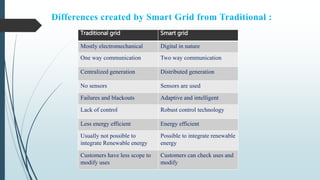
Traditional grid Smart grid
Mostly electromechanical Digital in nature
One way communication Two way communication
Centralized generation Distributed generation
No sensors Sensors are used
Failures and blackouts Adaptive and intelligent
Lack of control Robust control technology
Less energy efficient Energy efficient
Usually not possible to
integrate Renewable energy
Possible to integrate renewable
energy
Customers have less scope to
modify uses
Customers can check uses and
modify
In developing countries like INDIA– creates more scope of
technology standards improving electricity production, maintenance
& reliability.
In the future smart grid will connect everyone to abundant, affordable, clean, efficient, and
reliable electric power anytime, anywhere. It will offer the world the best and most secure electric
services.
go up for a smarter house & country…..

SMART GRID

  • 2.
    CONTENTS:  INTRODUCTION TOA GRID  PROBLEMS FACED BY TRADITIONAL GRID  CHANGES MADE TO THE TRADITIONAL GRID SYSTEM  SMART GRID ANALYSIS  Functions  Features  Smart house using smart devices  CRITERIA OF USING THIS SYSTEM  PROBLEMS INVOLVED IN ADOPTING THIS IN INDIA  CONCLUSION
  • 5.
    GRID:  The termgrid is used for an electricity system that may support all or some of the following four operations:  Electricity generation  Electricity transmission  Electricity distribution  Electricity control
  • 7.
    In India, there arefour grids namely- Northern grid North-eastern grid North-western grid Southern grid
  • 9.
    Problems faced byTraditional Grid :  Increase in demand for electricity  Black outs  Less efficiency( Average losses are 26% of total electricity production )  Use of non-renewable sources of energy  Power theft ( Total power theft amounted to about 30.56% every year)  Overloading of system components  Lack of reactive power support and regulation services  Low metering efficiency and bill collection
  • 10.
    Example:  Two severeblackouts seen by INDIA by northern and eastern parts of the country,  The 30 July 2012 India blackout affected over 300 million people and was the then-largest power outage, counting number of people affected , beating the January 2001 India blackout  The 31 July 2012 India blackout was the largest power outage in history. The outage affected over 670million people, about 9% of the world population or half of India’s population, spread across 22 states in Northern India.
  • 11.
    When do thedemand peak in a Day? Depends on which time of year? There are two peaks: Day: 11 am to 4 pm Evening: 7 pm to 11 pm Evening peak is worst most of the year Homes/ shops add to late office hrs Day peak can be bad in Summer months Air Conditioner is significant load
  • 12.
    Smart infrastructure system: i.Advanced electricity generation, delivery, and consumption; ii. Advanced information metering, monitoring, and management; and iii. Advanced communication technologies Smart management system: Sub system in smart grid – provides advanced management and control. Smart protection system: Sub system in smart grid – provide advanced grid reliability analysis, failure protection, security and privacy protection services.
  • 13.
    Equipment's & technologiesintroduced: Some of the new systems depicted below,  SCADA( Supervisory Control and Data Acquisition)  Wide area monitoring systems(WAMS)  Conductor/compression connector sensors and also sensors that can detect the faults in a line  Insulation contamination, leakage current sensor  Electronic instrument transformer  Intelligent electronic devices (IEDs)  Automated metering infrastructure(AMI)
  • 14.
    “A smart griddelivers electricity from suppliers to consumers using digital technology to save energy, reduce cost and increase reliability.”
  • 15.
  • 16.
    Goals of smarttechnology:  Delivery optimization :  Efficiency and reliability of the system and equipment are to be improved for better power generation.  Demand optimization :  To improve the power generation as per the demand of consumers satisfaction and to give continues supply.  Asset optimization :  To manage the health of system and machinery from catastrophic failures( heavy loads on the transformer due climatic changes like in summer).
  • 17.
    Functions :  Self-healingfrom power disturbance events:  Automated capabilities to solve the problems like power outages, blackouts due to failure of a substation interconnected with other station leading to failure of the grid, power quality problems.  Enabling active consumer’s participation :  Real-time two way communication availability will enable consumers to be compensated for their efforts to save energy and to sell energy back grid.  Operating resiliently against attack:  To avoid electric thefts using smart detectors.  Providing power quality and optimizing assets:  Increasing power quality by reducing losses during generation and transmission, reduce generation cost so that it reduces unit cost for consumer.
  • 18.
    Components : Two waycommunication: Control unit Generation unit Consumers Control Unit
  • 21.
    India Smart GridForum (ISGF), which is a non- profit voluntary consortium of public and private stakeholders, was launched on 26th May 2010.
  • 22.
    Italy – telegestore,annual savings of 500 million euro compared to project cost of 2.1 billion euro Australia – invested $100 million Canada – energy conservation responsibility act, 2006 China – 5 year plan, WAMS United states - energy independence and security act, 2007 Republic of Korea – $65 million pilot program European union - smart grid technology platform
  • 23.
    Barriers : High investmentin deployment of the method(it requires companies to invest as a part with government to compensate the price). Risk of security breaches Hacking of smart meter data transmission Potential malicious attacks
  • 24.
    Traditional grid Smartgrid Mostly electromechanical Digital in nature One way communication Two way communication Centralized generation Distributed generation No sensors Sensors are used Failures and blackouts Adaptive and intelligent Lack of control Robust control technology Less energy efficient Energy efficient Usually not possible to integrate Renewable energy Possible to integrate renewable energy Customers have less scope to modify uses Customers can check uses and modify
  • 25.
    In developing countrieslike INDIA– creates more scope of technology standards improving electricity production, maintenance & reliability. In the future smart grid will connect everyone to abundant, affordable, clean, efficient, and reliable electric power anytime, anywhere. It will offer the world the best and most secure electric services.
  • 27.
    go up fora smarter house & country…..