Presentation on Smart Grid
Presented By
Engr. Md. Tanzir Ahsan
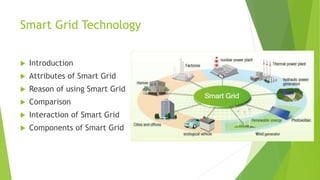
Smart Grid Technology
 Introduction
 Attributes of Smart Grid
 Reason of using Smart Grid
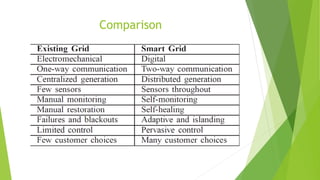
 Comparison
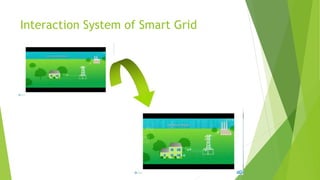
 Interaction of Smart Grid
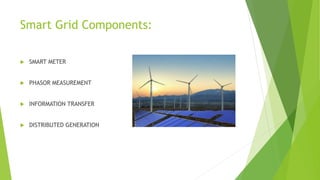
 Components of Smart Grid
continue
 Users of Smart Grid
 Working method of Smart Grid
 Advantages & Disadvantages of Smart Grid
 Agenda
 Future of Smart Grid
 Conclusion
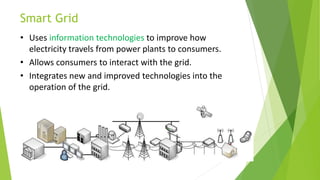
Smart Grid
• Uses information technologies to improve how
electricity travels from power plants to consumers.
• Allows consumers to interact with the grid.
• Integrates new and improved technologies into the
operation of the grid.
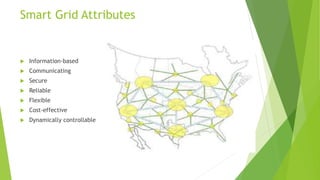
Smart Grid Attributes
 Information-based
 Communicating
 Secure
 Reliable
 Flexible
 Cost-effective
 Dynamically controllable
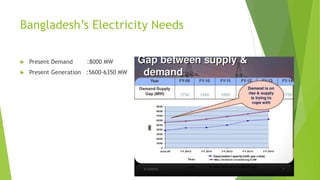
Bangladesh’s Electricity Needs
 Present Demand :8000 MW
 Present Generation :5600-6350 MW
More about Smart Grid
It is an electric grid that uses information and
communication technology to gather data and
act on information about the behaviour of
suppliers and consumers in an automated
fashion.
Reason of using smart grid:
 REDUCE CARBON FOOT-PRINTS
 IMPROVE DISTRIBUTION MANAGEMENT AND DECISION
SUPPORT SOFTWARE
 SELF-HEALING
 AUTOMATED CONTROL FOR DISTRIBUTION
 SENSING AND MEASUREMENT TECHNOLOGIES
 INCREASED EFFICIENCY
Comparison
Interaction System of Smart Grid
How it works
Smart Grid Components:
 SMART METER
 PHASOR MEASUREMENT
 INFORMATION TRANSFER
 DISTRIBUTED GENERATION
Users of Smart Grid
 Individual consumers
 Corporate participation
 Government regulators
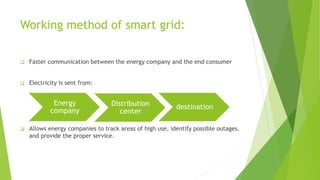
Working method of smart grid:
 Faster communication between the energy company and the end consumer
 Electricity is sent from:
 Allows energy companies to track areas of high use, identify possible outages,
and provide the proper service.
Energy
company
Distribution
center
destination
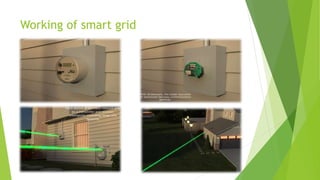
Working of smart grid
Advantages of Smart Grid:
 Reduces the cost of blackouts $$$
 Helps measure and reduce energy consumption and costs
 Helps businesses reduce their carbon footprint
 Opens up new opportunities for tech
companies meaning more jobs created!!!
continue
 Improving power reliability and quality
 Optimizing facility utilization and averting construction
 Enhancing capacity and efficiency of existing electric
power networks
 Enabling predictive maintenance and self-healing
responses to system disturbances
 Automating maintenance and operation
 Enabling new products, services, and markets
Disadvantages of Smart Grid:
 Biggest concern: security and privacy
 Smart Grid: uses
 automated meters,
 two-way communications: between a power consumer and
provider
 and advanced sensors
 Some types of meters can be hacked
 Hacker:
 gain control of thousands, even millions, of meters
 increase or decrease the demand for power
Agenda:
 SMART GRID IMPROVES EXISTING ELECTRICAL
INFRASTRUCTURE
 RELIABILITY, EFFICIENCY, ECONOMICALLY,
ENVIRONMENTALLY
 DISTRIBUTED GENERATION
 SMART METERS
continue
• DEVELOPMENT OF NEW TECHNOLOGIES AND
MARKETS.
 HOUSEHOLD MANAGEMENT
 POWER MANAGEMENT APP
 REGENERATIVE POWER
 POWER ACCOUNT
Power Management App
Future of Smart Grid:
 In the near future, will not be any vast development
 Risky because of financial demands and regulations
 In the long-run, attitudes will change, wide spread usage
of the smart grid from every business to every home just
like the Internet
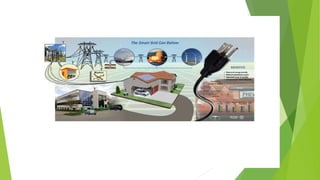
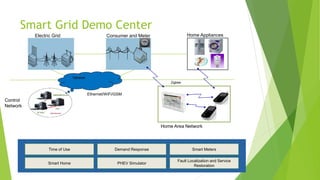
Smart Grid Demo Center
Control
Network
Network
Electric Grid Consumer and Meter Home Appliances
Zigbee
Ethernet/WiFi/GSM
Home Area Network
Time of Use
Smart Home
Demand Response
PHEV Simulator
Smart Meters
Fault Localization and Service
Restoration
Conclusion
 Smart Grid provides intelligent, advanced power control
for the next century
 Many new technologies involve for supporting sensing,
controlling, human interfaces.
 Charging electricity cost is fundamental infrastructure can
be implemented similar to stock market in smart grid.
Thank You
Any Questions

Presentation on Smart Grid

  • 1.
    Presentation on SmartGrid Presented By Engr. Md. Tanzir Ahsan
  • 2.
    Smart Grid Technology Introduction  Attributes of Smart Grid  Reason of using Smart Grid  Comparison  Interaction of Smart Grid  Components of Smart Grid
  • 3.
    continue  Users ofSmart Grid  Working method of Smart Grid  Advantages & Disadvantages of Smart Grid  Agenda  Future of Smart Grid  Conclusion
  • 4.
    Smart Grid • Usesinformation technologies to improve how electricity travels from power plants to consumers. • Allows consumers to interact with the grid. • Integrates new and improved technologies into the operation of the grid.
  • 5.
    Smart Grid Attributes Information-based  Communicating  Secure  Reliable  Flexible  Cost-effective  Dynamically controllable
  • 6.
    Bangladesh’s Electricity Needs Present Demand :8000 MW  Present Generation :5600-6350 MW
  • 7.
    More about SmartGrid It is an electric grid that uses information and communication technology to gather data and act on information about the behaviour of suppliers and consumers in an automated fashion.
  • 8.
    Reason of usingsmart grid:  REDUCE CARBON FOOT-PRINTS  IMPROVE DISTRIBUTION MANAGEMENT AND DECISION SUPPORT SOFTWARE  SELF-HEALING  AUTOMATED CONTROL FOR DISTRIBUTION  SENSING AND MEASUREMENT TECHNOLOGIES  INCREASED EFFICIENCY
  • 9.
  • 10.
  • 11.
  • 12.
    Smart Grid Components: SMART METER  PHASOR MEASUREMENT  INFORMATION TRANSFER  DISTRIBUTED GENERATION
  • 13.
    Users of SmartGrid  Individual consumers  Corporate participation  Government regulators
  • 14.
    Working method ofsmart grid:  Faster communication between the energy company and the end consumer  Electricity is sent from:  Allows energy companies to track areas of high use, identify possible outages, and provide the proper service. Energy company Distribution center destination
  • 15.
  • 16.
    Advantages of SmartGrid:  Reduces the cost of blackouts $$$  Helps measure and reduce energy consumption and costs  Helps businesses reduce their carbon footprint  Opens up new opportunities for tech companies meaning more jobs created!!!
  • 17.
    continue  Improving powerreliability and quality  Optimizing facility utilization and averting construction  Enhancing capacity and efficiency of existing electric power networks  Enabling predictive maintenance and self-healing responses to system disturbances  Automating maintenance and operation  Enabling new products, services, and markets
  • 18.
    Disadvantages of SmartGrid:  Biggest concern: security and privacy  Smart Grid: uses  automated meters,  two-way communications: between a power consumer and provider  and advanced sensors  Some types of meters can be hacked  Hacker:  gain control of thousands, even millions, of meters  increase or decrease the demand for power
  • 19.
    Agenda:  SMART GRIDIMPROVES EXISTING ELECTRICAL INFRASTRUCTURE  RELIABILITY, EFFICIENCY, ECONOMICALLY, ENVIRONMENTALLY  DISTRIBUTED GENERATION  SMART METERS
  • 20.
    continue • DEVELOPMENT OFNEW TECHNOLOGIES AND MARKETS.  HOUSEHOLD MANAGEMENT  POWER MANAGEMENT APP  REGENERATIVE POWER  POWER ACCOUNT
  • 21.
  • 22.
    Future of SmartGrid:  In the near future, will not be any vast development  Risky because of financial demands and regulations  In the long-run, attitudes will change, wide spread usage of the smart grid from every business to every home just like the Internet
  • 24.
    Smart Grid DemoCenter Control Network Network Electric Grid Consumer and Meter Home Appliances Zigbee Ethernet/WiFi/GSM Home Area Network Time of Use Smart Home Demand Response PHEV Simulator Smart Meters Fault Localization and Service Restoration
  • 25.
    Conclusion  Smart Gridprovides intelligent, advanced power control for the next century  Many new technologies involve for supporting sensing, controlling, human interfaces.  Charging electricity cost is fundamental infrastructure can be implemented similar to stock market in smart grid.
  • 26.