Second Language acquisition: 
An Introduction 
Universidad del Valle 
Escuela de Ciencias del Lenguaje 
Seminario de Lingüística Aplicada 
Prof. Carlos Mayora
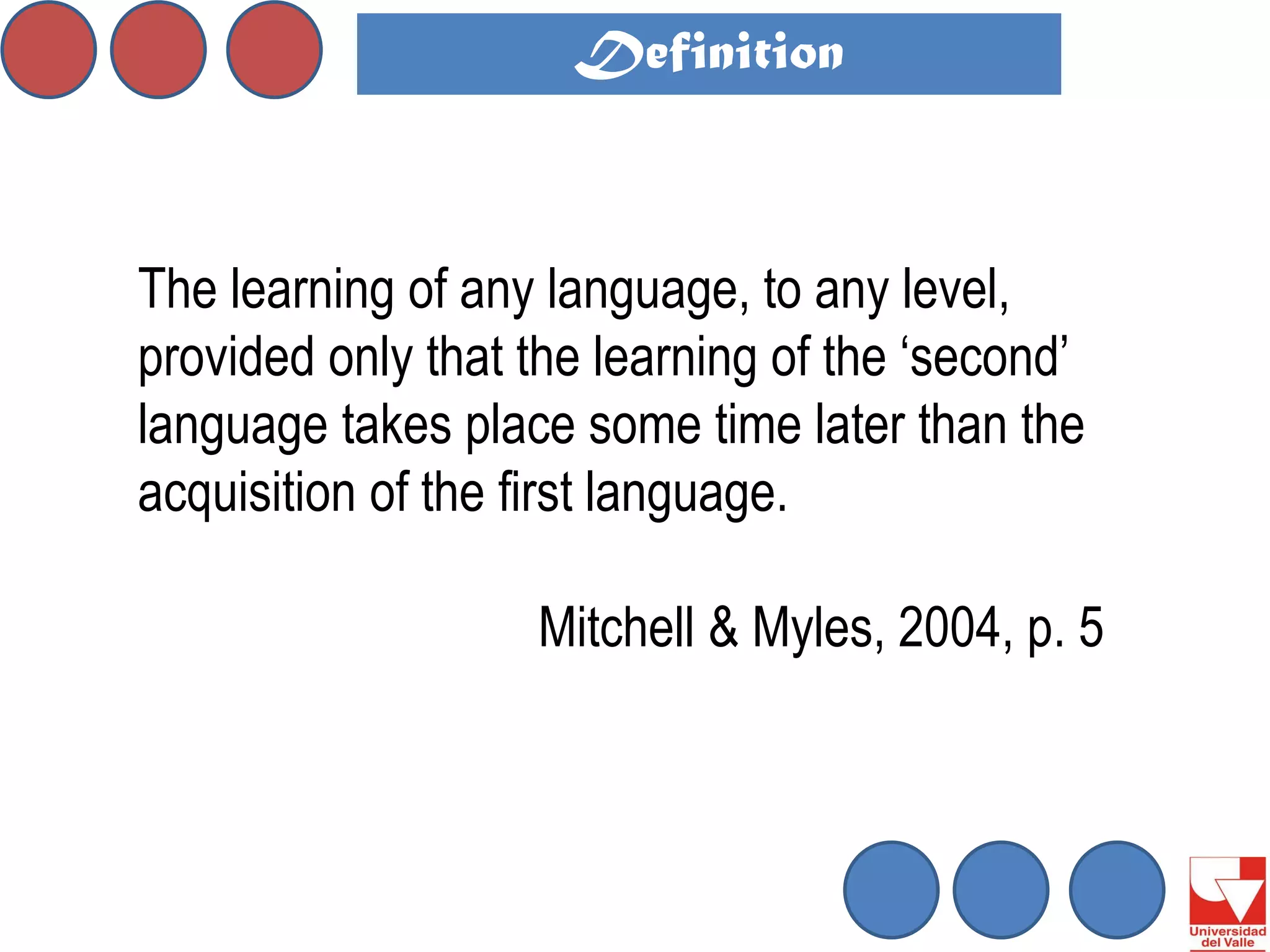
The learning of any language, to any level, provided only that the learning of the ‘second’ language takes place some time later than the acquisition of the first language. 
Mitchell & Myles, 2004, p. 5 
Definition
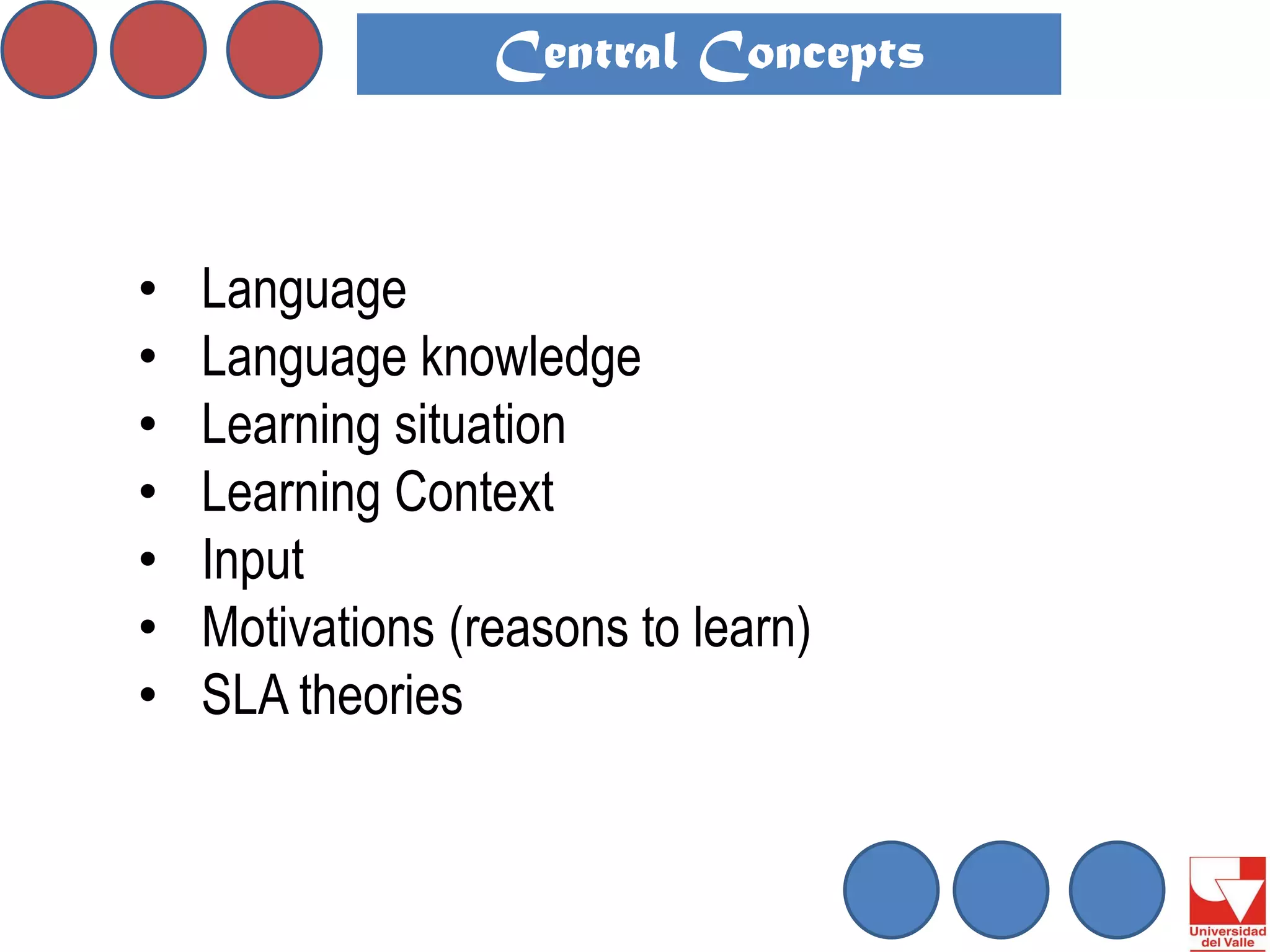
•Language 
•Language knowledge 
•Learning situation 
•Learning Context 
•Input 
•Motivations (reasons to learn) 
•SLA theories 
Central Concepts
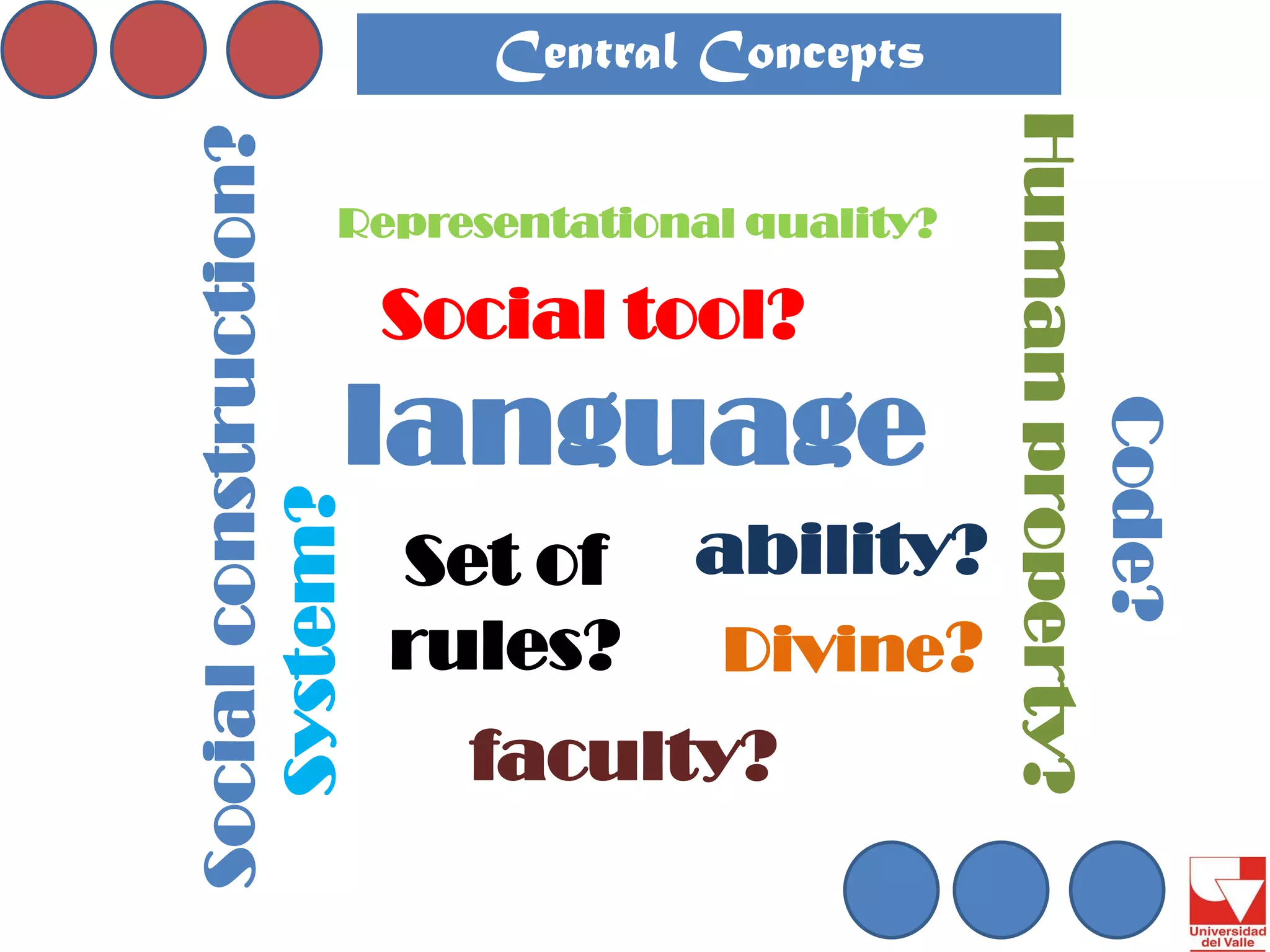
language 
Central Concepts 
Divine? 
faculty? 
System? 
Human property? 
Code? 
ability? 
Set of 
rules? 
Social tool? 
Social construction? 
Representational quality?
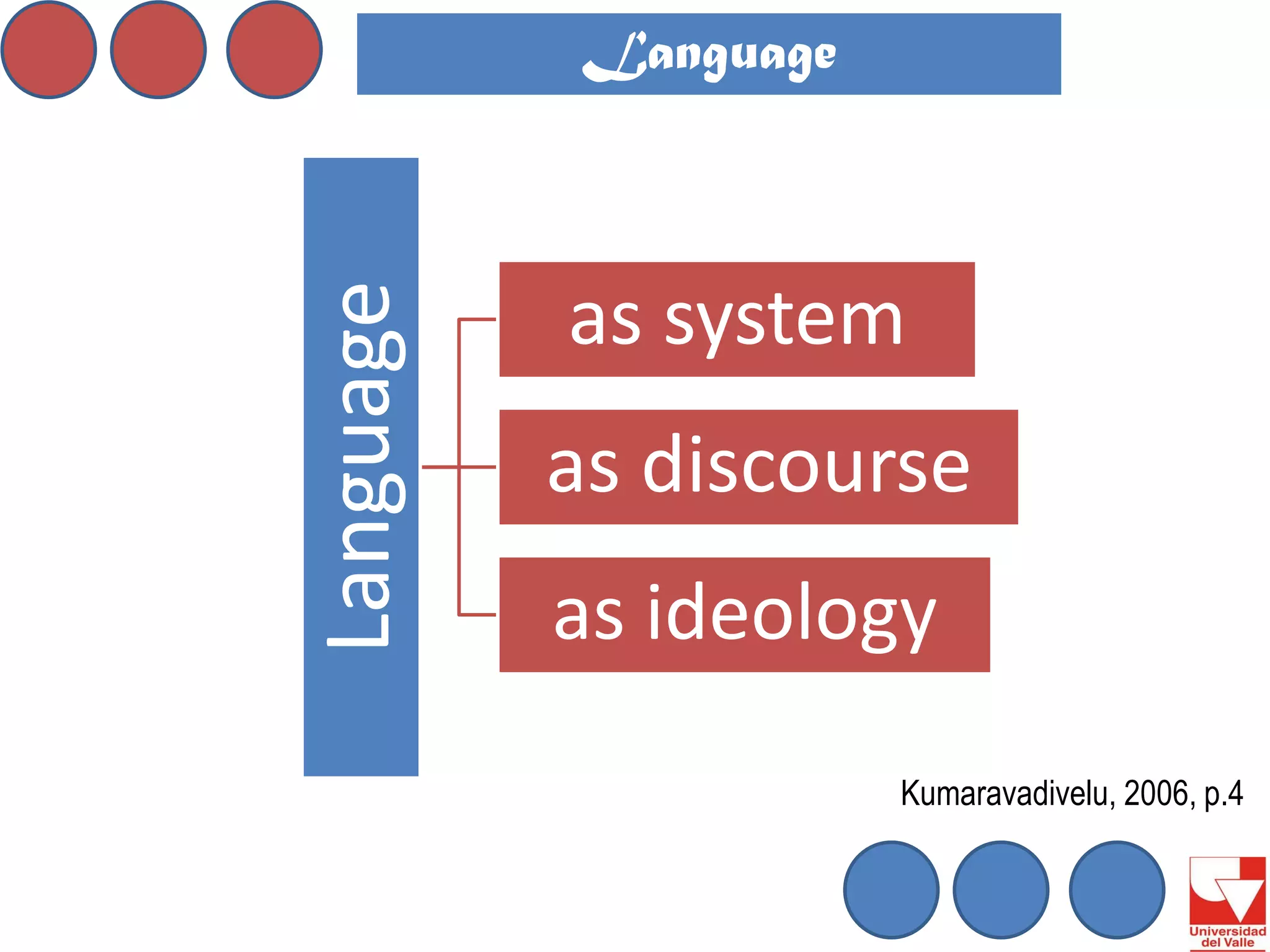
Language 
Language 
as system 
as discourse 
as ideology 
Kumaravadivelu, 2006, p.4
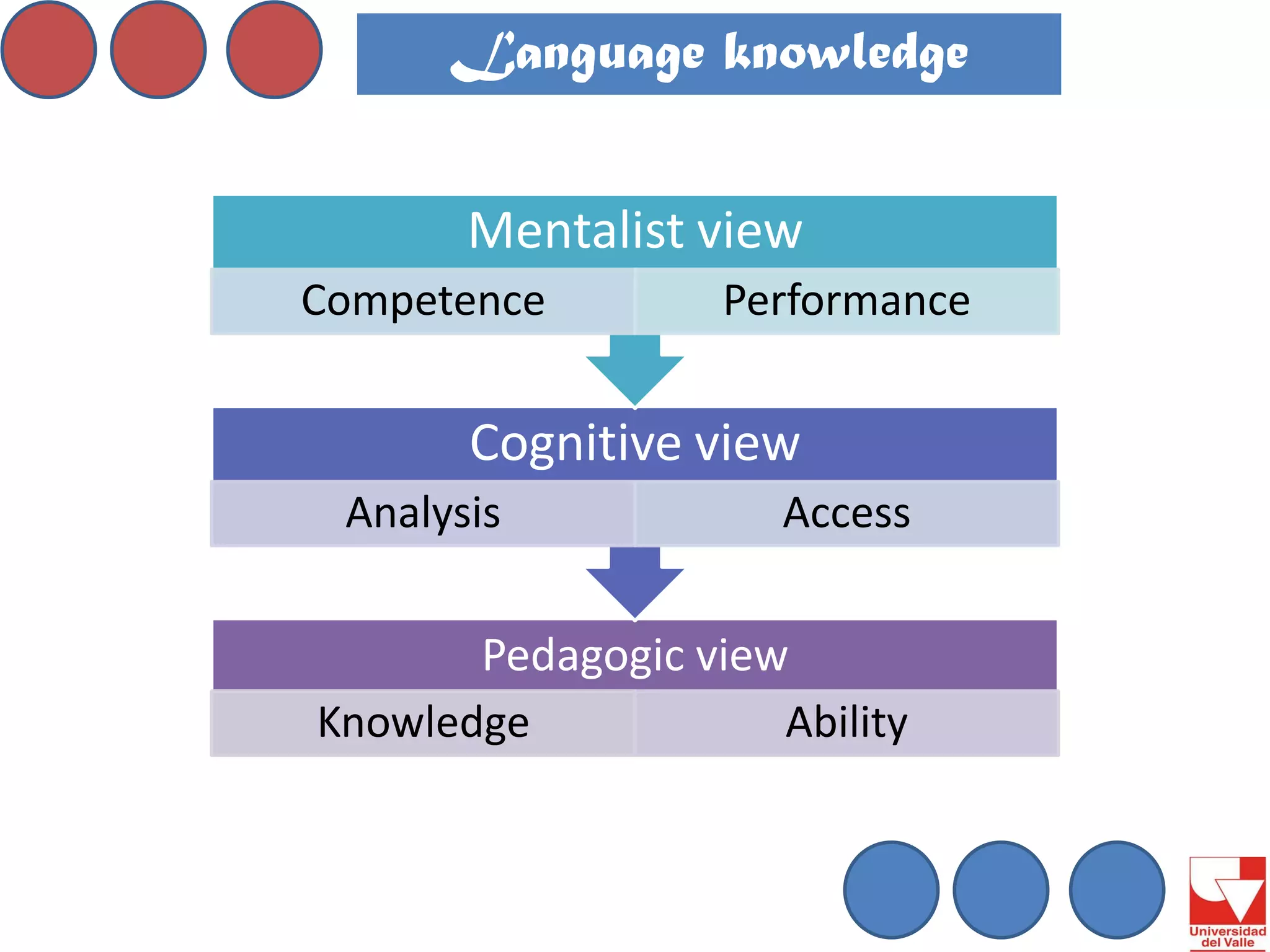
Language knowledge 
Pedagogic view 
Knowledge 
Ability 
Cognitive view 
Analysis 
Access 
Mentalist view 
Competence 
Performance
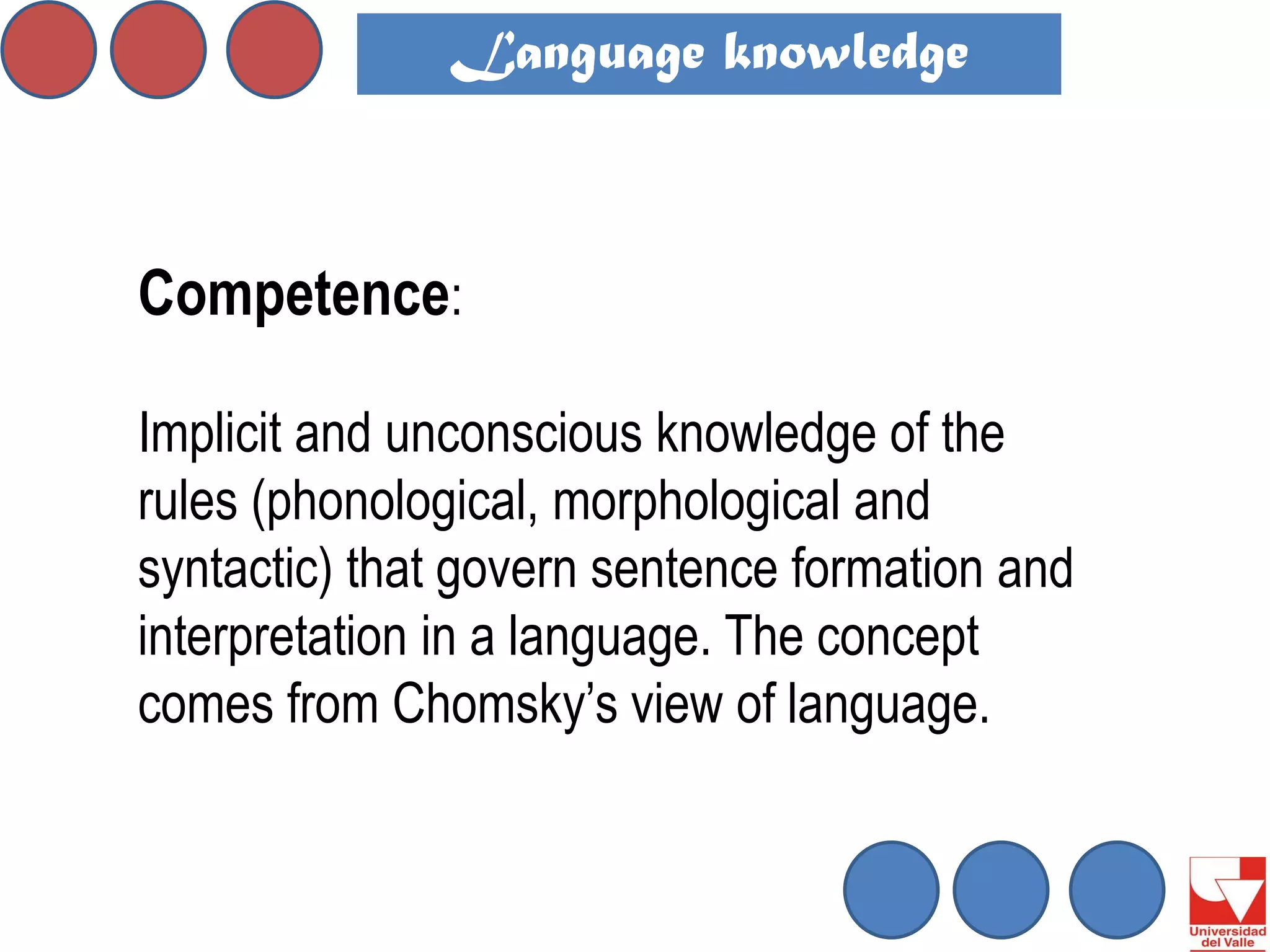
Competence: 
Implicit and unconscious knowledge of the rules (phonological, morphological and syntactic) that govern sentence formation and interpretation in a language. The concept comes from Chomsky’s view of language. 
Language knowledge
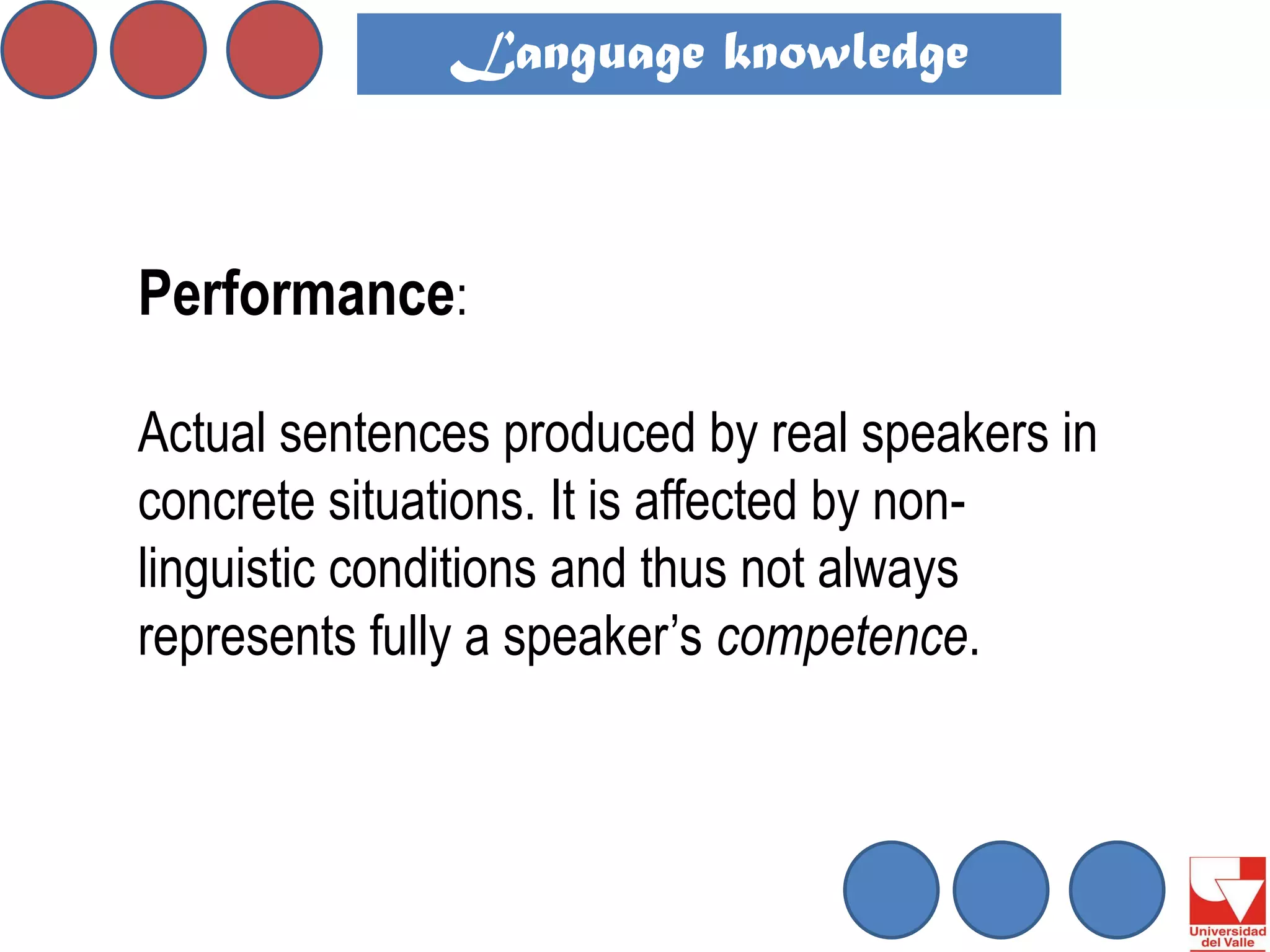
Performance: Actual sentences produced by real speakers in concrete situations. It is affected by non- linguistic conditions and thus not always represents fully a speaker’s competence. 
Language knowledge
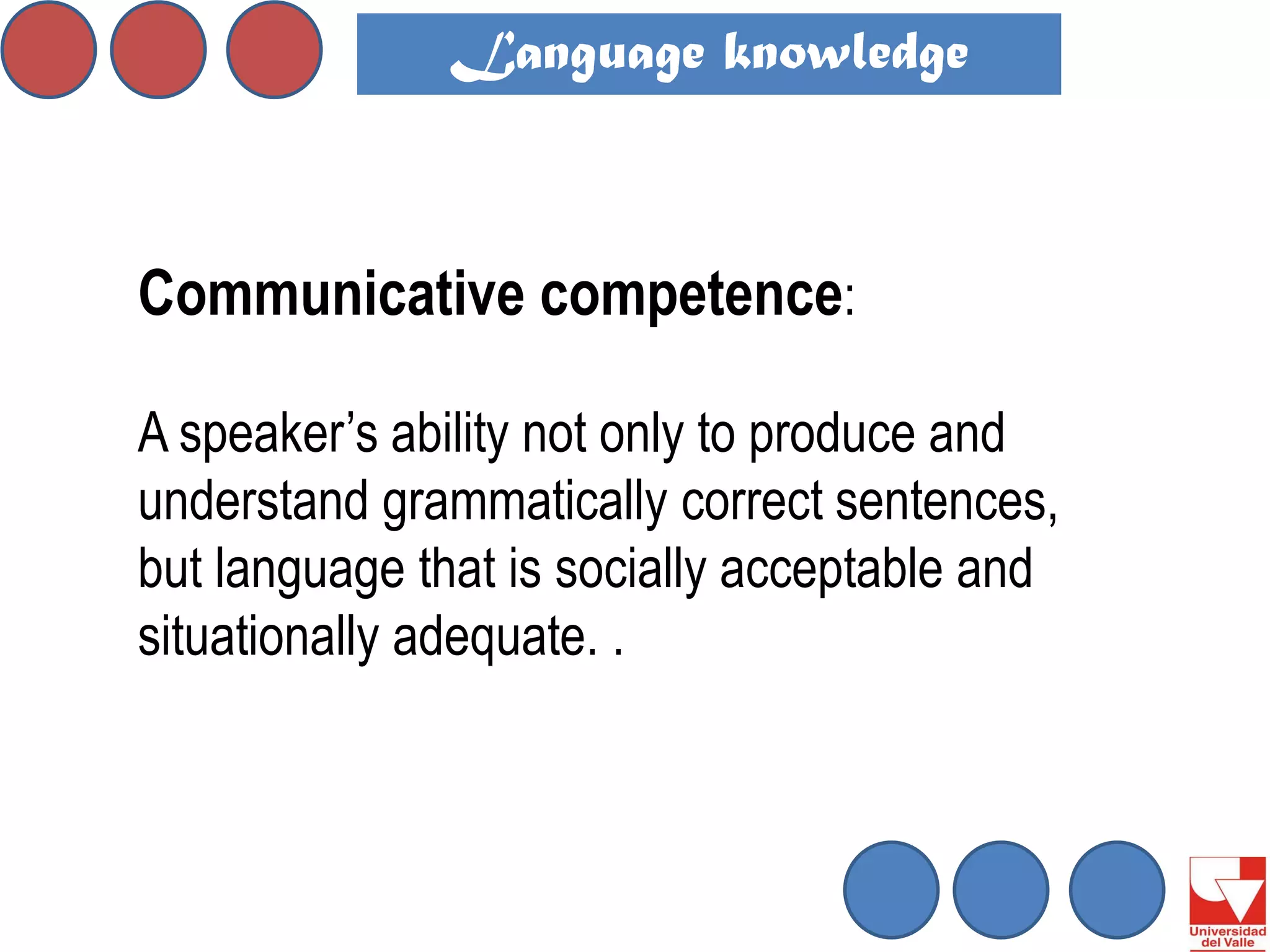
Communicative competence: 
A speaker’s ability not only to produce and understand grammatically correct sentences, but language that is socially acceptable and situationally adequate. . 
Language knowledge
Language knowledge 
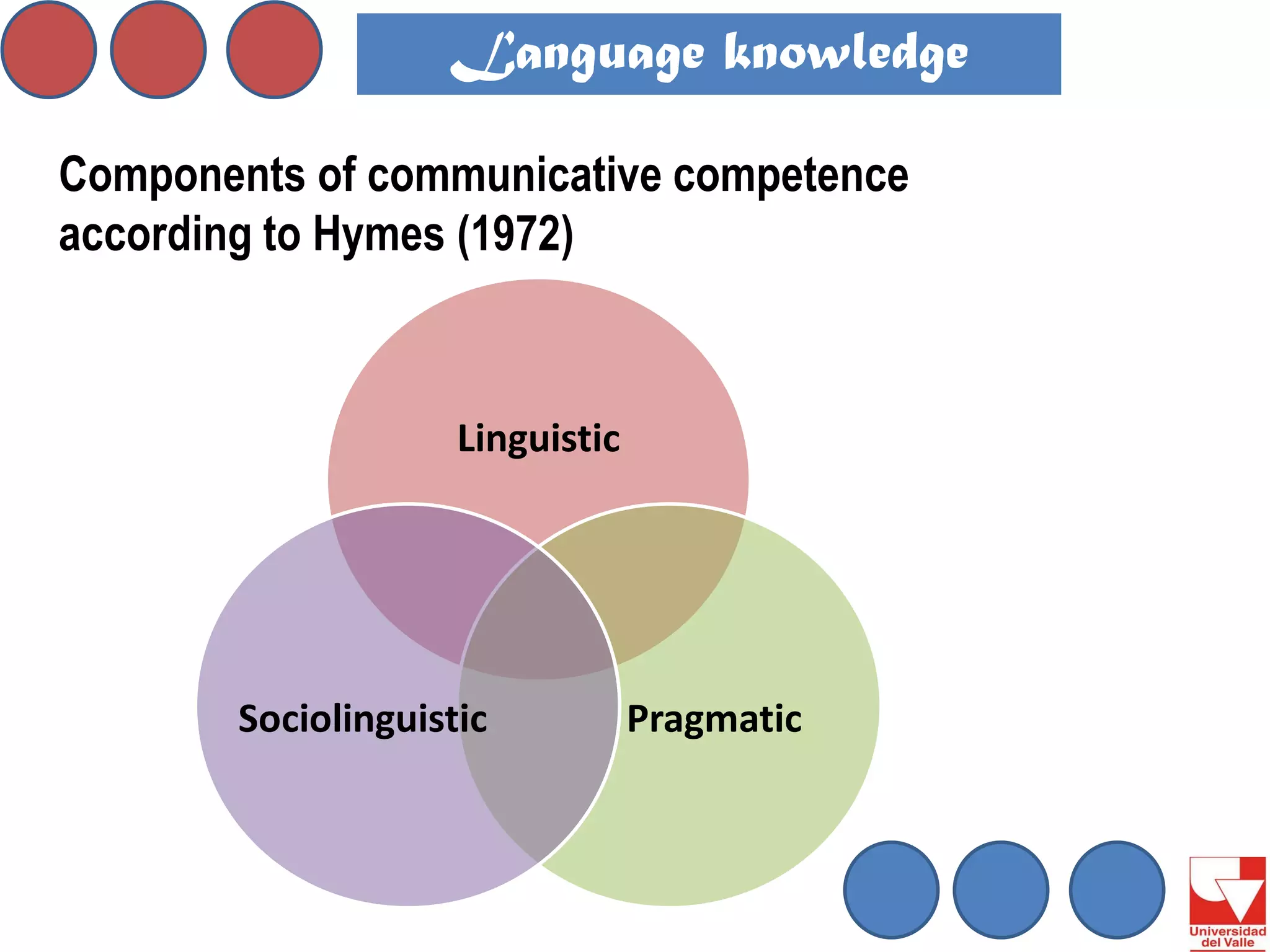
Components of communicative competence according to Hymes (1972) 
Linguistic 
Pragmatic 
Sociolinguistic
Language knowledge 
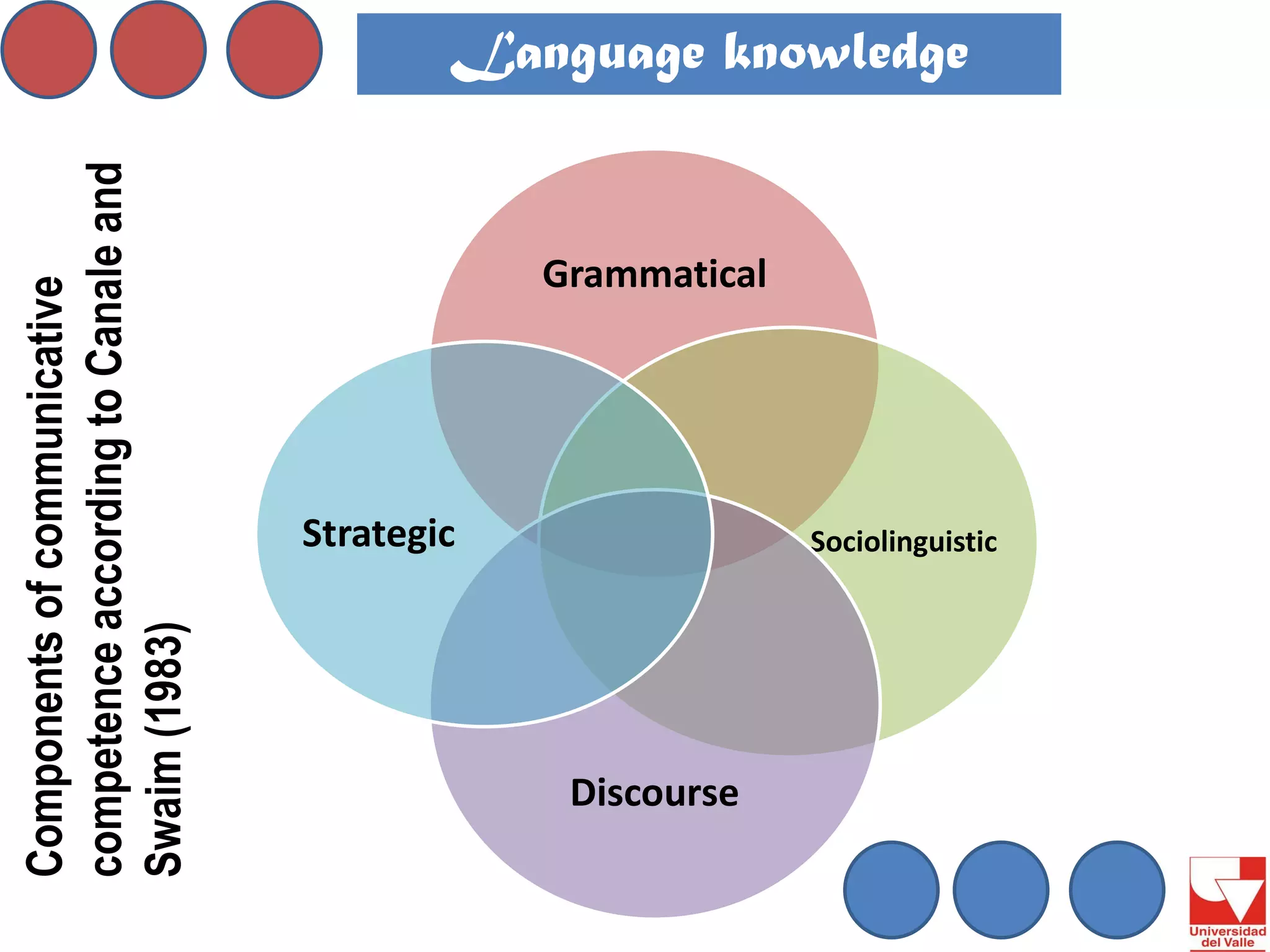
Components of communicative competence according to Canale and Swaim (1983) 
Grammatical 
Sociolinguistic 
Discourse 
Strategic
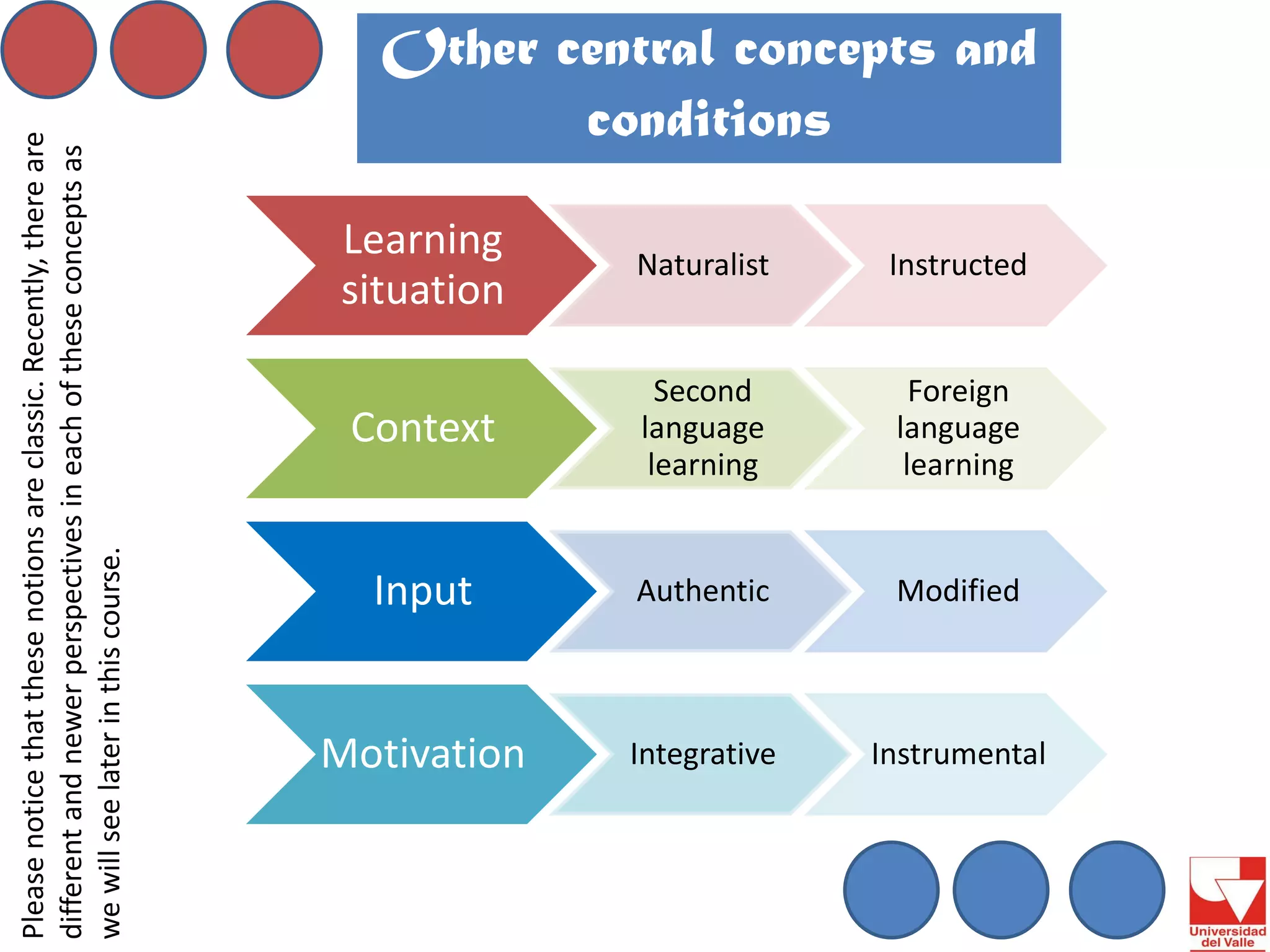
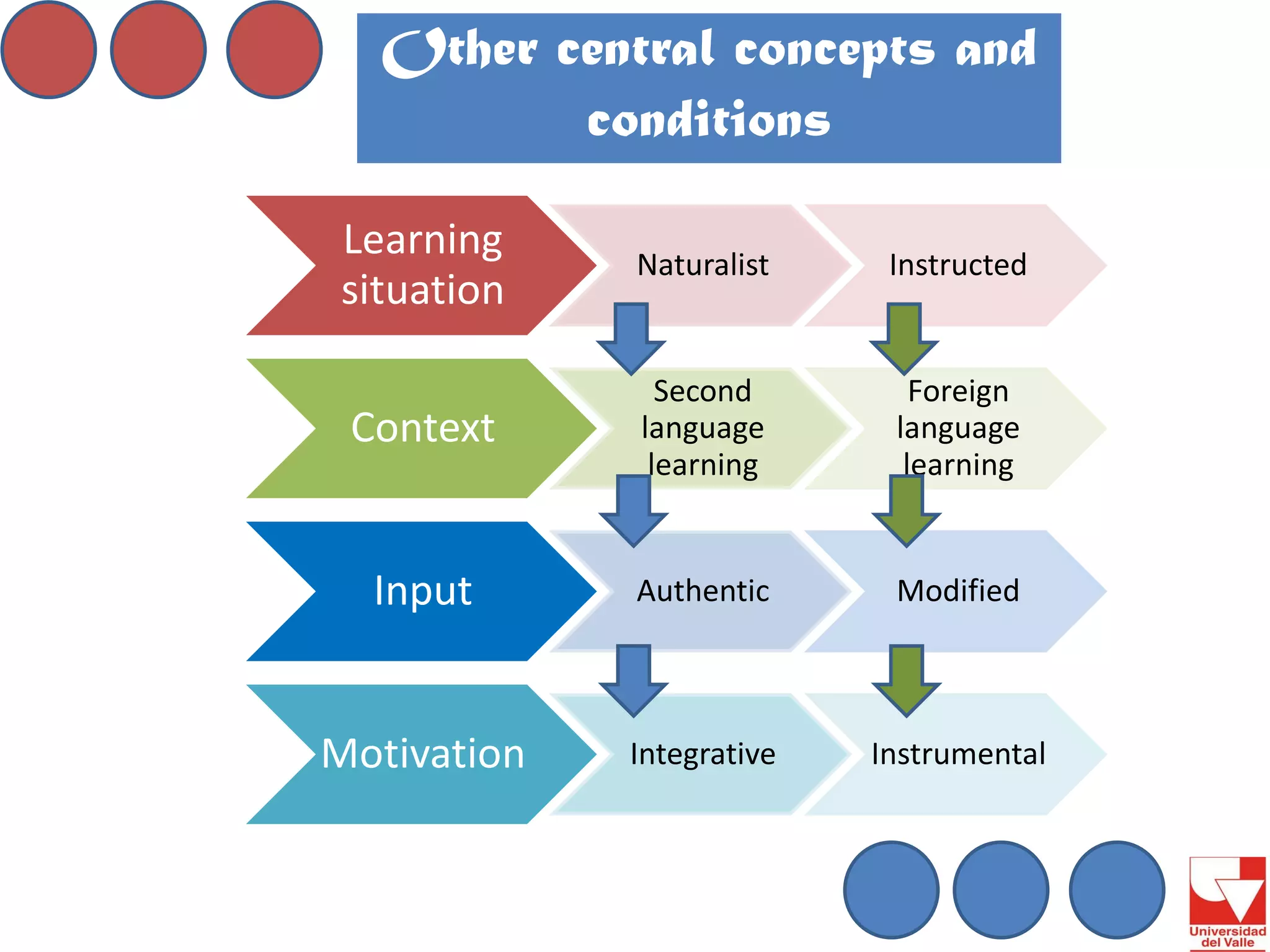
Other central concepts and conditions 
Learning situation 
Naturalist 
Instructed 
Context 
Second language learning 
Foreign language learning 
Input 
Authentic 
Modified 
Motivation 
Integrative 
Instrumental 
Please notice that these notions are classic. Recently, there are different and newer perspectives in each of these concepts as we will see later in this course.
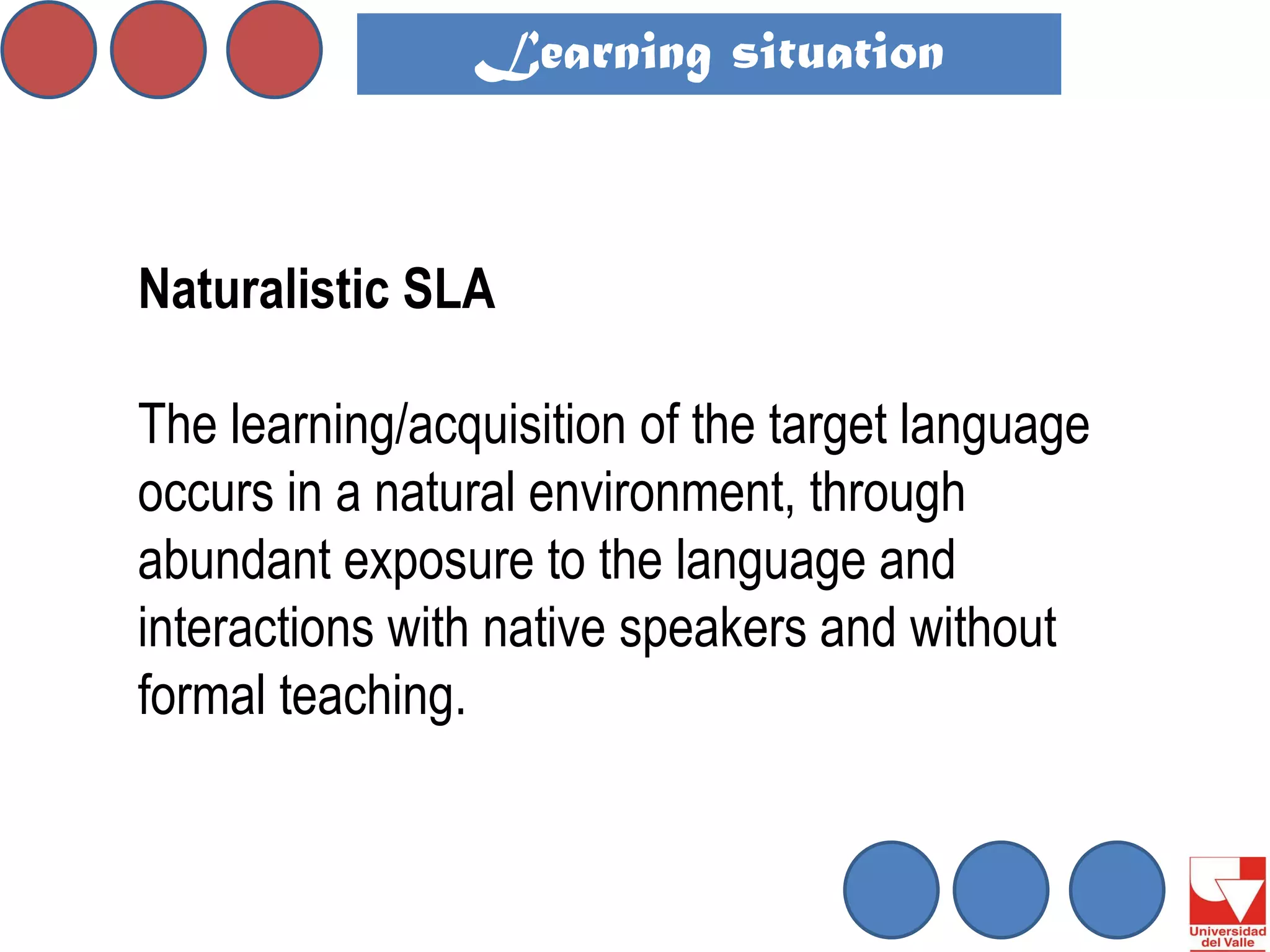
Naturalistic SLA 
The learning/acquisition of the target language occurs in a natural environment, through abundant exposure to the language and interactions with native speakers and without formal teaching. 
Learning situation
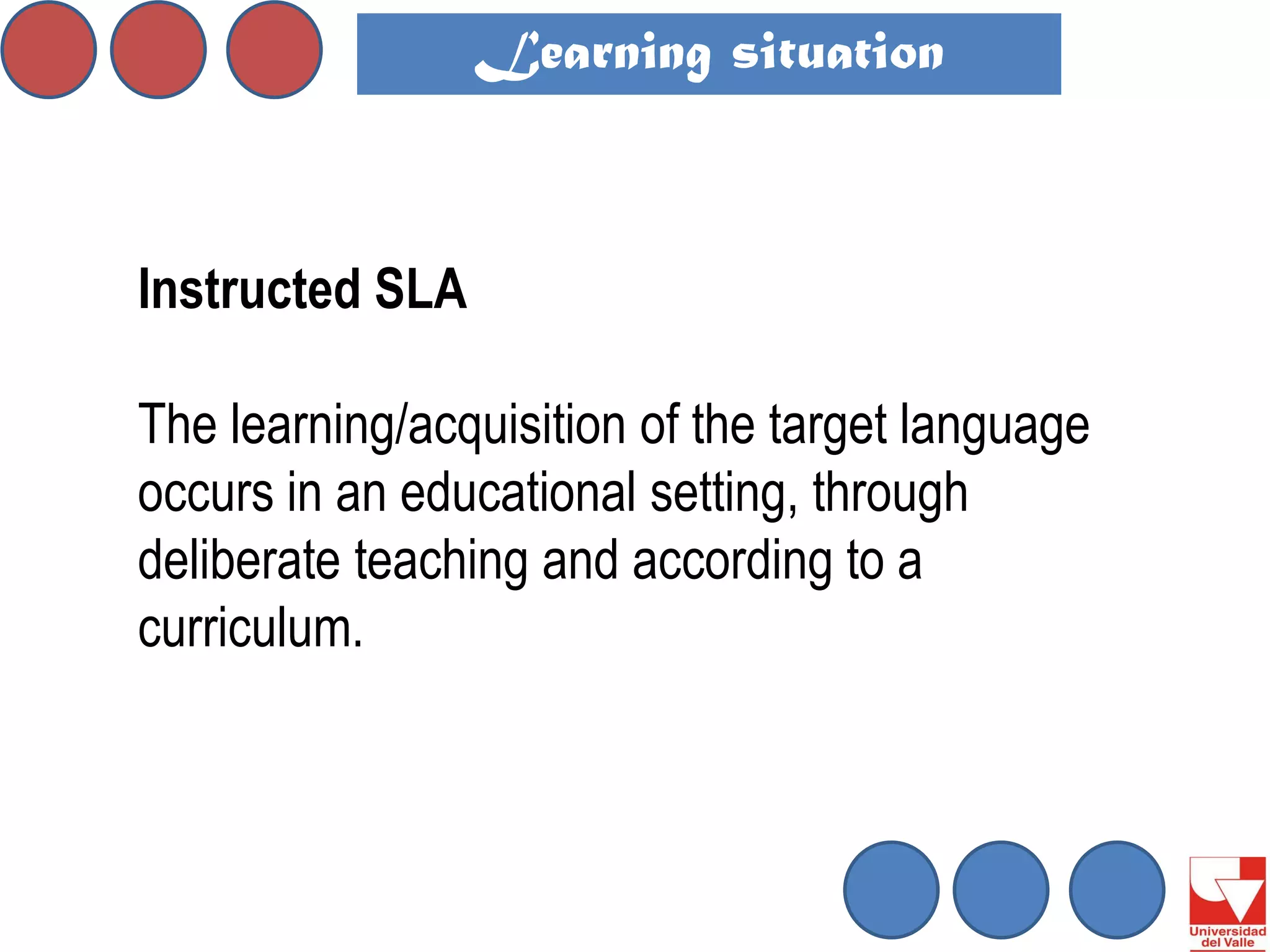
Instructed SLA 
The learning/acquisition of the target language occurs in an educational setting, through deliberate teaching and according to a curriculum. 
Learning situation
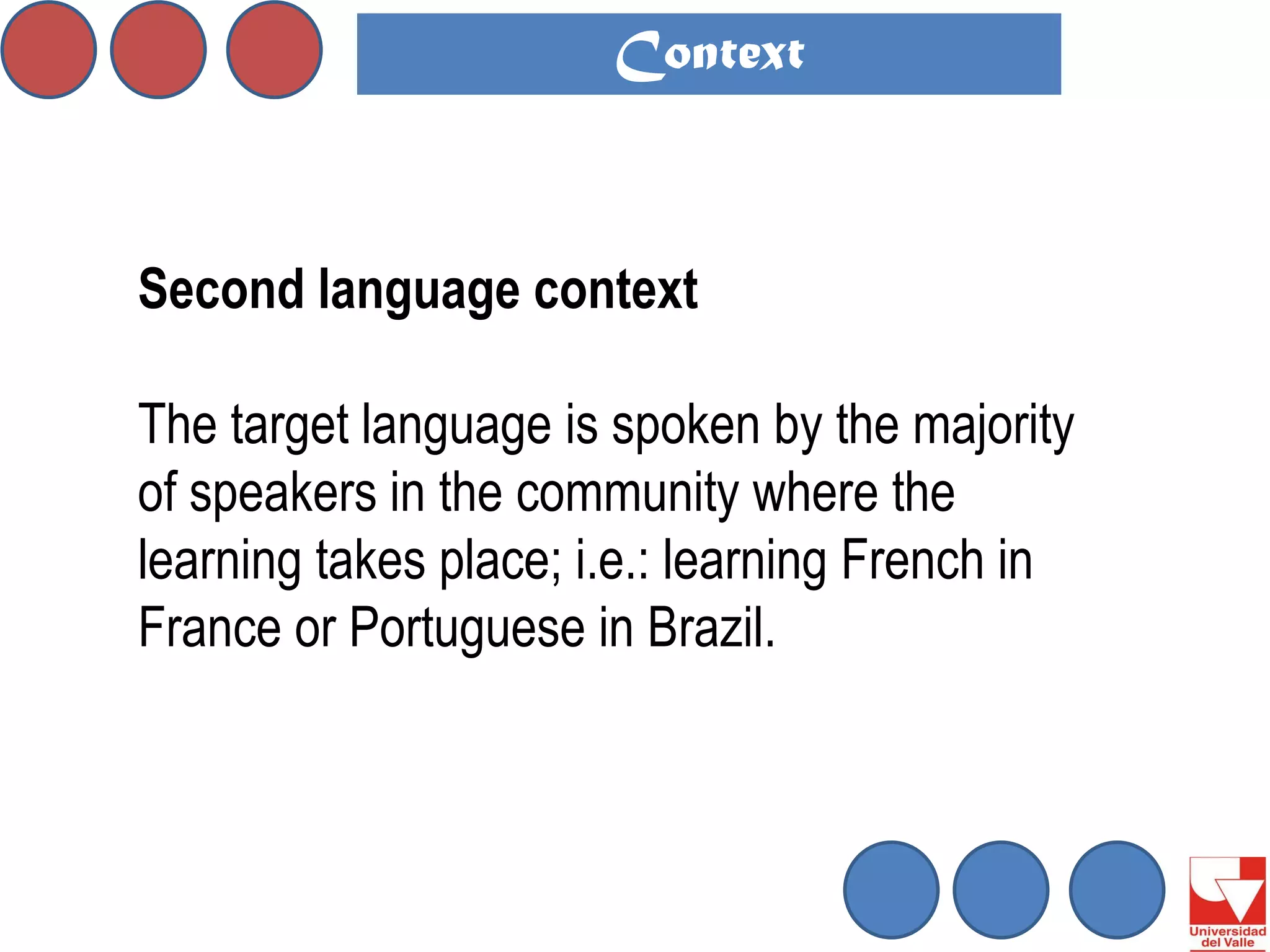
Second language context 
The target language is spoken by the majority of speakers in the community where the learning takes place; i.e.: learning French in France or Portuguese in Brazil. 
Context
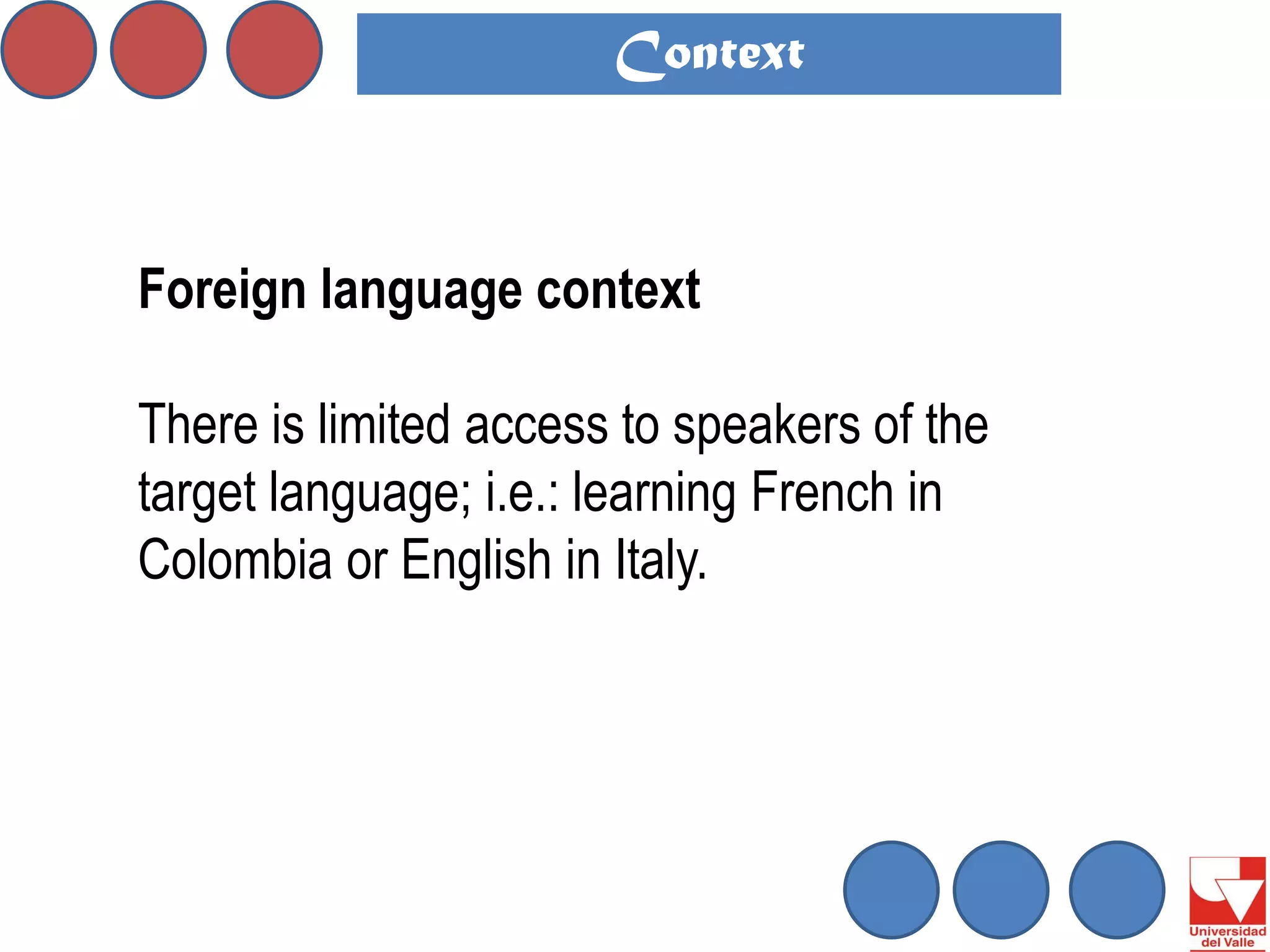
Foreign language context 
There is limited access to speakers of the target language; i.e.: learning French in Colombia or English in Italy. 
Context
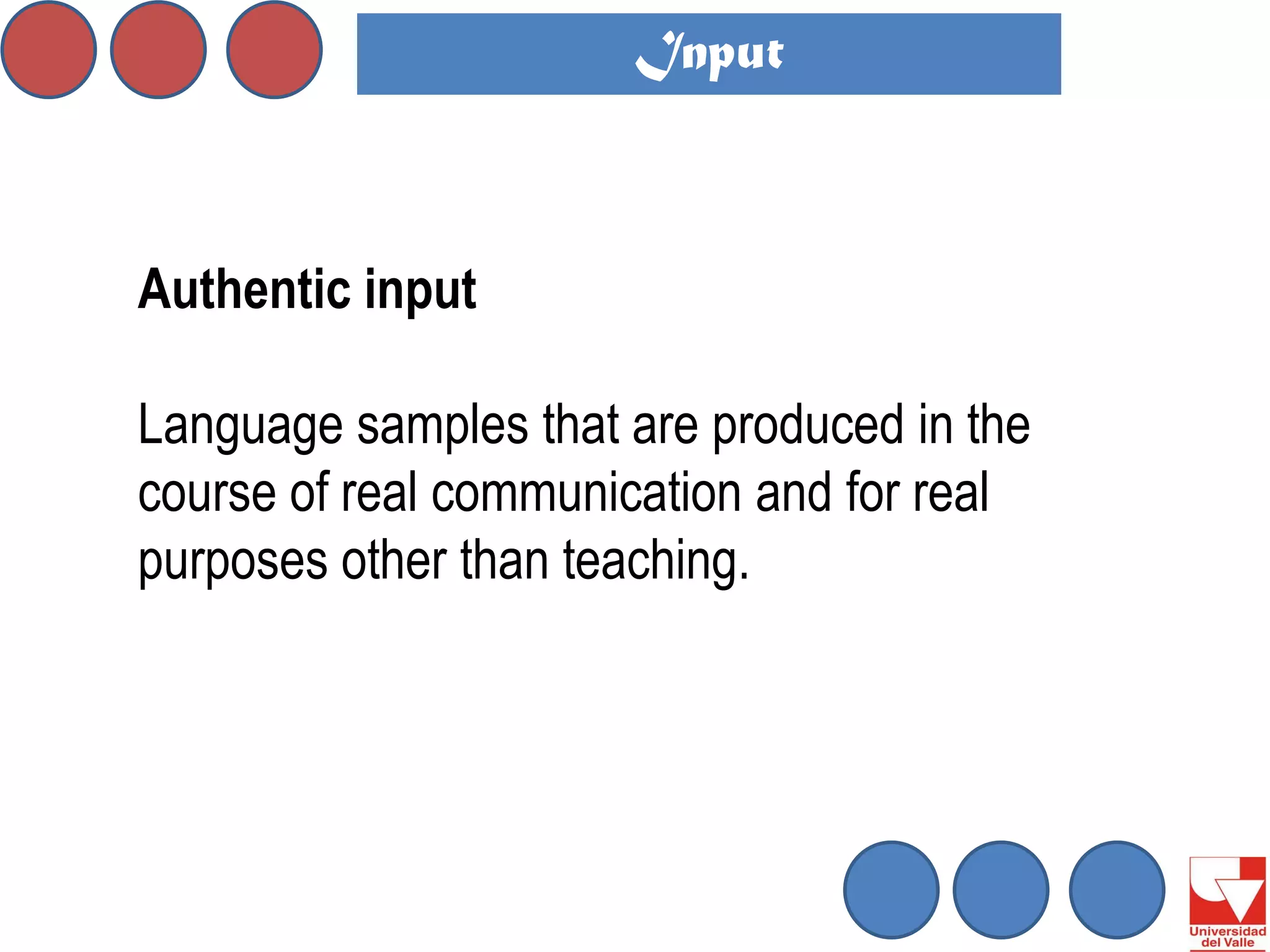
Authentic input 
Language samples that are produced in the course of real communication and for real purposes other than teaching. 
Input
Modified input 
Language samples that are deliberately simplified in order to render the language more easy to understand. It can be modified for teaching purposes (textbooks and other instructional materials), or when a native speaker of the target language interacts with a beginner non-native speaker (foreigner talk). 
Input
Integrative 
When learners are moved to learn the language for personal or affective reason such as I really like English; I think the Japanese culture is very interesting and so on. 
Motivation
Instrumental 
When learners are moved to learn the language for practical reasons, such as getting a better job, higher studies or a promotion. 
Motivation
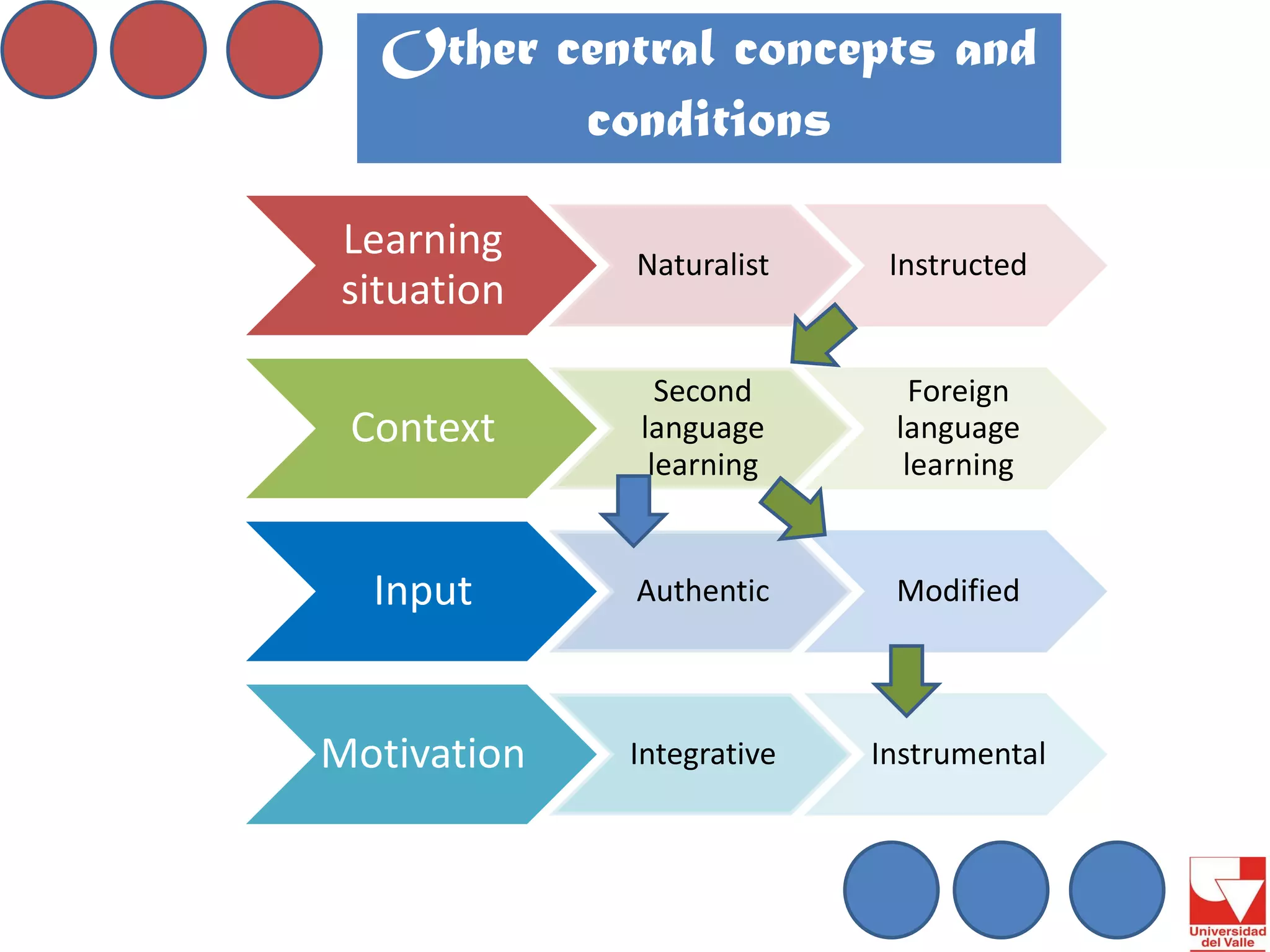
Other central concepts and conditions 
Learning situation 
Naturalist 
Instructed 
Context 
Second language learning 
Foreign language learning 
Input 
Authentic 
Modified 
Motivation 
Integrative 
Instrumental
Other central concepts and conditions 
Learning situation 
Naturalist 
Instructed 
Context 
Second language learning 
Foreign language learning 
Input 
Authentic 
Modified 
Motivation 
Integrative 
Instrumental
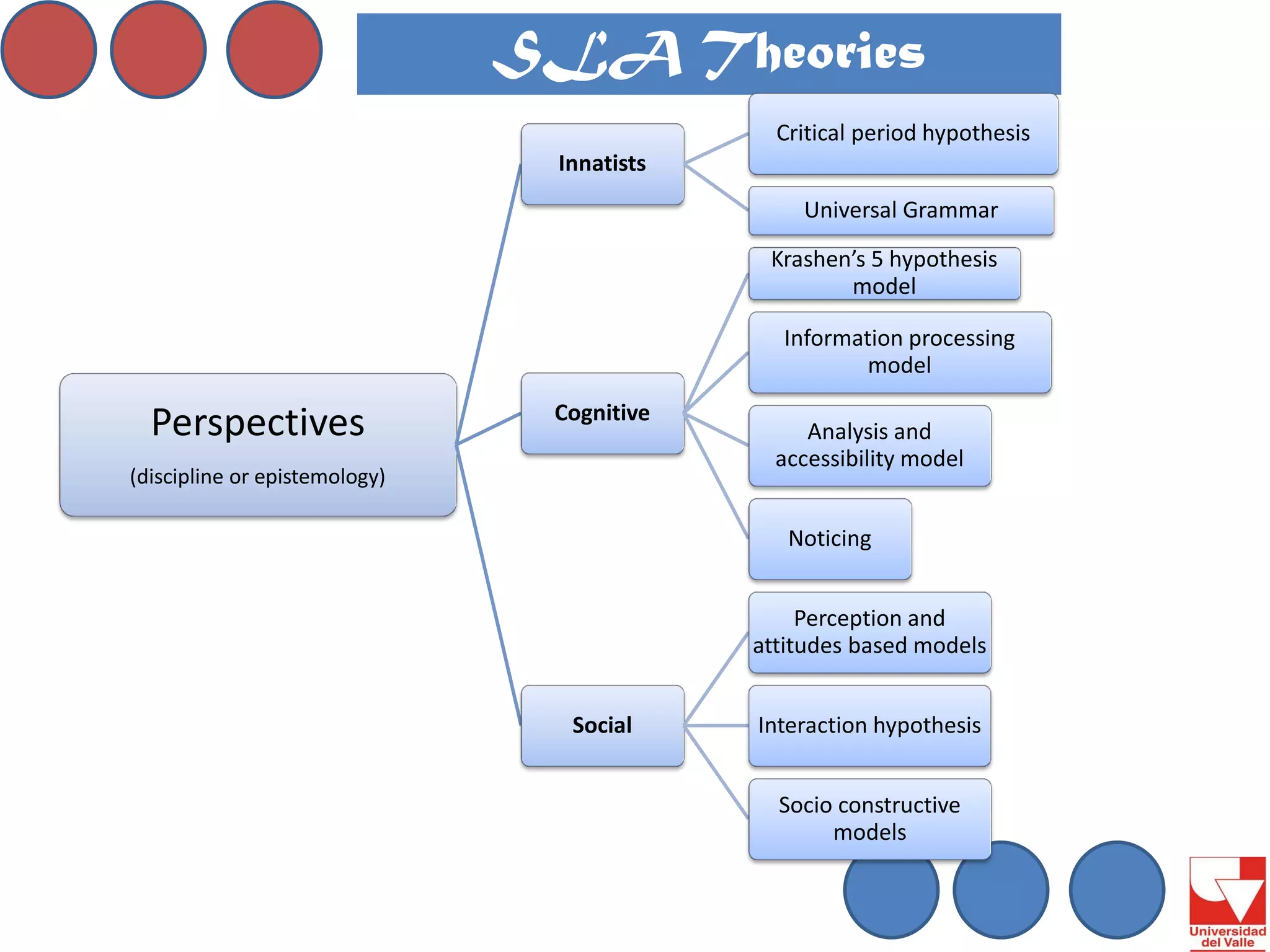
SLA Theories 
Perspectives (discipline or epistemology) 
Innatists 
Critical period hypothesis 
Universal Grammar 
Cognitive 
Krashen’s 5 hypothesis model 
Information processing model 
Analysis and accessibility model 
Noticing 
Social 
Perception and attitudes based models 
Interaction hypothesis 
Socio constructive models
References 
Gass, S. & Selinker, L. (2008). Second language acquisition: An introductory course. New York: taylor & Francis. 
Mitchell, R. & Myles, M. (2004). Second language learning theories (2nd ed.). New York: Hodder Arnold. 
Kumaravadivelu, B. (2006). Understanding language teaching. From method to postmethod. London: Lawrence Erlbaum Associates.

SLA: Introduction

  • 1.
    Second Language acquisition: An Introduction Universidad del Valle Escuela de Ciencias del Lenguaje Seminario de Lingüística Aplicada Prof. Carlos Mayora
  • 2.
    The learning ofany language, to any level, provided only that the learning of the ‘second’ language takes place some time later than the acquisition of the first language. Mitchell & Myles, 2004, p. 5 Definition
  • 3.
    •Language •Language knowledge •Learning situation •Learning Context •Input •Motivations (reasons to learn) •SLA theories Central Concepts
  • 4.
    language Central Concepts Divine? faculty? System? Human property? Code? ability? Set of rules? Social tool? Social construction? Representational quality?
  • 5.
    Language Language assystem as discourse as ideology Kumaravadivelu, 2006, p.4
  • 6.
    Language knowledge Pedagogicview Knowledge Ability Cognitive view Analysis Access Mentalist view Competence Performance
  • 7.
    Competence: Implicit andunconscious knowledge of the rules (phonological, morphological and syntactic) that govern sentence formation and interpretation in a language. The concept comes from Chomsky’s view of language. Language knowledge
  • 8.
    Performance: Actual sentencesproduced by real speakers in concrete situations. It is affected by non- linguistic conditions and thus not always represents fully a speaker’s competence. Language knowledge
  • 9.
    Communicative competence: Aspeaker’s ability not only to produce and understand grammatically correct sentences, but language that is socially acceptable and situationally adequate. . Language knowledge
  • 10.
    Language knowledge Componentsof communicative competence according to Hymes (1972) Linguistic Pragmatic Sociolinguistic
  • 11.
    Language knowledge Componentsof communicative competence according to Canale and Swaim (1983) Grammatical Sociolinguistic Discourse Strategic
  • 12.
    Other central conceptsand conditions Learning situation Naturalist Instructed Context Second language learning Foreign language learning Input Authentic Modified Motivation Integrative Instrumental Please notice that these notions are classic. Recently, there are different and newer perspectives in each of these concepts as we will see later in this course.
  • 13.
    Naturalistic SLA Thelearning/acquisition of the target language occurs in a natural environment, through abundant exposure to the language and interactions with native speakers and without formal teaching. Learning situation
  • 14.
    Instructed SLA Thelearning/acquisition of the target language occurs in an educational setting, through deliberate teaching and according to a curriculum. Learning situation
  • 15.
    Second language context The target language is spoken by the majority of speakers in the community where the learning takes place; i.e.: learning French in France or Portuguese in Brazil. Context
  • 16.
    Foreign language context There is limited access to speakers of the target language; i.e.: learning French in Colombia or English in Italy. Context
  • 17.
    Authentic input Languagesamples that are produced in the course of real communication and for real purposes other than teaching. Input
  • 18.
    Modified input Languagesamples that are deliberately simplified in order to render the language more easy to understand. It can be modified for teaching purposes (textbooks and other instructional materials), or when a native speaker of the target language interacts with a beginner non-native speaker (foreigner talk). Input
  • 19.
    Integrative When learnersare moved to learn the language for personal or affective reason such as I really like English; I think the Japanese culture is very interesting and so on. Motivation
  • 20.
    Instrumental When learnersare moved to learn the language for practical reasons, such as getting a better job, higher studies or a promotion. Motivation
  • 21.
    Other central conceptsand conditions Learning situation Naturalist Instructed Context Second language learning Foreign language learning Input Authentic Modified Motivation Integrative Instrumental
  • 22.
    Other central conceptsand conditions Learning situation Naturalist Instructed Context Second language learning Foreign language learning Input Authentic Modified Motivation Integrative Instrumental
  • 23.
    SLA Theories Perspectives(discipline or epistemology) Innatists Critical period hypothesis Universal Grammar Cognitive Krashen’s 5 hypothesis model Information processing model Analysis and accessibility model Noticing Social Perception and attitudes based models Interaction hypothesis Socio constructive models
  • 24.
    References Gass, S.& Selinker, L. (2008). Second language acquisition: An introductory course. New York: taylor & Francis. Mitchell, R. & Myles, M. (2004). Second language learning theories (2nd ed.). New York: Hodder Arnold. Kumaravadivelu, B. (2006). Understanding language teaching. From method to postmethod. London: Lawrence Erlbaum Associates.