Interactice technology in the
    FL classroom: Using polling
   and chat to promote student
        participation in campus
                       education

                            Elisabeth Wulff Sahlén
                             Mälardalen University
                                          Sweden


ICT for Language Learning
Florence, 20-21 Oct 2011
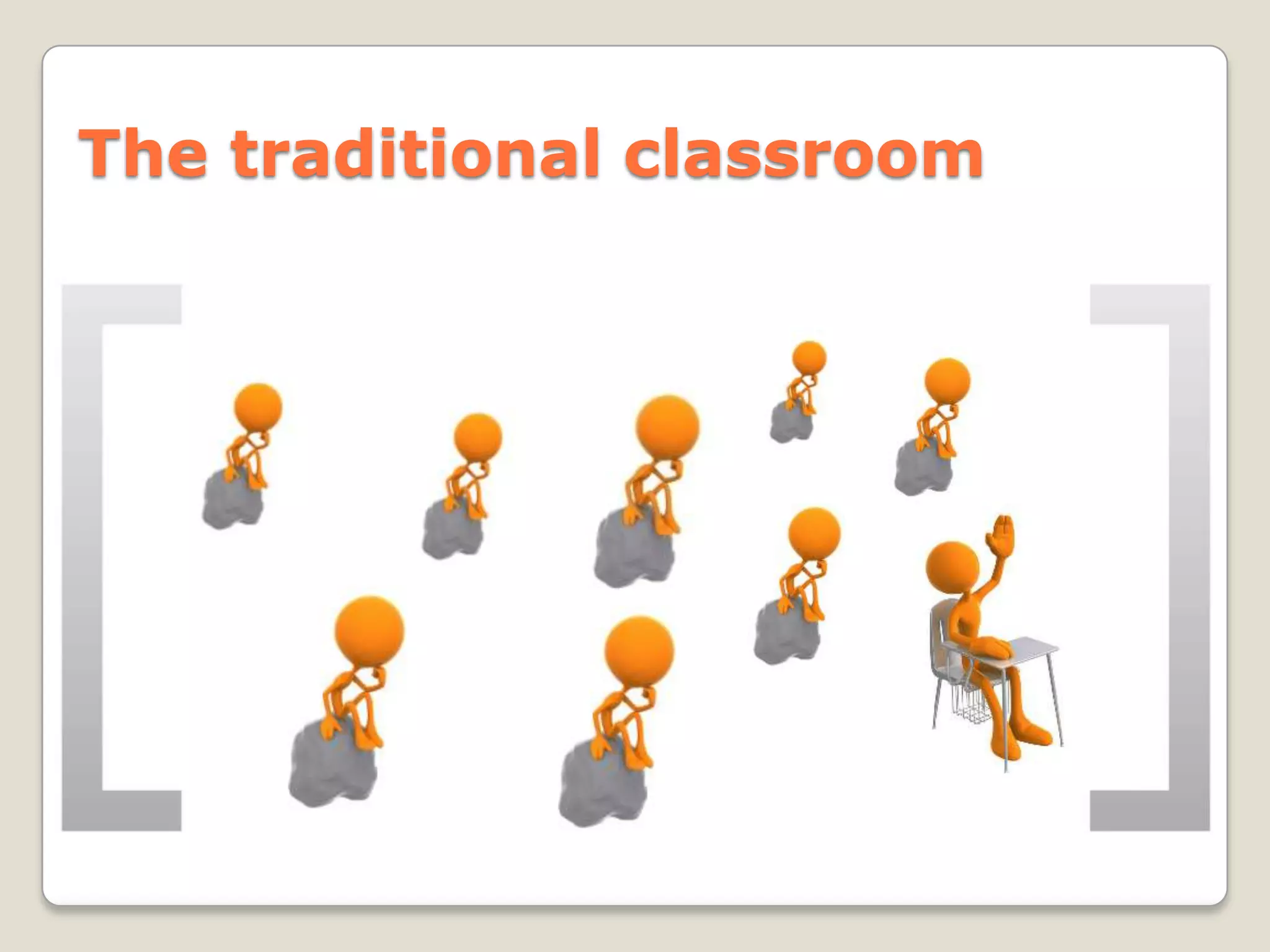
The traditional classroom


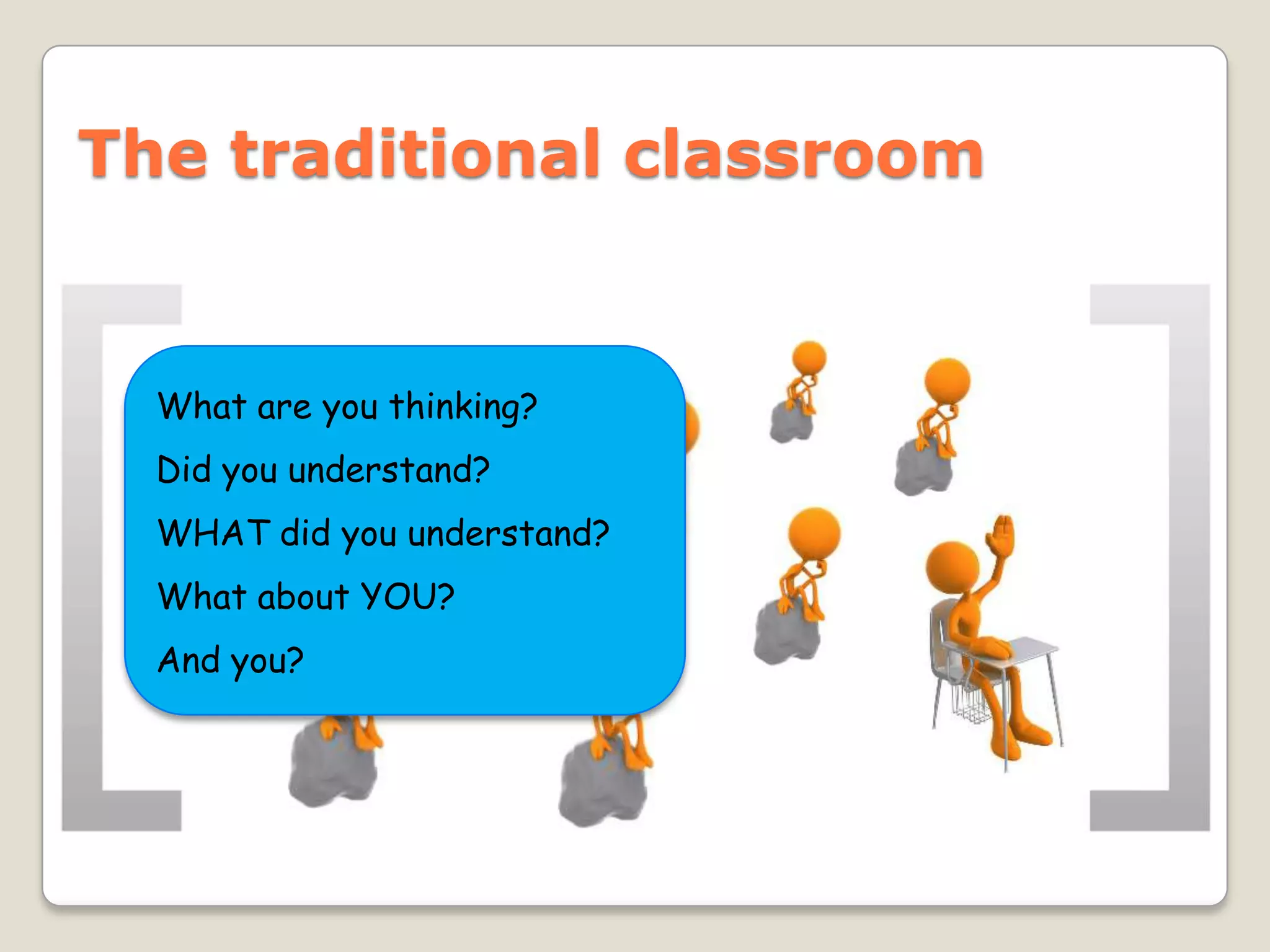
  What are you thinking?
  Did you understand?
  WHAT did you understand?
  What about YOU?
  And you?
The traditional classroom


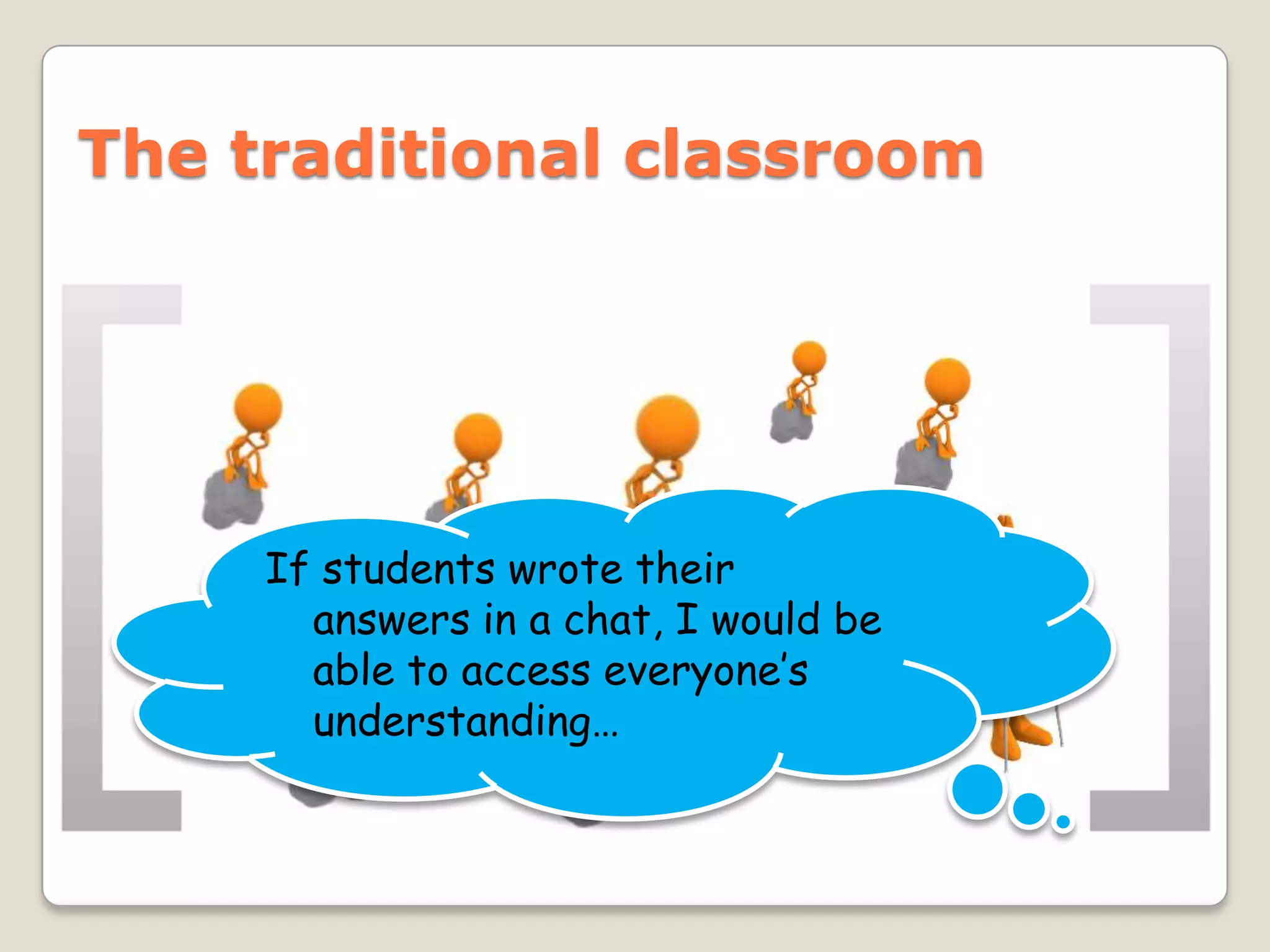
     If students wrote their
       answers in a chat, I would be
       able to access everyone’s
       understanding…
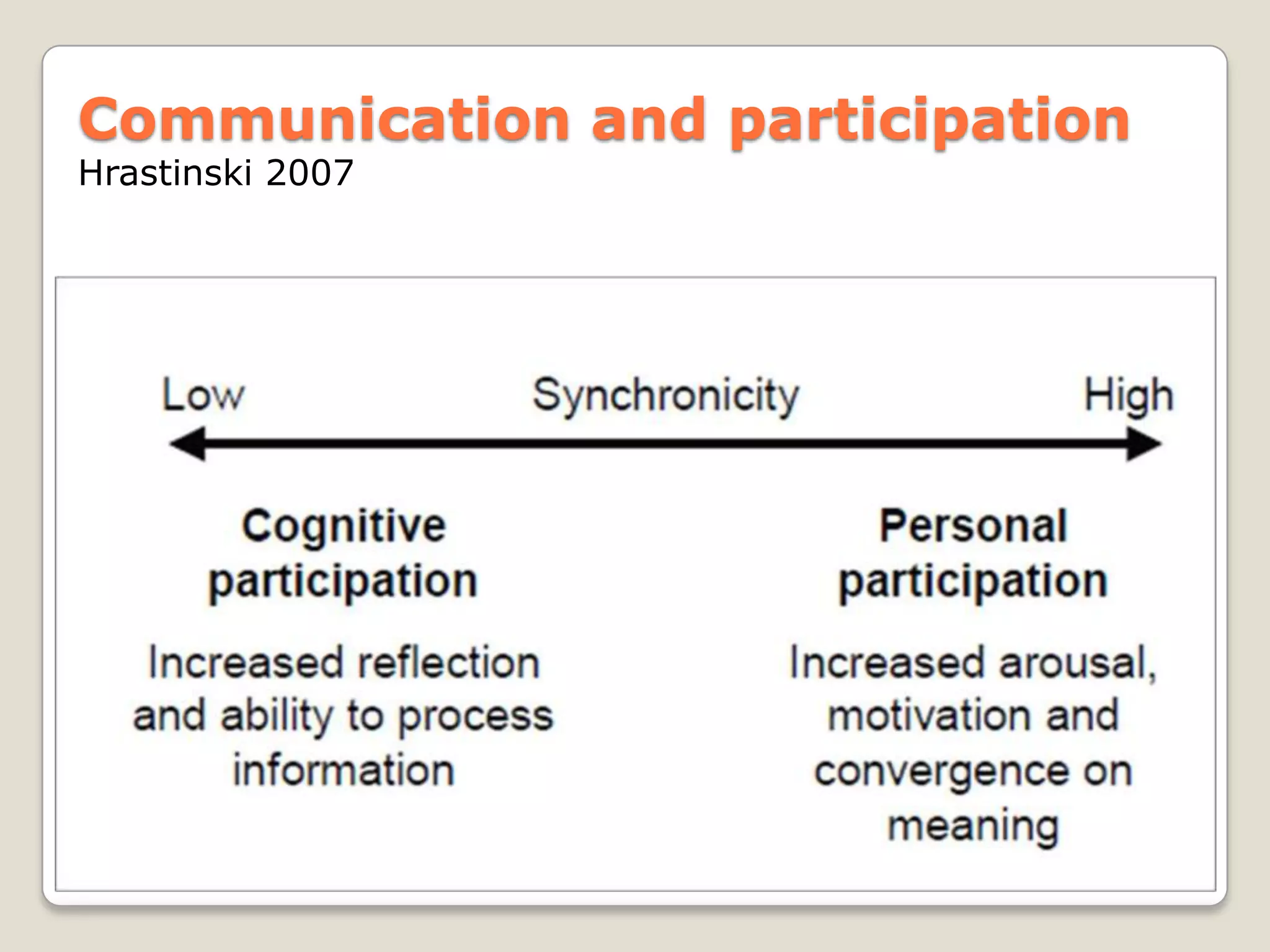
Communication and participation
Hrastinski 2007
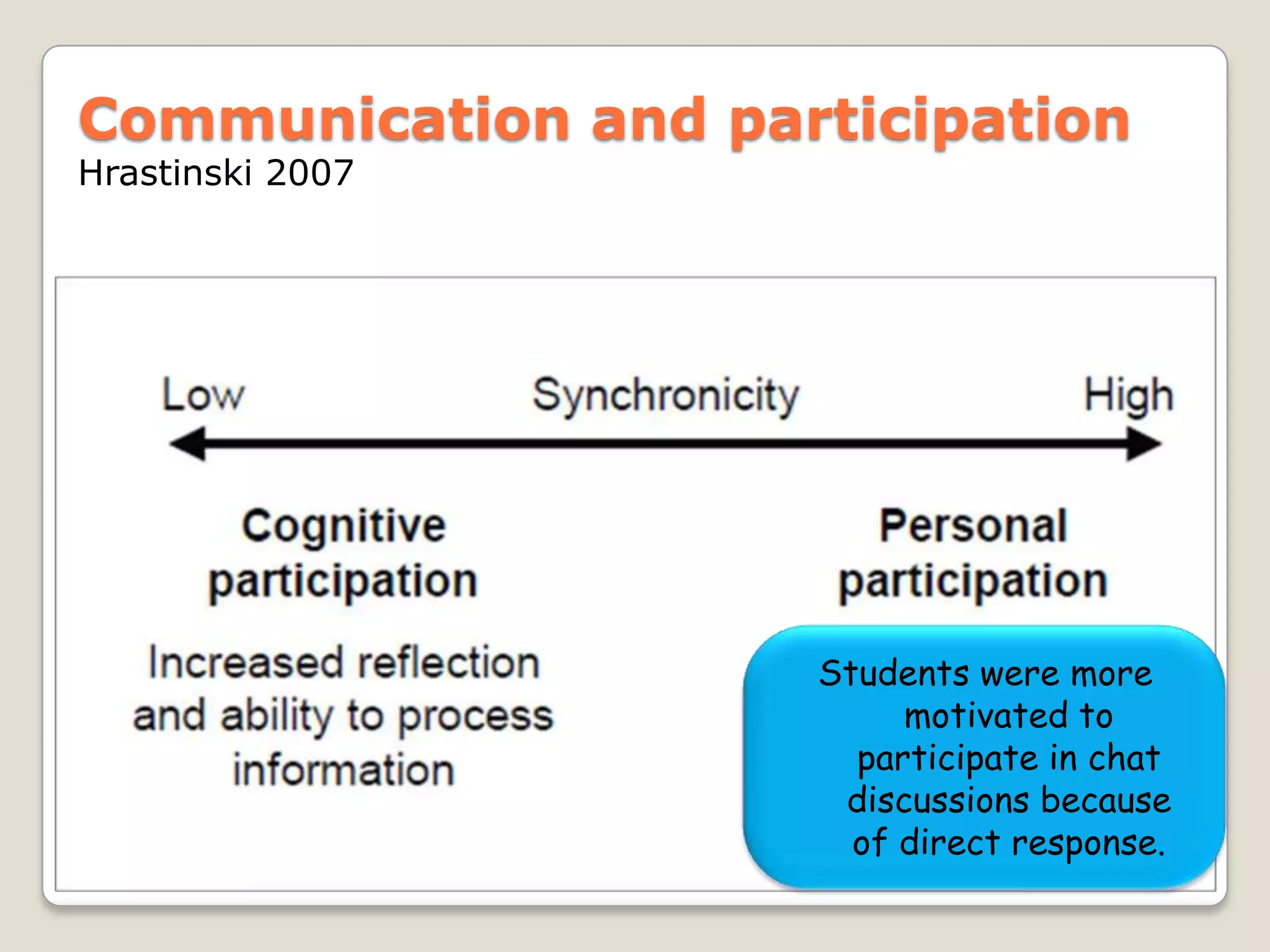
Communication and participation
Hrastinski 2007


                     Students were more
                          motivated to
                       participate in chat
                      discussions because
                       of direct response.
Chat in education
   administrative information rather than supporting
    cognitive aspects of learning
   communication in FL with native speakers and
    other learners
   students are often more focused, thoughtful
    and honest in discussions online than F2F– even
    if in the same room!
   The Twitter experiment – Twitter in the classroom
    to get students involved in discussion
Polling and chat in the classroom – a
pedagogical experiment

Setting and technology
On-campus course in grammar and translation for
advanced learners of English
Adobe Connect Pro to enable polling and chat
Seminars in computer rooms, 3
students/computer
Video projector to display student contributions for
oral discussion
Polling and chat in the classroom – a
pedagogical experiment

Aims
promote wider student participation
tap into everyone’s understanding in order to
provide feedback where it is needed the most
Adobe Connect Pro (ACP)
A    web-conferencing solution where you can
     ◦ communicate through audio, video and chat
     ◦ show power point presentations
     ◦ share your screen, whiteboard and files
     ◦ create interactive quizzes
     ◦ let students collaborate in small groups
     ◦ record the meeting and distribute the URL
       through e-mail or on your LMS
     ◦ etc… etc…
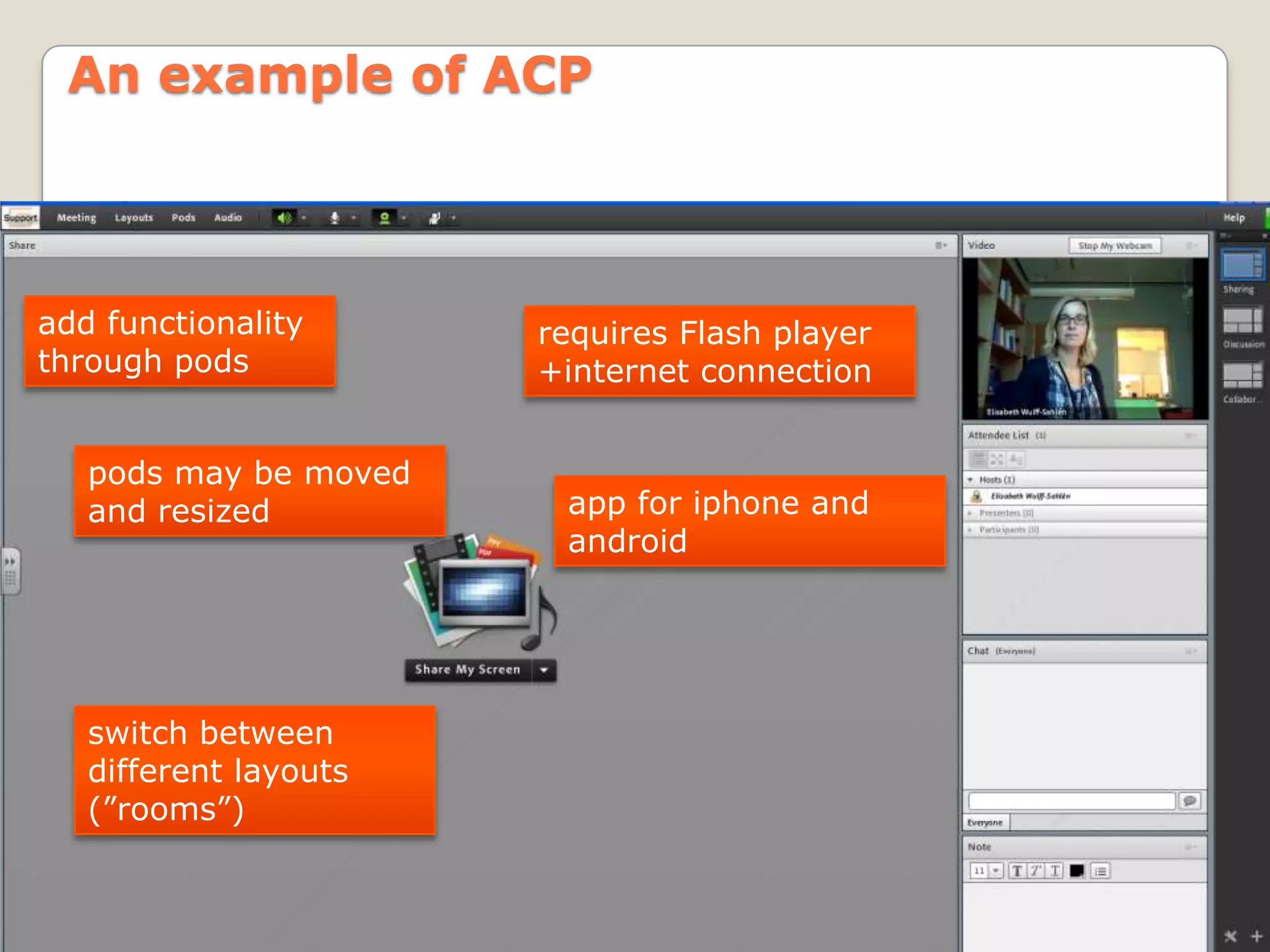
An example of ACP


add functionality      requires Flash player
through pods           +internet connection


   pods may be moved
   and resized          app for iphone and
                        android


   switch between
   different layouts
   (”rooms”)
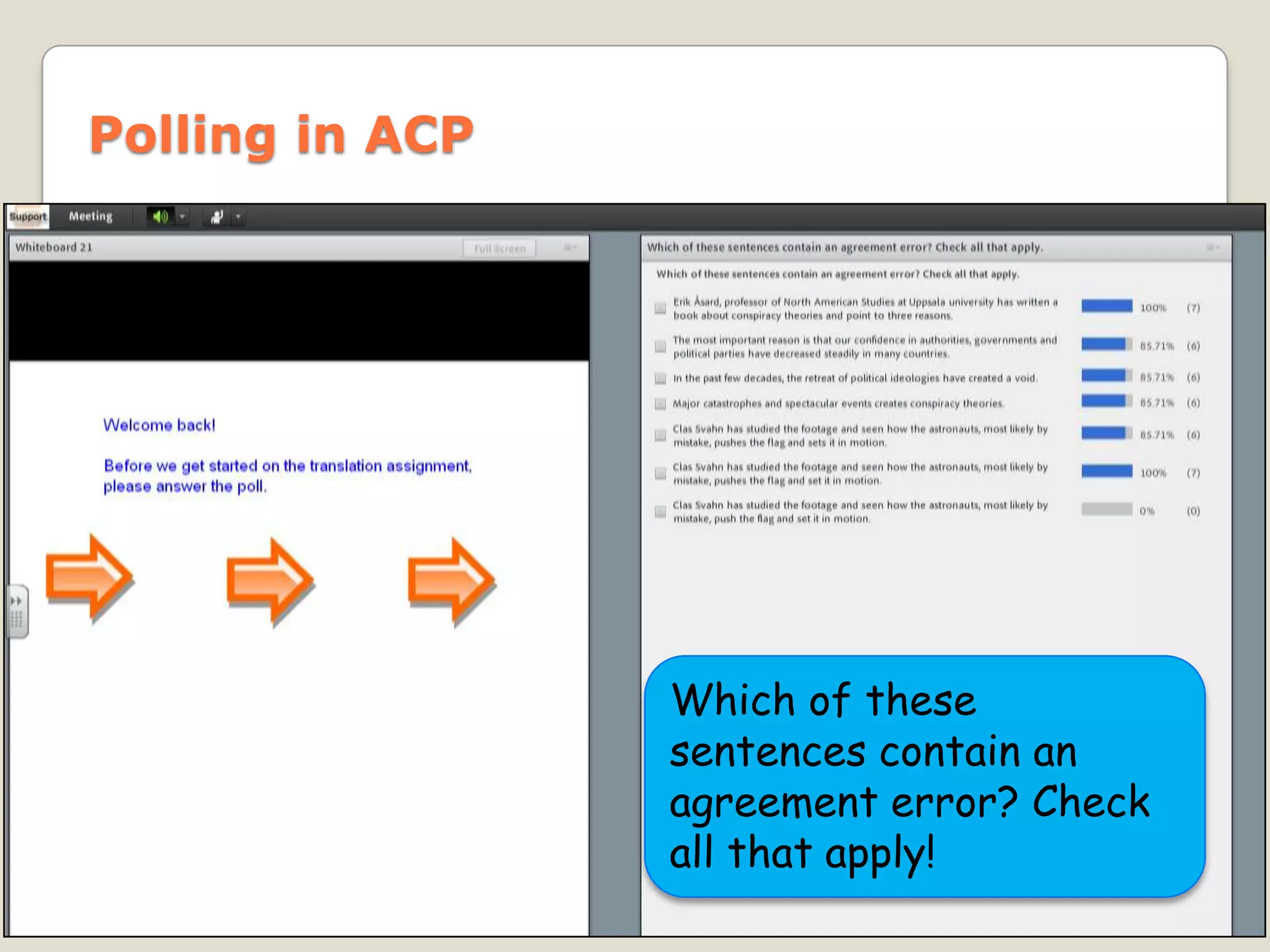
Polling in ACP


                 Which of these
                 sentences contain an
                 agreement error? Check
                 all that apply!
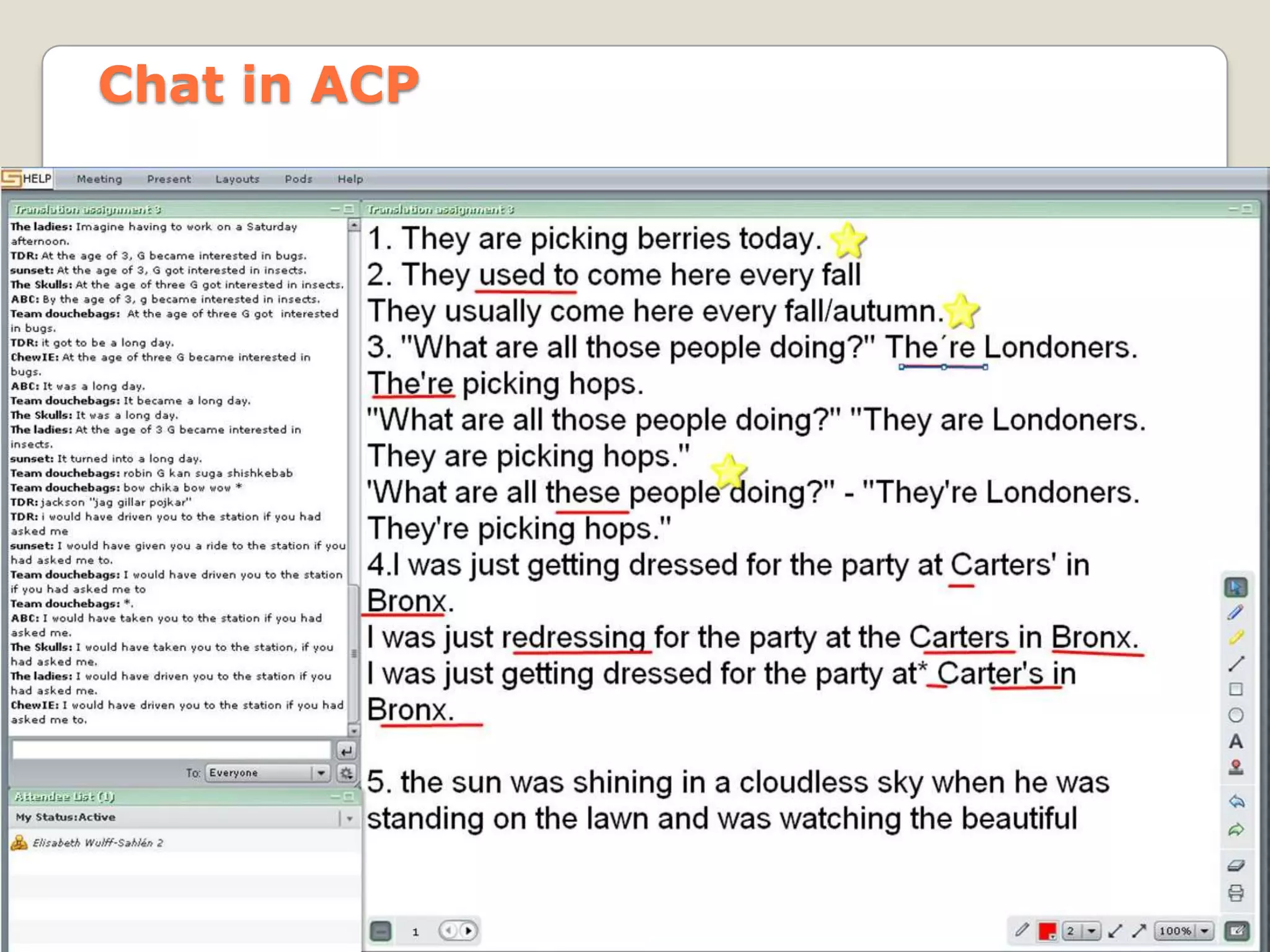
Chat in ACP
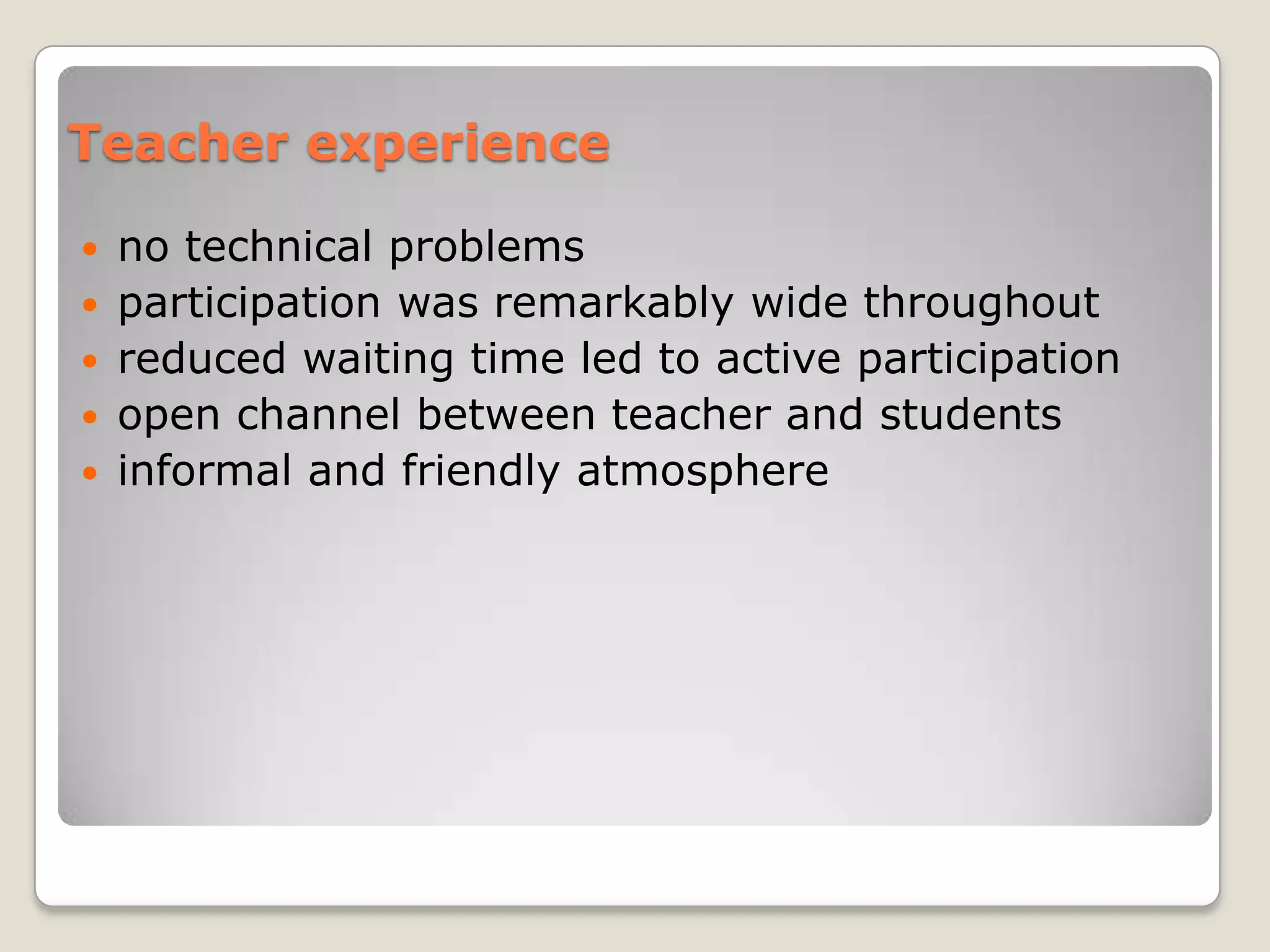
Teacher experience

 no technical problems
 participation was remarkably wide throughout
 reduced waiting time led to active participation
 open channel between teacher and students
 informal and friendly atmosphere
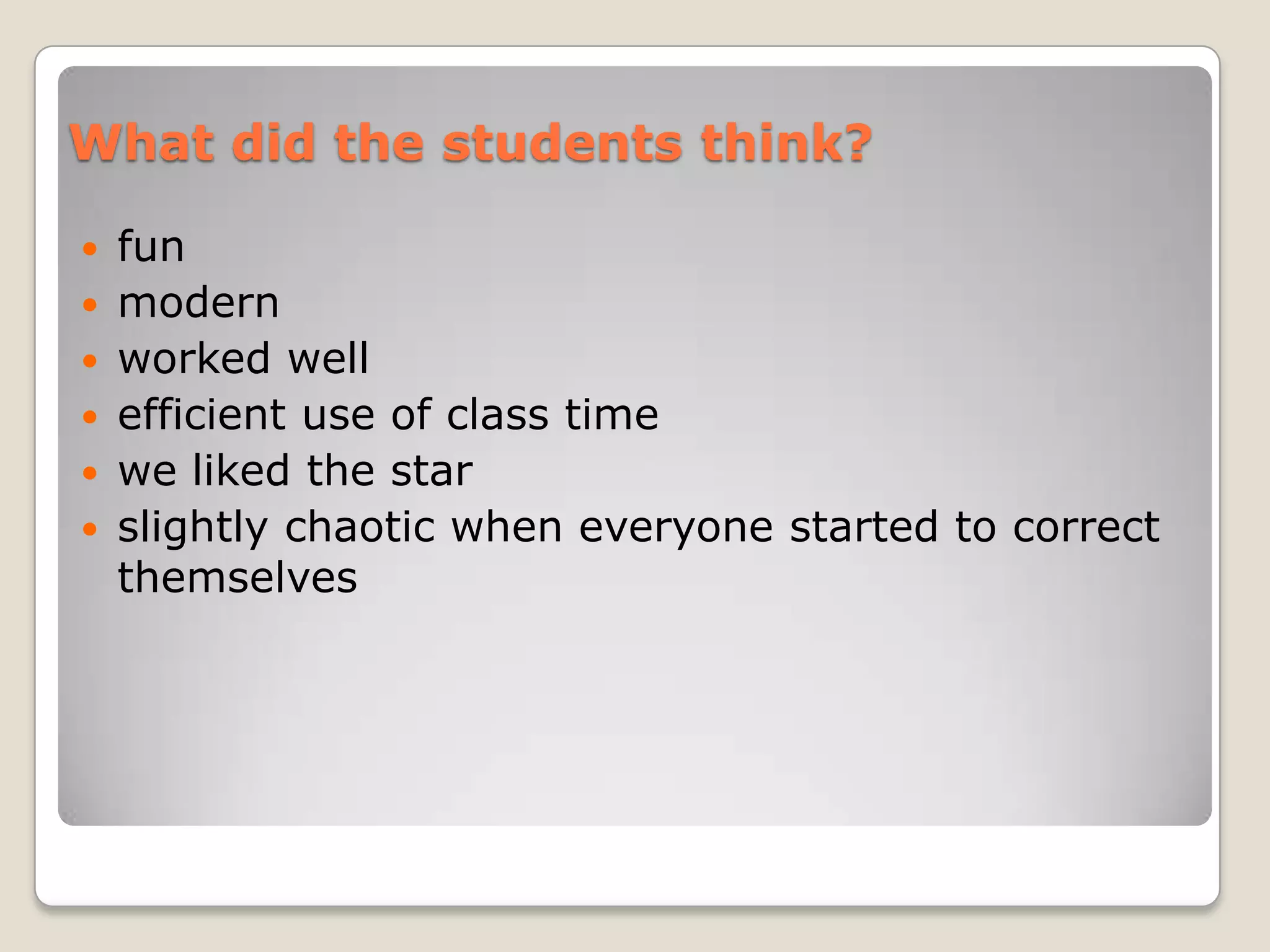
What did the students think?

 fun
 modern
 worked well
 efficient use of class time
 we liked the star
 slightly chaotic when everyone started to correct
  themselves
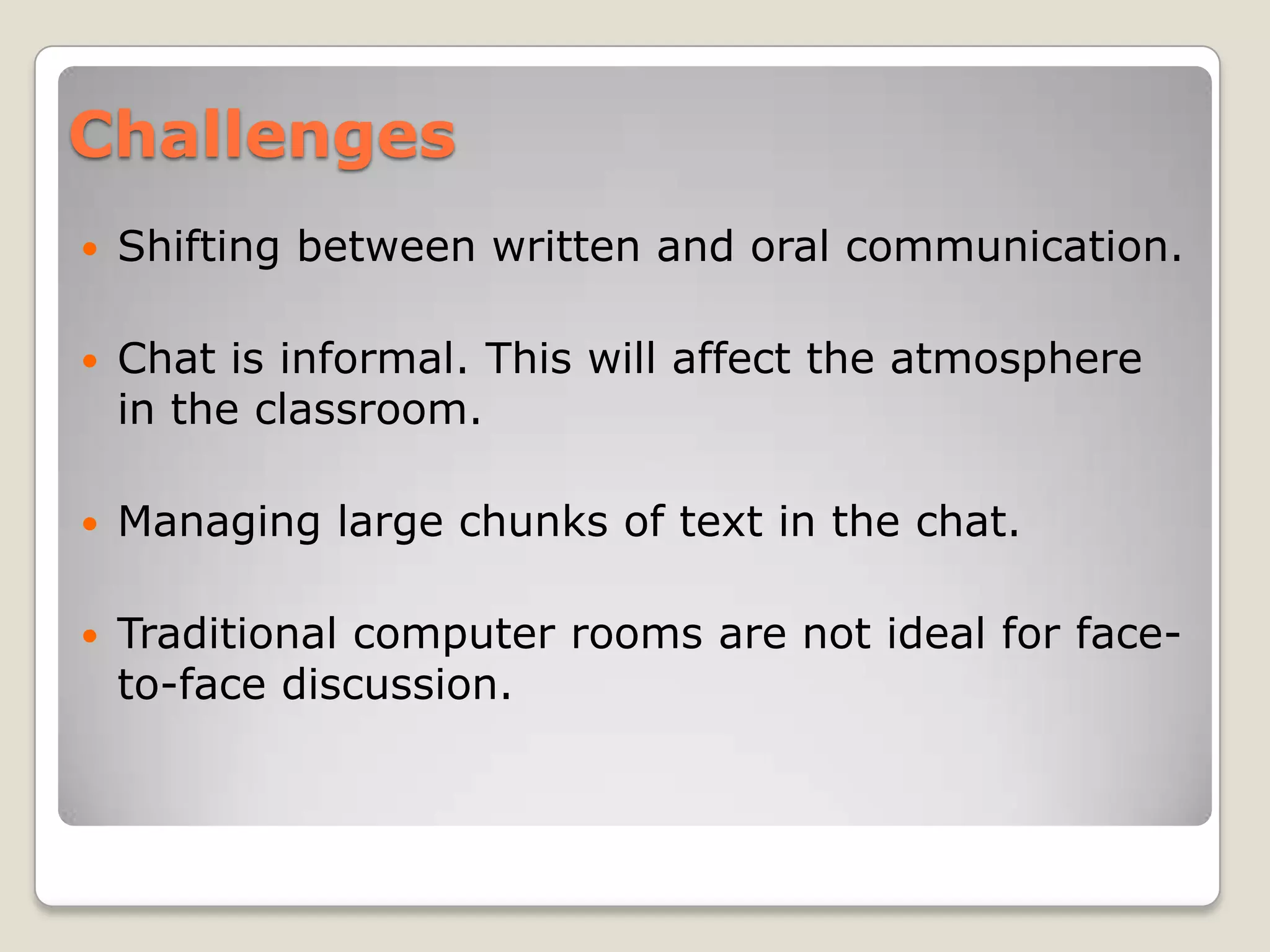
Challenges
   Shifting between written and oral communication.

   Chat is informal. This will affect the atmosphere
    in the classroom.

   Managing large chunks of text in the chat.

   Traditional computer rooms are not ideal for face-
    to-face discussion.
In conclusion
 Using polling and chat in the classroom
 creates a blend of oral and written
 interaction that caters to different learning
 styles while promoting wide student
 participation. Chat, in particular, has the
 potential to build a bridge between teacher
 assumptions and student understanding.
Thank you for your attention!


   elisabeth.wulff-sahlen@mdh.se
References
   Clyde, William & Delohery, Andrew. (2004). Using Technology in Teaching.
    Yale University Press.
   Gonzalez, Dafne. (2003) Teaching and Learning Through Chat. A Taxonomy
    of Educational Chat for EFL/ESL. Teaching English with Technology.
    Vol.3, nr. 4:57-69.
   Hrastinski, Stefan. (2007). Participating in synchronous online education.
    Akademisk avhandling. Lund: Studies in Informatics No. 6.
   Hrastinski, Stefan. (2009). Nätbaserad utbildning: en introduktion. Lund:
    Studentlitteratur.
   Mitchell, Rosamund & Myles, Florence. (1998). Second Language Learning
    Theories. London & New York: Arnold
   Prensky, Marc. Digital Natives, Digital Immigrants. On the Horizon.
    2001, Vol. 9,5.
   Reynard, Ruth. (2008). Using Chat to Move the Thinking Process Forward.
    Campus Technology. (Retrieved 5/9 2011)
    http://campustechnology.com/articles/2008/10/using-chat-to-move-the-
    thinking-process-forward.aspx
   The Twitter Experiment. (Retrieved 5/9 2011).
    http://www.youtube.com/watch?v=6WPVWDkF7U8

Polling and Chat in the Foreign Language Classroom, higher ed

  • 1.
    Interactice technology inthe FL classroom: Using polling and chat to promote student participation in campus education Elisabeth Wulff Sahlén Mälardalen University Sweden ICT for Language Learning Florence, 20-21 Oct 2011
  • 2.
  • 3.
    The traditional classroom What are you thinking? Did you understand? WHAT did you understand? What about YOU? And you?
  • 4.
    The traditional classroom If students wrote their answers in a chat, I would be able to access everyone’s understanding…
  • 5.
  • 6.
    Communication and participation Hrastinski2007 Students were more motivated to participate in chat discussions because of direct response.
  • 7.
    Chat in education  administrative information rather than supporting cognitive aspects of learning  communication in FL with native speakers and other learners  students are often more focused, thoughtful and honest in discussions online than F2F– even if in the same room!  The Twitter experiment – Twitter in the classroom to get students involved in discussion
  • 8.
    Polling and chatin the classroom – a pedagogical experiment Setting and technology On-campus course in grammar and translation for advanced learners of English Adobe Connect Pro to enable polling and chat Seminars in computer rooms, 3 students/computer Video projector to display student contributions for oral discussion
  • 9.
    Polling and chatin the classroom – a pedagogical experiment Aims promote wider student participation tap into everyone’s understanding in order to provide feedback where it is needed the most
  • 10.
    Adobe Connect Pro(ACP) A web-conferencing solution where you can ◦ communicate through audio, video and chat ◦ show power point presentations ◦ share your screen, whiteboard and files ◦ create interactive quizzes ◦ let students collaborate in small groups ◦ record the meeting and distribute the URL through e-mail or on your LMS ◦ etc… etc…
  • 11.
    An example ofACP add functionality requires Flash player through pods +internet connection pods may be moved and resized app for iphone and android switch between different layouts (”rooms”)
  • 12.
    Polling in ACP Which of these sentences contain an agreement error? Check all that apply!
  • 13.
  • 14.
    Teacher experience  notechnical problems  participation was remarkably wide throughout  reduced waiting time led to active participation  open channel between teacher and students  informal and friendly atmosphere
  • 15.
    What did thestudents think?  fun  modern  worked well  efficient use of class time  we liked the star  slightly chaotic when everyone started to correct themselves
  • 16.
    Challenges  Shifting between written and oral communication.  Chat is informal. This will affect the atmosphere in the classroom.  Managing large chunks of text in the chat.  Traditional computer rooms are not ideal for face- to-face discussion.
  • 17.
    In conclusion Usingpolling and chat in the classroom creates a blend of oral and written interaction that caters to different learning styles while promoting wide student participation. Chat, in particular, has the potential to build a bridge between teacher assumptions and student understanding.
  • 18.
    Thank you foryour attention! elisabeth.wulff-sahlen@mdh.se
  • 19.
    References  Clyde, William & Delohery, Andrew. (2004). Using Technology in Teaching. Yale University Press.  Gonzalez, Dafne. (2003) Teaching and Learning Through Chat. A Taxonomy of Educational Chat for EFL/ESL. Teaching English with Technology. Vol.3, nr. 4:57-69.  Hrastinski, Stefan. (2007). Participating in synchronous online education. Akademisk avhandling. Lund: Studies in Informatics No. 6.  Hrastinski, Stefan. (2009). Nätbaserad utbildning: en introduktion. Lund: Studentlitteratur.  Mitchell, Rosamund & Myles, Florence. (1998). Second Language Learning Theories. London & New York: Arnold  Prensky, Marc. Digital Natives, Digital Immigrants. On the Horizon. 2001, Vol. 9,5.  Reynard, Ruth. (2008). Using Chat to Move the Thinking Process Forward. Campus Technology. (Retrieved 5/9 2011) http://campustechnology.com/articles/2008/10/using-chat-to-move-the- thinking-process-forward.aspx  The Twitter Experiment. (Retrieved 5/9 2011). http://www.youtube.com/watch?v=6WPVWDkF7U8