

Appliedlinguistics: introductionFacultad de HumanidadesEscuela de Ciencias del LenguajeSeminario de Lingüística AplicadaProf. Carlos MayoraAgosto 2014
introduction 
•What is linguistics? What does a linguist do? 
•What do you think is applied linguistics? What does an applied linguist do?
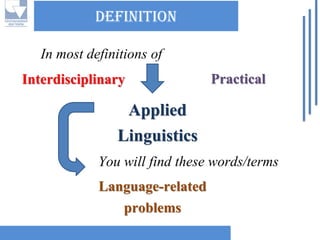
DEFINITIONApplied LinguisticsInterdisciplinaryPracticalLanguage-related problems 
In most definitions of 
You will find these words/terms
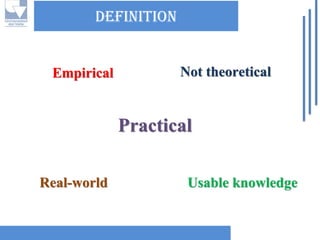
DEFINITIONNot theoreticalEmpiricalUsable knowledgePracticalReal-world
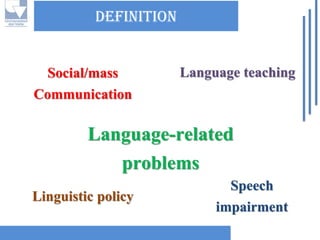
DEFINITIONSocial/massCommunicationLanguage-related problemsLanguage teachingLinguistic policySpeech impairment
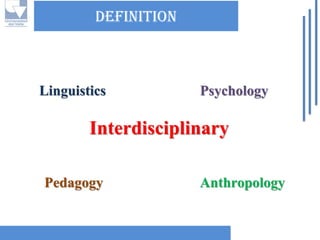
DEFINITIONLinguisticsInterdisciplinaryAnthropologyPsychologyPedagogy
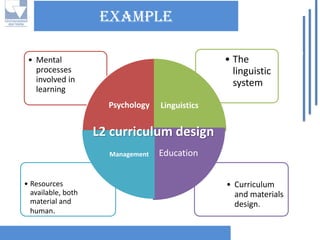
Example 
•Curriculum and materials design. 
•Resources available, both material and human. 
•The linguistic system 
•Mental processes involved in learning 
Psychology 
Linguistics 
Education 
ManagementL2 curriculumdesign
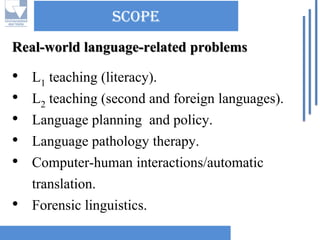
scopeReal-world language-related problems 
•L1teaching (literacy). 
•L2teaching (second and foreign languages). 
•Language planning and policy. 
•Language pathology therapy. 
•Computer-human interactions/automatic translation. 
•Forensic linguistics.
Doing applied linguisticsSources of language-related problems 
•Migration. 
•Social inequities. 
•Speech disorders. 
•Gender differences. 
•Economic development. 
•Globalization/internationalization. 
•An endless list of social, political and economic conditions…
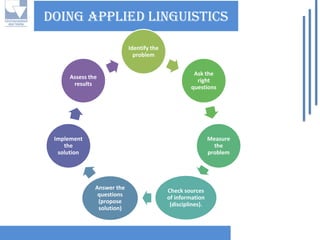
Doing applied linguistics 
Identify the problem 
Ask the right questions 
Measure the problem 
Check sources of information (disciplines). 
Answer the questions (propose solution) 
Implement the solution 
Assess the results
Example 
Country “X” wants to enter the World Trade Organization, but it has a large rate of illiteracy, a fact that may be frown down upon by international organizations. The government of “X” wants an educational program to reduce illiteracy in a short time. The problem…
Example 
1.What percentage of the population is illiterate? What age group? 
2.What is reading? 
3.What is writing? 
4.What other skills are linked to reading and writing? 
5.How do adults learn? How does learning in adulthood differ from learning in childhood? 
6.What is the deadline? The right questions…
ExampleMeasure the problem… 
•Collect data about the problem. 
•Design/Use instruments (surveys, questionnaires, tests, etc.) 
•Select a large sample that can be representative. 
•Get the numbers!
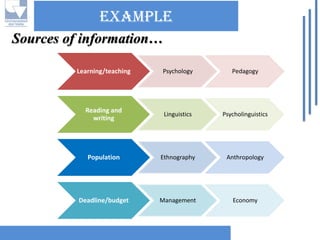
ExampleSources of information… 
Learning/teaching 
Psychology 
Pedagogy 
Reading and writing 
Linguistics 
Psycholinguistics 
Population 
Ethnography 
Anthropology 
Deadline/budget 
Management 
Economy
Example 
A nation-wide literacy program is designed considering all resources, variables and client needs. It is piloted in a few states and then launched in the whole-country. The answer…
Example 
The literacy program is continuously evaluated through… 
•Achievement tests. 
•Surveys of participants’ satisfaction. 
•Attendance records. 
•Class observations. 
Depending on the results, the program is maintained, modified or discarded. The evaluation…
practice 
In small groups of 3 to 4 people, choose one of the problems given and try to apply the process of doing applied linguistics. You will have 1 hour to discuss each of the problem and go through the process. After that, each of your proposals will be discussed as a whole class.
practice 
•A Latin-American oil company has signed an agreement with a large British company. Mixed teams will work in several projects but only a few percentage of employees speak English fluently. 
•An unknown tribe of aborigines has been “discovered” in South Australia. Linguists have studied their language and come up with a “grammar” of it. The government wants the people of this tribe to be educated and integrated with the rest of the population. 
•After a century, an African nation has gained its independence from France. There are about 17 different local languages in the country. Most people speak either his/her native language and French. The new democratic government has to make a decision regarding the official language of the newly-born nation. 
•A Korean university wants to project internationally its scientific productivity, but most of its researchers do not speak or write in English. Model problems
ThanksCarlos A. MayoraJunio 2014

Applied linguístics 1

  • 1.
    Appliedlinguistics: introductionFacultad deHumanidadesEscuela de Ciencias del LenguajeSeminario de Lingüística AplicadaProf. Carlos MayoraAgosto 2014
  • 2.
    introduction •What islinguistics? What does a linguist do? •What do you think is applied linguistics? What does an applied linguist do?
  • 3.
    DEFINITIONApplied LinguisticsInterdisciplinaryPracticalLanguage-related problems In most definitions of You will find these words/terms
  • 4.
  • 5.
  • 6.
  • 7.
    Example •Curriculum andmaterials design. •Resources available, both material and human. •The linguistic system •Mental processes involved in learning Psychology Linguistics Education ManagementL2 curriculumdesign
  • 8.
    scopeReal-world language-related problems •L1teaching (literacy). •L2teaching (second and foreign languages). •Language planning and policy. •Language pathology therapy. •Computer-human interactions/automatic translation. •Forensic linguistics.
  • 9.
    Doing applied linguisticsSourcesof language-related problems •Migration. •Social inequities. •Speech disorders. •Gender differences. •Economic development. •Globalization/internationalization. •An endless list of social, political and economic conditions…
  • 10.
    Doing applied linguistics Identify the problem Ask the right questions Measure the problem Check sources of information (disciplines). Answer the questions (propose solution) Implement the solution Assess the results
  • 11.
    Example Country “X”wants to enter the World Trade Organization, but it has a large rate of illiteracy, a fact that may be frown down upon by international organizations. The government of “X” wants an educational program to reduce illiteracy in a short time. The problem…
  • 12.
    Example 1.What percentageof the population is illiterate? What age group? 2.What is reading? 3.What is writing? 4.What other skills are linked to reading and writing? 5.How do adults learn? How does learning in adulthood differ from learning in childhood? 6.What is the deadline? The right questions…
  • 13.
    ExampleMeasure the problem… •Collect data about the problem. •Design/Use instruments (surveys, questionnaires, tests, etc.) •Select a large sample that can be representative. •Get the numbers!
  • 14.
    ExampleSources of information… Learning/teaching Psychology Pedagogy Reading and writing Linguistics Psycholinguistics Population Ethnography Anthropology Deadline/budget Management Economy
  • 15.
    Example A nation-wideliteracy program is designed considering all resources, variables and client needs. It is piloted in a few states and then launched in the whole-country. The answer…
  • 16.
    Example The literacyprogram is continuously evaluated through… •Achievement tests. •Surveys of participants’ satisfaction. •Attendance records. •Class observations. Depending on the results, the program is maintained, modified or discarded. The evaluation…
  • 17.
    practice In smallgroups of 3 to 4 people, choose one of the problems given and try to apply the process of doing applied linguistics. You will have 1 hour to discuss each of the problem and go through the process. After that, each of your proposals will be discussed as a whole class.
  • 18.
    practice •A Latin-Americanoil company has signed an agreement with a large British company. Mixed teams will work in several projects but only a few percentage of employees speak English fluently. •An unknown tribe of aborigines has been “discovered” in South Australia. Linguists have studied their language and come up with a “grammar” of it. The government wants the people of this tribe to be educated and integrated with the rest of the population. •After a century, an African nation has gained its independence from France. There are about 17 different local languages in the country. Most people speak either his/her native language and French. The new democratic government has to make a decision regarding the official language of the newly-born nation. •A Korean university wants to project internationally its scientific productivity, but most of its researchers do not speak or write in English. Model problems
  • 19.