To ; Ma’am Mahwish
Faiqa (group Leader)
Slide #20-31
Naveed akhtar
Slide #1-9
Aqsa habib
Slide # 10-14
Adeena anwar
Sliide # 15- 19
 Error analysis, a branch of “applied linguistic”
 Pit Corder is the father of Error Analysis
 Error Analysis emerged in the 1960s by S.Pit Corder
 Corder (1967) noted: “a learner’s errors are
significant in that they provide to the researcher
evidence of how language is learned or acquired,
what strategies or procedures the learner is
employing in the discovery of the language.”
 Crystal (2003) defines EA as a “technique for
identifying, classifying and systematically
interpreting the unacceptable forms produced by
someone learning a foreign language ,using any of
the principles and procedures provided by
linguistics”.
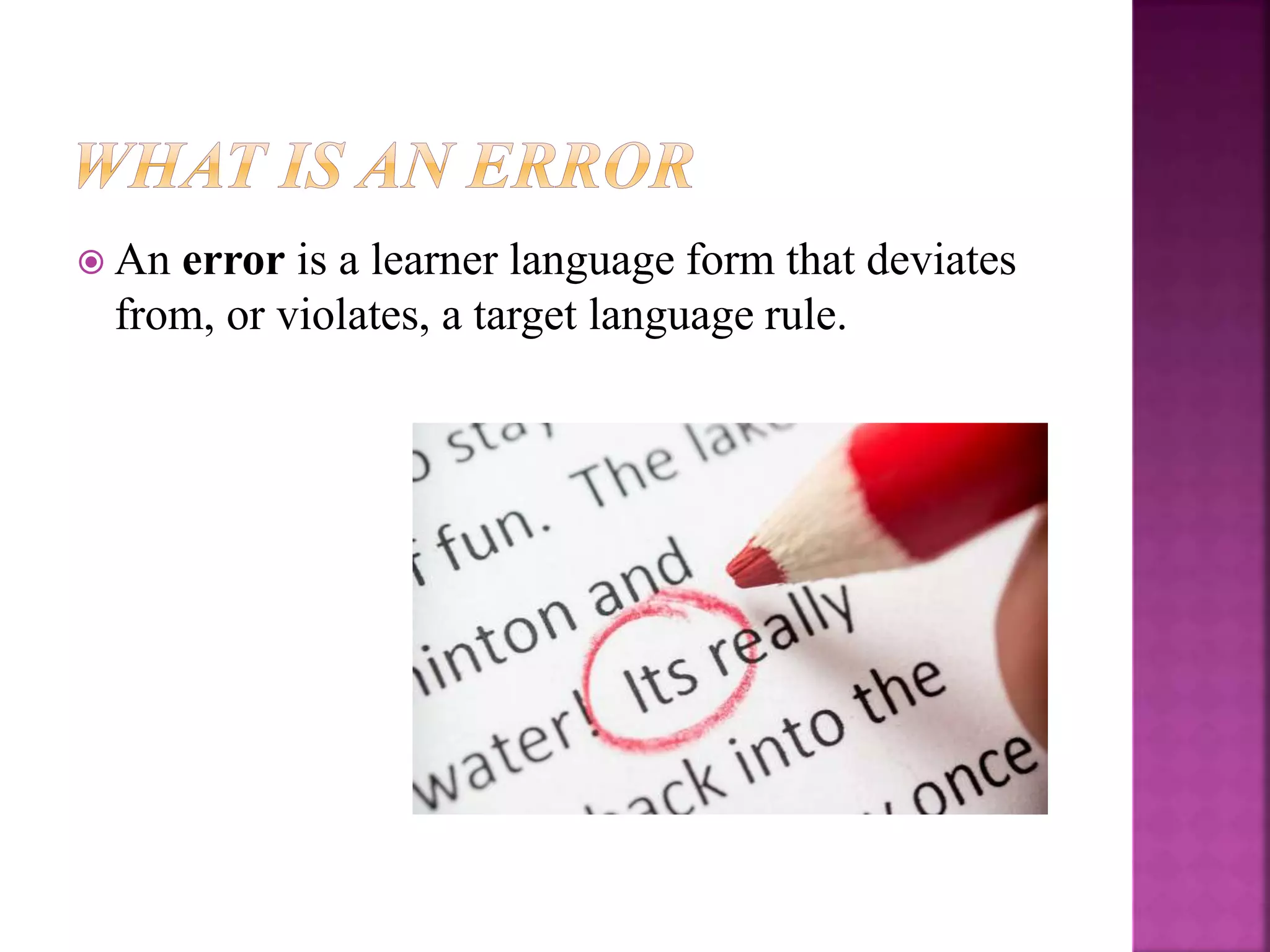
 An error is a learner language form that deviates
from, or violates, a target language rule.
 Error analysis is a type of linguistic analysis that focus on
the errors make learners.
 Ea was emerged in the answer of contrastive analysis
which aim to find the learners error due to native
language.
 It consists of a comparison between the errors made in
the target language and second language
 It is a technique to explain the learners language error.
 Error analysis is the examination of those errors
committed by the students in both the spoken and
written medium.
 Ea defines the reinforcement areas of learners.
 According to linguist Corder,the following are
the steps in any typical EA research:
 collecting samples of learner language
 identifying the errors
 describing the errors
 explaining the errors
 evaluating/correcting the errors
 CA is a technique used to define the learners
errors that are occurred in his L2 due to the
transfer of L1.
 Transfer can be of two types
1. Negative; when structure of two languages
is different and learner consider them as
same.
2. Positive; when structure of two languages
is same and learner consider them as same.
 The distinction between learner’s errors and
mistakes has always been problematic for both
teachers and researchers
 Errors are systematic and that can not be
corrected by the learners.
 Mistakes are occurred due to the lake of
competence in the learners language.
 Orthographic Errors
 Sound/letter mismatch
 Same spelling. Different pronunciation
 Similar pronunciation. Different spelling
 Ignorance of spelling rules
 Phonological Errors
 Lack of certain L2 phonemes in the learner’s L1
 Differences in syllable structures in L1 and L2
 Spelling pronunciation of words
 The problem of silnt letters
 Lexico-semantic Errors
 (related to the semantic properties of lexical items)
 * I am working 24 o’clock each week.
 * English is alive language by which everyone can
convey his ideas.
 Morphological-syntactic Errors
 Wrong use of plural morpheme
 Wrong use of tenses
 Wrong word order
 Wrong use of prepositions
 Errors in the use of articles
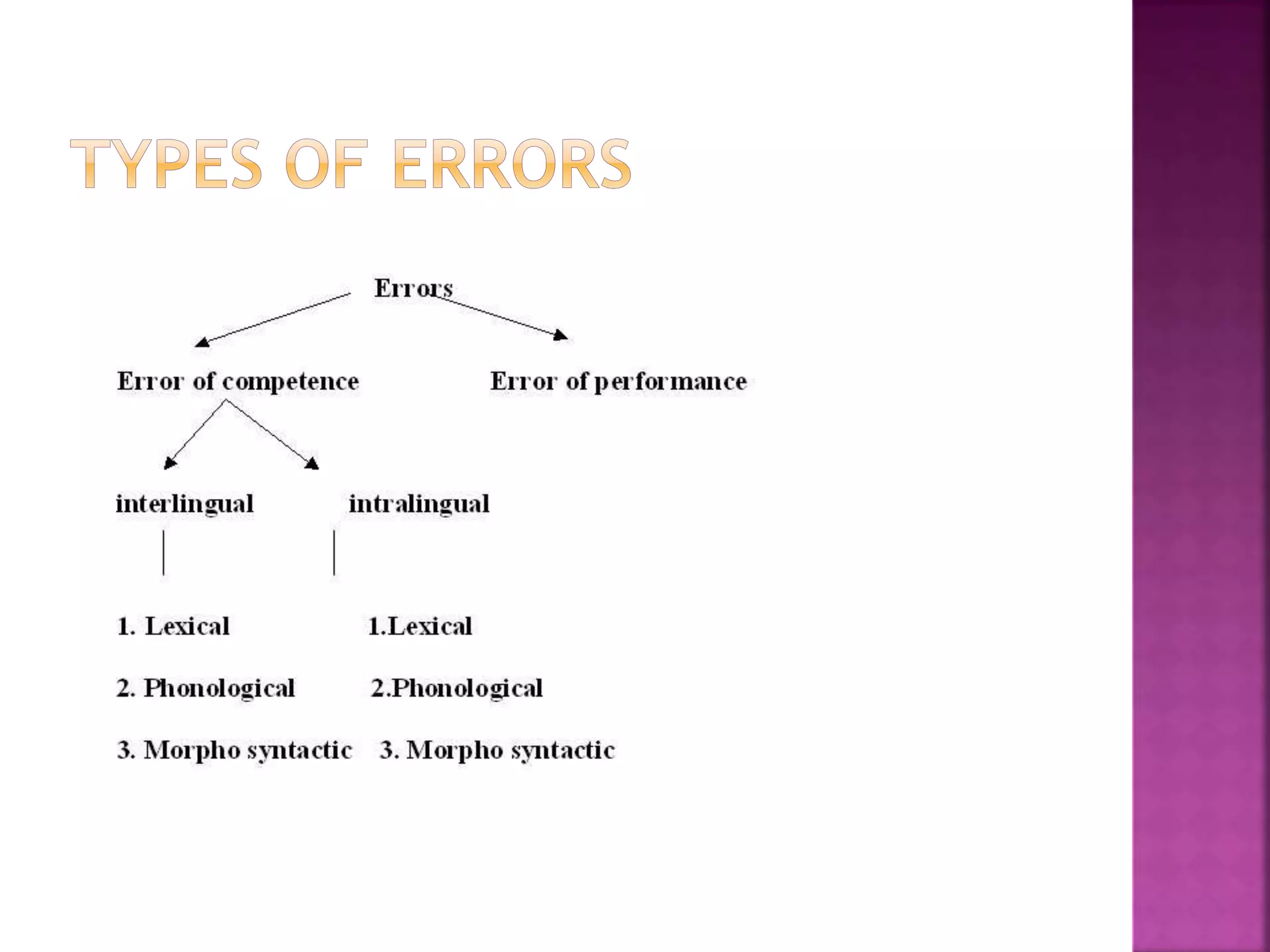
interlingual errors vs. intralingual errors
errors vs. mistakes
semantic vs. syntactic vs. semantic
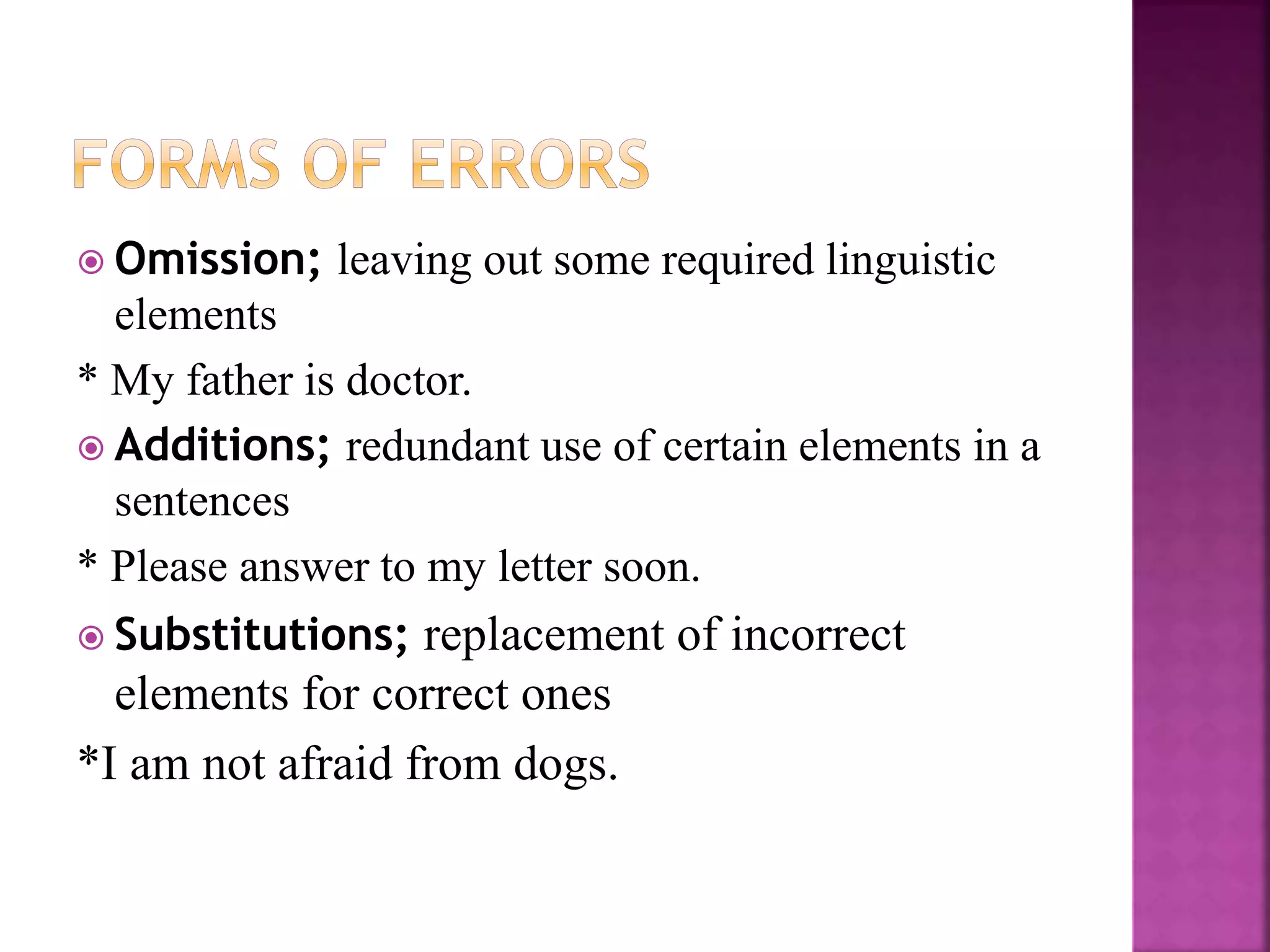
 Omission; leaving out some required linguistic
elements
* My father is doctor.
 Additions; redundant use of certain elements in a
sentences
* Please answer to my letter soon.
 Substitutions; replacement of incorrect
elements for correct ones
*I am not afraid from dogs.
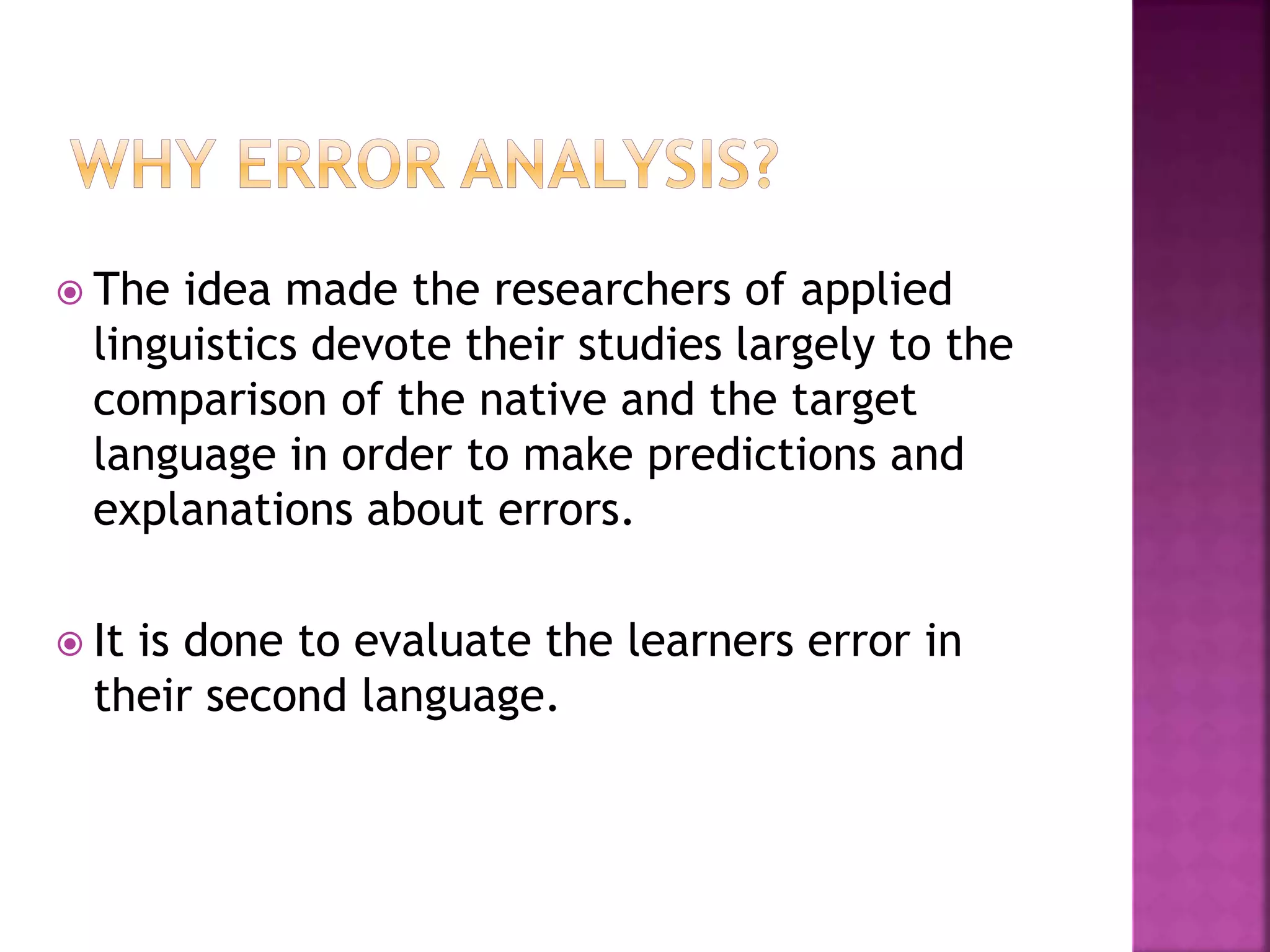
 The idea made the researchers of applied
linguistics devote their studies largely to the
comparison of the native and the target
language in order to make predictions and
explanations about errors.
 It is done to evaluate the learners error in
their second language.
 It checks for the voilation of rules
 Tell the current status of the learning of the
learner to both learner and teacher
 Errors are ‘systematic”
 Like; its occur repeatedly and not recognized
by the learner.
 Errors are of different types
 Errors cannot be self corrected by learners
 Collection of error
 Identification of error
 Classification of error types
 Statement of relative frequency of error
types
 Identification of the areas of difficulty in the
L2
 Determination of the source of error
 Determination of the seriousness of the error
 Remedy by the teacher in the classroom
 Error analysis helps to understand the
process of SLA (second language acquisition)
 Error analysis shows the troublesome
linguistic areas or errors that L2 learners
encounter in learning
 It showed that Contrastive Analysis was unable to
predict a great majority of errors.
 The errors give valuable feedback to both
teachers and learners regarding strategies
and progress.
 The error also provides research with insights
into the nature of SLA process
 Error analysis is useful in second language
learning because it reveals to us.
 Teaching strategies
 Syllabus designing
 Textbook writers of what the problems areas
are.
Error anaalysis is a useful technique to define the
learners errors of second language.
It is beneficial to the learner and the teacher both
It is compulsory to evaluate the current status of
the learner
It also indicate the problem areas and the solutions
of them
It explores the reinforcement areas of the learners
It helps to acquire linguistic rules of second
language
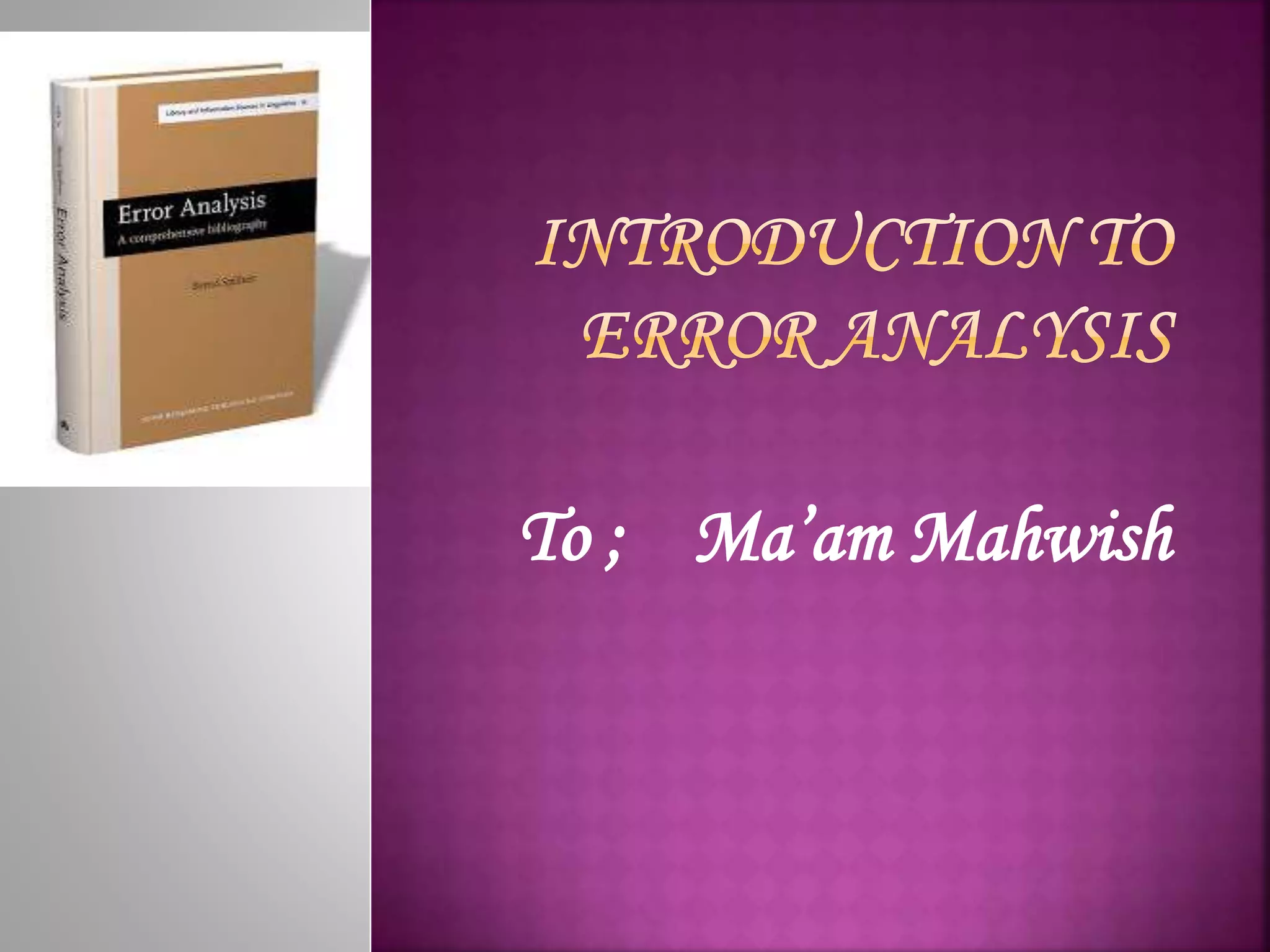
Introduction to error analysis

Introduction to error analysis

  • 1.
    To ; Ma’amMahwish
  • 2.
    Faiqa (group Leader) Slide#20-31 Naveed akhtar Slide #1-9 Aqsa habib Slide # 10-14 Adeena anwar Sliide # 15- 19
  • 3.
     Error analysis,a branch of “applied linguistic”  Pit Corder is the father of Error Analysis  Error Analysis emerged in the 1960s by S.Pit Corder  Corder (1967) noted: “a learner’s errors are significant in that they provide to the researcher evidence of how language is learned or acquired, what strategies or procedures the learner is employing in the discovery of the language.”
  • 4.
     Crystal (2003)defines EA as a “technique for identifying, classifying and systematically interpreting the unacceptable forms produced by someone learning a foreign language ,using any of the principles and procedures provided by linguistics”.
  • 6.
     An erroris a learner language form that deviates from, or violates, a target language rule.
  • 8.
     Error analysisis a type of linguistic analysis that focus on the errors make learners.  Ea was emerged in the answer of contrastive analysis which aim to find the learners error due to native language.  It consists of a comparison between the errors made in the target language and second language  It is a technique to explain the learners language error.
  • 9.
     Error analysisis the examination of those errors committed by the students in both the spoken and written medium.  Ea defines the reinforcement areas of learners.
  • 10.
     According tolinguist Corder,the following are the steps in any typical EA research:  collecting samples of learner language  identifying the errors  describing the errors  explaining the errors  evaluating/correcting the errors
  • 12.
     CA isa technique used to define the learners errors that are occurred in his L2 due to the transfer of L1.  Transfer can be of two types 1. Negative; when structure of two languages is different and learner consider them as same. 2. Positive; when structure of two languages is same and learner consider them as same.
  • 13.
     The distinctionbetween learner’s errors and mistakes has always been problematic for both teachers and researchers
  • 14.
     Errors aresystematic and that can not be corrected by the learners.  Mistakes are occurred due to the lake of competence in the learners language.
  • 15.
     Orthographic Errors Sound/letter mismatch  Same spelling. Different pronunciation  Similar pronunciation. Different spelling  Ignorance of spelling rules  Phonological Errors  Lack of certain L2 phonemes in the learner’s L1  Differences in syllable structures in L1 and L2  Spelling pronunciation of words  The problem of silnt letters
  • 16.
     Lexico-semantic Errors (related to the semantic properties of lexical items)  * I am working 24 o’clock each week.  * English is alive language by which everyone can convey his ideas.  Morphological-syntactic Errors  Wrong use of plural morpheme  Wrong use of tenses  Wrong word order  Wrong use of prepositions  Errors in the use of articles
  • 17.
    interlingual errors vs.intralingual errors errors vs. mistakes semantic vs. syntactic vs. semantic
  • 19.
     Omission; leavingout some required linguistic elements * My father is doctor.  Additions; redundant use of certain elements in a sentences * Please answer to my letter soon.  Substitutions; replacement of incorrect elements for correct ones *I am not afraid from dogs.
  • 20.
     The ideamade the researchers of applied linguistics devote their studies largely to the comparison of the native and the target language in order to make predictions and explanations about errors.  It is done to evaluate the learners error in their second language.
  • 21.
     It checksfor the voilation of rules  Tell the current status of the learning of the learner to both learner and teacher
  • 23.
     Errors are‘systematic”  Like; its occur repeatedly and not recognized by the learner.  Errors are of different types  Errors cannot be self corrected by learners
  • 24.
     Collection oferror  Identification of error  Classification of error types  Statement of relative frequency of error types  Identification of the areas of difficulty in the L2  Determination of the source of error  Determination of the seriousness of the error  Remedy by the teacher in the classroom
  • 26.
     Error analysishelps to understand the process of SLA (second language acquisition)  Error analysis shows the troublesome linguistic areas or errors that L2 learners encounter in learning  It showed that Contrastive Analysis was unable to predict a great majority of errors.
  • 27.
     The errorsgive valuable feedback to both teachers and learners regarding strategies and progress.  The error also provides research with insights into the nature of SLA process
  • 28.
     Error analysisis useful in second language learning because it reveals to us.  Teaching strategies  Syllabus designing  Textbook writers of what the problems areas are.
  • 29.
    Error anaalysis isa useful technique to define the learners errors of second language. It is beneficial to the learner and the teacher both It is compulsory to evaluate the current status of the learner It also indicate the problem areas and the solutions of them It explores the reinforcement areas of the learners It helps to acquire linguistic rules of second language