Input and slaFacultad de HumanidadesEscuela de Ciencias del LenguajeSeminario de Lingüística AplicadaProf. Carlos MayoraOctubre 2014
introduction 
•In your process of learning a foreign language, what has been the main source of exposure to the target language? 
•Apart from classes, where else can you get in touch with the language? 
•How important do you think that contact is?
input 
Any samples of the target language the learner is exposed to.
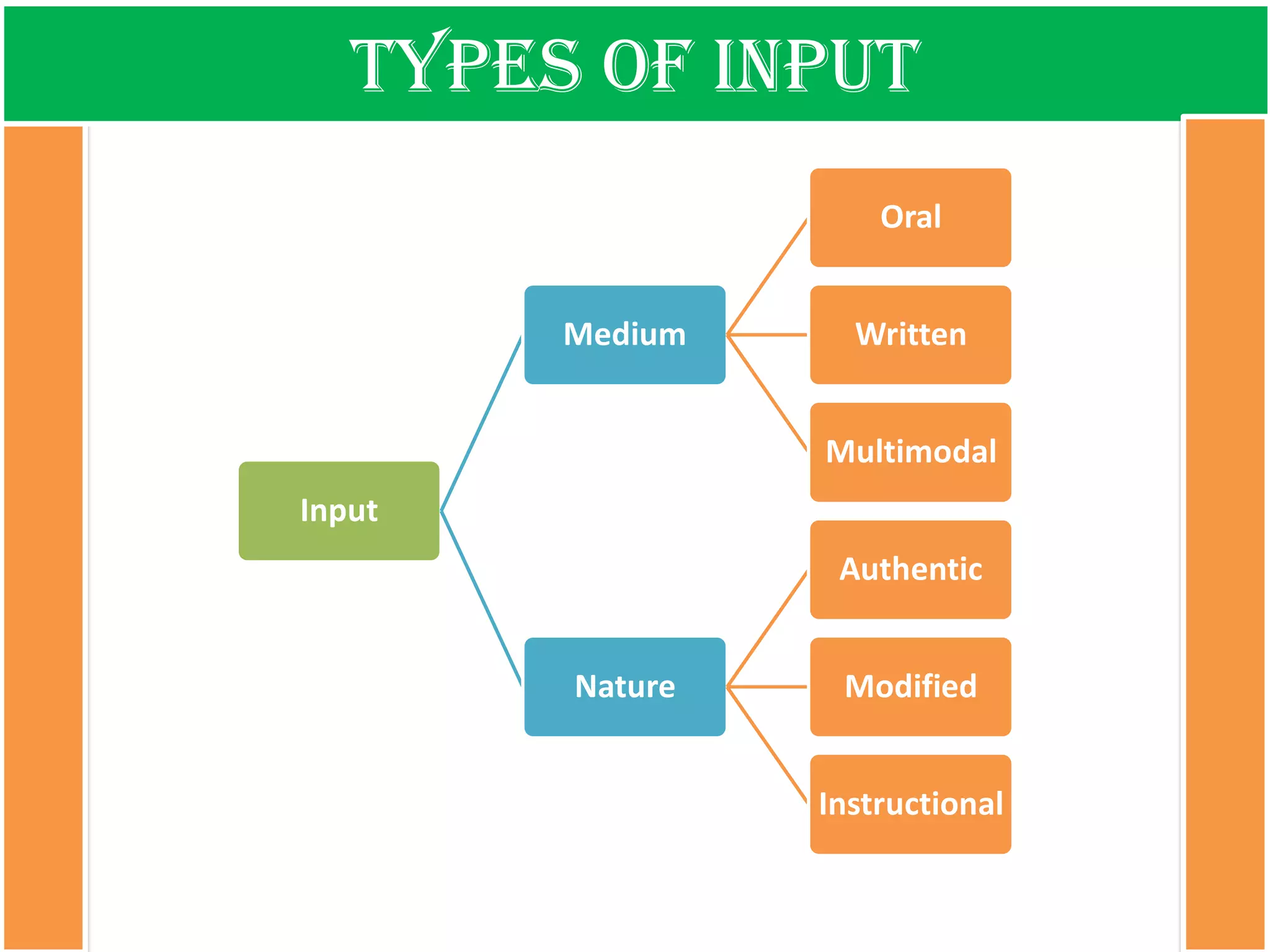
Typesof input 
Input 
Medium 
Oral 
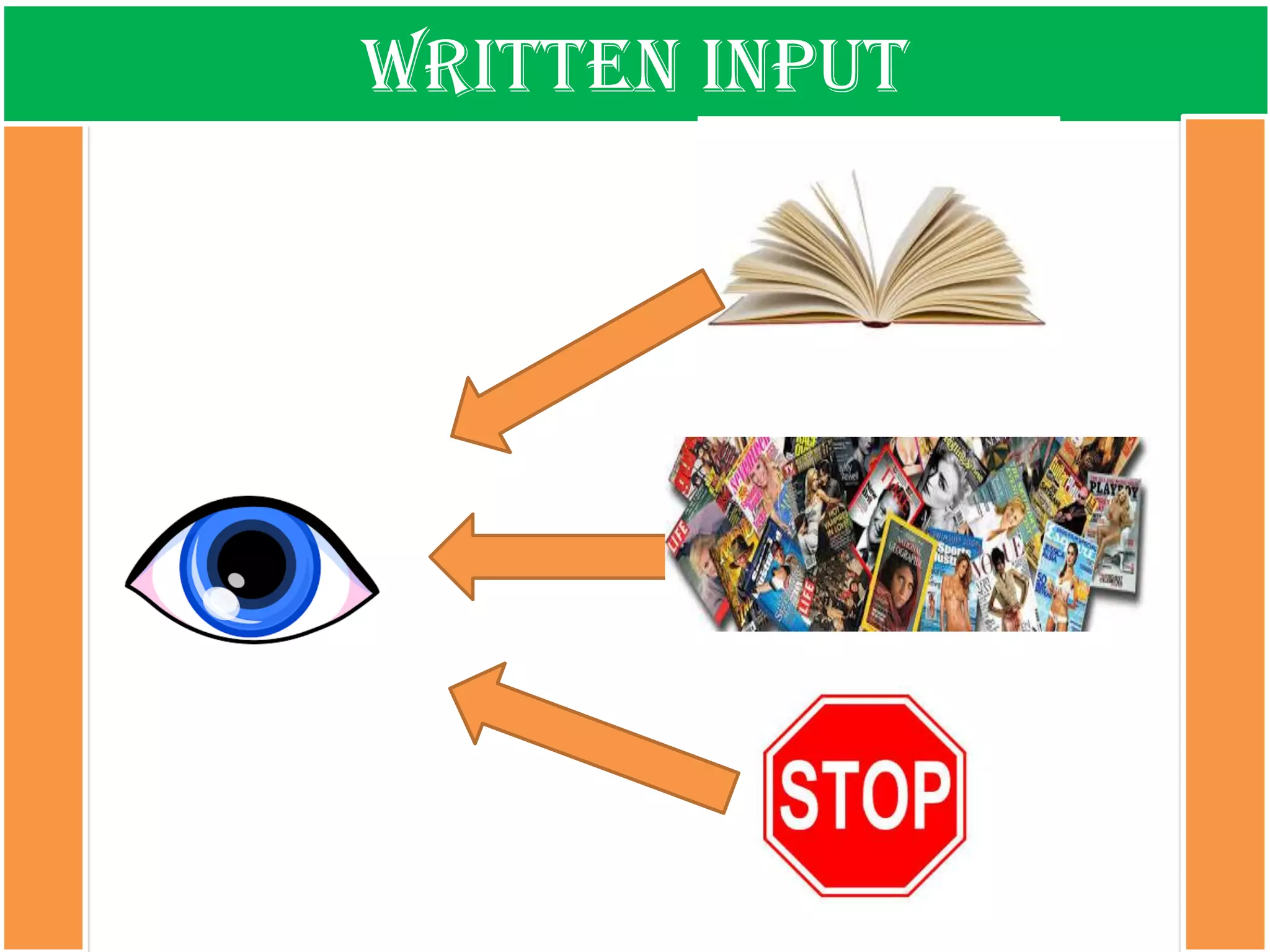
Written 
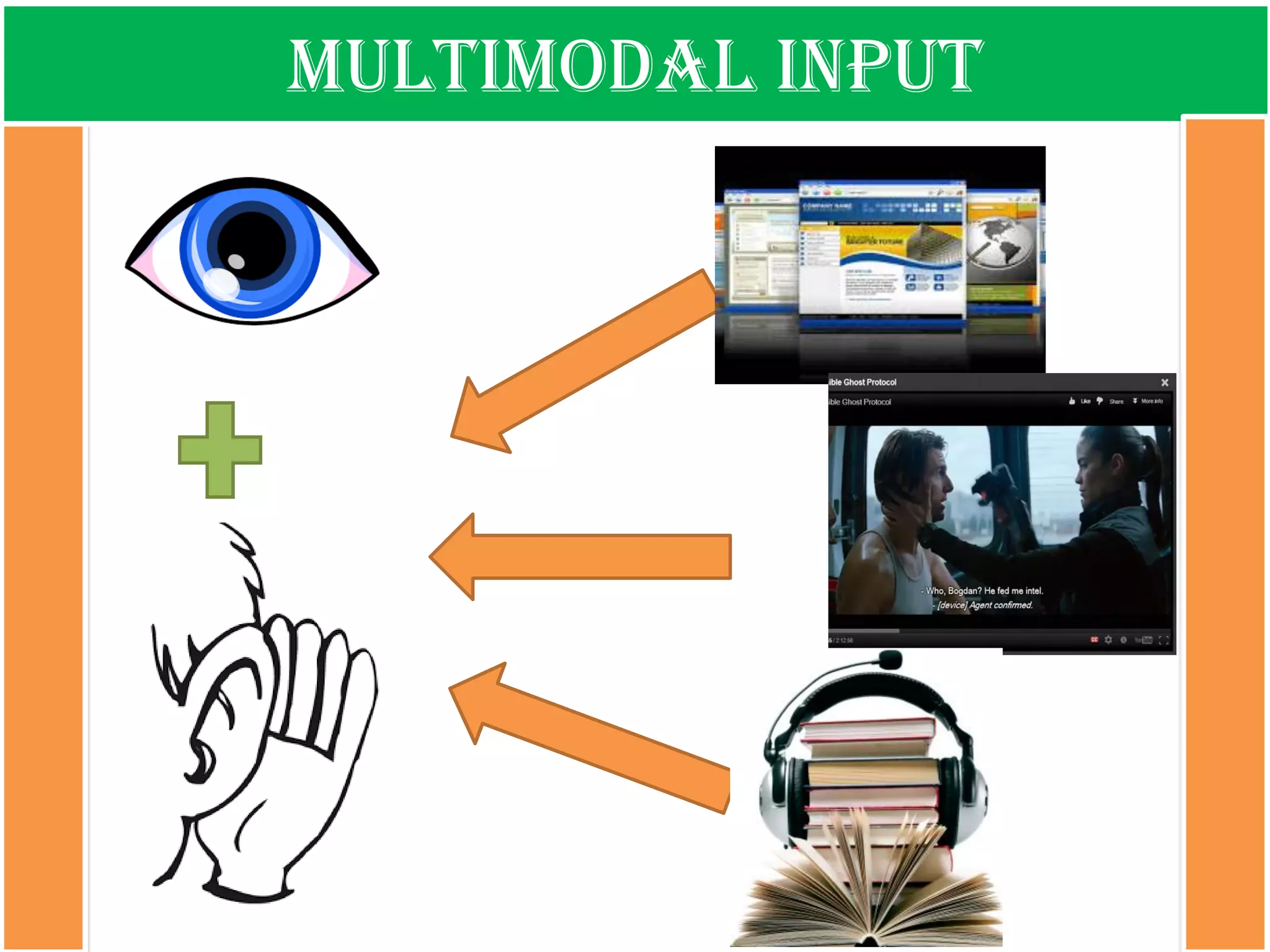
Multimodal 
Nature 
Authentic 
Modified 
Instructional
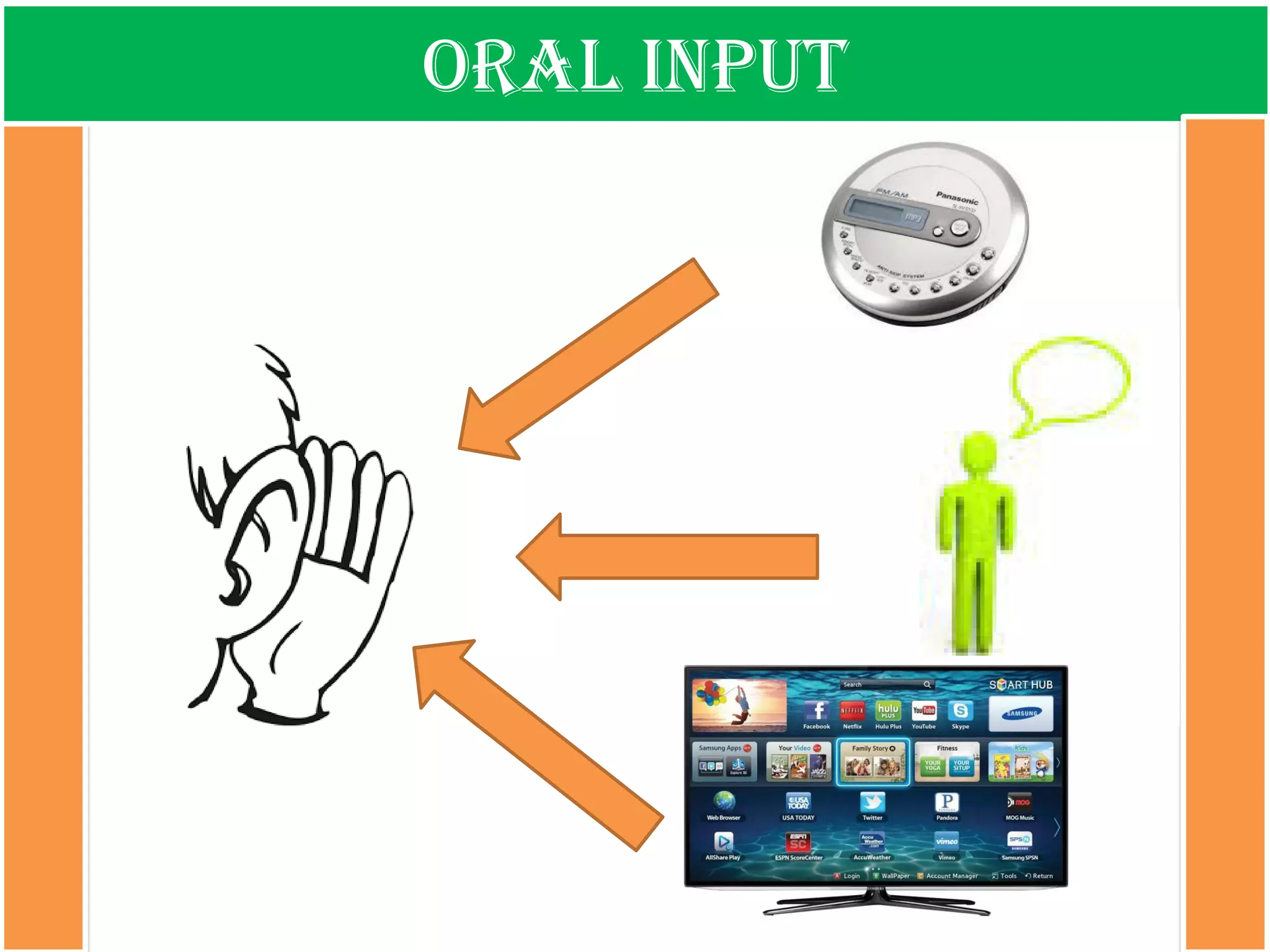
Oral input
Writteninput
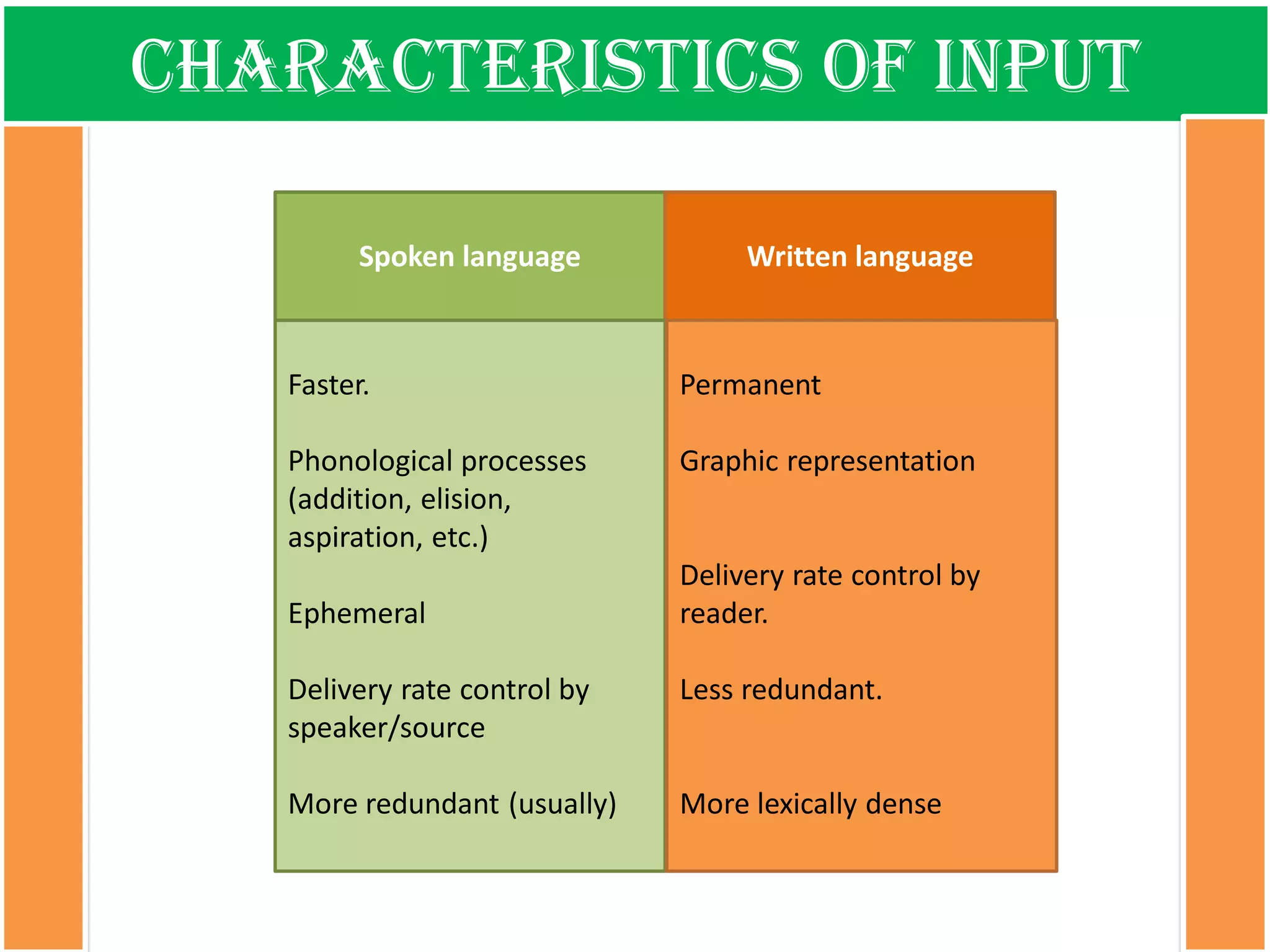
Characteristics of input 
Spoken language 
Written language 
Faster. 
Phonological processes (addition, elision, aspiration, etc.) 
Ephemeral 
Delivery rate control by speaker/source 
More redundant(usually) 
Permanent 
Graphic representation 
Delivery rate control by reader. 
Less redundant. 
More lexically dense
Multimodal input
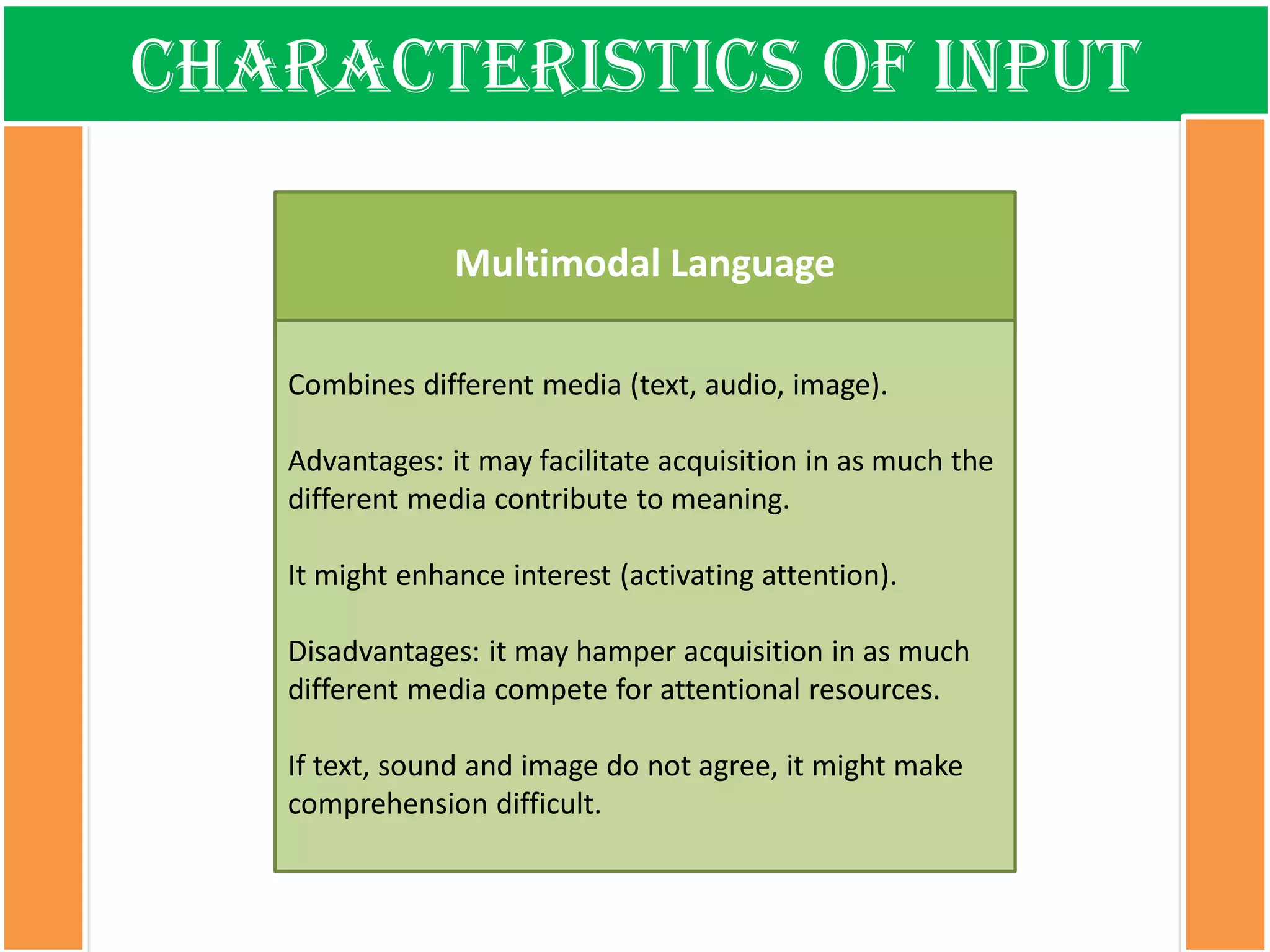
Characteristics of input 
Multimodal Language 
Combines differentmedia (text, audio, image). 
Advantages: itmayfacilitateacquisitionin as muchthedifferentmedia contributeto meaning. 
Itmightenhanceinterest(activatingattention). 
Disadvantages: itmayhamperacquisitionin as muchdifferentmedia compete forattentionalresources. 
Iftext, soundand imagedo notagree, itmightmakecomprehensiondifficult.
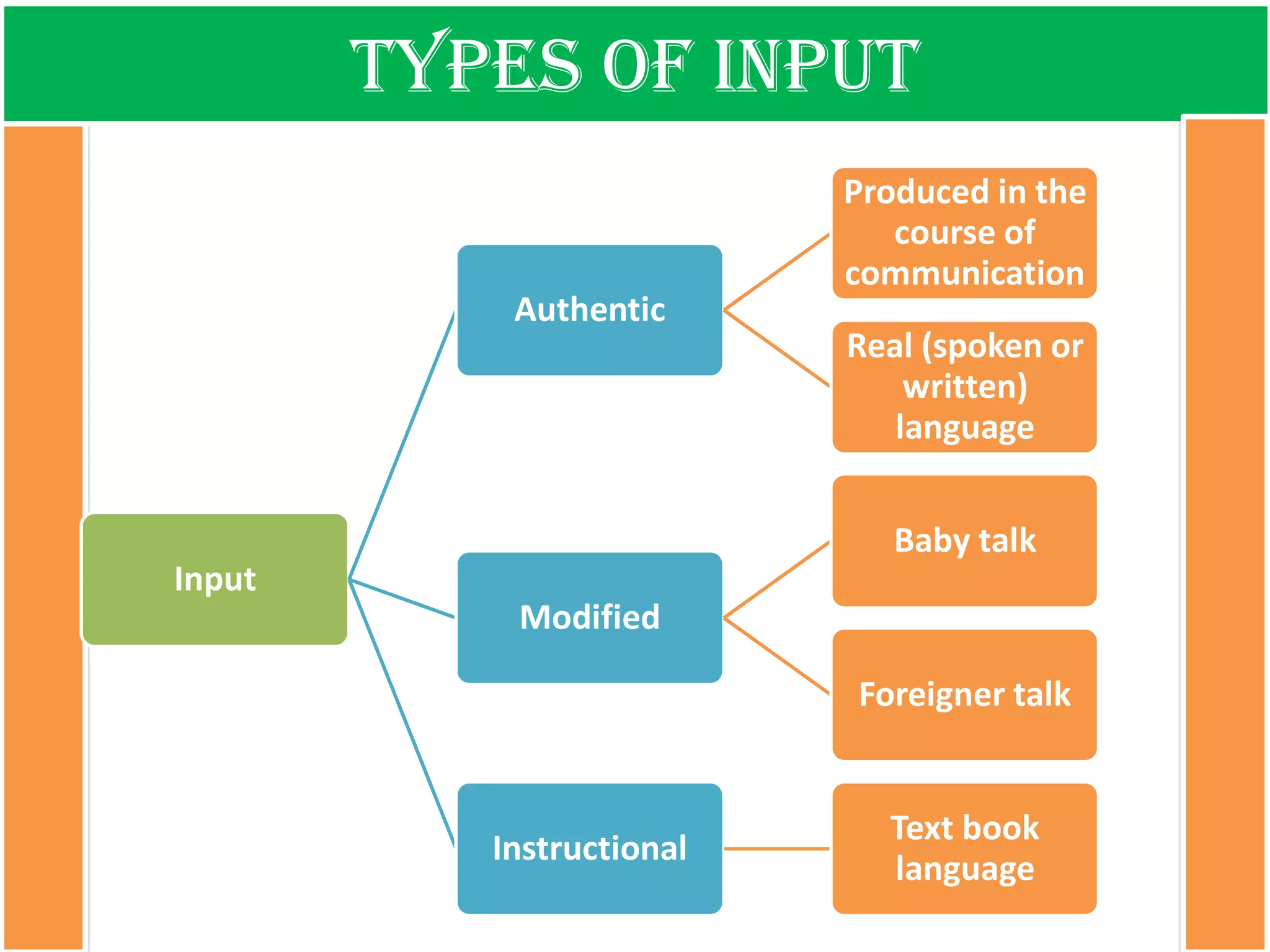
Typesof input 
Input 
Authentic 
Produced in the course of communication 
Real (spoken or written) language 
Modified 
Baby talk 
Foreigner talk 
Instructional 
Text book language
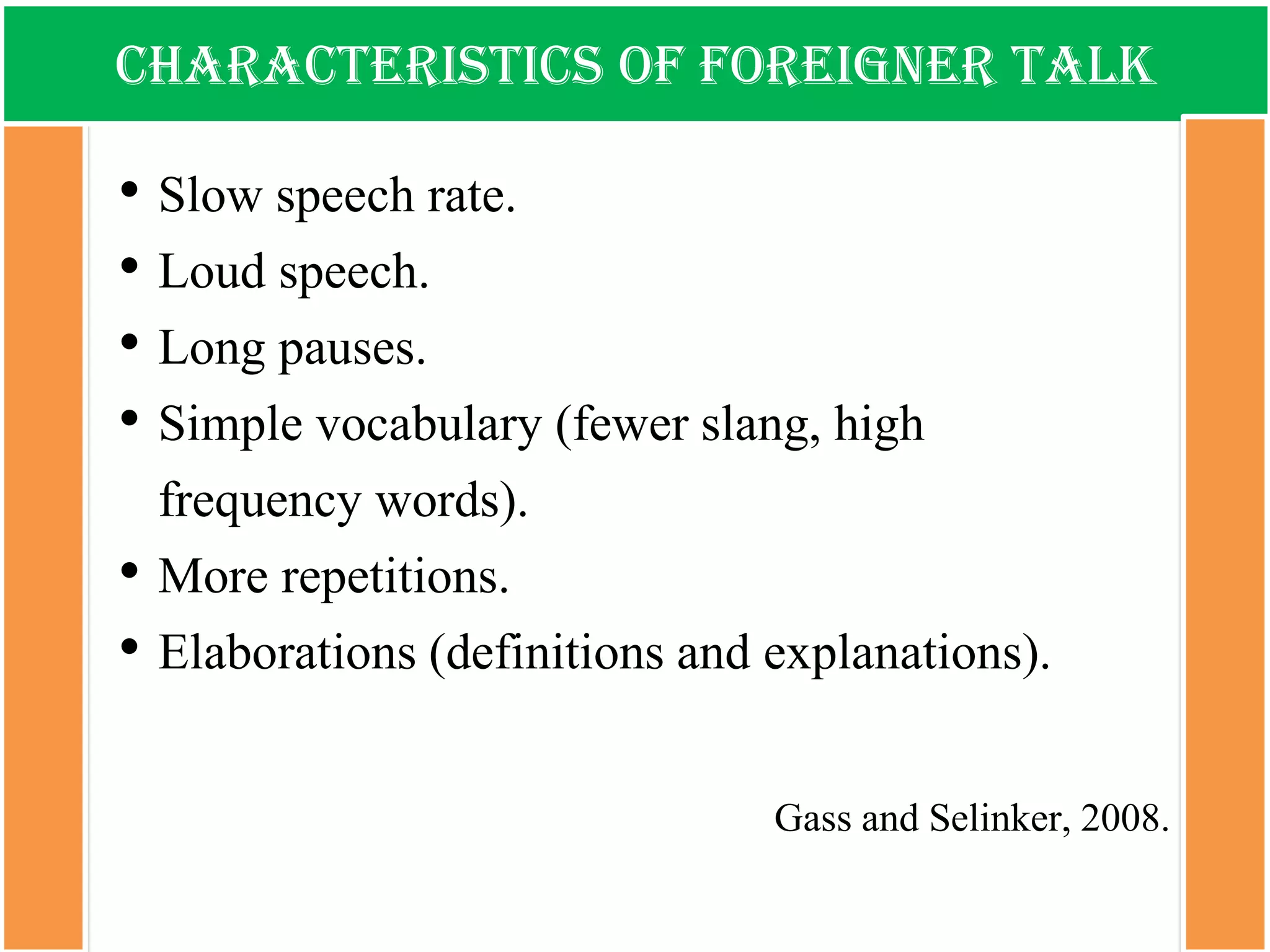
Characteristics of foreigner talk 
•Slow speech rate. 
•Loud speech. 
•Long pauses. 
•Simple vocabulary (fewer slang, high frequency words). 
•More repetitions. 
•Elaborations (definitions and explanations). 
Gassand Selinker, 2008.
Related concepts 
•Comprehensible input 
•Apperceived input 
•Intake 
•Noticing
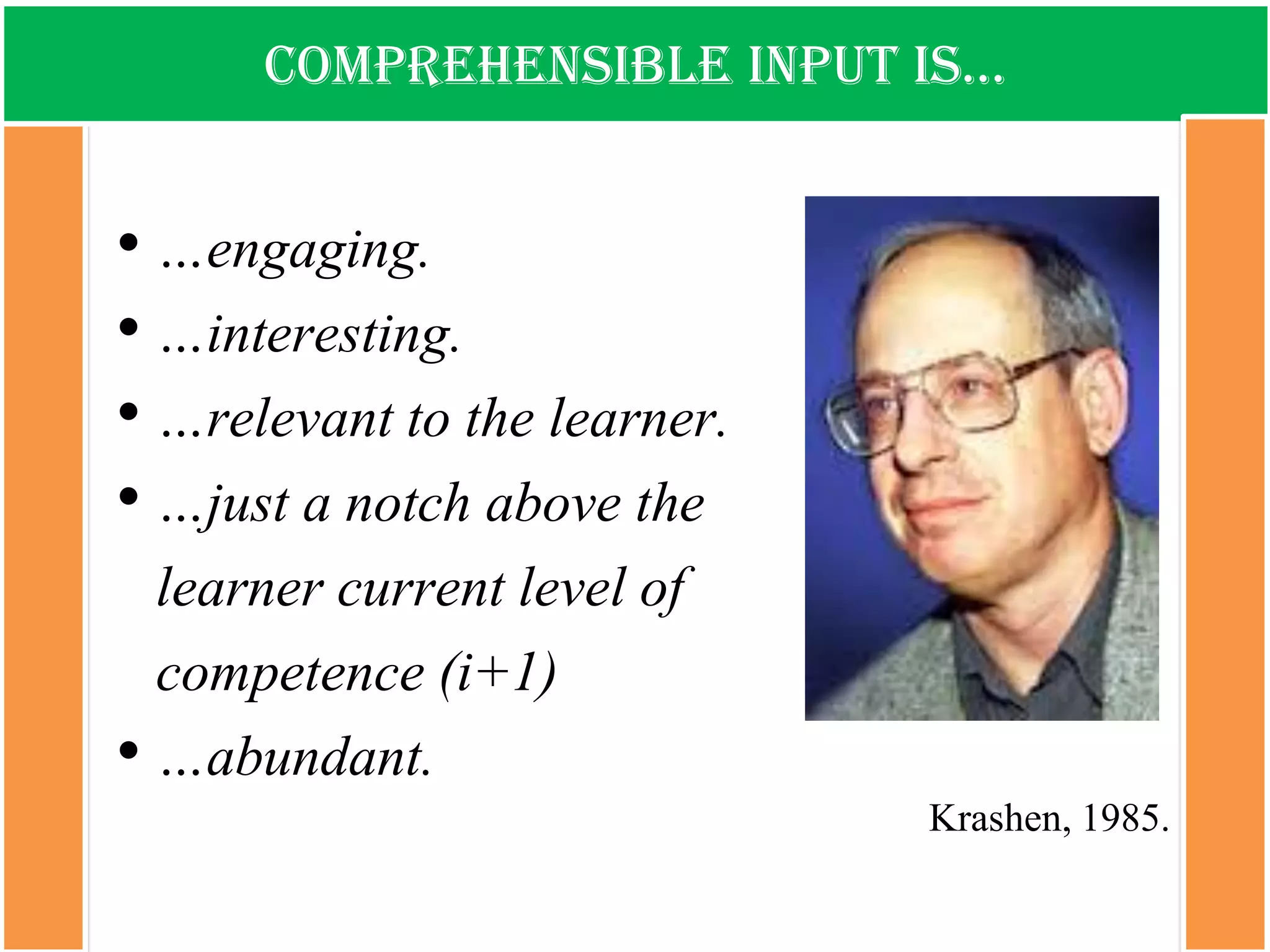
Comprehensible input is… 
•…engaging. 
•…interesting. 
•…relevant to the learner. 
•…just a notch above the learner current level of competence (i+1) 
•…abundant. 
Krashen, 1985.
apperCeived input is… 
…anystructurein theinput thatis“noticed” becauseitisidentifiedand relatedto someformof prior knowledge. 
Gassand Selinker, 2008.
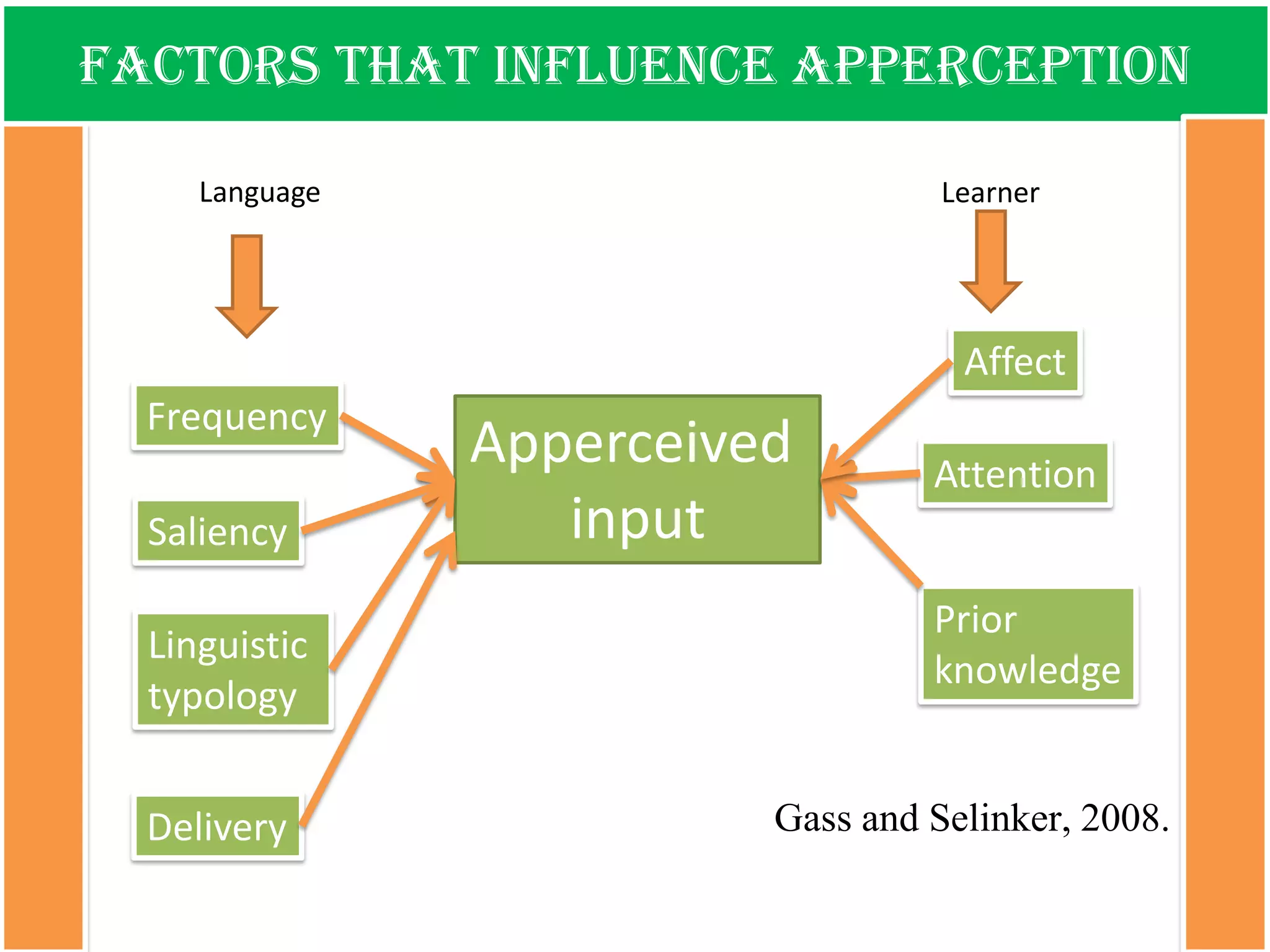
Factors that influence apperception 
Gassand Selinker, 2008. 
Apperceived 
input 
Prior 
knowledge 
Attention 
Affect 
Frequency 
Saliency 
Language 
Learner 
Linguistic 
typology 
Delivery
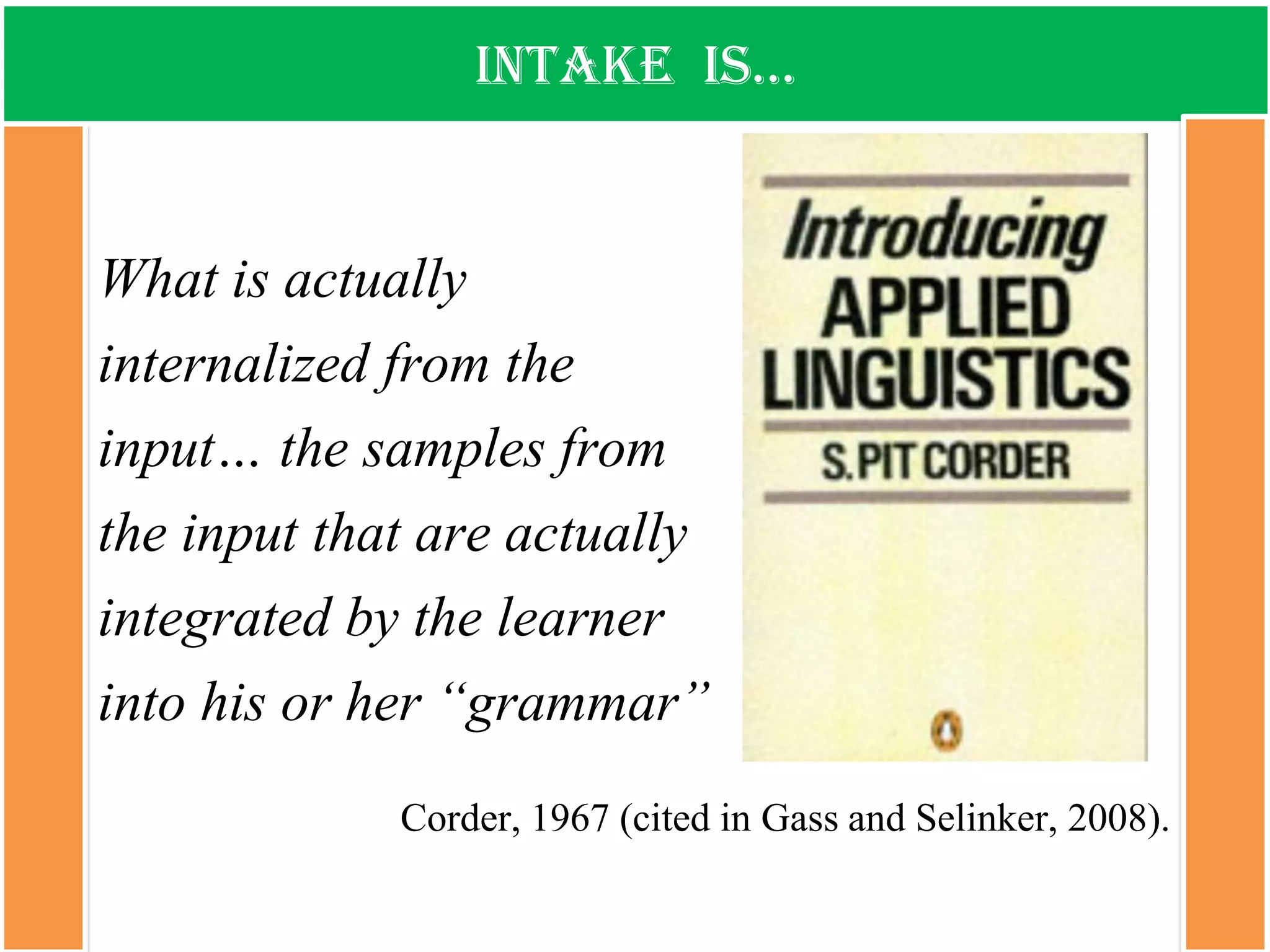
intake is… 
What is actually internalized from the input… the samples from the input that are actually integrated by the learner into his or her “grammar” 
Corder, 1967 (cited in Gassand Selinker, 2008).
From input to intake 
•Attention is neccessaryfor input to become intake. 
•Learners process input for meaning first. 
•Learner usually process the first and last elements in an utterance. 
•Meaning and grammar compete for attentional resources. 
VanPattern, 2002 (cited in Mitchell and Myles, 2004).
notiCing is… 
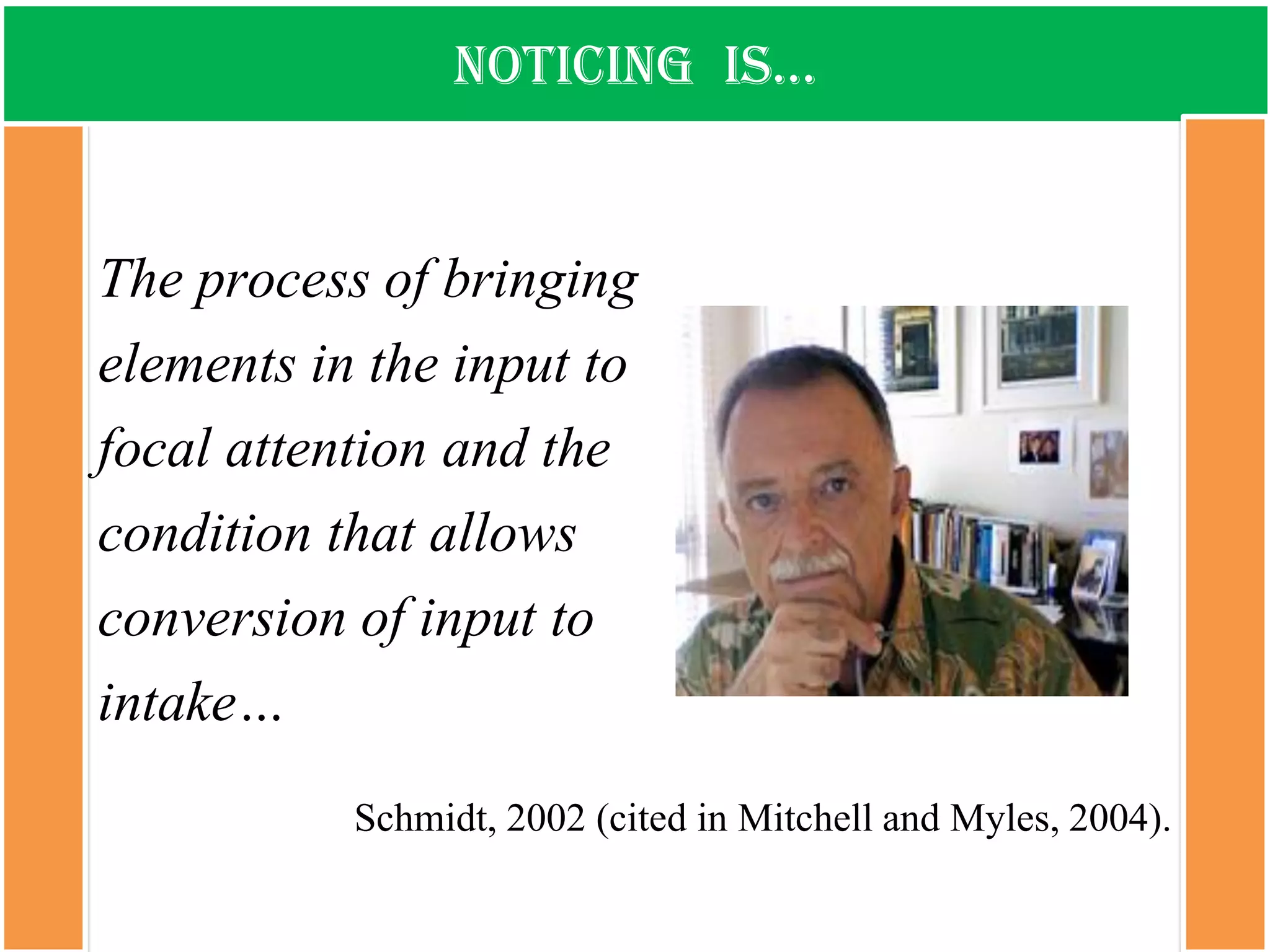
The process of bringing elements in the input to focal attention and the condition that allows conversion of input to intake… 
Schmidt, 2002 (cited in Mitchell and Myles, 2004).
conclusions 
Foreign language teachers should…
references 
•Gass, S. & Selinker, L. (2008). Secondlanguageacquisition. Anintroductorycourse(thirdedition). New York: Routledge. 
•Krashen, S. (1985). TheInput Hypothesis. New York: Longman. 
•Mitchell, R. & Myles, F. (2004) Second language learning theories(second edition).London: Hodder Arnold.

Input and SLA

  • 1.
    Input and slaFacultadde HumanidadesEscuela de Ciencias del LenguajeSeminario de Lingüística AplicadaProf. Carlos MayoraOctubre 2014
  • 2.
    introduction •In yourprocess of learning a foreign language, what has been the main source of exposure to the target language? •Apart from classes, where else can you get in touch with the language? •How important do you think that contact is?
  • 3.
    input Any samplesof the target language the learner is exposed to.
  • 4.
    Typesof input Input Medium Oral Written Multimodal Nature Authentic Modified Instructional
  • 5.
  • 6.
  • 7.
    Characteristics of input Spoken language Written language Faster. Phonological processes (addition, elision, aspiration, etc.) Ephemeral Delivery rate control by speaker/source More redundant(usually) Permanent Graphic representation Delivery rate control by reader. Less redundant. More lexically dense
  • 8.
  • 9.
    Characteristics of input Multimodal Language Combines differentmedia (text, audio, image). Advantages: itmayfacilitateacquisitionin as muchthedifferentmedia contributeto meaning. Itmightenhanceinterest(activatingattention). Disadvantages: itmayhamperacquisitionin as muchdifferentmedia compete forattentionalresources. Iftext, soundand imagedo notagree, itmightmakecomprehensiondifficult.
  • 10.
    Typesof input Input Authentic Produced in the course of communication Real (spoken or written) language Modified Baby talk Foreigner talk Instructional Text book language
  • 11.
    Characteristics of foreignertalk •Slow speech rate. •Loud speech. •Long pauses. •Simple vocabulary (fewer slang, high frequency words). •More repetitions. •Elaborations (definitions and explanations). Gassand Selinker, 2008.
  • 12.
    Related concepts •Comprehensibleinput •Apperceived input •Intake •Noticing
  • 13.
    Comprehensible input is… •…engaging. •…interesting. •…relevant to the learner. •…just a notch above the learner current level of competence (i+1) •…abundant. Krashen, 1985.
  • 14.
    apperCeived input is… …anystructurein theinput thatis“noticed” becauseitisidentifiedand relatedto someformof prior knowledge. Gassand Selinker, 2008.
  • 15.
    Factors that influenceapperception Gassand Selinker, 2008. Apperceived input Prior knowledge Attention Affect Frequency Saliency Language Learner Linguistic typology Delivery
  • 16.
    intake is… Whatis actually internalized from the input… the samples from the input that are actually integrated by the learner into his or her “grammar” Corder, 1967 (cited in Gassand Selinker, 2008).
  • 17.
    From input tointake •Attention is neccessaryfor input to become intake. •Learners process input for meaning first. •Learner usually process the first and last elements in an utterance. •Meaning and grammar compete for attentional resources. VanPattern, 2002 (cited in Mitchell and Myles, 2004).
  • 18.
    notiCing is… Theprocess of bringing elements in the input to focal attention and the condition that allows conversion of input to intake… Schmidt, 2002 (cited in Mitchell and Myles, 2004).
  • 19.
    conclusions Foreign languageteachers should…
  • 20.
    references •Gass, S.& Selinker, L. (2008). Secondlanguageacquisition. Anintroductorycourse(thirdedition). New York: Routledge. •Krashen, S. (1985). TheInput Hypothesis. New York: Longman. •Mitchell, R. & Myles, F. (2004) Second language learning theories(second edition).London: Hodder Arnold.