Agenda                   Bell Work
• Periodic Table Review • What is the ionic charge
                          for:
• Notes: Bohr Model        – Magnesium that loses 2 e-
                           – Fluorine that gains 1 e-
                         • Draw the isotopic symbol
                           for the following:
                           Carbon – 14
                           Hydrogen - 3
                         • Pick up Atomic Structure
                           and Theory WS to
                           complete
Bohr Model
January 3, 2013
Objectives
1. Explain the usefulness of the shell
   model
2. Describe how to set up the shell
   model
3. Know how many electrons are in
   each energy level
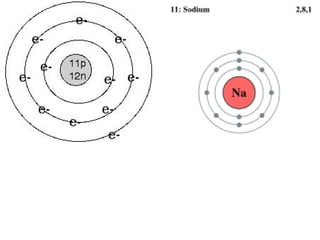
Shell model
 A region of space around the atomic
 nucleus where electrons may be

 Each shell can hold a limited amount of
 electrons
 Series of seven shells accounts for the
 seven periods

 Number of electrons held in each period is
 equal to the shell’s capacity for electrons
Valence Electrons
 Electrons in the outermost shell
  “combining power”

 Directly exposed to the external
  environment

 The first to interact with other atoms
 Making Molecules

Shell model

  • 1.
    Agenda Bell Work • Periodic Table Review • What is the ionic charge for: • Notes: Bohr Model – Magnesium that loses 2 e- – Fluorine that gains 1 e- • Draw the isotopic symbol for the following: Carbon – 14 Hydrogen - 3 • Pick up Atomic Structure and Theory WS to complete
  • 2.
  • 3.
    Objectives 1. Explain theusefulness of the shell model 2. Describe how to set up the shell model 3. Know how many electrons are in each energy level
  • 4.
    Shell model  Aregion of space around the atomic nucleus where electrons may be  Each shell can hold a limited amount of electrons
  • 5.
     Series ofseven shells accounts for the seven periods  Number of electrons held in each period is equal to the shell’s capacity for electrons
  • 7.
    Valence Electrons  Electronsin the outermost shell “combining power”  Directly exposed to the external environment  The first to interact with other atoms
  • 8.