DR. MAHESWARI JAIKUMAR
maheswarijaikumar2103@gmail.com
TEACHING
SEMINAR
DEFINITION
• Seminars are simply a group of
people comming together for the
discussion and learning of specific
techniques and topics.
• Usually there are several keynote
speakers within each seminar, and
these speakers are experts in their
own fields or topic.
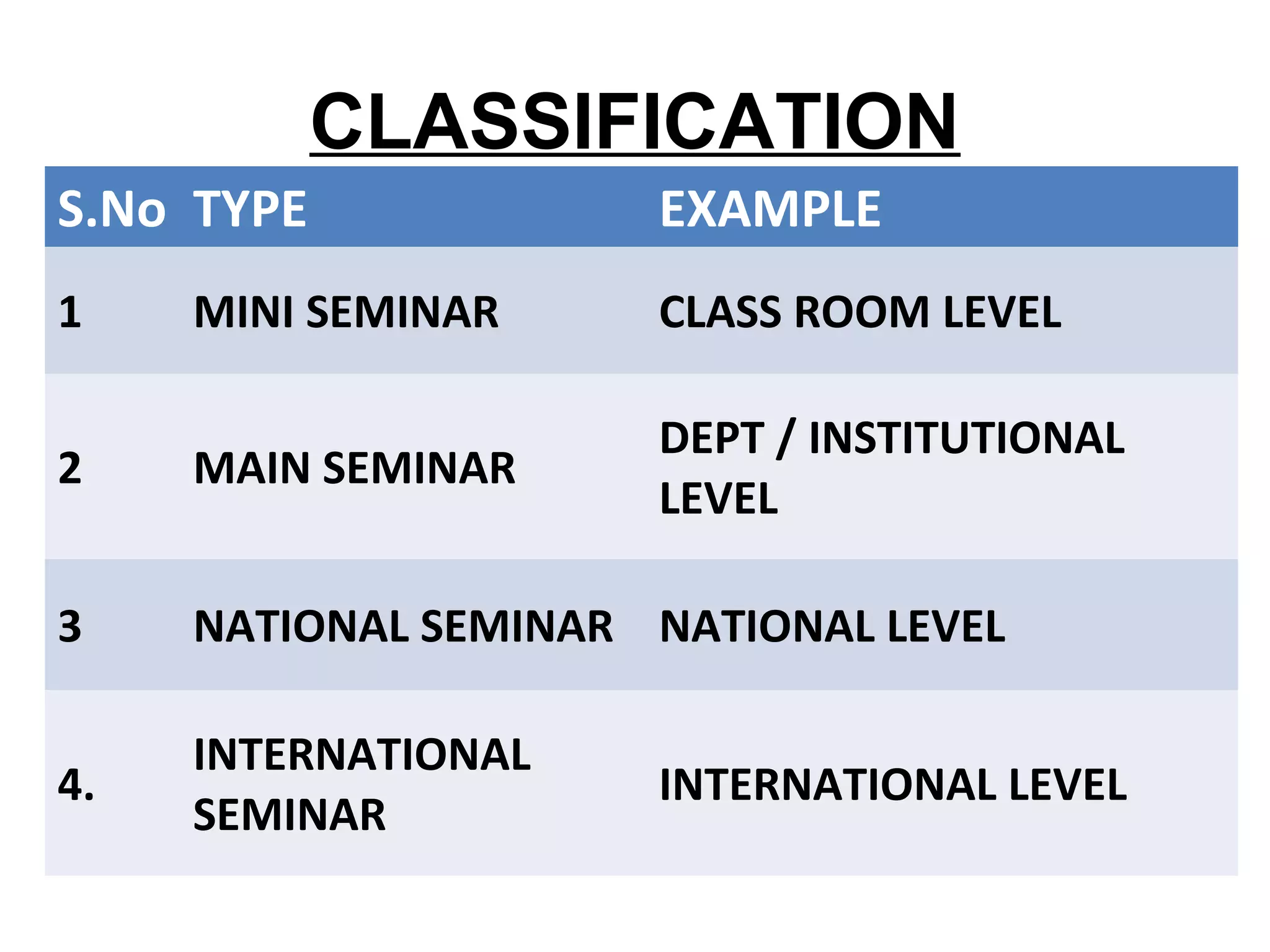
CLASSIFICATION
S.No TYPE EXAMPLE
1 MINI SEMINAR CLASS ROOM LEVEL
2 MAIN SEMINAR
DEPT / INSTITUTIONAL
LEVEL
3 NATIONAL SEMINAR NATIONAL LEVEL
4.
INTERNATIONAL
SEMINAR
INTERNATIONAL LEVEL
CLASS ROOM SEMINAR
DEPARTMENTAL SEMINAR
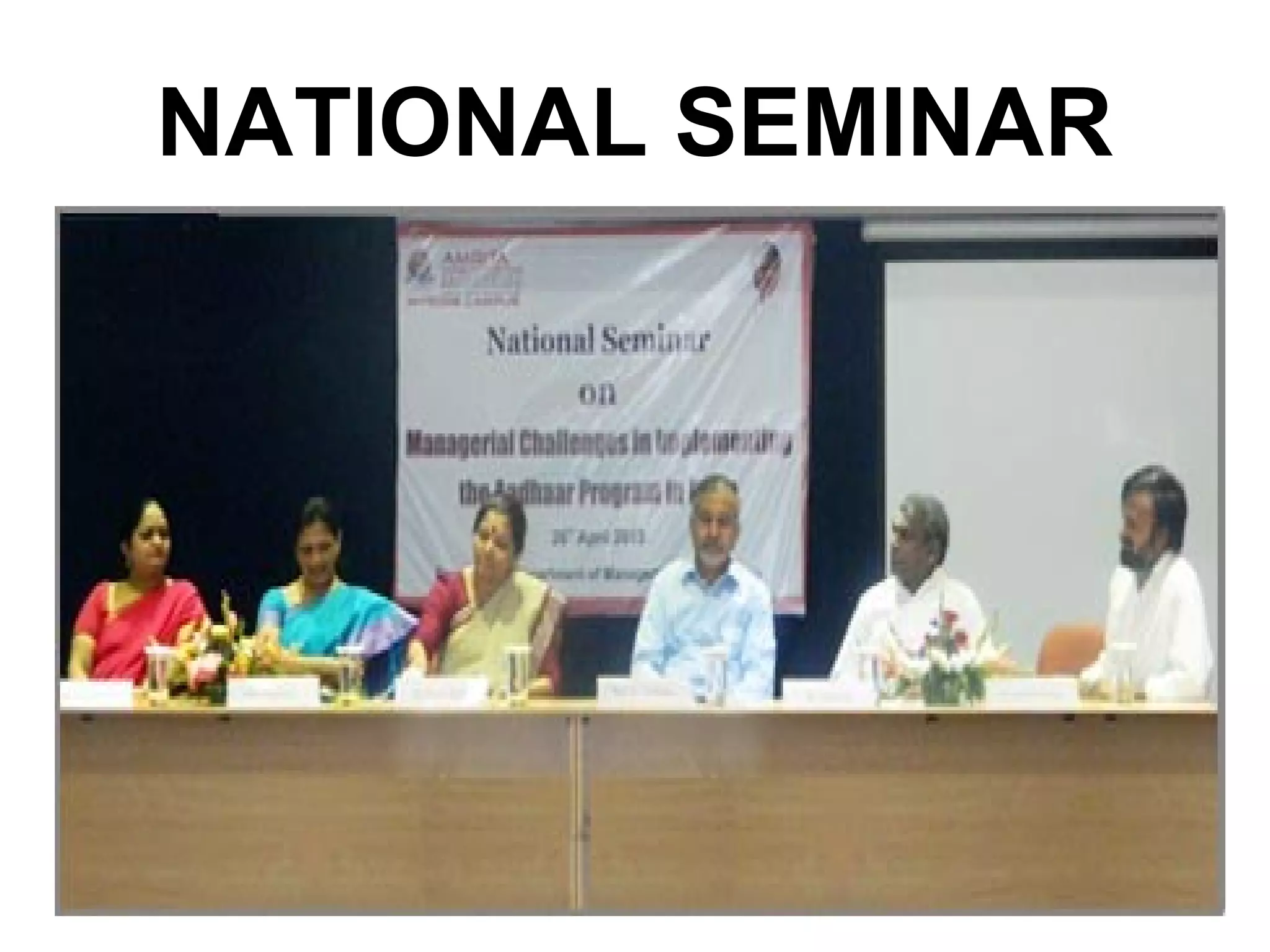
NATIONAL SEMINAR
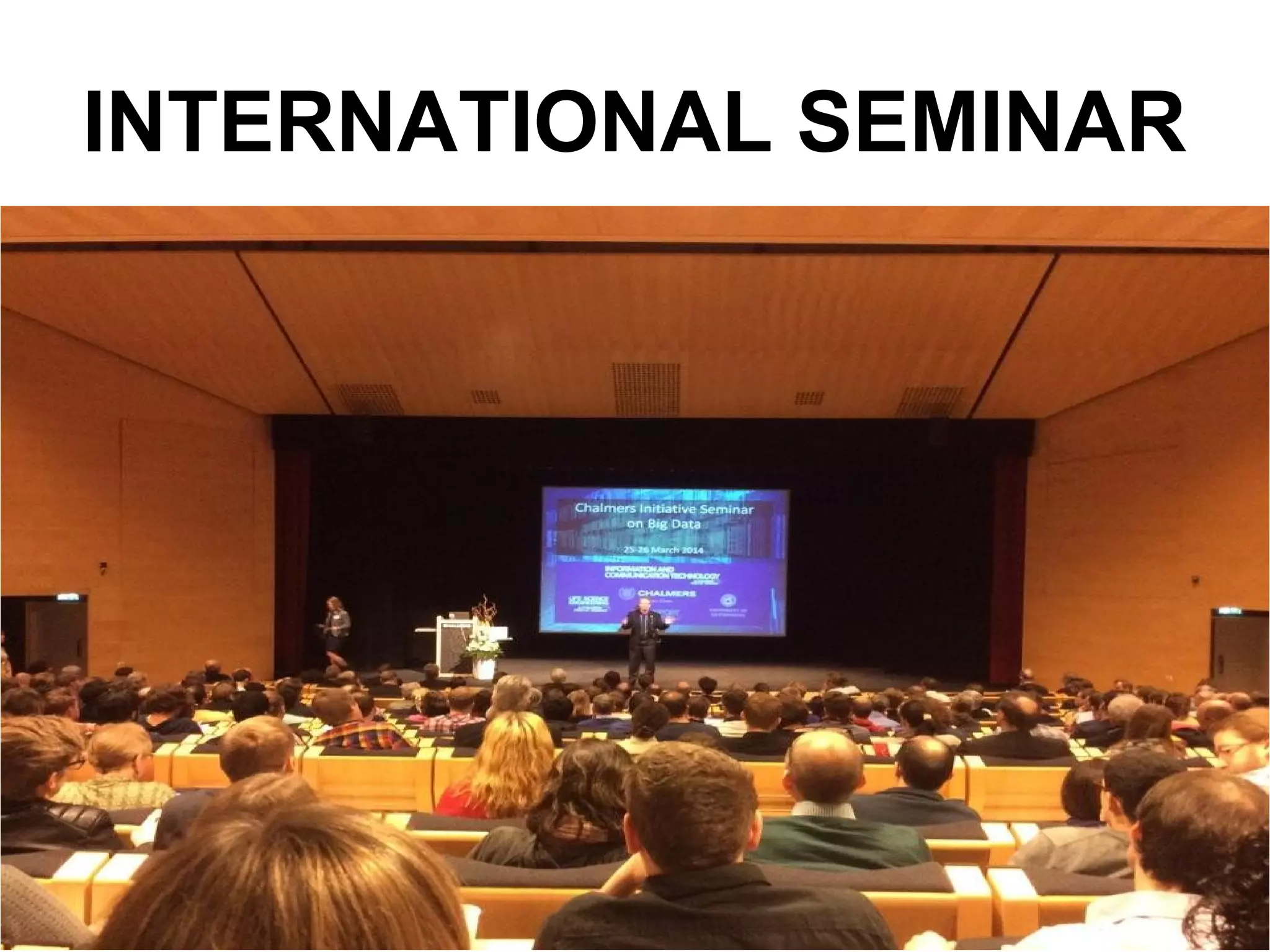
INTERNATIONAL SEMINAR
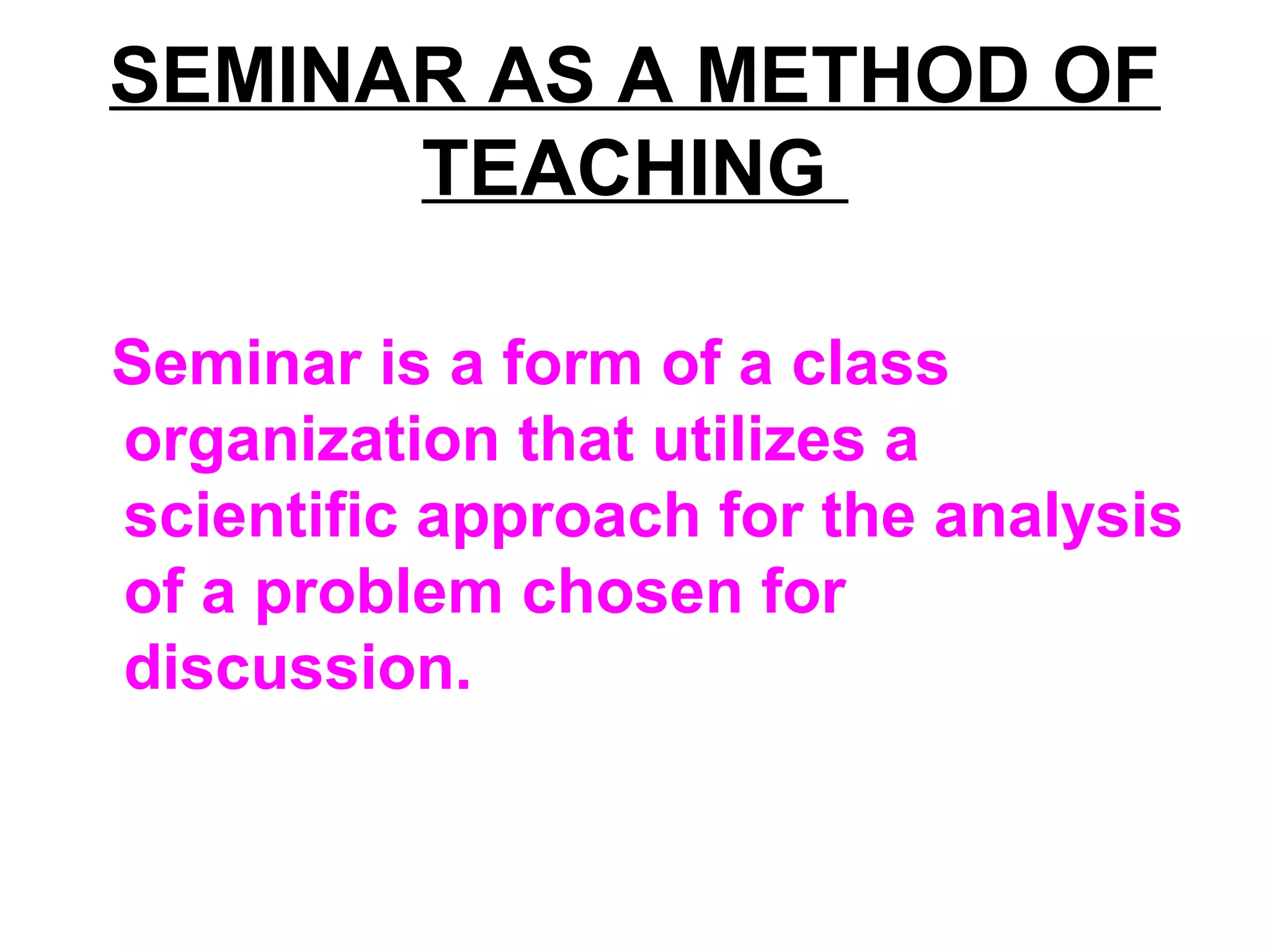
SEMINAR AS A METHOD OF
TEACHING
Seminar is a form of a class
organization that utilizes a
scientific approach for the analysis
of a problem chosen for
discussion.
• It is a discussion method of
teaching where an informal group
of 10-15 ( not more than 25 )
learners participate to solve
problems in a scientific approach
and analysis.
• It is an organized, guided
discussion with a focus on the
discovery of new relationship by the
participating individuals.
• It differs from intellectual
initiative.The student plays an
active role in seminar.
• The objective of the seminar is to
give students opportunity to
participate in methods of scientific
analysis and research procedures.
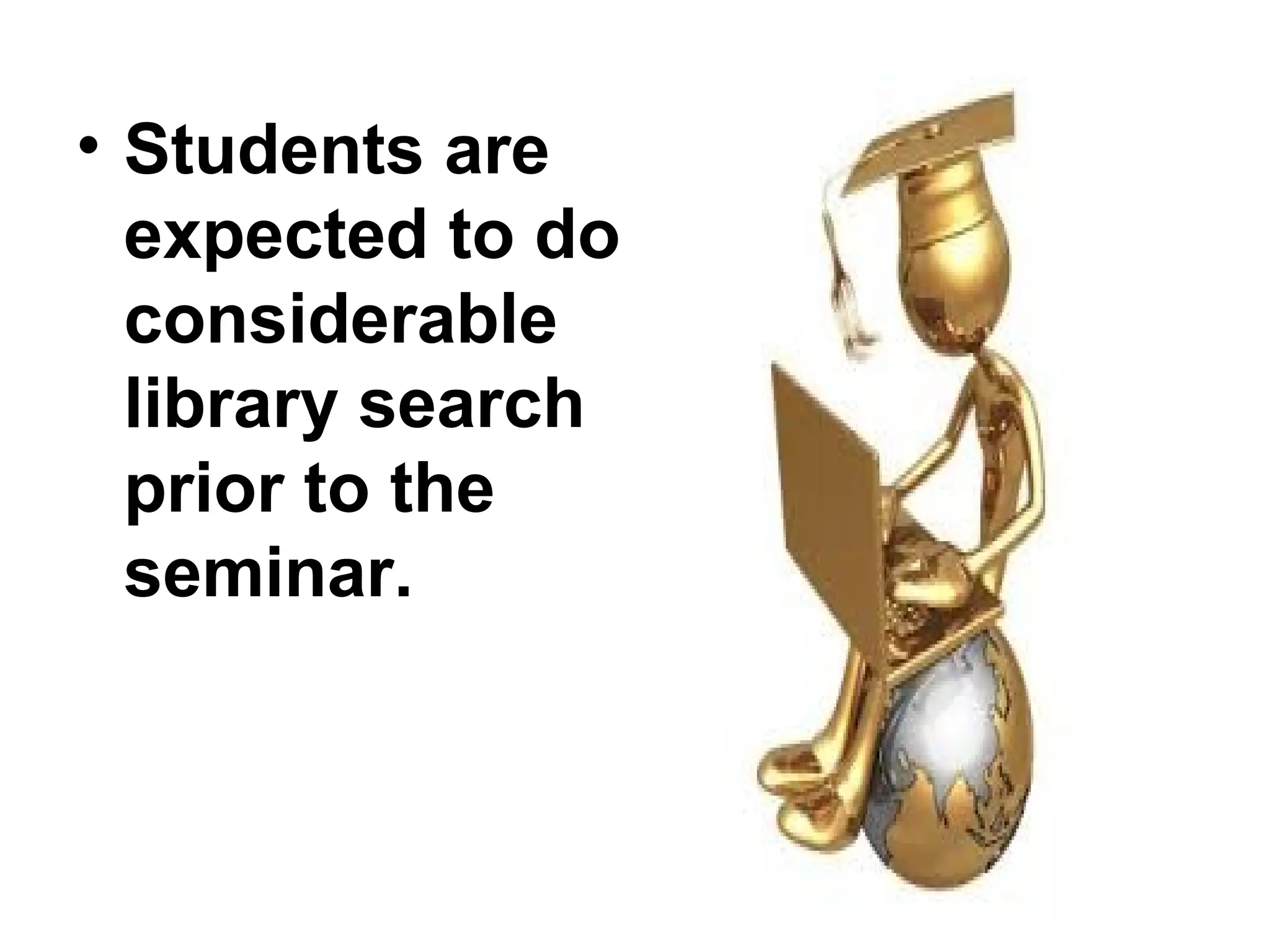
• Students are
expected to do
considerable
library search
prior to the
seminar.
• A seminar group is mainly
concerned with academic matters
rather than individual students and
commonly involves the reading of
an essay or paper by one group
member followed by a discussion
by the totoal group on the topic.
• The role of a teacher is to help
students to select, formulate and
resolve the most significant
problems and suggest the available
sources of information.
• As the seminar progresses, the
students assume greater
responsibility for addressing the
problems and conducting
discussion.
CHARATERISTICS
• Teacher is the leader.
• The group generally consists of 10
to 15 participants.
• An ideal seminar lasts for 1-2 hrs.
• The topic is initially presented by
the presenter followed by group
discussion.
• The leader should keep the
discussion within limits so the
focus of discussion can be
mentioned.
• care should be taken to avoid
stereotypes.
• In student seminars, students
present their data in an informal
way under the leadership of the
teacher, followed by a teacher
monitored discussion.
• All members take part in
discussion in an informal but
orderly manner.
• The chairman should be skilled in
encouraging the timid participants.
• A student secretary may record the
problems that come up and the
solutions given to them.
ORGANIZING A SEMINAR
• 1. Define the purpose of the
seminar.
• 2. Relate the topic of seminar and
discussion to the main concept or
the objectives to be attained.
• Direct and focus on the discussion
topic.
• Help students to express their
ideas and keep the discussion at a
high level of interest so that the
students listen attentively to those
who contribute the ideaas.
• Plan comments and questions that
relate to the subject and also guide
and direct the discussion.
• Set time limitations for each
person's contribution.
• Guard against monopoly of the
discussion by any member of the
seminar.
• Plan for summary at intervals
during the discussion and also at
the end of the discussion and
relate the ideas expressed to the
purpose of discussion.
• Have the discussion recorded by a
student as a recording secretary or
by tape recording.
• Plan for teacher and student self
evaluation of the progress made
towards the immediate objectives.
ROLE OF A TEACHER
• Select the topic.(Give reasonable
time for preparation).
• Remain in the background in the
seminar, but sit where the whole
group can be seen.
• Prepare to help out in the initial
stages of using this method in
case of long silence.
• Be sure that essential points are
not overlooked and that gross
inadequacies are corrected
(preferably by the other members
of the class).
• Make sure that all members have a
share in the discussion and that
irrelevant discussion is avoided.
ADVANTAGES
• Student plays an active role; it pre
supposes that the student has
backgroung knowledge.
• A properly conducted seminar has
potentials to teach students the
method of scientific analysis and
technique or research.
• Individual student and the group
as a whole try to solve the
problem.
• Exchange of facts and efforts to
crystalize group opinion is a clear
advantage in seminar method.
• The problem solving skills of the
students are sharpned by
participation.
• The students develop vocabulary,
articulation, problem solving and
critical thinking skills as they
participate in the seminar.
• A seminar helps in self learning
and promotes independent
thinking.
• Ability to see own problems is
increased because of personal
difficulties can be compared with
those of the group.
• Skilfully directed seminar
promotes group spirit and co-
operativeness.
DISADVANTAGES
• Seminar is a time consuming
process.
• It cannot be applied to new
students.
• Timid students may initially feel
nervous.
• If subject knowledge is poor,
unnecessary discussions arise.
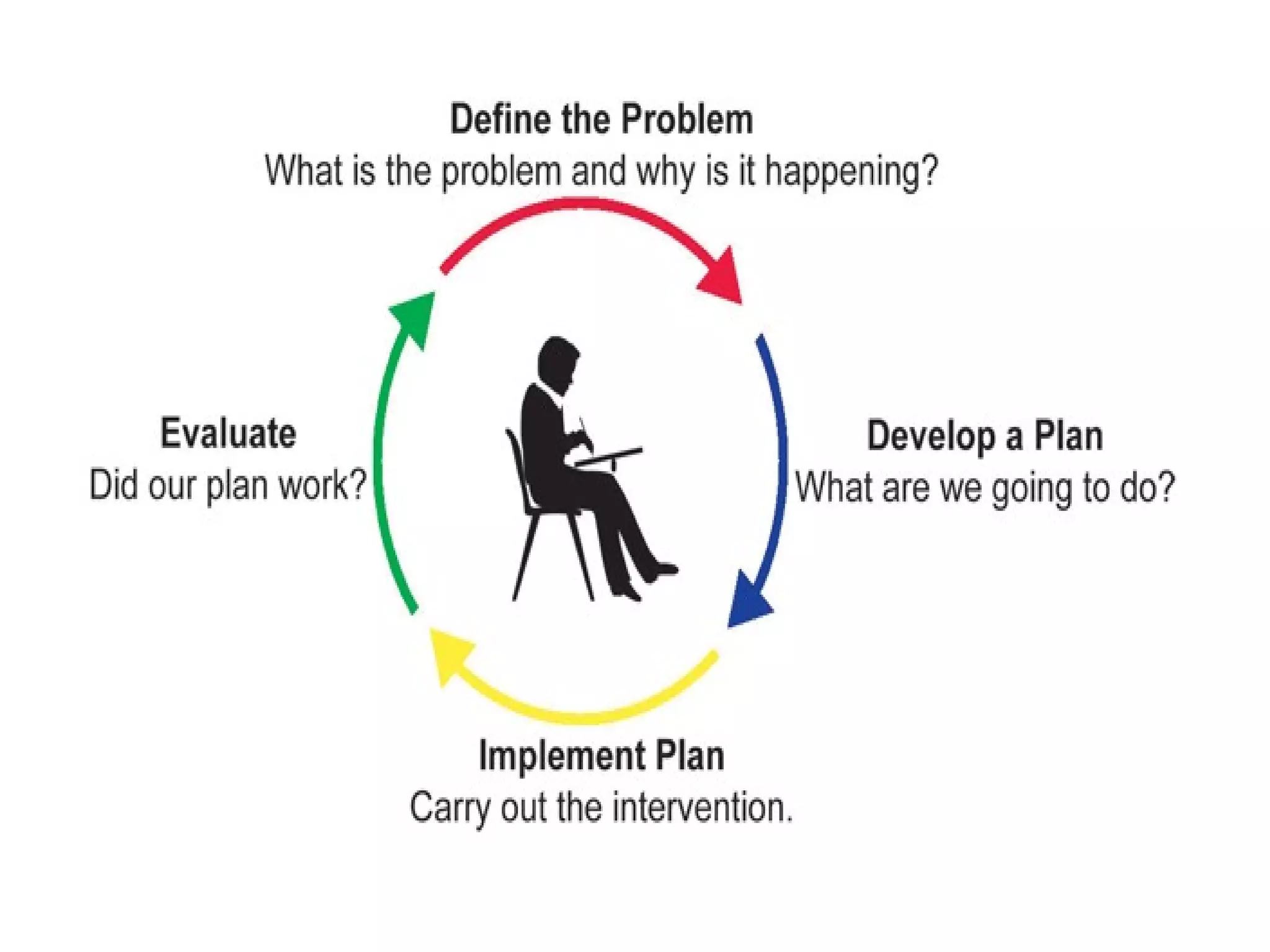
• The approach to problem solving
extends to student's professional
and personal activities.
Seminar   Method of Teaching

Seminar Method of Teaching

  • 1.
  • 2.
  • 4.
    DEFINITION • Seminars aresimply a group of people comming together for the discussion and learning of specific techniques and topics. • Usually there are several keynote speakers within each seminar, and these speakers are experts in their own fields or topic.
  • 5.
    CLASSIFICATION S.No TYPE EXAMPLE 1MINI SEMINAR CLASS ROOM LEVEL 2 MAIN SEMINAR DEPT / INSTITUTIONAL LEVEL 3 NATIONAL SEMINAR NATIONAL LEVEL 4. INTERNATIONAL SEMINAR INTERNATIONAL LEVEL
  • 6.
  • 7.
  • 8.
  • 9.
  • 10.
    SEMINAR AS AMETHOD OF TEACHING Seminar is a form of a class organization that utilizes a scientific approach for the analysis of a problem chosen for discussion.
  • 11.
    • It isa discussion method of teaching where an informal group of 10-15 ( not more than 25 ) learners participate to solve problems in a scientific approach and analysis.
  • 12.
    • It isan organized, guided discussion with a focus on the discovery of new relationship by the participating individuals. • It differs from intellectual initiative.The student plays an active role in seminar.
  • 13.
    • The objectiveof the seminar is to give students opportunity to participate in methods of scientific analysis and research procedures.
  • 14.
    • Students are expectedto do considerable library search prior to the seminar.
  • 15.
    • A seminargroup is mainly concerned with academic matters rather than individual students and commonly involves the reading of an essay or paper by one group member followed by a discussion by the totoal group on the topic.
  • 16.
    • The roleof a teacher is to help students to select, formulate and resolve the most significant problems and suggest the available sources of information. • As the seminar progresses, the students assume greater responsibility for addressing the problems and conducting discussion.
  • 17.
    CHARATERISTICS • Teacher isthe leader. • The group generally consists of 10 to 15 participants. • An ideal seminar lasts for 1-2 hrs.
  • 18.
    • The topicis initially presented by the presenter followed by group discussion. • The leader should keep the discussion within limits so the focus of discussion can be mentioned. • care should be taken to avoid stereotypes.
  • 19.
    • In studentseminars, students present their data in an informal way under the leadership of the teacher, followed by a teacher monitored discussion. • All members take part in discussion in an informal but orderly manner.
  • 20.
    • The chairmanshould be skilled in encouraging the timid participants. • A student secretary may record the problems that come up and the solutions given to them.
  • 21.
    ORGANIZING A SEMINAR •1. Define the purpose of the seminar. • 2. Relate the topic of seminar and discussion to the main concept or the objectives to be attained.
  • 22.
    • Direct andfocus on the discussion topic. • Help students to express their ideas and keep the discussion at a high level of interest so that the students listen attentively to those who contribute the ideaas.
  • 23.
    • Plan commentsand questions that relate to the subject and also guide and direct the discussion. • Set time limitations for each person's contribution.
  • 24.
    • Guard againstmonopoly of the discussion by any member of the seminar. • Plan for summary at intervals during the discussion and also at the end of the discussion and relate the ideas expressed to the purpose of discussion.
  • 25.
    • Have thediscussion recorded by a student as a recording secretary or by tape recording. • Plan for teacher and student self evaluation of the progress made towards the immediate objectives.
  • 26.
    ROLE OF ATEACHER • Select the topic.(Give reasonable time for preparation). • Remain in the background in the seminar, but sit where the whole group can be seen.
  • 27.
    • Prepare tohelp out in the initial stages of using this method in case of long silence. • Be sure that essential points are not overlooked and that gross inadequacies are corrected (preferably by the other members of the class).
  • 28.
    • Make surethat all members have a share in the discussion and that irrelevant discussion is avoided.
  • 29.
    ADVANTAGES • Student playsan active role; it pre supposes that the student has backgroung knowledge. • A properly conducted seminar has potentials to teach students the method of scientific analysis and technique or research.
  • 30.
    • Individual studentand the group as a whole try to solve the problem. • Exchange of facts and efforts to crystalize group opinion is a clear advantage in seminar method.
  • 32.
    • The problemsolving skills of the students are sharpned by participation. • The students develop vocabulary, articulation, problem solving and critical thinking skills as they participate in the seminar.
  • 33.
    • A seminarhelps in self learning and promotes independent thinking. • Ability to see own problems is increased because of personal difficulties can be compared with those of the group.
  • 34.
    • Skilfully directedseminar promotes group spirit and co- operativeness.
  • 35.
    DISADVANTAGES • Seminar isa time consuming process. • It cannot be applied to new students. • Timid students may initially feel nervous.
  • 36.
    • If subjectknowledge is poor, unnecessary discussions arise. • The approach to problem solving extends to student's professional and personal activities.