INSTrUCTIONal
PLANING
YEAR PLAN
MEANING
Planning for the
whole year’s work as
part of the Pedagogic
analysis is known as
year plan.
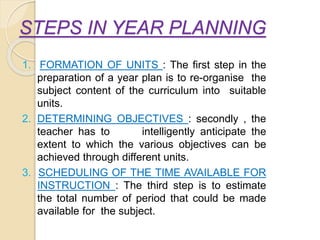
STEPS IN YEAR PLANNING
1. FORMATION OF UNITS : The first step in the
preparation of a year plan is to re-organise the
subject content of the curriculum into suitable
units.
2. DETERMINING OBJECTIVES : secondly , the
teacher has to intelligently anticipate the
extent to which the various objectives can be
achieved through different units.
3. SCHEDULING OF THE TIME AVAILABLE FOR
INSTRUCTION : The third step is to estimate
the total number of period that could be made
available for the subject.
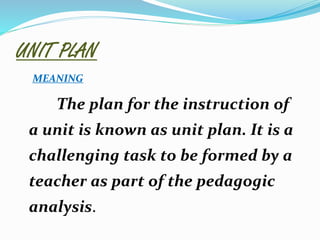
UNIT PLAN
MEANING
The plan for the instruction of
a unit is known as unit plan. It is a
challenging task to be formed by a
teacher as part of the pedagogic
analysis.
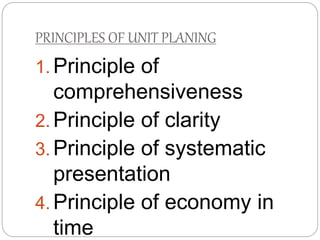
PRINCIPLES OF UNIT PLANING
1. Principle of
comprehensiveness
2. Principle of clarity
3. Principle of systematic
presentation
4. Principle of economy in
time
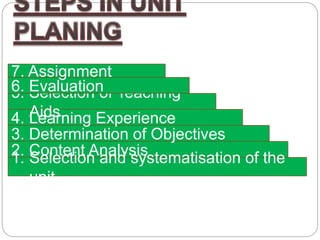
2. Content Analysis
3. Determination of Objectives
4. Learning Experience
5. Selection of Teaching
Aids
6. Evaluation
7. Assignment
1. Selection and systematisation of the
unit
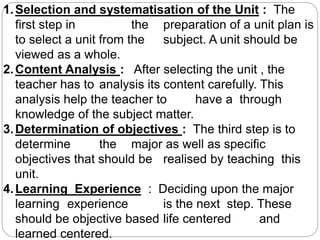
1.Selection and systematisation of the Unit : The
first step in the preparation of a unit plan is
to select a unit from the subject. A unit should be
viewed as a whole.
2.Content Analysis : After selecting the unit , the
teacher has to analysis its content carefully. This
analysis help the teacher to have a through
knowledge of the subject matter.
3.Determination of objectives : The third step is to
determine the major as well as specific
objectives that should be realised by teaching this
unit.
4.Learning Experience : Deciding upon the major
learning experience is the next step. These
should be objective based life centered and
learned centered.
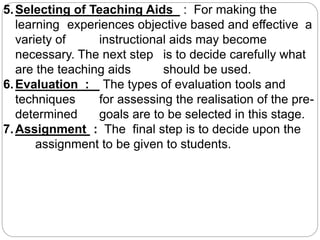
5.Selecting of Teaching Aids : For making the
learning experiences objective based and effective a
variety of instructional aids may become
necessary. The next step is to decide carefully what
are the teaching aids should be used.
6.Evaluation : The types of evaluation tools and
techniques for assessing the realisation of the pre-
determined goals are to be selected in this stage.
7.Assignment : The final step is to decide upon the
assignment to be given to students.
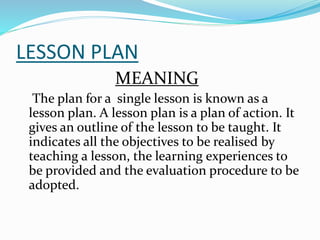
LESSON PLAN
LESSON PLAN
MEANING
The plan for a single lesson is known as a
lesson plan. A lesson plan is a plan of action. It
gives an outline of the lesson to be taught. It
indicates all the objectives to be realised by
teaching a lesson, the learning experiences to
be provided and the evaluation procedure to be
adopted.
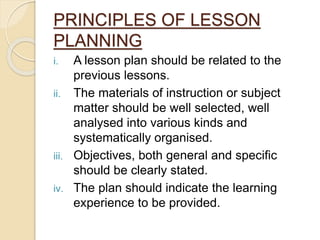
PRINCIPLES OF LESSON
PLANNING
i. A lesson plan should be related to the
previous lessons.
ii. The materials of instruction or subject
matter should be well selected, well
analysed into various kinds and
systematically organised.
iii. Objectives, both general and specific
should be clearly stated.
iv. The plan should indicate the learning
experience to be provided.
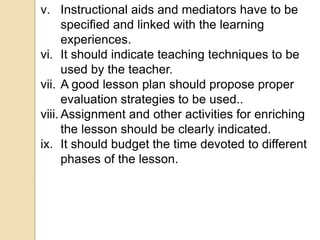
v. Instructional aids and mediators have to be
specified and linked with the learning
experiences.
vi. It should indicate teaching techniques to be
used by the teacher.
vii. A good lesson plan should propose proper
evaluation strategies to be used..
viii. Assignment and other activities for enriching
the lesson should be clearly indicated.
ix. It should budget the time devoted to different
phases of the lesson.
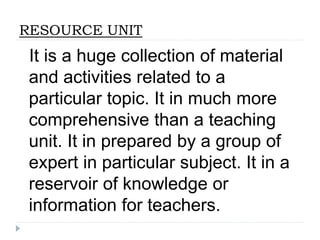
RESOURCE UNIT
It is a huge collection of material
and activities related to a
particular topic. It in much more
comprehensive than a teaching
unit. It in prepared by a group of
expert in particular subject. It in a
reservoir of knowledge or
information for teachers.
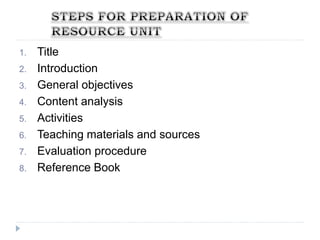
1. Title
2. Introduction
3. General objectives
4. Content analysis
5. Activities
6. Teaching materials and sources
7. Evaluation procedure
8. Reference Book
ppt

ppt

  • 1.
  • 2.
    YEAR PLAN MEANING Planning forthe whole year’s work as part of the Pedagogic analysis is known as year plan.
  • 3.
    STEPS IN YEARPLANNING 1. FORMATION OF UNITS : The first step in the preparation of a year plan is to re-organise the subject content of the curriculum into suitable units. 2. DETERMINING OBJECTIVES : secondly , the teacher has to intelligently anticipate the extent to which the various objectives can be achieved through different units. 3. SCHEDULING OF THE TIME AVAILABLE FOR INSTRUCTION : The third step is to estimate the total number of period that could be made available for the subject.
  • 4.
    UNIT PLAN MEANING The planfor the instruction of a unit is known as unit plan. It is a challenging task to be formed by a teacher as part of the pedagogic analysis.
  • 5.
    PRINCIPLES OF UNITPLANING 1. Principle of comprehensiveness 2. Principle of clarity 3. Principle of systematic presentation 4. Principle of economy in time
  • 6.
    2. Content Analysis 3.Determination of Objectives 4. Learning Experience 5. Selection of Teaching Aids 6. Evaluation 7. Assignment 1. Selection and systematisation of the unit
  • 7.
    1.Selection and systematisationof the Unit : The first step in the preparation of a unit plan is to select a unit from the subject. A unit should be viewed as a whole. 2.Content Analysis : After selecting the unit , the teacher has to analysis its content carefully. This analysis help the teacher to have a through knowledge of the subject matter. 3.Determination of objectives : The third step is to determine the major as well as specific objectives that should be realised by teaching this unit. 4.Learning Experience : Deciding upon the major learning experience is the next step. These should be objective based life centered and learned centered.
  • 8.
    5.Selecting of TeachingAids : For making the learning experiences objective based and effective a variety of instructional aids may become necessary. The next step is to decide carefully what are the teaching aids should be used. 6.Evaluation : The types of evaluation tools and techniques for assessing the realisation of the pre- determined goals are to be selected in this stage. 7.Assignment : The final step is to decide upon the assignment to be given to students.
  • 9.
  • 10.
    LESSON PLAN MEANING The planfor a single lesson is known as a lesson plan. A lesson plan is a plan of action. It gives an outline of the lesson to be taught. It indicates all the objectives to be realised by teaching a lesson, the learning experiences to be provided and the evaluation procedure to be adopted.
  • 11.
    PRINCIPLES OF LESSON PLANNING i.A lesson plan should be related to the previous lessons. ii. The materials of instruction or subject matter should be well selected, well analysed into various kinds and systematically organised. iii. Objectives, both general and specific should be clearly stated. iv. The plan should indicate the learning experience to be provided.
  • 12.
    v. Instructional aidsand mediators have to be specified and linked with the learning experiences. vi. It should indicate teaching techniques to be used by the teacher. vii. A good lesson plan should propose proper evaluation strategies to be used.. viii. Assignment and other activities for enriching the lesson should be clearly indicated. ix. It should budget the time devoted to different phases of the lesson.
  • 13.
    RESOURCE UNIT It isa huge collection of material and activities related to a particular topic. It in much more comprehensive than a teaching unit. It in prepared by a group of expert in particular subject. It in a reservoir of knowledge or information for teachers.
  • 14.
    1. Title 2. Introduction 3.General objectives 4. Content analysis 5. Activities 6. Teaching materials and sources 7. Evaluation procedure 8. Reference Book