SELF DRIVEN AUTOPILOT CAR
CONTENTS
 Introduction
 History
 Background
 Technology
 Working
 Advantages
 Disadvantages
 Conclusion
 References
What
is
Self driven
Autopilot car?
INTRODUCTION
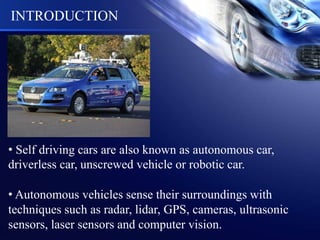
• Self driving cars are also known as autonomous car,
driverless car, unscrewed vehicle or robotic car.
• Autonomous vehicles sense their surroundings with
techniques such as radar, lidar, GPS, cameras, ultrasonic
sensors, laser sensors and computer vision.
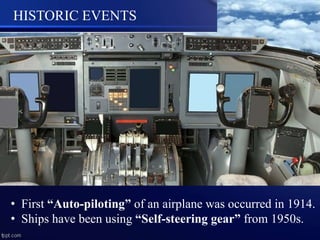
HISTORIC EVENTS
• First “Auto-piloting” of an airplane was occurred in 1914.
• Ships have been using “Self-steering gear” from 1950s.
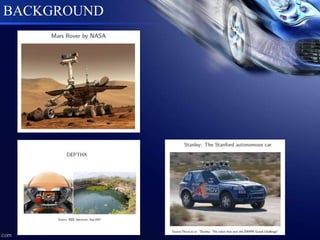
BACKGROUND
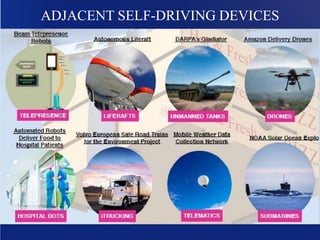
ADJACENT SELF-DRIVING DEVICES
What
Technologies
are
used?
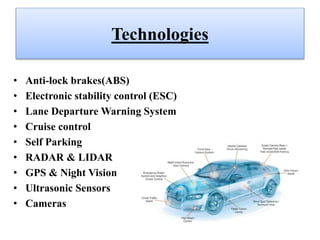
Technologies
• Anti-lock brakes(ABS)
• Electronic stability control (ESC)
• Lane Departure Warning System
• Cruise control
• Self Parking
• RADAR & LIDAR
• GPS & Night Vision
• Ultrasonic Sensors
• Cameras
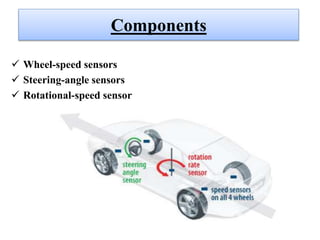
Components
 Wheel-speed sensors
 Steering-angle sensors
 Rotational-speed sensor
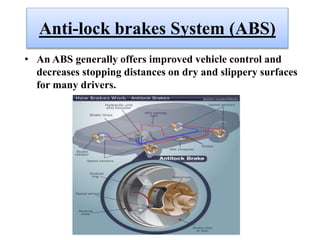
Anti-lock brakes System (ABS)
• An ABS generally offers improved vehicle control and
decreases stopping distances on dry and slippery surfaces
for many drivers.
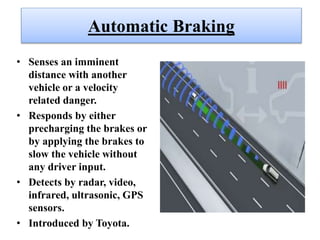
Automatic Braking
• Senses an imminent
distance with another
vehicle or a velocity
related danger.
• Responds by either
precharging the brakes or
by applying the brakes to
slow the vehicle without
any driver input.
• Detects by radar, video,
infrared, ultrasonic, GPS
sensors.
• Introduced by Toyota.
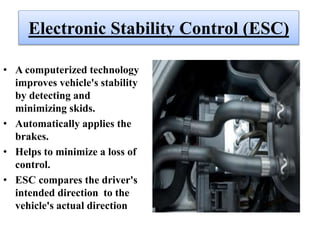
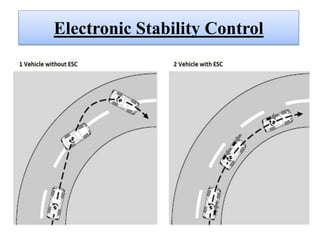
Electronic Stability Control (ESC)
• A computerized technology
improves vehicle's stability
by detecting and
minimizing skids.
• Automatically applies the
brakes.
• Helps to minimize a loss of
control.
• ESC compares the driver's
intended direction to the
vehicle's actual direction
Electronic Stability Control
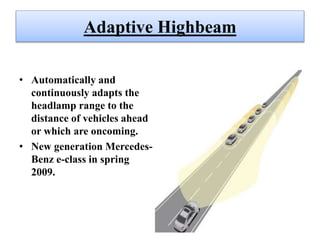
Adaptive Highbeam
• Automatically and
continuously adapts the
headlamp range to the
distance of vehicles ahead
or which are oncoming.
• New generation Mercedes-
Benz e-class in spring
2009.
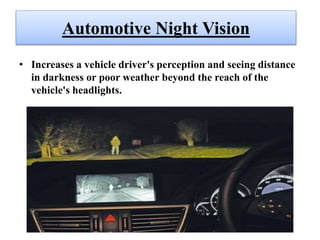
Automotive Night Vision
• Increases a vehicle driver's perception and seeing distance
in darkness or poor weather beyond the reach of the
vehicle's headlights.
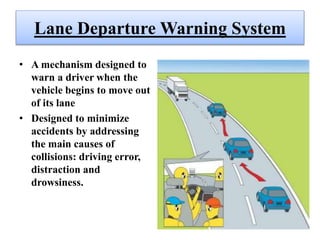
Lane Departure Warning System
• A mechanism designed to
warn a driver when the
vehicle begins to move out
of its lane
• Designed to minimize
accidents by addressing
the main causes of
collisions: driving error,
distraction and
drowsiness.
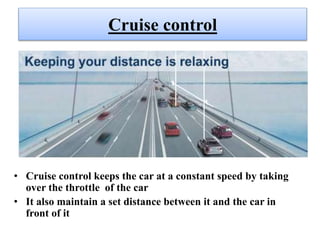
Cruise control
• Cruise control keeps the car at a constant speed by taking
over the throttle of the car
• It also maintain a set distance between it and the car in
front of it
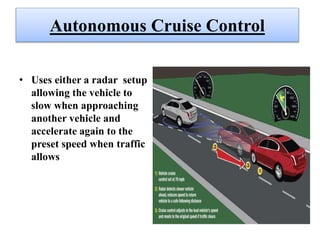
Autonomous Cruise Control
• Uses either a radar setup
allowing the vehicle to
slow when approaching
another vehicle and
accelerate again to the
preset speed when traffic
allows
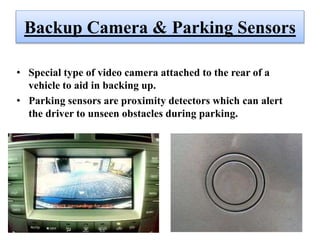
Backup Camera & Parking Sensors
• Special type of video camera attached to the rear of a
vehicle to aid in backing up.
• Parking sensors are proximity detectors which can alert
the driver to unseen obstacles during parking.
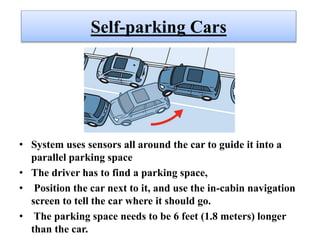
Self-parking Cars
• System uses sensors all around the car to guide it into a
parallel parking space
• The driver has to find a parking space,
• Position the car next to it, and use the in-cabin navigation
screen to tell the car where it should go.
• The parking space needs to be 6 feet (1.8 meters) longer
than the car.
How
it
works?
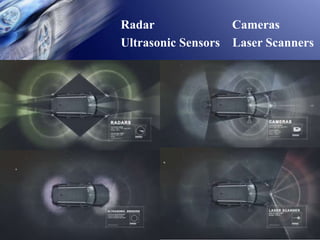
Radar Cameras
Ultrasonic Sensors Laser Scanners
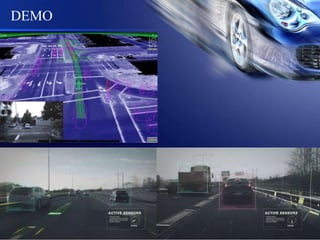
DEMO
Advantages
• POLICE: Reduction in the need for traffic police and vehicle
insurance.
• SIGNS: Reduction of physical road signage.
• CHILDREN & TEENAGERS : Smoother ride.
• Reduction in car theft, due to the vehicle's self-awareness.
• DISABLED: Enjoy improved mobility with on-call, door-to-door
service in specialized vehicles.
• ELDERLY: No longer dependent on driving, aging will have
little to no effect on transportation and independence.
• ADULTS: Safely use phones, laptops and tablets. Some will get
jump-start on the work, others will socialize or enjoy a video.
• ACCIDENTS: No any accidents, car crashes.
Disadvantages
• Loss of driving-related jobs.
• Loss of privacy.
• Competition for the radio spectrum desired for the car's
communication.
• Hackers can change the rout which is plotted in the system.
• Self-driving cars could potentially be loaded with explosives
and used as bombs.
• Drivers being inexperienced if situations arose requiring
manual driving.
• Software reliability & Liability for damage.
The most effective gain of this system will be
control on traffic congestions and avoiding
accidents.
So the time is not far ‘2020’ when we are
going to have our self controlled vehicles and
we say “THE FUTURE OF AUTOMOBILES IS
HERE”.
CONCLUSION
REFERENCES
http://autocontrols.com.au/
http://www.carsense.org/ > Car sense Project
http://www.howstuffworks.com/cruise-control
http://www.howstuffworks.com/electronic stability control
Self Driving Autopilot Car

Self Driving Autopilot Car

  • 1.
  • 2.
    CONTENTS  Introduction  History Background  Technology  Working  Advantages  Disadvantages  Conclusion  References
  • 3.
  • 4.
    INTRODUCTION • Self drivingcars are also known as autonomous car, driverless car, unscrewed vehicle or robotic car. • Autonomous vehicles sense their surroundings with techniques such as radar, lidar, GPS, cameras, ultrasonic sensors, laser sensors and computer vision.
  • 5.
    HISTORIC EVENTS • First“Auto-piloting” of an airplane was occurred in 1914. • Ships have been using “Self-steering gear” from 1950s.
  • 6.
  • 7.
  • 8.
  • 9.
    Technologies • Anti-lock brakes(ABS) •Electronic stability control (ESC) • Lane Departure Warning System • Cruise control • Self Parking • RADAR & LIDAR • GPS & Night Vision • Ultrasonic Sensors • Cameras
  • 10.
    Components  Wheel-speed sensors Steering-angle sensors  Rotational-speed sensor
  • 11.
    Anti-lock brakes System(ABS) • An ABS generally offers improved vehicle control and decreases stopping distances on dry and slippery surfaces for many drivers.
  • 12.
    Automatic Braking • Sensesan imminent distance with another vehicle or a velocity related danger. • Responds by either precharging the brakes or by applying the brakes to slow the vehicle without any driver input. • Detects by radar, video, infrared, ultrasonic, GPS sensors. • Introduced by Toyota.
  • 13.
    Electronic Stability Control(ESC) • A computerized technology improves vehicle's stability by detecting and minimizing skids. • Automatically applies the brakes. • Helps to minimize a loss of control. • ESC compares the driver's intended direction to the vehicle's actual direction
  • 14.
  • 15.
    Adaptive Highbeam • Automaticallyand continuously adapts the headlamp range to the distance of vehicles ahead or which are oncoming. • New generation Mercedes- Benz e-class in spring 2009.
  • 16.
    Automotive Night Vision •Increases a vehicle driver's perception and seeing distance in darkness or poor weather beyond the reach of the vehicle's headlights.
  • 17.
    Lane Departure WarningSystem • A mechanism designed to warn a driver when the vehicle begins to move out of its lane • Designed to minimize accidents by addressing the main causes of collisions: driving error, distraction and drowsiness.
  • 18.
    Cruise control • Cruisecontrol keeps the car at a constant speed by taking over the throttle of the car • It also maintain a set distance between it and the car in front of it
  • 19.
    Autonomous Cruise Control •Uses either a radar setup allowing the vehicle to slow when approaching another vehicle and accelerate again to the preset speed when traffic allows
  • 20.
    Backup Camera &Parking Sensors • Special type of video camera attached to the rear of a vehicle to aid in backing up. • Parking sensors are proximity detectors which can alert the driver to unseen obstacles during parking.
  • 21.
    Self-parking Cars • Systemuses sensors all around the car to guide it into a parallel parking space • The driver has to find a parking space, • Position the car next to it, and use the in-cabin navigation screen to tell the car where it should go. • The parking space needs to be 6 feet (1.8 meters) longer than the car.
  • 22.
  • 23.
  • 24.
  • 25.
    Advantages • POLICE: Reductionin the need for traffic police and vehicle insurance. • SIGNS: Reduction of physical road signage. • CHILDREN & TEENAGERS : Smoother ride. • Reduction in car theft, due to the vehicle's self-awareness. • DISABLED: Enjoy improved mobility with on-call, door-to-door service in specialized vehicles. • ELDERLY: No longer dependent on driving, aging will have little to no effect on transportation and independence. • ADULTS: Safely use phones, laptops and tablets. Some will get jump-start on the work, others will socialize or enjoy a video. • ACCIDENTS: No any accidents, car crashes.
  • 26.
    Disadvantages • Loss ofdriving-related jobs. • Loss of privacy. • Competition for the radio spectrum desired for the car's communication. • Hackers can change the rout which is plotted in the system. • Self-driving cars could potentially be loaded with explosives and used as bombs. • Drivers being inexperienced if situations arose requiring manual driving. • Software reliability & Liability for damage.
  • 27.
    The most effectivegain of this system will be control on traffic congestions and avoiding accidents. So the time is not far ‘2020’ when we are going to have our self controlled vehicles and we say “THE FUTURE OF AUTOMOBILES IS HERE”. CONCLUSION
  • 28.
    REFERENCES http://autocontrols.com.au/ http://www.carsense.org/ > Carsense Project http://www.howstuffworks.com/cruise-control http://www.howstuffworks.com/electronic stability control