DRIVERLESS CAR
Presented by – Pratik Thorat
CONTENTS -
 Introduction
 History
 What is driverless car
 Reason behind making?
 How work it?
 Components
 Sensor used
 Advantages
 Conclusion
INTRODUCTION-
 It is the project by google that involves
developing technology for the driverless car
 This project Led by Google engineer Sebastian
thrun who is director of stanford artificial
intelligence & co-inventor of google street view
HISTORY-
First driverless car by
general motors in newyork
 First driverless car
proposed by general
motors in 1939
 In 1925 haudina lab
discovered radio
controlled driverless
car
What is Driverless car ?
 it is a vehicle that can drive itself from one
point to another point without driver , in
other words car with an autopilot system.
 Can steer itself.
 Can accelerate itself.
 Can go &stop itself.
Google launched driverless car in 2015
Reason behind the making ?
 Driver error is the most common cause of road
accident
 Nearly 1.25 million people die in road accident each
year, that is one person is killed every 25 second
 Using cell phone during driving, drink &drive
,entertainment system are the reason for the road
accident
 So, to solve this all problem driverless car is useful
for us and this is a reason behind making it.
How it work ?
 It is controlled by
computer
 It require input or
instruction from
human
 After giving input or
instruction it will
drive automatically.
Components-
 Google map
 Hardware sensors
 Arrtificial intelligence software
Google maps –
 Google maps interacts with GPS & acts like
data base
 Speed limits
 Upcoming obstacles
 Traffic report
 Directions
 Nearby collisions
Artificial intelligence –
 Determines-
1)How to accelerate ?
2)When to slow down /stop
3)when to steer the wheel
*Goal-
Take the passenger to the
destination safely
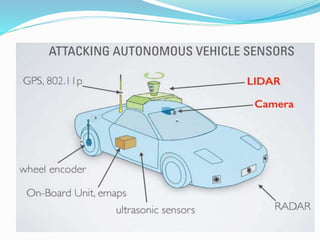
Sensors used -
1)LIDAR
2)Video camera
3)Position estimator
4)Distance sensors
LIDAR- ‘Eyes’ of Google car
 It is a heart of system
 Light detection and ranging
 Optical remote sensing technology
 Scanning distance of 60 meters
 Road line markers and stop line with an
accuracy of 2 inches
Video camera-
 Mounted near rearview mirror to detect
road signs and traffic lights , speed limits
 It also has computer on the board of vehicle
to recognise obstacles such as
cyclist,&pedistrian
Currently-
 6 Google driverless cars manufactured
1) 5 Toyota prius
2) 1 AUDI
#NEVADA –
*first state to allow driverless vehicle
can be legally operated on public roads
Advanteges-
 Reduce road accident
 Reduced journey time
 Elimination of driving licenses
 Auotomatic parking
 Environment friendly
Conclusion -
 Very useful
 Pollution free
 Echo friendly
 Will be available in india in 2020
Complete ppt on driverless car 1(1) sd

Complete ppt on driverless car 1(1) sd

  • 1.
    DRIVERLESS CAR Presented by– Pratik Thorat
  • 2.
    CONTENTS -  Introduction History  What is driverless car  Reason behind making?  How work it?  Components  Sensor used  Advantages  Conclusion
  • 3.
  • 4.
     It isthe project by google that involves developing technology for the driverless car  This project Led by Google engineer Sebastian thrun who is director of stanford artificial intelligence & co-inventor of google street view
  • 5.
    HISTORY- First driverless carby general motors in newyork  First driverless car proposed by general motors in 1939  In 1925 haudina lab discovered radio controlled driverless car
  • 6.
    What is Driverlesscar ?  it is a vehicle that can drive itself from one point to another point without driver , in other words car with an autopilot system.  Can steer itself.  Can accelerate itself.  Can go &stop itself.
  • 7.
  • 8.
    Reason behind themaking ?  Driver error is the most common cause of road accident  Nearly 1.25 million people die in road accident each year, that is one person is killed every 25 second  Using cell phone during driving, drink &drive ,entertainment system are the reason for the road accident  So, to solve this all problem driverless car is useful for us and this is a reason behind making it.
  • 9.
    How it work?  It is controlled by computer  It require input or instruction from human  After giving input or instruction it will drive automatically.
  • 10.
    Components-  Google map Hardware sensors  Arrtificial intelligence software
  • 11.
    Google maps – Google maps interacts with GPS & acts like data base  Speed limits  Upcoming obstacles  Traffic report  Directions  Nearby collisions
  • 12.
    Artificial intelligence – Determines- 1)How to accelerate ? 2)When to slow down /stop 3)when to steer the wheel *Goal- Take the passenger to the destination safely
  • 13.
    Sensors used - 1)LIDAR 2)Videocamera 3)Position estimator 4)Distance sensors
  • 14.
    LIDAR- ‘Eyes’ ofGoogle car  It is a heart of system  Light detection and ranging  Optical remote sensing technology  Scanning distance of 60 meters  Road line markers and stop line with an accuracy of 2 inches
  • 15.
    Video camera-  Mountednear rearview mirror to detect road signs and traffic lights , speed limits  It also has computer on the board of vehicle to recognise obstacles such as cyclist,&pedistrian
  • 17.
    Currently-  6 Googledriverless cars manufactured 1) 5 Toyota prius 2) 1 AUDI #NEVADA – *first state to allow driverless vehicle can be legally operated on public roads
  • 18.
    Advanteges-  Reduce roadaccident  Reduced journey time  Elimination of driving licenses  Auotomatic parking  Environment friendly
  • 19.
    Conclusion -  Veryuseful  Pollution free  Echo friendly  Will be available in india in 2020