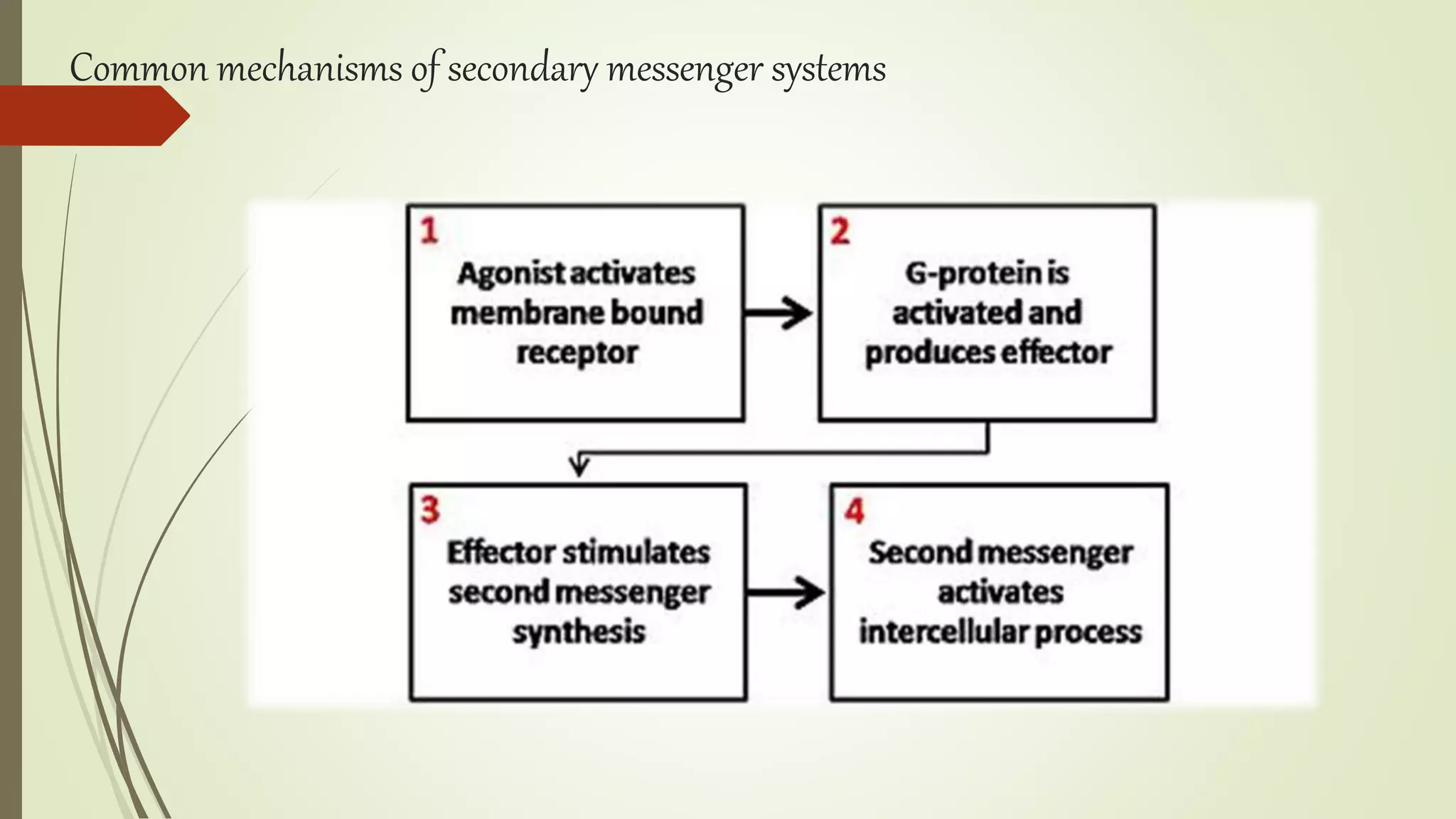
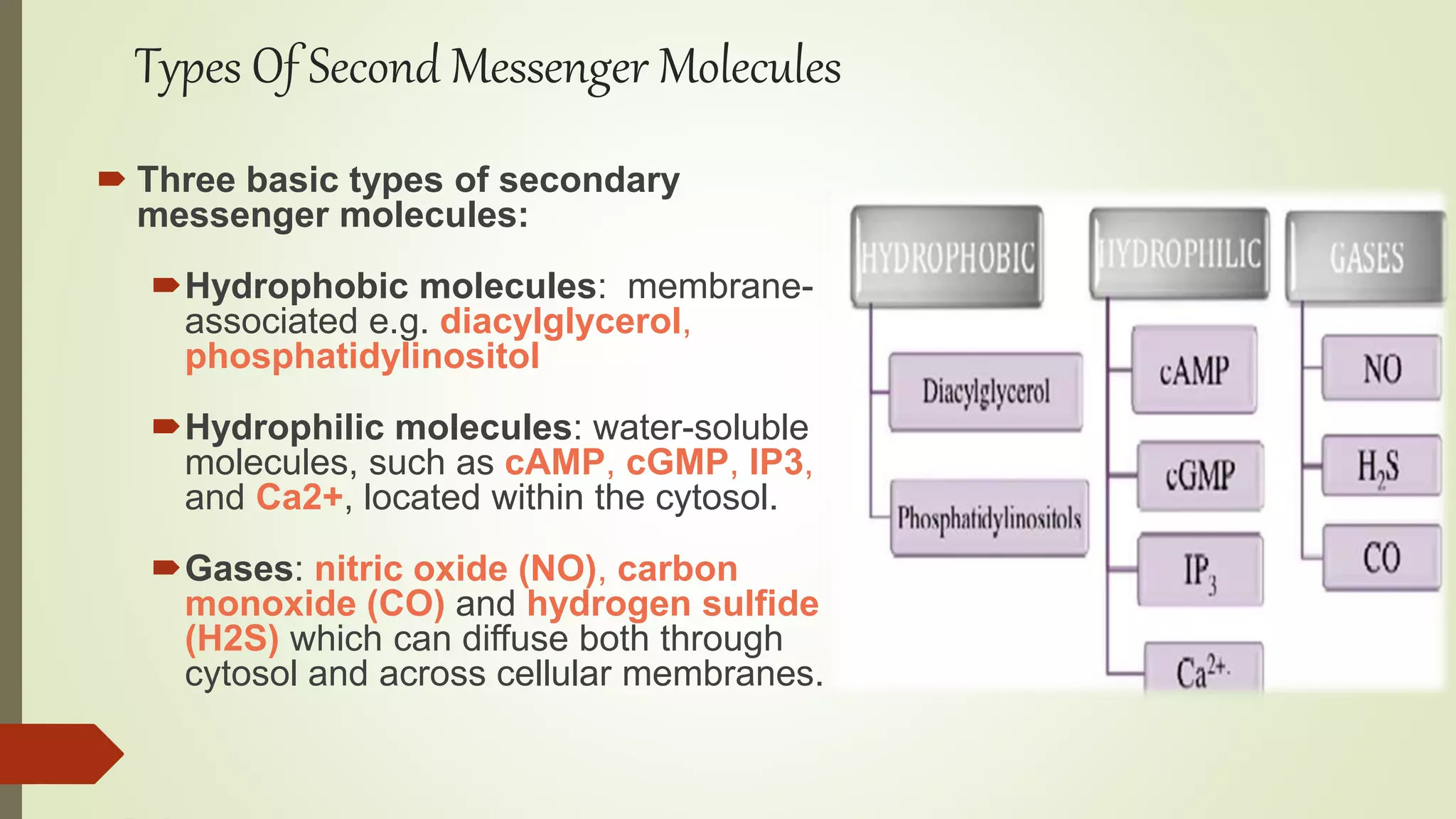
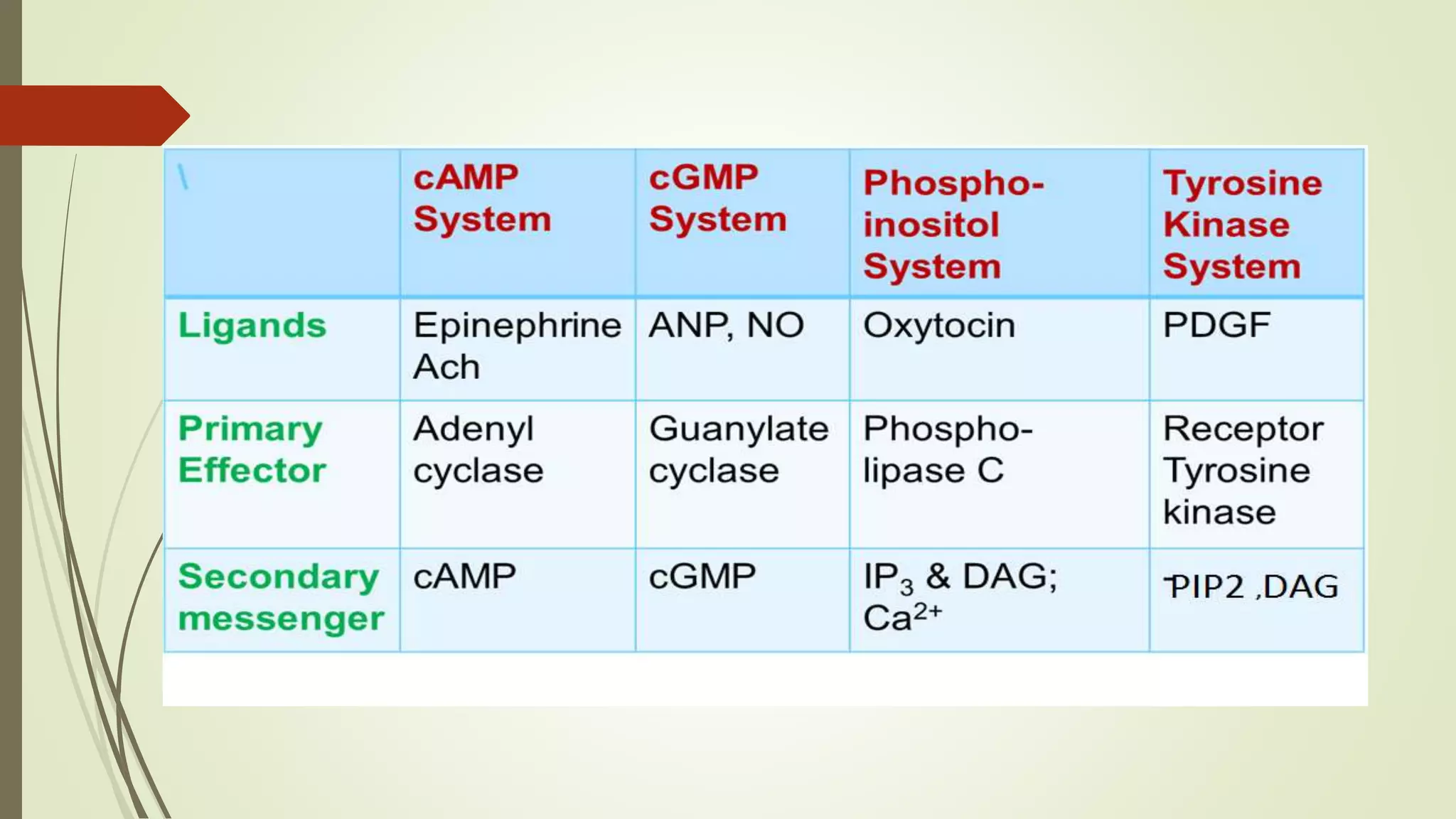
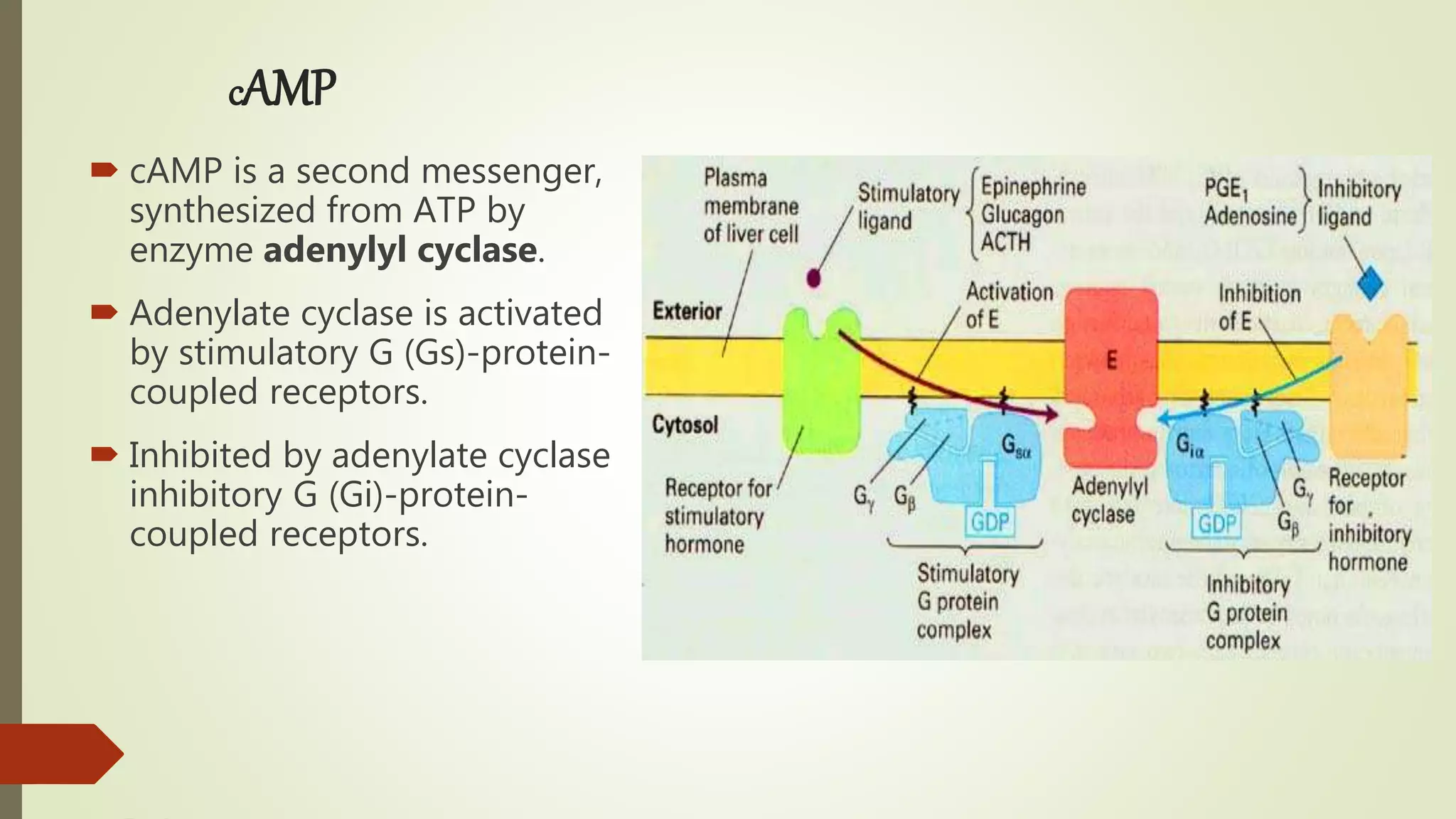
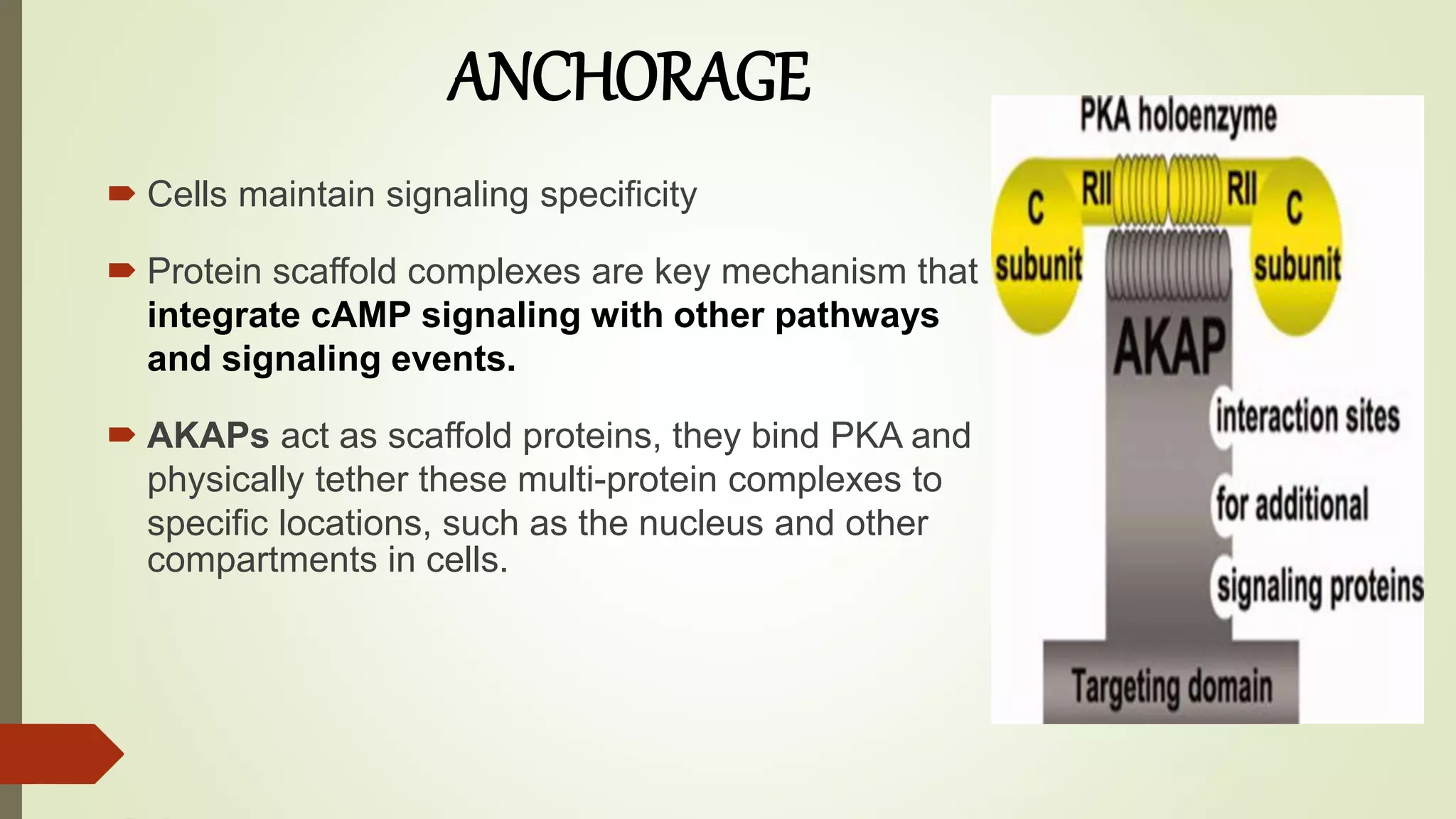
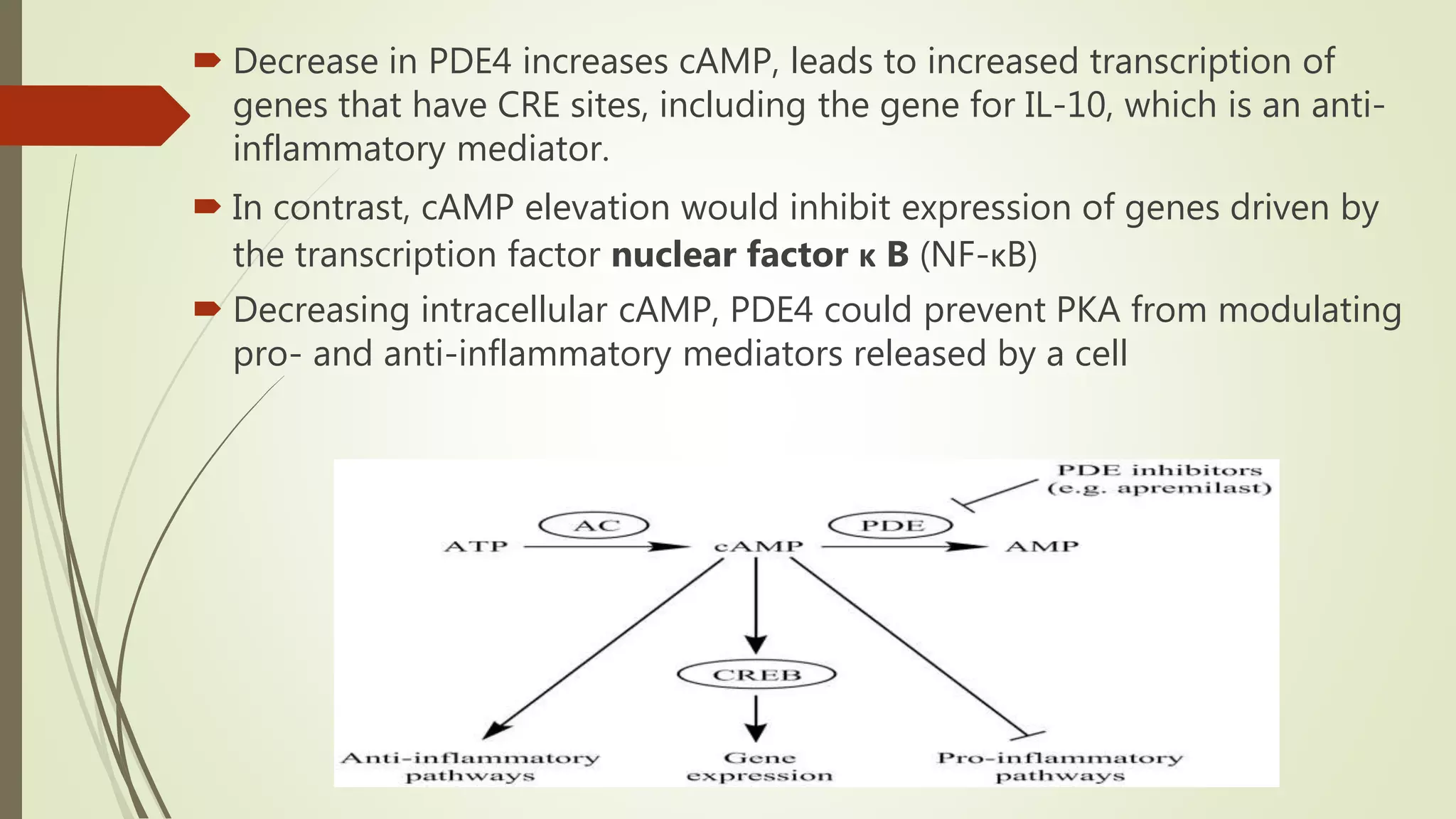
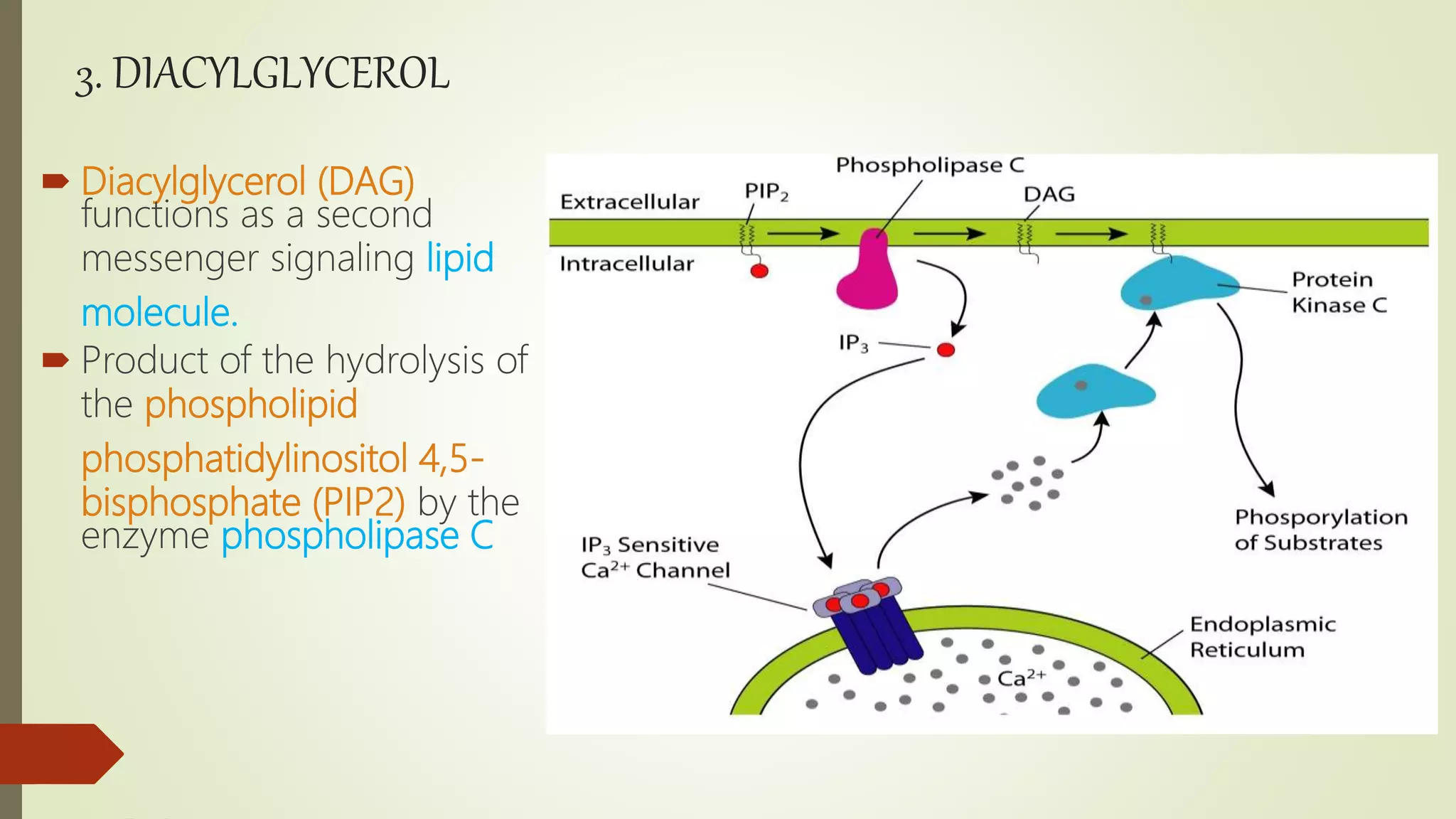
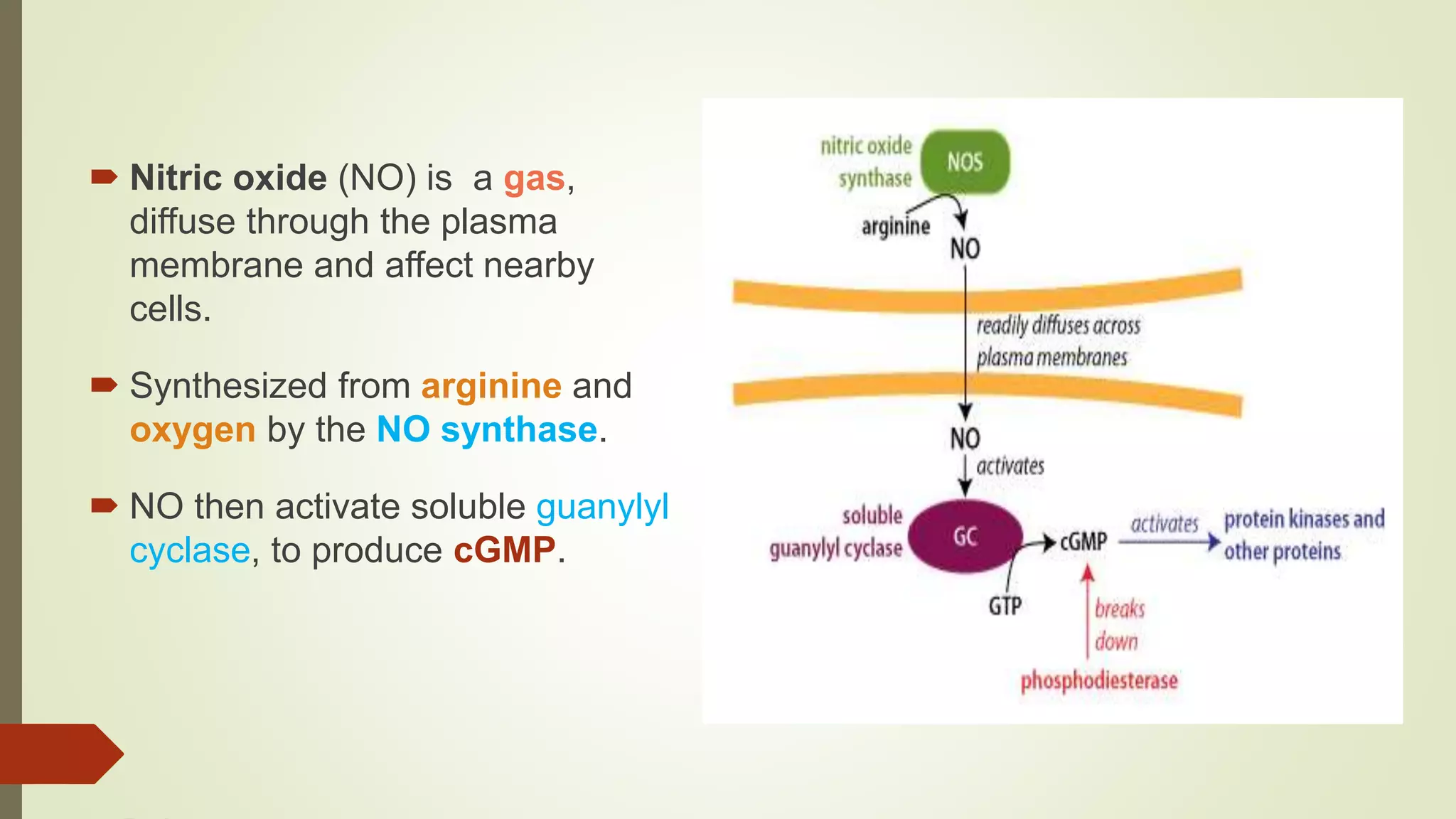
Secondary messengers are intracellular signaling molecules that are released within cells in response to extracellular signaling molecules known as first messengers like hormones and neurotransmitters. Common examples include cyclic AMP, inositol trisphosphate, diacylglycerol, and calcium ions. These secondary messengers help amplify and propagate intracellular signals by binding to target proteins and modulating their activity, often through phosphorylation. They allow cells to mount robust physiological responses despite the extracellular signals not directly crossing the cell membrane.