CYCLICAMP
BhagyaSiripalli,
Dept. ofpharmacology,SVIPS.
INTRODUCTION
•Cyclic adenosine monophosphate (cAMP, cyclic AMP, or 3',5'-
cyclic adenosine monophosphate) is a second messenger important in
many biological processes.
•cAMP is a derivative of adenosine triphosphate (ATP) and used for
intracellular signal transduction in many different organisms, conveying
the cAMP-dependent pathway. It should not be confused with 5'-AMP-
activated protein kinase (AMP-activated protein kinase).
INTRODUCTION
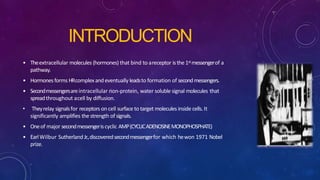
• Theextracellular molecules (hormones) that bind to areceptor isthe 1stmessengerof a
pathway.
• Hormonesforms HRcomplexandeventually leadsto formation of secondmessengers.
• Secondmessengersareintracellular non-protein, water soluble signal molecules that
spreadthroughout acell by diffusion.
• Theyrelay signalsfor receptors on cell surface to target molecules inside cells.It
significantly amplifies the strength of signals.
• Oneof major secondmessengeriscyclic AMP(CYCLICADENOSINEMONOPHOSPHATE)
• EarlWilbur SutherlandJr.,discoveredsecondmessengerfor which hewon 1971 Nobel
prize.
Hormones that use the adenylyl
cyclase- AMPPathway
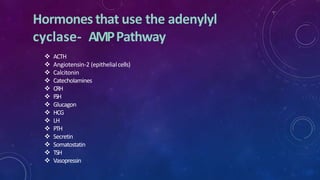
 ACTH
 Angiotensin-2 (epithelialcells)
 Calcitonin
 Catecholamines
 CRH
 FSH
 Glucagon
 HCG
 LH
 PTH
 Secretin
 Somatostatin
 TSH
 Vasopressin
STEPS INVOLVED…..
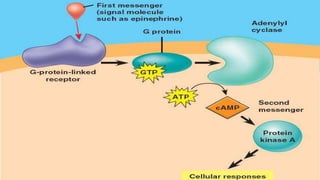
 Step1 : BINDING OF HORMONE to a specific receptor in the cell membrane
 Step2: ACTIVATION OF G-PROTEIN after the formation of HR complex, GDP is replaced
by GTP.
 Step3: ACTIVATION OF ENZYME ADENYLATE CYCLASE activated G-protein either
stimulates or inhibits the enzyme adenylate cyclase which is located in plasma
membrane
 Step4: FORMATION OF cAMP the part of enzyme adenylyl cyclase protrudes through
the inner surface of the cell membrane and when activated it catalyse the formation of
cAMP from cytoplasmic ATP with Mg2+ as cofactor. Thus a stimulatory G-protein
increases the cAMP level whereas inhibitory G protein decreases the cAMP level.
 Step5: Action of cAMP: it activates protein kinase A. One molecule of cAMP stimulates
many enzyme, therefore even a slightest amount of hormone acting on cell surface can
initiate a powerful response.
TERMINATIONOFCYCLIC-AMPACTIONS
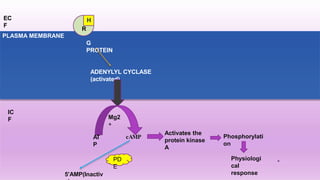
Theactionsof cAMPin thecell areterminated Intwo ways:
1.cAMPis degraded to 5’-AMP in thecell bythe cytoplasmicenzyme
Phosphodiesterase(PDE)
2.Serineor threonine specificphosphatases dephosphorylatestheprotein already
phosphorylatedby PKA.
ADENYLYL CYCLASE
(activated)
EC
F
R
PLASMA MEMBRANE
G
PROTEIN
H
AT
P
cAMP
Mg2
+
Activates the
protein kinase
A
Phosphorylati
on
Physiologi
cal
response5’AMP(Inactiv
PD
E
IC
F
cAMP is a second messenger, used for intracellular signal transduction,
such as transferring into cells the effects
of hormones like glucagon and adrenaline, which cannot pass through the
plasma membrane.
It is also involved in the activation of protein kinases. In addition,
cAMP binds to and regulates the function of ion channels such as the HCN
channels and a few other cyclic nucleotide-binding proteins such
as Epac1 and RAPGEF2.
FUNCTIONS
Role in eukaryotic cells
In cell biology, protein kinase A (PKA[N 1]) is a family of enzymes whose activity is dependent on
cellular levels of cyclic AMP (cAMP). PKA is also known as cAMP-dependent protein kinase.
Protein kinase A has several functions in the cell, including regulation of glycogen, sugar,
and lipid metabolism.
Role in bacteria
In bacteria, the level of cAMP varies depending on the medium used for growth. In particular,
cAMP is low when glucose is the carbon source. This occurs through inhibition of the cAMP-
producing enzyme, adenylate cyclase, as a side-effect of glucose transport into the cell.
The transcription factor cAMP receptor protein (CRP) also called CAP (catabolite gene activator
protein) forms a complex with cAMP and thereby is activated to bind to DNA. CRP-cAMP increases
expression of a large number of genes, including some encoding enzymes that can supply energy
independent of glucose.
Since cyclic AMP is a second messenger and plays vital role in cell signaling, it has been implicated in
various disorders but not restricted to the roles given below:
Role in human carcinoma
Some research has suggested that a deregulation of cAMP pathways and an aberrant activation of
cAMP-controlled genes is linked to the growth of some cancers.
Role in prefrontal cortex disorders
Recent research suggests that cAMP affects the function of higher-order thinking in the prefrontal
cortex through its regulation of ion channels called hyper polarization-activated cyclic nucleotide-gated
channels (HCN). When cAMP stimulates the HCN, the channels open, closing the brain cell to
communication and thus interfering with the function of the prefrontal cortex. This research,
especially the cognitive deficits in age-related illnesses and ADHD, is of interest to researchers studying
the brain.
Pathology
CLINICALIMPORTANCE
Notonly, manyhormonesactthrough Campbut also,toxins releasedbyvarious
pathogensbyaltering cAMPconcentration in thecell
• STIMULATIONOFcAMP:asin thecaseofcholera
• INHIBITION OFcAMP:asin caseof pertussis,Acomponentof pertussistoxin decreases
adenylyl Cyclaseactivity byinhibitory Gprotein. This impairs the host’s defense
ability
THANK
YOU….!!
;)

Cyclic amp

  • 1.
  • 2.
    INTRODUCTION •Cyclic adenosine monophosphate(cAMP, cyclic AMP, or 3',5'- cyclic adenosine monophosphate) is a second messenger important in many biological processes. •cAMP is a derivative of adenosine triphosphate (ATP) and used for intracellular signal transduction in many different organisms, conveying the cAMP-dependent pathway. It should not be confused with 5'-AMP- activated protein kinase (AMP-activated protein kinase).
  • 3.
    INTRODUCTION • Theextracellular molecules(hormones) that bind to areceptor isthe 1stmessengerof a pathway. • Hormonesforms HRcomplexandeventually leadsto formation of secondmessengers. • Secondmessengersareintracellular non-protein, water soluble signal molecules that spreadthroughout acell by diffusion. • Theyrelay signalsfor receptors on cell surface to target molecules inside cells.It significantly amplifies the strength of signals. • Oneof major secondmessengeriscyclic AMP(CYCLICADENOSINEMONOPHOSPHATE) • EarlWilbur SutherlandJr.,discoveredsecondmessengerfor which hewon 1971 Nobel prize.
  • 4.
    Hormones that usethe adenylyl cyclase- AMPPathway  ACTH  Angiotensin-2 (epithelialcells)  Calcitonin  Catecholamines  CRH  FSH  Glucagon  HCG  LH  PTH  Secretin  Somatostatin  TSH  Vasopressin
  • 5.
    STEPS INVOLVED…..  Step1: BINDING OF HORMONE to a specific receptor in the cell membrane  Step2: ACTIVATION OF G-PROTEIN after the formation of HR complex, GDP is replaced by GTP.  Step3: ACTIVATION OF ENZYME ADENYLATE CYCLASE activated G-protein either stimulates or inhibits the enzyme adenylate cyclase which is located in plasma membrane  Step4: FORMATION OF cAMP the part of enzyme adenylyl cyclase protrudes through the inner surface of the cell membrane and when activated it catalyse the formation of cAMP from cytoplasmic ATP with Mg2+ as cofactor. Thus a stimulatory G-protein increases the cAMP level whereas inhibitory G protein decreases the cAMP level.  Step5: Action of cAMP: it activates protein kinase A. One molecule of cAMP stimulates many enzyme, therefore even a slightest amount of hormone acting on cell surface can initiate a powerful response.
  • 6.
    TERMINATIONOFCYCLIC-AMPACTIONS Theactionsof cAMPin thecellareterminated Intwo ways: 1.cAMPis degraded to 5’-AMP in thecell bythe cytoplasmicenzyme Phosphodiesterase(PDE) 2.Serineor threonine specificphosphatases dephosphorylatestheprotein already phosphorylatedby PKA.
  • 8.
    ADENYLYL CYCLASE (activated) EC F R PLASMA MEMBRANE G PROTEIN H AT P cAMP Mg2 + Activatesthe protein kinase A Phosphorylati on Physiologi cal response5’AMP(Inactiv PD E IC F
  • 9.
    cAMP is asecond messenger, used for intracellular signal transduction, such as transferring into cells the effects of hormones like glucagon and adrenaline, which cannot pass through the plasma membrane. It is also involved in the activation of protein kinases. In addition, cAMP binds to and regulates the function of ion channels such as the HCN channels and a few other cyclic nucleotide-binding proteins such as Epac1 and RAPGEF2. FUNCTIONS
  • 10.
    Role in eukaryoticcells In cell biology, protein kinase A (PKA[N 1]) is a family of enzymes whose activity is dependent on cellular levels of cyclic AMP (cAMP). PKA is also known as cAMP-dependent protein kinase. Protein kinase A has several functions in the cell, including regulation of glycogen, sugar, and lipid metabolism. Role in bacteria In bacteria, the level of cAMP varies depending on the medium used for growth. In particular, cAMP is low when glucose is the carbon source. This occurs through inhibition of the cAMP- producing enzyme, adenylate cyclase, as a side-effect of glucose transport into the cell. The transcription factor cAMP receptor protein (CRP) also called CAP (catabolite gene activator protein) forms a complex with cAMP and thereby is activated to bind to DNA. CRP-cAMP increases expression of a large number of genes, including some encoding enzymes that can supply energy independent of glucose.
  • 11.
    Since cyclic AMPis a second messenger and plays vital role in cell signaling, it has been implicated in various disorders but not restricted to the roles given below: Role in human carcinoma Some research has suggested that a deregulation of cAMP pathways and an aberrant activation of cAMP-controlled genes is linked to the growth of some cancers. Role in prefrontal cortex disorders Recent research suggests that cAMP affects the function of higher-order thinking in the prefrontal cortex through its regulation of ion channels called hyper polarization-activated cyclic nucleotide-gated channels (HCN). When cAMP stimulates the HCN, the channels open, closing the brain cell to communication and thus interfering with the function of the prefrontal cortex. This research, especially the cognitive deficits in age-related illnesses and ADHD, is of interest to researchers studying the brain. Pathology
  • 12.
    CLINICALIMPORTANCE Notonly, manyhormonesactthrough Campbutalso,toxins releasedbyvarious pathogensbyaltering cAMPconcentration in thecell • STIMULATIONOFcAMP:asin thecaseofcholera • INHIBITION OFcAMP:asin caseof pertussis,Acomponentof pertussistoxin decreases adenylyl Cyclaseactivity byinhibitory Gprotein. This impairs the host’s defense ability
  • 13.