Janus Kinase/Signal Transducers and
Activators of Transcription (JAK/STAT)
signaling pathway
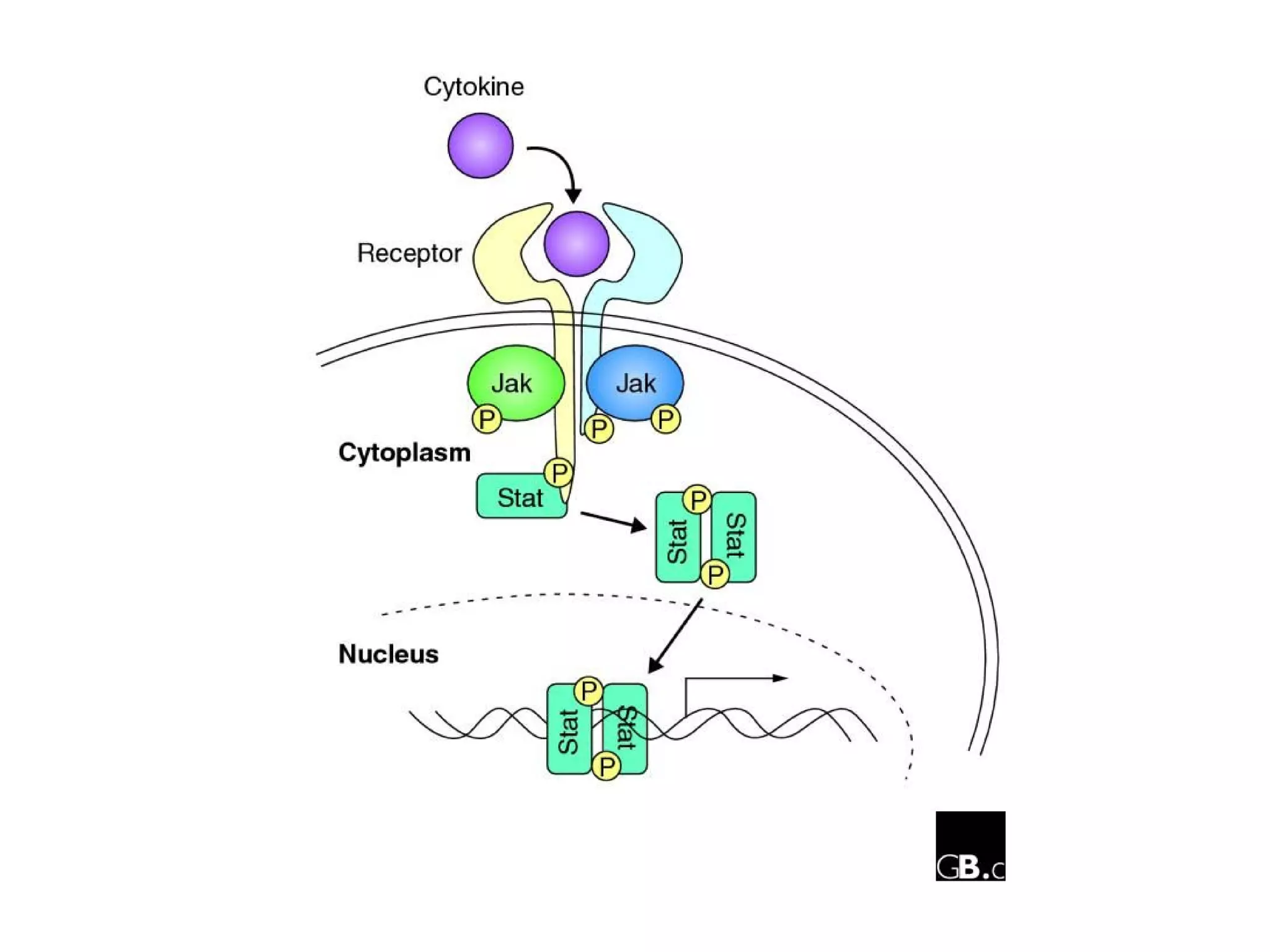
• JAK- Family of cytoplasmic non-receptor
tyrosine kinases which get activated after
the binding of a cytokine to the cell-surface
cytokine receptor.
• STAT- Family of transcription factors that
become activated when one of the tyrosine
residues is phosphorylated by JAK.
• STAT3 dimers then translocate from the
cytoplasm into the nucleus – bind to
Interferon-stimulated Response Elements.
• Cellular responses to dozens of cytokines
and growth factors are mediated by the
evolutionarily conserved.
• Ex: Involved in Ig class switching in B Cells
following a response to IL-4 which
phosphorylates STAT6.
• Resistance to viral infection by interferons
mediated through STAT1.
• Trans-phosphorylated JAKs then
phosphorylate downstream substrates,
including both the receptor and the STATs.
• Activated STATs enter the nucleus and
bind as dimers or as more complex
oligomers to specific enhancer sequences in
target genes, thus regulating their
transcription.
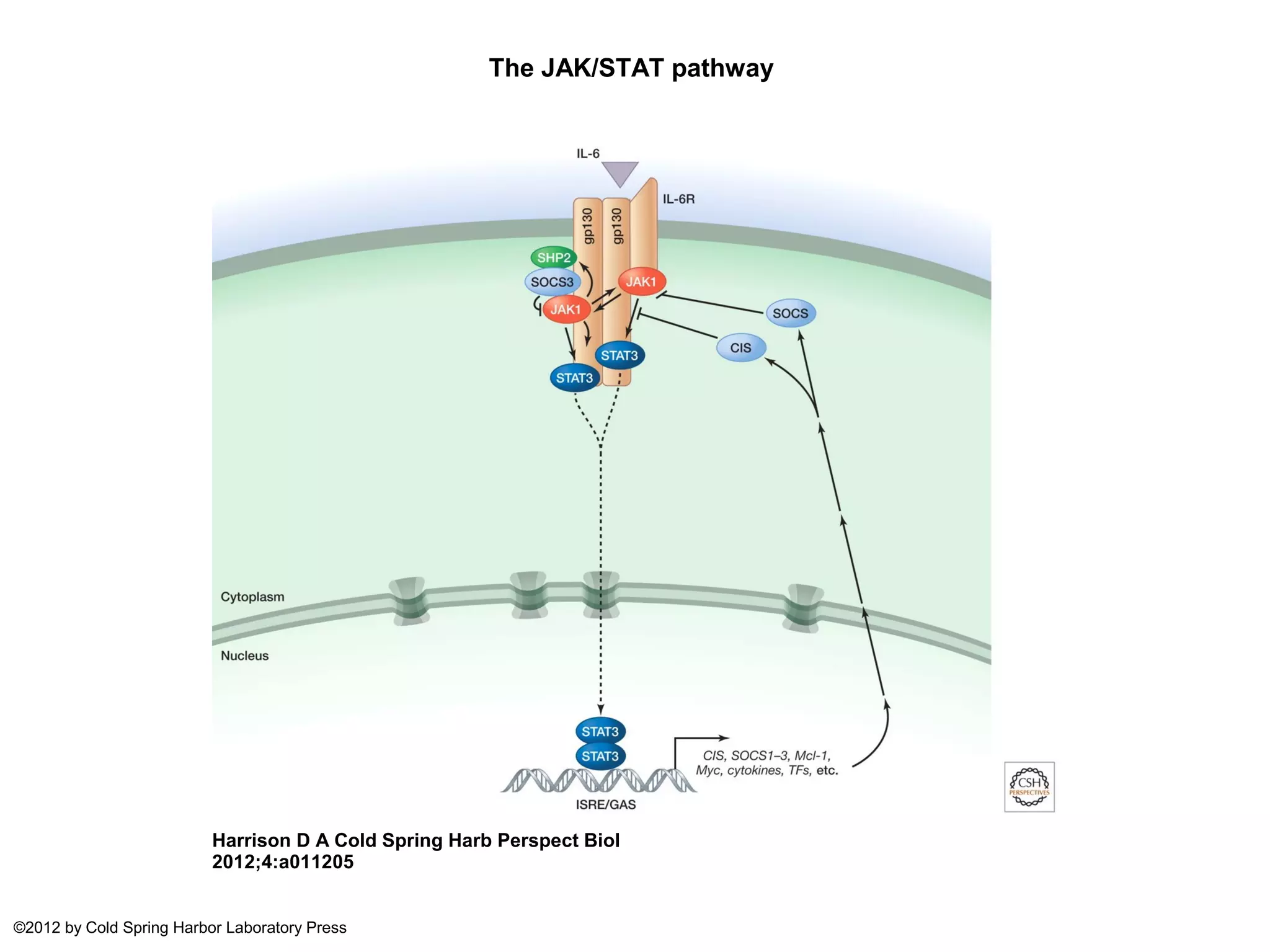
The JAK/STAT pathway
Harrison D A Cold Spring Harb Perspect Biol
2012;4:a011205
©2012 by Cold Spring Harbor Laboratory Press
• Responses include proliferation, differentiation,
migration, apoptosis, and cell survival.
• Essential for numerous developmental and
homeostatic processes, including hematopoiesis,
immune cell development, stem cell
maintenance, organismal growth, and mammary
gland development.
• Human JAK mutations cause numerous diseases,
including SCID, hyper IgE syndrome, certain
leukemias, polycythemia vera, and other
myeloproliferative disorders.
• Small molecular weight cell membrane-permeable
drugs that target this pathways have been
developed for leukemia therapy. (JAK Inhibitors)
• Responses include proliferation, differentiation,
migration, apoptosis, and cell survival.
• Essential for numerous developmental and
homeostatic processes, including hematopoiesis,
immune cell development, stem cell
maintenance, organismal growth, and mammary
gland development.
• Human JAK mutations cause numerous diseases,
including SCID, hyper IgE syndrome, certain
leukemias, polycythemia vera, and other
myeloproliferative disorders.
• Small molecular weight cell membrane-permeable
drugs that target this pathways have been
developed for leukemia therapy. (JAK Inhibitors)
JAK-STAT pathway

  • 1.
    Janus Kinase/Signal Transducersand Activators of Transcription (JAK/STAT) signaling pathway
  • 2.
    • JAK- Familyof cytoplasmic non-receptor tyrosine kinases which get activated after the binding of a cytokine to the cell-surface cytokine receptor. • STAT- Family of transcription factors that become activated when one of the tyrosine residues is phosphorylated by JAK. • STAT3 dimers then translocate from the cytoplasm into the nucleus – bind to Interferon-stimulated Response Elements. • Cellular responses to dozens of cytokines and growth factors are mediated by the evolutionarily conserved.
  • 4.
    • Ex: Involvedin Ig class switching in B Cells following a response to IL-4 which phosphorylates STAT6. • Resistance to viral infection by interferons mediated through STAT1. • Trans-phosphorylated JAKs then phosphorylate downstream substrates, including both the receptor and the STATs. • Activated STATs enter the nucleus and bind as dimers or as more complex oligomers to specific enhancer sequences in target genes, thus regulating their transcription.
  • 5.
    The JAK/STAT pathway HarrisonD A Cold Spring Harb Perspect Biol 2012;4:a011205 ©2012 by Cold Spring Harbor Laboratory Press
  • 6.
    • Responses includeproliferation, differentiation, migration, apoptosis, and cell survival. • Essential for numerous developmental and homeostatic processes, including hematopoiesis, immune cell development, stem cell maintenance, organismal growth, and mammary gland development. • Human JAK mutations cause numerous diseases, including SCID, hyper IgE syndrome, certain leukemias, polycythemia vera, and other myeloproliferative disorders. • Small molecular weight cell membrane-permeable drugs that target this pathways have been developed for leukemia therapy. (JAK Inhibitors)
  • 7.
    • Responses includeproliferation, differentiation, migration, apoptosis, and cell survival. • Essential for numerous developmental and homeostatic processes, including hematopoiesis, immune cell development, stem cell maintenance, organismal growth, and mammary gland development. • Human JAK mutations cause numerous diseases, including SCID, hyper IgE syndrome, certain leukemias, polycythemia vera, and other myeloproliferative disorders. • Small molecular weight cell membrane-permeable drugs that target this pathways have been developed for leukemia therapy. (JAK Inhibitors)
Editor's Notes

  • #6 The JAK/STAT pathway (simplified view).