PRESENTED BY – SMRUTI RANJAN MASANTA
M.PHARM(1ST YR)
PHARMACOLOGY
Content
 History
 Introduction
 Secondary messenger
 Hormones uses cyclic AMP Pathway
 Steps of cyclic AMP Pathway
 Termination of cyclic AMP Pathway
 Effect of cyclic AMP Pathway
 Therapeutic application
 Reference
History
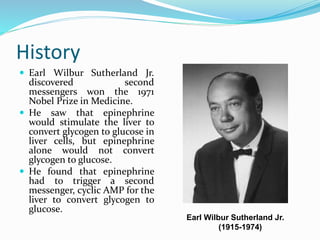
 Earl Wilbur Sutherland Jr.
discovered second
messengers won the 1971
Nobel Prize in Medicine.
 He saw that epinephrine
would stimulate the liver to
convert glycogen to glucose in
liver cells, but epinephrine
alone would not convert
glycogen to glucose.
 He found that epinephrine
had to trigger a second
messenger, cyclic AMP for the
liver to convert glycogen to
glucose.
Earl Wilbur Sutherland Jr.
(1915-1974)
Introduction
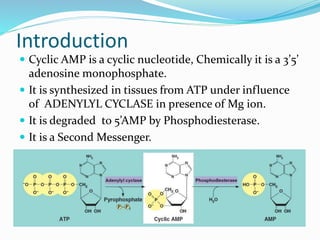
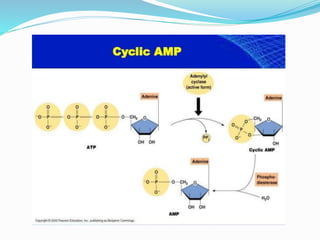
 Cyclic AMP is a cyclic nucleotide, Chemically it is a 3’5’
adenosine monophosphate.
 It is synthesized in tissues from ATP under influence
of ADENYLYL CYCLASE in presence of Mg ion.
 It is degraded to 5’AMP by Phosphodiesterase.
 It is a Second Messenger.
Second messenger
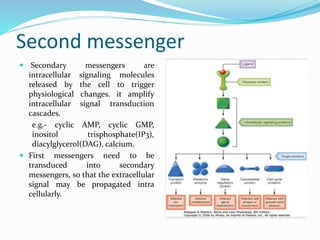
 Secondary messengers are
intracellular signaling molecules
released by the cell to trigger
physiological changes. it amplify
intracellular signal transduction
cascades.
e.g.- cyclic AMP, cyclic GMP,
inositol trisphosphate(IP3),
diacylglycerol(DAG), calcium.
 First messengers need to be
transduced into secondary
messengers, so that the extracellular
signal may be propagated intra
cellularly.
Hormones uses cyclic AMP Pathway
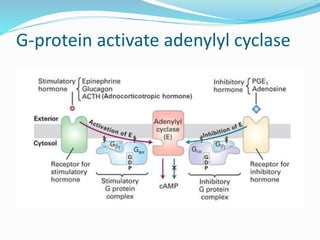
Activate adenylyl cyclase Inhibit adenylyl cyclase
 Epinephrine(β1,β2)
 Norepinephrine
 Glucagon
 CRH
 ACTH
 MSH
 TSH
 AVP/ADH
 HCG
 LH
 FSH
 Somatostatin
 Acetylcholine M2
 Angiotensin II
 Epinephrine α2
Steps involve
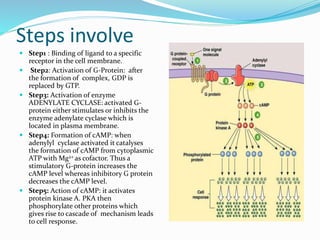
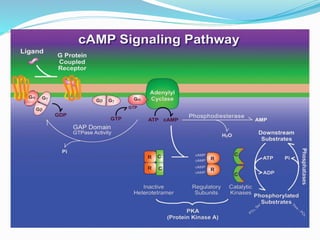
 Step1 : Binding of ligand to a specific
receptor in the cell membrane.
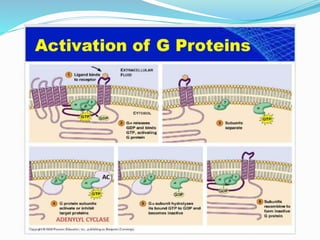
 Step2: Activation of G-Protein: after
the formation of complex, GDP is
replaced by GTP.
 Step3: Activation of enzyme
ADENYLATE CYCLASE: activated G-
protein either stimulates or inhibits the
enzyme adenylate cyclase which is
located in plasma membrane.
 Step4: Formation of cAMP: when
adenylyl cyclase activated it catalyses
the formation of cAMP from cytoplasmic
ATP with Mg2+ as cofactor. Thus a
stimulatory G-protein increases the
cAMP level whereas inhibitory G protein
decreases the cAMP level.
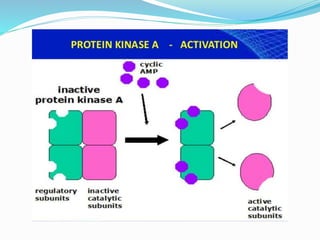
 Step5: Action of cAMP: it activates
protein kinase A. PKA then
phosphorylate other proteins which
gives rise to cascade of mechanism leads
to cell response.
Termination of cyclic AMP
 The actions of cAMP in the cell are terminated in two
ways:
 cAMP is degraded to 5’-AMP in the cell by the
cytoplasmic enzyme Phosphodiesterase(PDE).
 Specific phosphatases dephosphorylates the protein
already phosphorylated by PKA.
G-protein activate adenylyl cyclase
Effects of cAMP Pathway
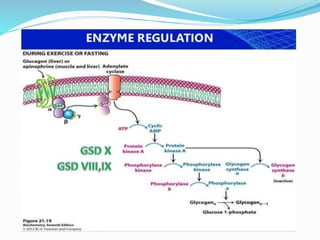
 ALTERED GLYCOGEN METABOLISM BY ENZYME
REGULATION
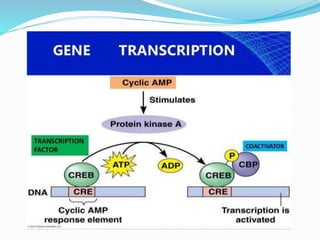
 ALTERED GENE TRANSCRIPTION
 HORMONE ESTRADIOL SECRETION
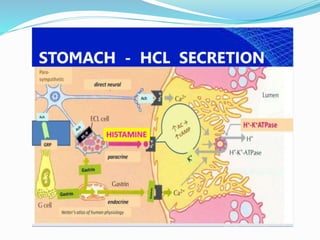
 ALTERED ION TRANSPORT - HCL SECRETION IN
STOMACH
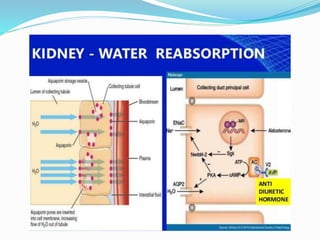
 WATER REABSORPTION BY ANTI DIURETIC
HORMONE
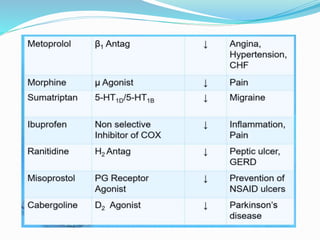
Therapeutic application
References
 www.slideshare.com
 www.youtube.com
 www.ncbi.nlm.nih.gov
 www.sciencedirect.com
Cyclic amp pathway

Cyclic amp pathway

  • 1.
    PRESENTED BY –SMRUTI RANJAN MASANTA M.PHARM(1ST YR) PHARMACOLOGY
  • 2.
    Content  History  Introduction Secondary messenger  Hormones uses cyclic AMP Pathway  Steps of cyclic AMP Pathway  Termination of cyclic AMP Pathway  Effect of cyclic AMP Pathway  Therapeutic application  Reference
  • 3.
    History  Earl WilburSutherland Jr. discovered second messengers won the 1971 Nobel Prize in Medicine.  He saw that epinephrine would stimulate the liver to convert glycogen to glucose in liver cells, but epinephrine alone would not convert glycogen to glucose.  He found that epinephrine had to trigger a second messenger, cyclic AMP for the liver to convert glycogen to glucose. Earl Wilbur Sutherland Jr. (1915-1974)
  • 4.
    Introduction  Cyclic AMPis a cyclic nucleotide, Chemically it is a 3’5’ adenosine monophosphate.  It is synthesized in tissues from ATP under influence of ADENYLYL CYCLASE in presence of Mg ion.  It is degraded to 5’AMP by Phosphodiesterase.  It is a Second Messenger.
  • 5.
    Second messenger  Secondarymessengers are intracellular signaling molecules released by the cell to trigger physiological changes. it amplify intracellular signal transduction cascades. e.g.- cyclic AMP, cyclic GMP, inositol trisphosphate(IP3), diacylglycerol(DAG), calcium.  First messengers need to be transduced into secondary messengers, so that the extracellular signal may be propagated intra cellularly.
  • 6.
    Hormones uses cyclicAMP Pathway Activate adenylyl cyclase Inhibit adenylyl cyclase  Epinephrine(β1,β2)  Norepinephrine  Glucagon  CRH  ACTH  MSH  TSH  AVP/ADH  HCG  LH  FSH  Somatostatin  Acetylcholine M2  Angiotensin II  Epinephrine α2
  • 7.
    Steps involve  Step1: Binding of ligand to a specific receptor in the cell membrane.  Step2: Activation of G-Protein: after the formation of complex, GDP is replaced by GTP.  Step3: Activation of enzyme ADENYLATE CYCLASE: activated G- protein either stimulates or inhibits the enzyme adenylate cyclase which is located in plasma membrane.  Step4: Formation of cAMP: when adenylyl cyclase activated it catalyses the formation of cAMP from cytoplasmic ATP with Mg2+ as cofactor. Thus a stimulatory G-protein increases the cAMP level whereas inhibitory G protein decreases the cAMP level.  Step5: Action of cAMP: it activates protein kinase A. PKA then phosphorylate other proteins which gives rise to cascade of mechanism leads to cell response.
  • 8.
    Termination of cyclicAMP  The actions of cAMP in the cell are terminated in two ways:  cAMP is degraded to 5’-AMP in the cell by the cytoplasmic enzyme Phosphodiesterase(PDE).  Specific phosphatases dephosphorylates the protein already phosphorylated by PKA.
  • 10.
  • 14.
    Effects of cAMPPathway  ALTERED GLYCOGEN METABOLISM BY ENZYME REGULATION  ALTERED GENE TRANSCRIPTION  HORMONE ESTRADIOL SECRETION  ALTERED ION TRANSPORT - HCL SECRETION IN STOMACH  WATER REABSORPTION BY ANTI DIURETIC HORMONE
  • 20.
  • 22.
    References  www.slideshare.com  www.youtube.com www.ncbi.nlm.nih.gov  www.sciencedirect.com