Lymphatic System
Section 3.3
Lymphatic system
When you turn on a faucet the
excess water runs down the drain.
Your body’s excess tissue fluid is removed
by the lymphatic system.
Lymphatic system
Nutrients, water and oxygen molecules in the
blood diffuse through capillary walls to nearby
cells.
Lymphatic system
Those substances can become part of the tissue
fluid that is found between cells.
Lymphatic system
This fluid is collected and returned to the blood
by the lymphatic system.
Lymphatic system
Once the fluid is in the lymphatic
capillaries, it is called lymph.
The Lymphatic System
carries lymph
through a network of
lymph capillaries and
larger lymph vessels.
Then lymph drains
into large veins near
the heart.
Lymphatic Circulation
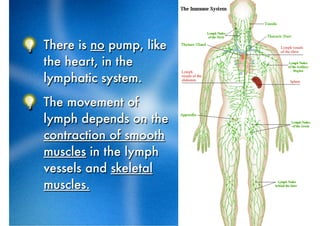
There is no pump, like
the heart, in the
lymphatic system.
The movement of
lymph depends on the
contraction of smooth
muscles in the lymph
vessels and skeletal
muscles.
Lymph vessels, like
veins, have valves that
keep lymph from
flowing backwards.
If the lymphatic system
is not working
properly, severe
swelling occurs because
the tissue fluid cannot
get back to the blood.
Lymph contains water and dissolved substances,
but it also contains lymphocytes.
Lymphocytes are a type of white blood
cell that help your body defend against disease-
causing organisms.
Lymphatic Organs
Before the lymph enters the blood, it passes
through lymph nodes, which are
bean shaped organs of varying sizes found
throughout the body.
Lymph nodes filter out microorganisms and
foreign material that have been taken up by
lymphocytes.
Lymphatic Organs
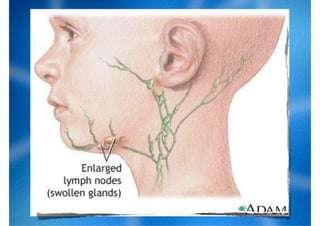
When your body fights an infection,
lymphocytes fill the lymph nodes.
The lymph nodes become swollen, warm,
reddened, and tender to the touch. After the
invaders are destroyed, the swelling,
redness, warmth and tenderness in the
lymph nodes goes away.
Lymphatic Organs
Lymphatic Organs
Another important lymphatic organ is the
tonsils.
They are in the back of your throat and
protect you from harmful microorganisms
that enter through your mouth and nose.
Lymphatic Organs
Another important lymphatic organ is the
thymus.
The thymus is a soft mass of tissue located
behind the sternum.
It makes lymphocytes that travel to other
lymph organs.
Lymphatic Organs
Another important lymphatic organ is the
spleen.
This is the largest lymphatic organ.
It is located behind the upper-left part of the
stomach and filters the blood by removing
worn out and damaged red blood cells.
Cells in the spleen take up and destroy
bacteria and other harmful substances.
Disease of the Lymphatic System
HIV is a deadly virus.
When it enters a person’s body, it attacks
and destroys lymphocytes, called helper T
cells that help make antibodies to fight
infections.
This affects the person’s immunity against
certain diseases.
Usually the person dies of one of those
diseases, not from the HIV virus.

Lymphatic System

  • 1.
  • 2.
    Lymphatic system When youturn on a faucet the excess water runs down the drain. Your body’s excess tissue fluid is removed by the lymphatic system.
  • 3.
    Lymphatic system Nutrients, waterand oxygen molecules in the blood diffuse through capillary walls to nearby cells.
  • 4.
    Lymphatic system Those substancescan become part of the tissue fluid that is found between cells.
  • 5.
    Lymphatic system This fluidis collected and returned to the blood by the lymphatic system.
  • 7.
    Lymphatic system Once thefluid is in the lymphatic capillaries, it is called lymph.
  • 9.
    The Lymphatic System carrieslymph through a network of lymph capillaries and larger lymph vessels. Then lymph drains into large veins near the heart. Lymphatic Circulation
  • 10.
    There is nopump, like the heart, in the lymphatic system. The movement of lymph depends on the contraction of smooth muscles in the lymph vessels and skeletal muscles.
  • 11.
    Lymph vessels, like veins,have valves that keep lymph from flowing backwards. If the lymphatic system is not working properly, severe swelling occurs because the tissue fluid cannot get back to the blood.
  • 12.
    Lymph contains waterand dissolved substances, but it also contains lymphocytes. Lymphocytes are a type of white blood cell that help your body defend against disease- causing organisms.
  • 13.
    Lymphatic Organs Before thelymph enters the blood, it passes through lymph nodes, which are bean shaped organs of varying sizes found throughout the body. Lymph nodes filter out microorganisms and foreign material that have been taken up by lymphocytes.
  • 15.
    Lymphatic Organs When yourbody fights an infection, lymphocytes fill the lymph nodes. The lymph nodes become swollen, warm, reddened, and tender to the touch. After the invaders are destroyed, the swelling, redness, warmth and tenderness in the lymph nodes goes away.
  • 20.
  • 21.
    Lymphatic Organs Another importantlymphatic organ is the tonsils. They are in the back of your throat and protect you from harmful microorganisms that enter through your mouth and nose.
  • 23.
    Lymphatic Organs Another importantlymphatic organ is the thymus. The thymus is a soft mass of tissue located behind the sternum. It makes lymphocytes that travel to other lymph organs.
  • 25.
    Lymphatic Organs Another importantlymphatic organ is the spleen. This is the largest lymphatic organ. It is located behind the upper-left part of the stomach and filters the blood by removing worn out and damaged red blood cells. Cells in the spleen take up and destroy bacteria and other harmful substances.
  • 27.
    Disease of theLymphatic System HIV is a deadly virus. When it enters a person’s body, it attacks and destroys lymphocytes, called helper T cells that help make antibodies to fight infections. This affects the person’s immunity against certain diseases. Usually the person dies of one of those diseases, not from the HIV virus.