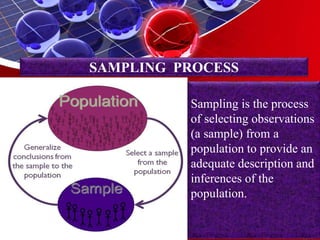
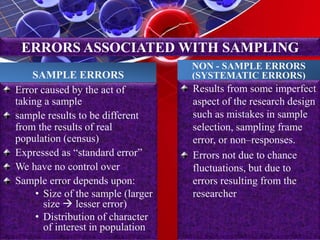
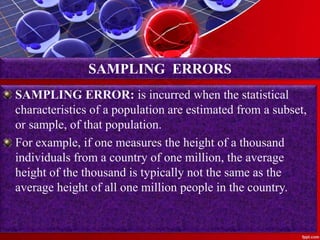
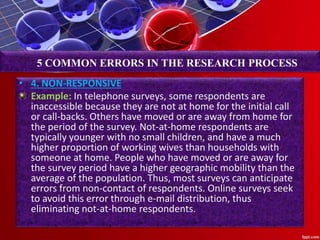
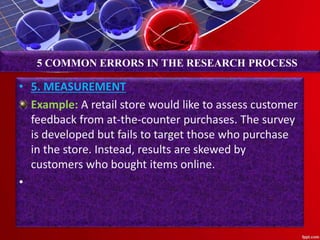
Sampling errors occur when using a sample to make inferences about a population. There are two main types of sampling errors - random sampling error and bias sampling error. Random sampling error is caused by chance fluctuations in who is selected in the sample and usually balances out, while bias sampling error results from flaws in the sampling design or implementation and does not balance out. Some factors that influence the size of sampling errors are the sample size, with larger samples having smaller errors, and the heterogeneity of the population. Non-sampling errors also exist, such as errors in defining the population, sampling methodology, non-responses, and measurement errors.