Earth is made up of rocks and
minerals.
A rock consists of two or more
minerals.
Minerals are made of one or more
 Metamorphic
Rocks
Igneous Rocks Sedimentary Rocks
Igneous rocks are formed from liquid
molten rock that cool slowly and harden.
Igneous means made from fire and heat.
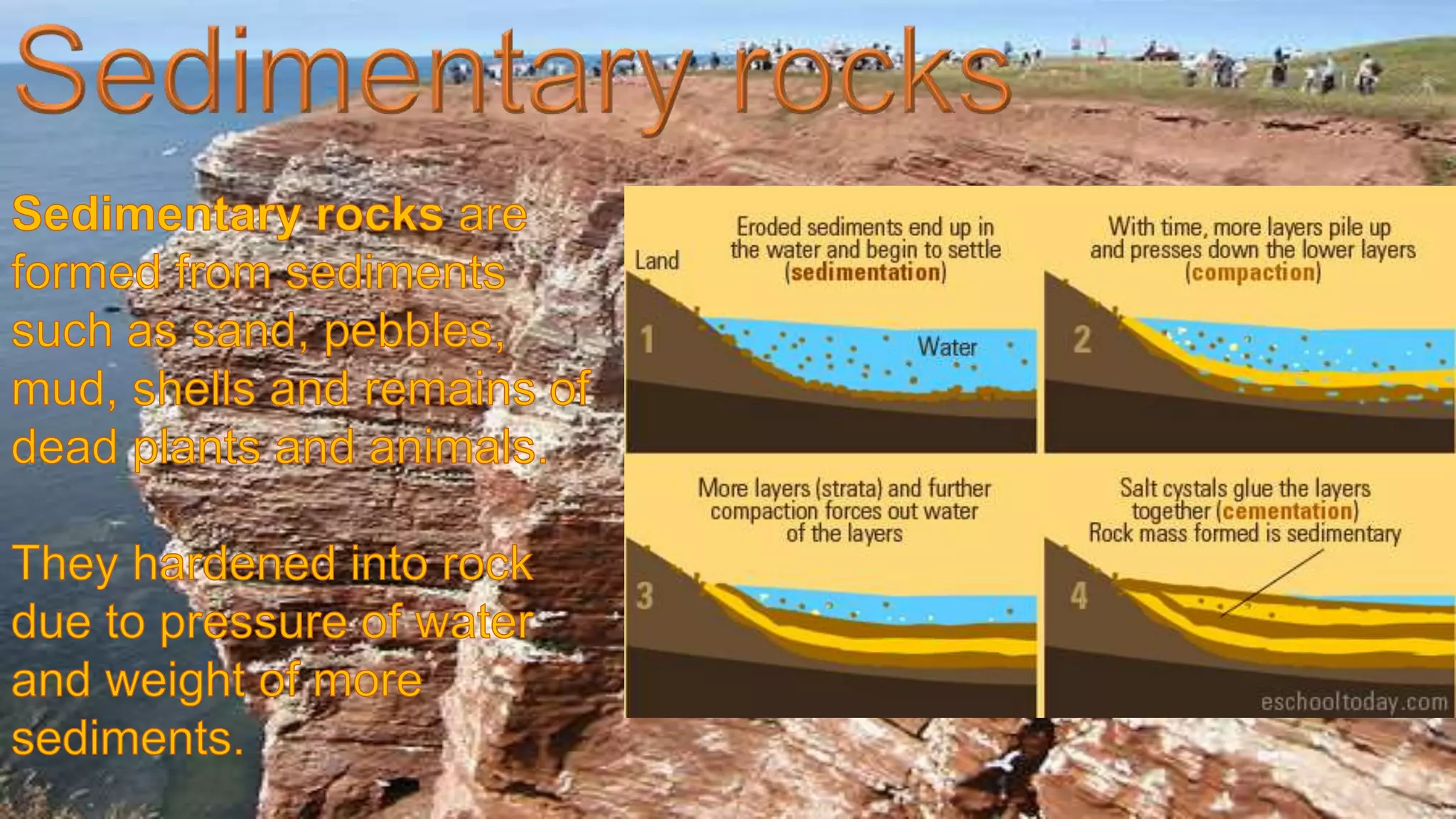
Categories of Sedimentary
rocks
a. Clastic rocks-
formed from broken
fragments of pre-
existing rocks and
minerals.
b. Chemical rocks-
formed when
minerals precipitate
or solidify from a
solution like sea
water or lake water.
c. Organic rocks-
formed from
accumulation of plant
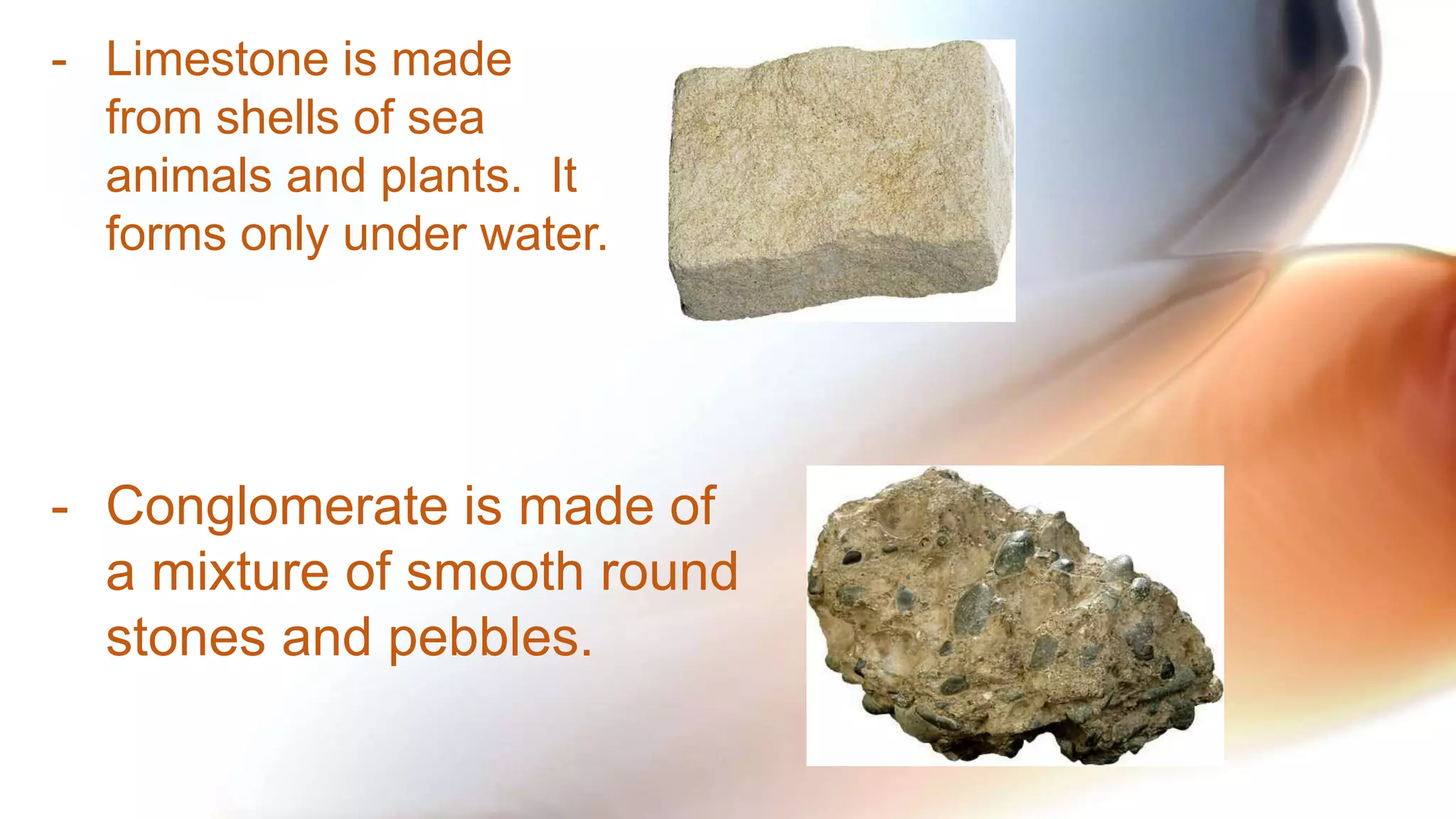
- Limestone is made
from shells of sea
animals and plants. It
forms only under water.
- Conglomerate is made of
a mixture of smooth round
stones and pebbles.
- Sandstone is made up
of tiny bits of sand. It is
cut into blocks and
used in walls and
buildings because it is
strong and easy to
quarry.
- Shale is made from mud and
fine silt or clay. It is commonly
called mudstone.
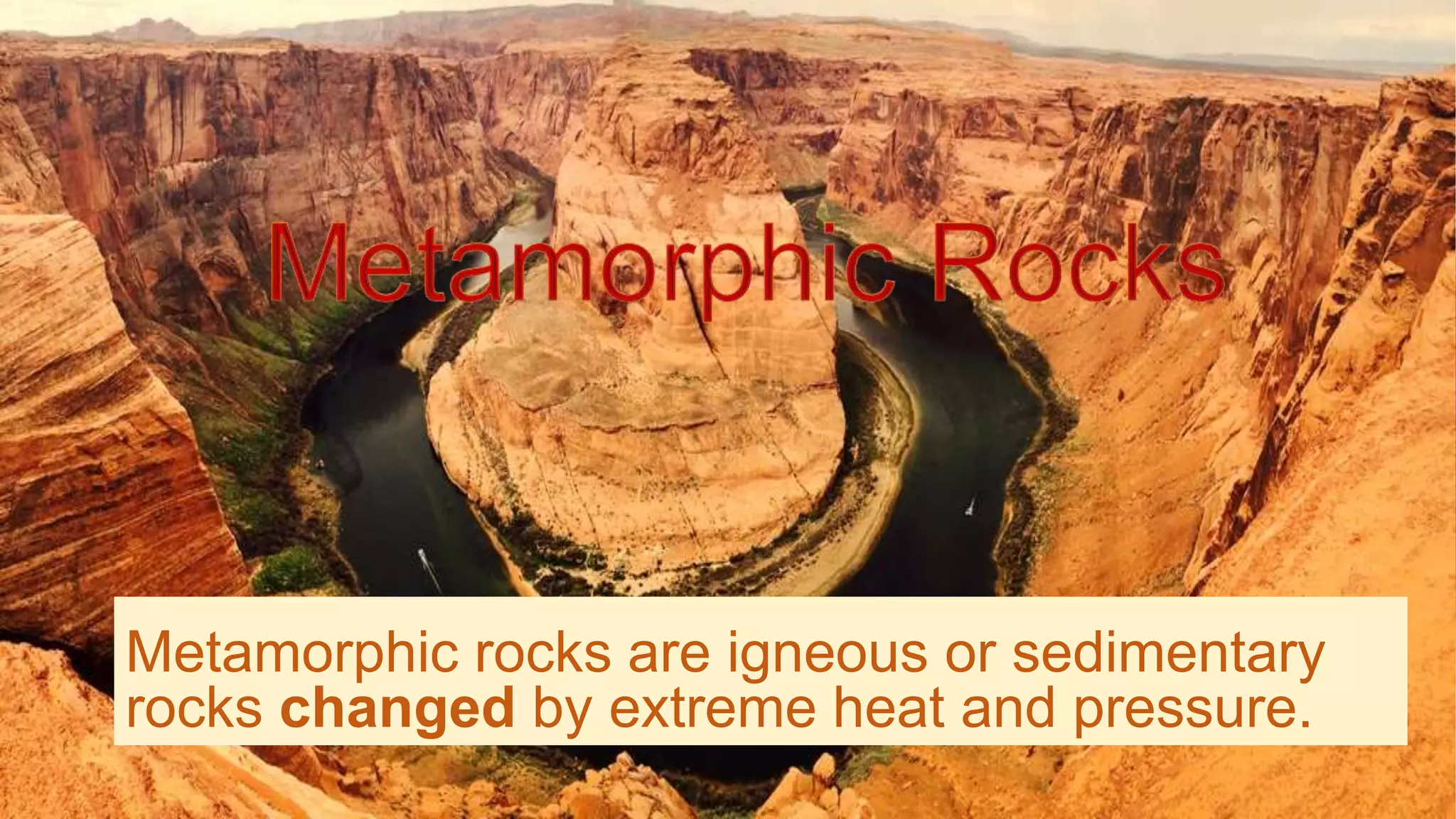
Metamorphic rocks are igneous or sedimentary
rocks changed by extreme heat and pressure.
Metamorphic means
“to have been
changed”
As a volcano
pushes its way up
through the earth,
great heat changes
a sedimentary rock
into metamorphic
rock.
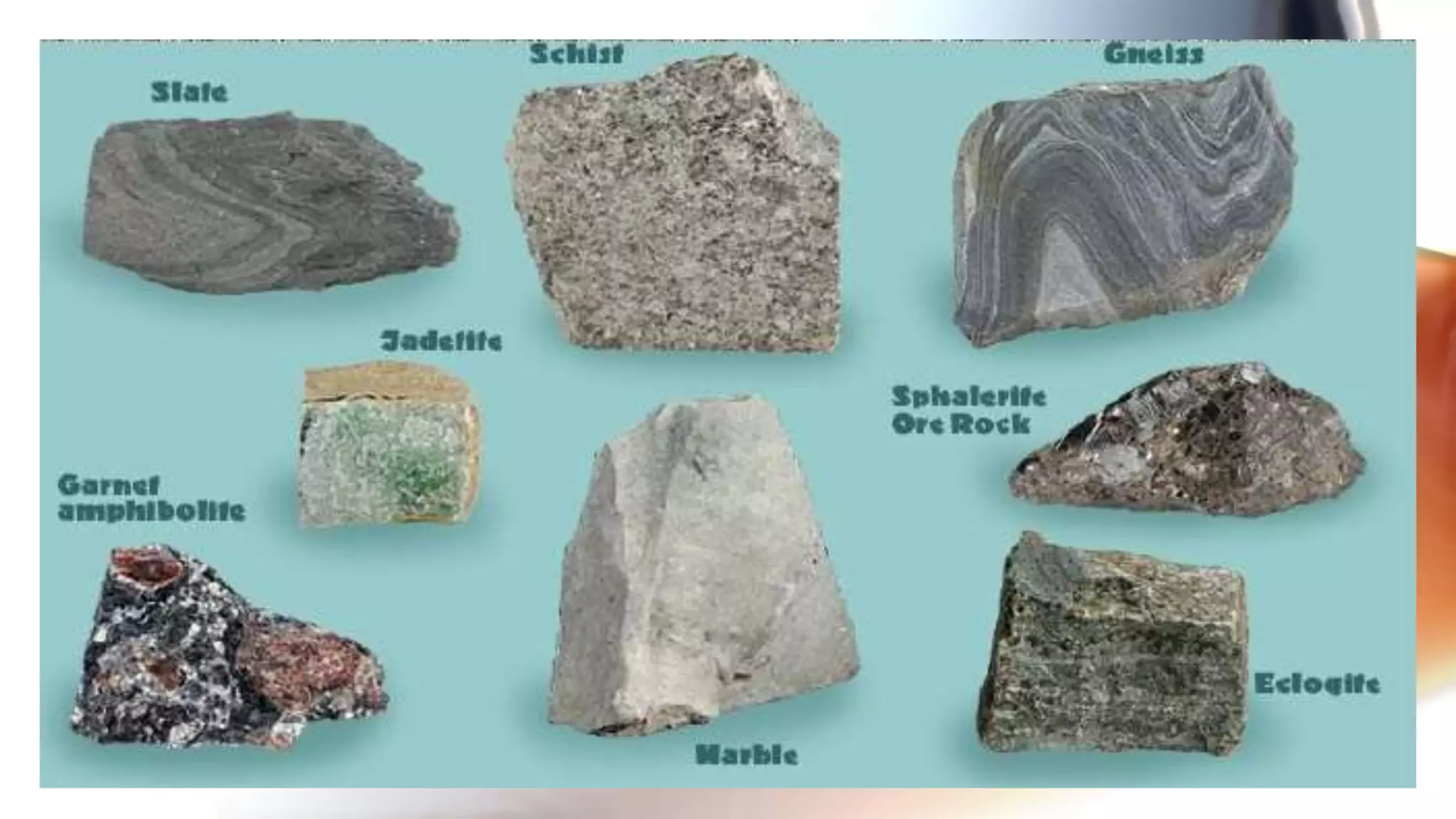
- Marble is a metamorphic rock which comes from limestone.
Minerals or impurities in the marble changes its color.
- Slate is made from shale. Slate and shale have the same colors,
but they do not look alike because of how they break. Slate breaks
into smooth flat sheets of rocks while shale breaks only into odd
- Quartzite comes from hard sandstone.
- Schist is made from mudstone or shale. As schist is made, some
of the minerals change to become mica which make the schist
shine and sparkle.
…from one type to another
Elements that make up
rocks are never created or
destroyed — instead, they
are constantly being
recycled.
The rock cycle helps us to see that the earth is like
a giant rock recycling machine!
formed
destroyed
In rock cycle, earth materials change back and forth among
the different types of rock.

Rock Cycle

  • 2.
    Earth is madeup of rocks and minerals. A rock consists of two or more minerals. Minerals are made of one or more
  • 3.
  • 4.
    Igneous rocks areformed from liquid molten rock that cool slowly and harden. Igneous means made from fire and heat.
  • 9.
    Categories of Sedimentary rocks a.Clastic rocks- formed from broken fragments of pre- existing rocks and minerals. b. Chemical rocks- formed when minerals precipitate or solidify from a solution like sea water or lake water. c. Organic rocks- formed from accumulation of plant
  • 11.
    - Limestone ismade from shells of sea animals and plants. It forms only under water. - Conglomerate is made of a mixture of smooth round stones and pebbles.
  • 12.
    - Sandstone ismade up of tiny bits of sand. It is cut into blocks and used in walls and buildings because it is strong and easy to quarry. - Shale is made from mud and fine silt or clay. It is commonly called mudstone.
  • 13.
    Metamorphic rocks areigneous or sedimentary rocks changed by extreme heat and pressure.
  • 14.
    Metamorphic means “to havebeen changed” As a volcano pushes its way up through the earth, great heat changes a sedimentary rock into metamorphic rock.
  • 15.
    - Marble isa metamorphic rock which comes from limestone. Minerals or impurities in the marble changes its color. - Slate is made from shale. Slate and shale have the same colors, but they do not look alike because of how they break. Slate breaks into smooth flat sheets of rocks while shale breaks only into odd
  • 16.
    - Quartzite comesfrom hard sandstone. - Schist is made from mudstone or shale. As schist is made, some of the minerals change to become mica which make the schist shine and sparkle.
  • 18.
    …from one typeto another
  • 19.
    Elements that makeup rocks are never created or destroyed — instead, they are constantly being recycled.
  • 20.
    The rock cyclehelps us to see that the earth is like a giant rock recycling machine!
  • 21.
  • 22.
    In rock cycle,earth materials change back and forth among the different types of rock.