Weathering
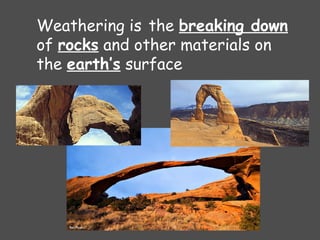
Weathering is the breaking down
of rocks and other materials on
the earth’s surface
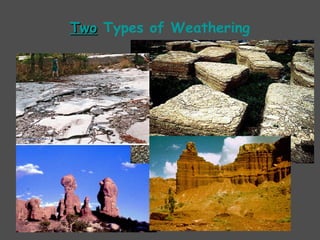
TwoTwo Types of Weathering
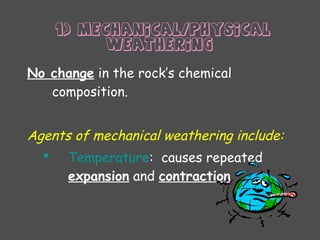
No change in the rock’s chemical
composition.
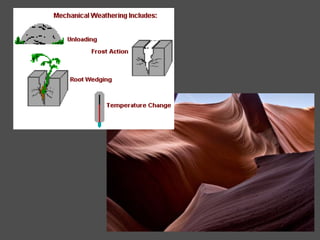
Agents of mechanical weathering include:
 Temperature: causes repeated
expansion and contraction
1) Mechanical/physical
weathering
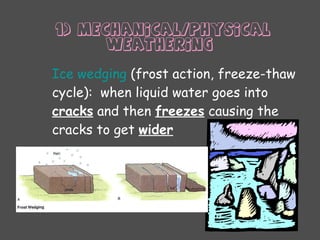
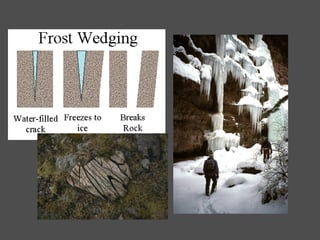
Ice wedging (frost action, freeze-thaw
cycle): when liquid water goes into
cracks and then freezes causing the
cracks to get wider
1) Mechanical/physical
weathering
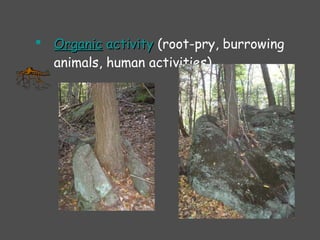
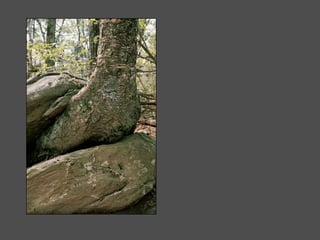
 OrganicOrganic activityactivity (root-pry, burrowing
animals, human activities)
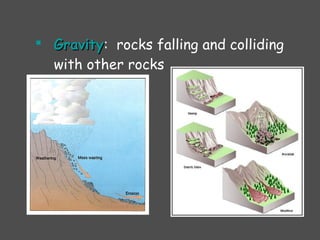
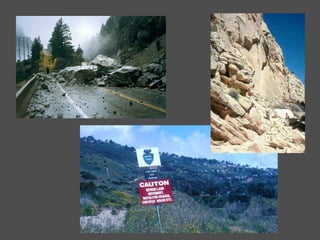
 GravityGravity: rocks falling and colliding
with other rocks
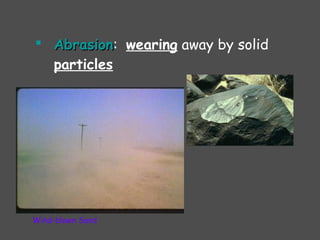
 AbrasionAbrasion: wearing away by solid
particles
Wind-blown Sand
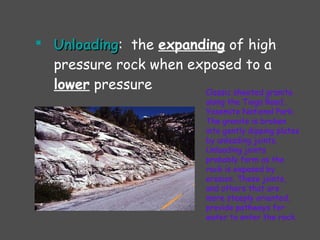
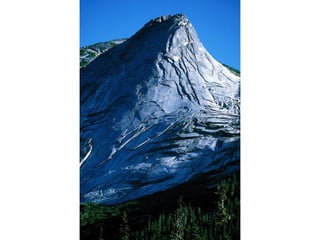
 UnloadingUnloading: the expanding of high
pressure rock when exposed to a
lower pressure Classic sheeted granite
along the Tioga Road,
Yosemite National Park.
The granite is broken
into gently dipping plates
by unloading joints.
Unloading joints
probably form as the
rock is exposed by
erosion. These joints,
and others that are
more steeply oriented,
provide pathways for
water to enter the rock.
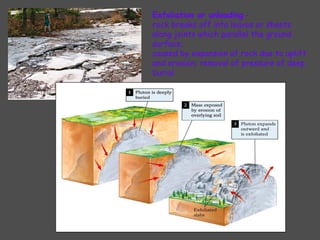
Exfoliation or unloading -
rock breaks off into leaves or sheets
along joints which parallel the ground
surface;
caused by expansion of rock due to uplift
and erosion; removal of pressure of deep
burial
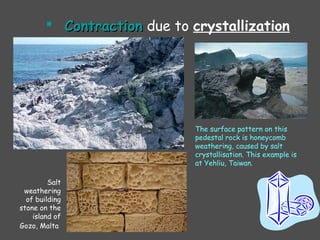
 ContractionContraction due to crystallization
The surface pattern on this
pedestal rock is honeycomb
weathering, caused by salt
crystallisation. This example is
at Yehliu, Taiwan.
Salt
weathering
of building
stone on the
island of
Gozo, Malta
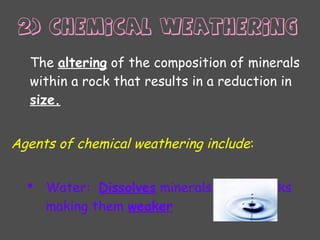
The altering of the composition of minerals
within a rock that results in a reduction in
size.
Agents of chemical weathering include:
 Water: Dissolves minerals out of rocks
making them weaker
2) Chemical weathering
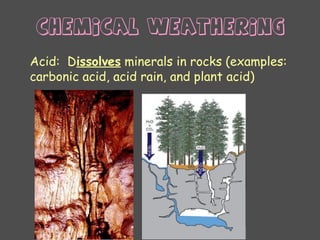
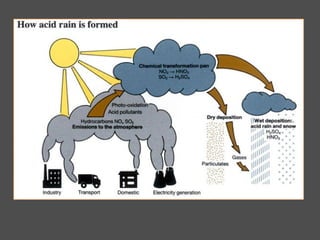
Acid: Dissolves minerals in rocks (examples:
carbonic acid, acid rain, and plant acid)
Chemical weathering
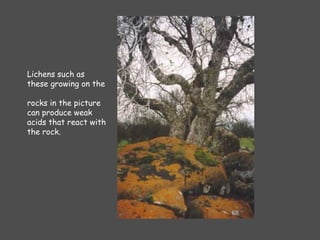
Lichens such as
these growing on the
rocks in the picture
can produce weak
acids that react with
the rock.
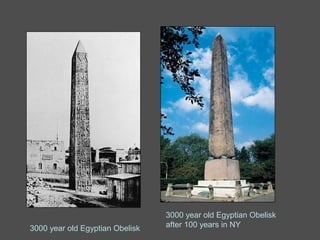
3000 year old Egyptian Obelisk
after 100 years in NY
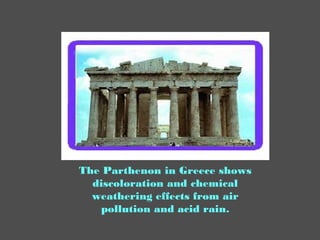
The Parthenon in Greece shows
discoloration and chemical
weathering effects from air
pollution and acid rain.
 Oxidation: Oxygen combines with iron
minerals and sulfur minerals changing the
composition of the rock
Chemical weathering
Oxidation turned these rocks in
Nevada's Valley of Fire red.
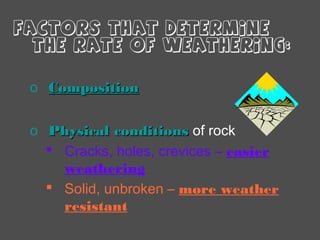
Factors that determine
the rate of weathering:
o CompositionComposition
o Physical conditionsPhysical conditions of rock
 Cracks, holes, crevices – easier
weathering
 Solid, unbroken – more weather
resistant
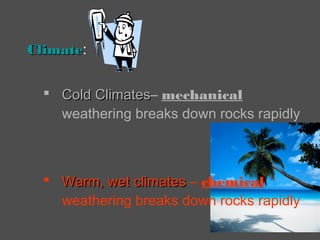
ClimateClimate:
 ColdCold ClimatesClimates– mechanical
weathering breaks down rocks rapidly
 Warm, wet climatesWarm, wet climates – chemical
weathering breaks down rocks rapidly
o TopographyTopography: the position of the rock
o Air pollutionAir pollution
o Exposure timeExposure time
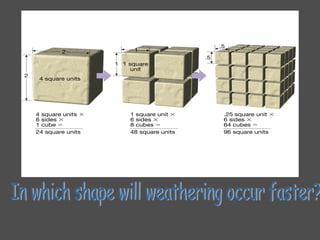
o Surface areaSurface area exposed
Mechanical and chemical
weathering work together
Weathering by BrainpopWeathering by Brainpop
1) How long does the weathering process take?
2) What is carbonic acid a mixture of?
3) What kind of rocks are formed by weathering?
• http://www.youtube.com/watch?
v=lyysL02ZvQ8

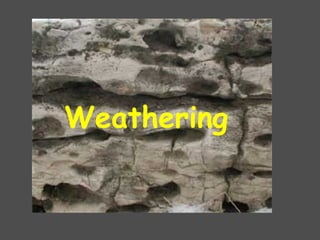
Weathering

  • 1.
  • 2.
    Weathering is thebreaking down of rocks and other materials on the earth’s surface
  • 3.
    TwoTwo Types ofWeathering
  • 4.
    No change inthe rock’s chemical composition. Agents of mechanical weathering include:  Temperature: causes repeated expansion and contraction 1) Mechanical/physical weathering
  • 5.
    Ice wedging (frostaction, freeze-thaw cycle): when liquid water goes into cracks and then freezes causing the cracks to get wider 1) Mechanical/physical weathering
  • 7.
     OrganicOrganic activityactivity(root-pry, burrowing animals, human activities)
  • 9.
     GravityGravity: rocksfalling and colliding with other rocks
  • 11.
     AbrasionAbrasion: wearingaway by solid particles Wind-blown Sand
  • 12.
     UnloadingUnloading: theexpanding of high pressure rock when exposed to a lower pressure Classic sheeted granite along the Tioga Road, Yosemite National Park. The granite is broken into gently dipping plates by unloading joints. Unloading joints probably form as the rock is exposed by erosion. These joints, and others that are more steeply oriented, provide pathways for water to enter the rock.
  • 13.
    Exfoliation or unloading- rock breaks off into leaves or sheets along joints which parallel the ground surface; caused by expansion of rock due to uplift and erosion; removal of pressure of deep burial
  • 15.
     ContractionContraction dueto crystallization The surface pattern on this pedestal rock is honeycomb weathering, caused by salt crystallisation. This example is at Yehliu, Taiwan. Salt weathering of building stone on the island of Gozo, Malta
  • 17.
    The altering ofthe composition of minerals within a rock that results in a reduction in size. Agents of chemical weathering include:  Water: Dissolves minerals out of rocks making them weaker 2) Chemical weathering
  • 18.
    Acid: Dissolves mineralsin rocks (examples: carbonic acid, acid rain, and plant acid) Chemical weathering
  • 19.
    Lichens such as thesegrowing on the rocks in the picture can produce weak acids that react with the rock.
  • 21.
    3000 year oldEgyptian Obelisk 3000 year old Egyptian Obelisk after 100 years in NY
  • 22.
    The Parthenon inGreece shows discoloration and chemical weathering effects from air pollution and acid rain.
  • 23.
     Oxidation: Oxygencombines with iron minerals and sulfur minerals changing the composition of the rock Chemical weathering Oxidation turned these rocks in Nevada's Valley of Fire red.
  • 24.
    Factors that determine therate of weathering: o CompositionComposition o Physical conditionsPhysical conditions of rock  Cracks, holes, crevices – easier weathering  Solid, unbroken – more weather resistant
  • 26.
    ClimateClimate:  ColdCold ClimatesClimates–mechanical weathering breaks down rocks rapidly  Warm, wet climatesWarm, wet climates – chemical weathering breaks down rocks rapidly
  • 27.
    o TopographyTopography: theposition of the rock o Air pollutionAir pollution o Exposure timeExposure time o Surface areaSurface area exposed Mechanical and chemical weathering work together
  • 28.
    Weathering by BrainpopWeatheringby Brainpop 1) How long does the weathering process take? 2) What is carbonic acid a mixture of? 3) What kind of rocks are formed by weathering?
  • 29.