Limestone Landscapes
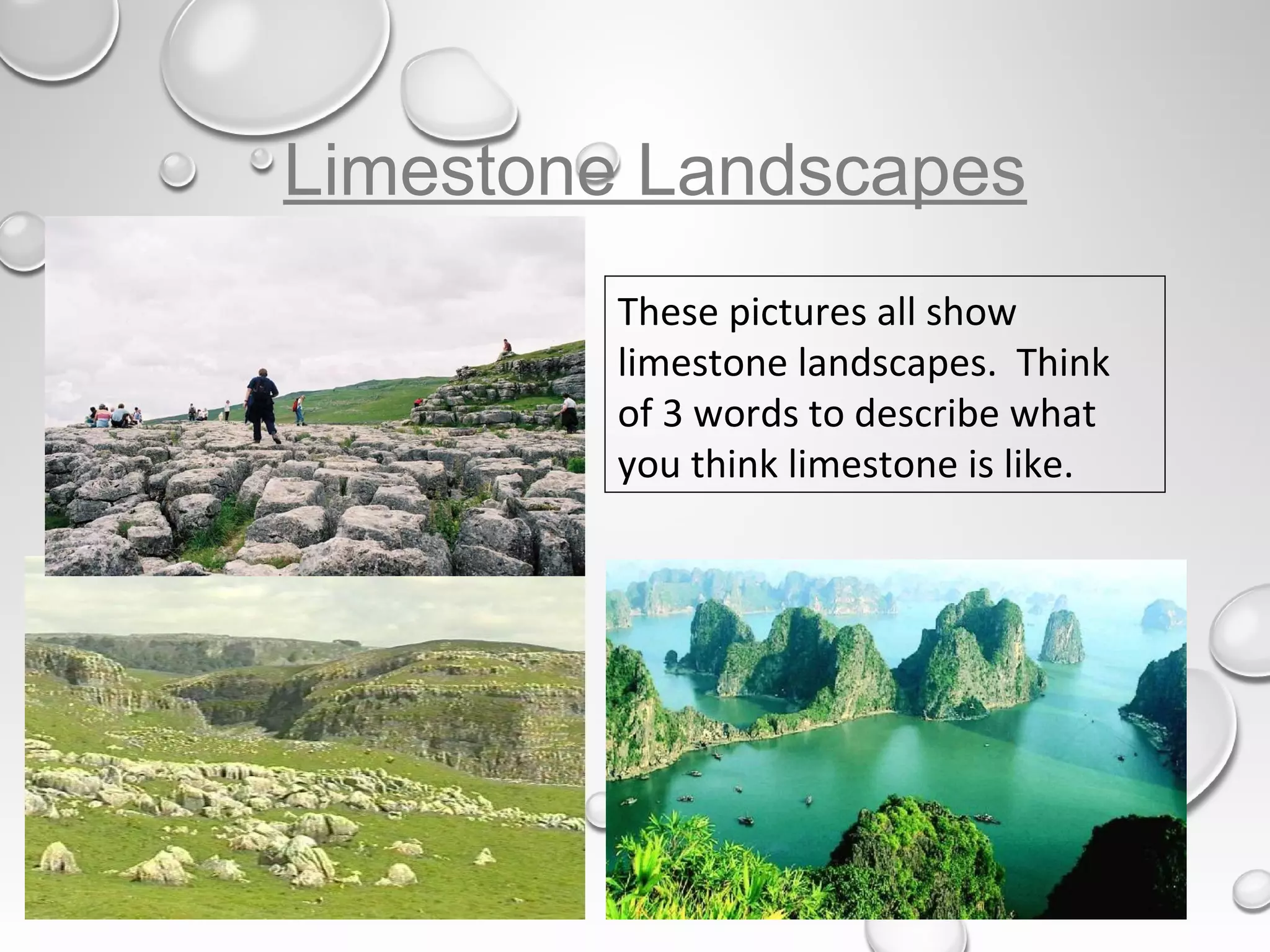
These pictures all show
limestone landscapes. Think
of 3 words to describe what
you think limestone is like.
SO .. HOW WASSO .. HOW WAS
LIMESTONE REALLYLIMESTONE REALLY
FORMED?FORMED?
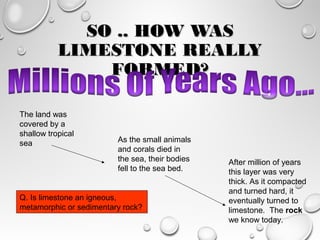
The land was
covered by a
shallow tropical
sea As the small animals
and corals died in
the sea, their bodies
fell to the sea bed.
After million of years
this layer was very
thick. As it compacted
and turned hard, it
eventually turned to
limestone. The rock
we know today.
Q. Is limestone an igneous,
metamorphic or sedimentary rock?
Characteristics of Carboniferous Limestone:
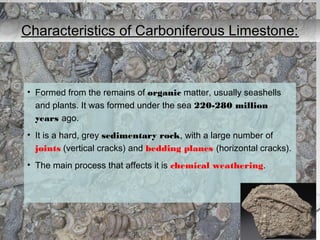
• Formed from the remains of organic matter, usually seashells
and plants. It was formed under the sea 220-280 million
years ago.
• It is a hard, grey sedimentary rock, with a large number of
joints (vertical cracks) and bedding planes (horizontal cracks).
• The main process that affects it is chemical weathering.
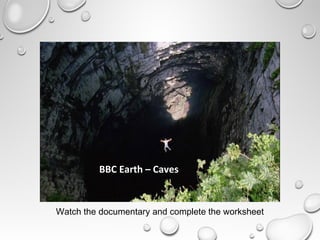
Planet Earth ‘caves’
Watch the documentary and complete the worksheet
BBC Earth – Caves

Limestone (part 1)

  • 1.
    Limestone Landscapes These picturesall show limestone landscapes. Think of 3 words to describe what you think limestone is like.
  • 2.
    SO .. HOWWASSO .. HOW WAS LIMESTONE REALLYLIMESTONE REALLY FORMED?FORMED? The land was covered by a shallow tropical sea As the small animals and corals died in the sea, their bodies fell to the sea bed. After million of years this layer was very thick. As it compacted and turned hard, it eventually turned to limestone. The rock we know today. Q. Is limestone an igneous, metamorphic or sedimentary rock?
  • 3.
    Characteristics of CarboniferousLimestone: • Formed from the remains of organic matter, usually seashells and plants. It was formed under the sea 220-280 million years ago. • It is a hard, grey sedimentary rock, with a large number of joints (vertical cracks) and bedding planes (horizontal cracks). • The main process that affects it is chemical weathering.
  • 4.
    Planet Earth ‘caves’ Watchthe documentary and complete the worksheet BBC Earth – Caves