Downloaded 166 times


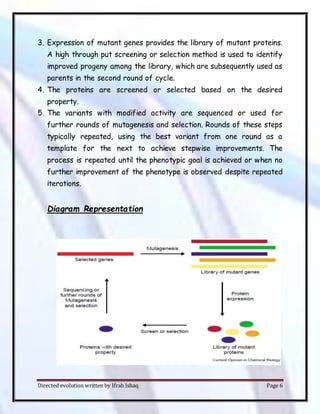
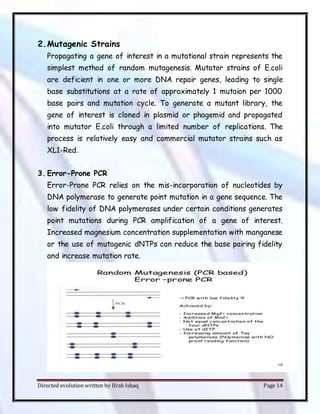
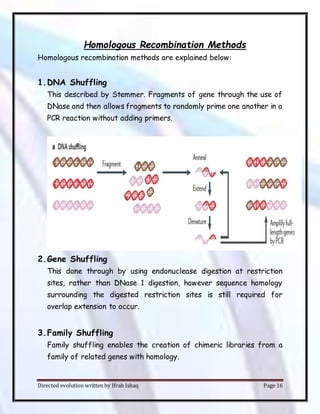
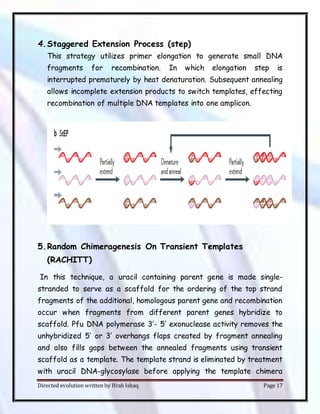
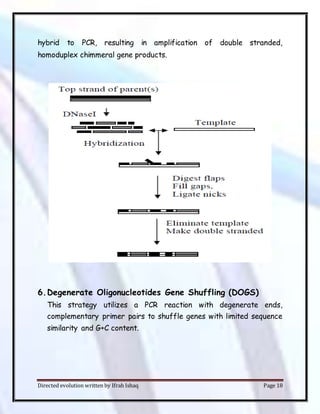
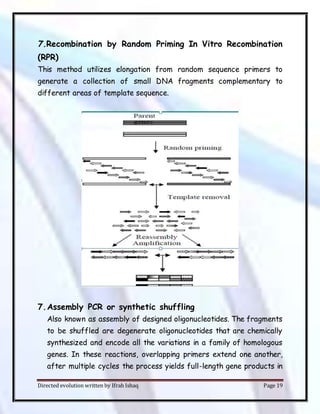
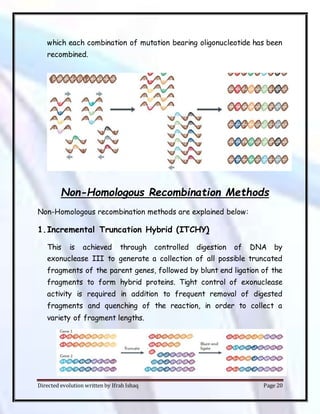
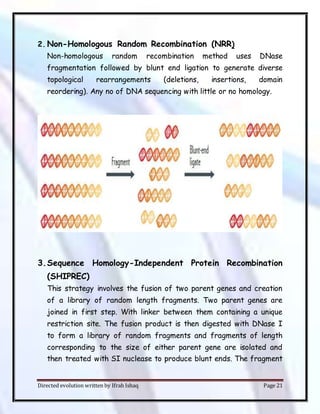
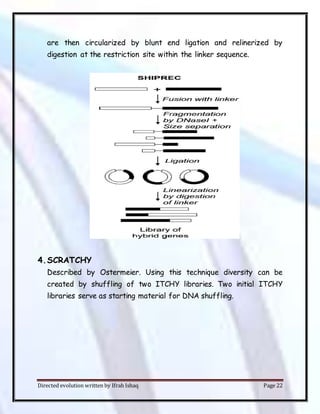
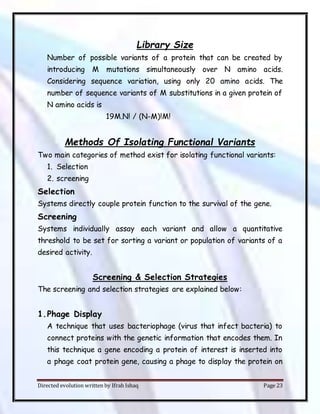
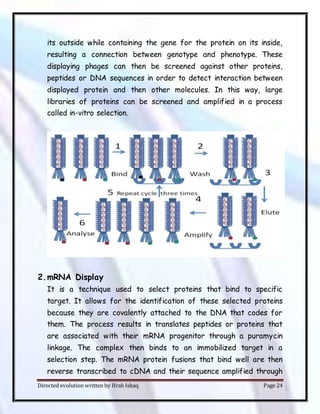
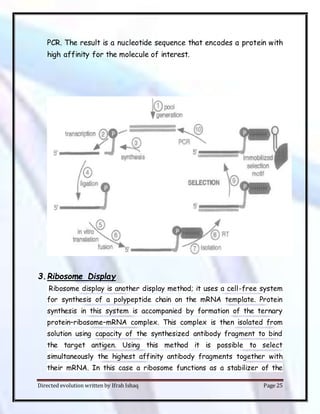
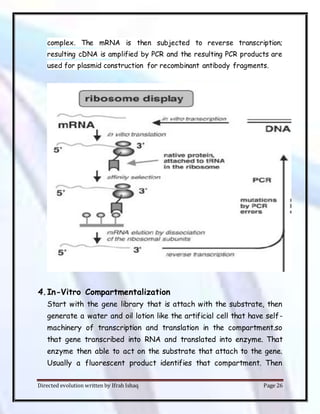
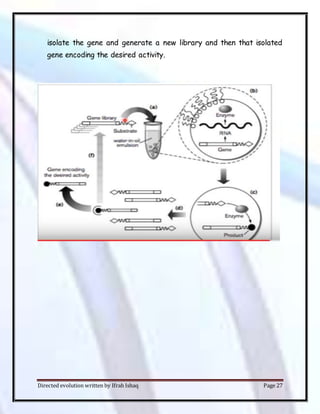
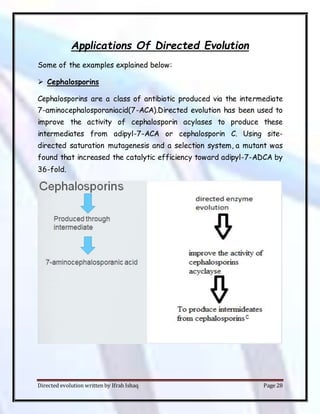

This document discusses directed evolution, which mimics natural selection to evolve proteins or nucleic acids towards a defined goal. It does not create new organisms and focuses on specific molecular properties. The process involves randomly mutating a gene of interest, generating a library of variants, screening or selecting for desired properties, and repeating rounds of mutation and selection until the goal is achieved. Directed evolution was first used in the 1970s and has since advanced protein engineering techniques. It provides a way to customize protein reactions and improve properties like yield, substrate specificity, and stability.


