POST-TRANSCRIPTIONAL
MODIFICATIONS
MOLECULAR BIOLOGY-II (BBC 207)
SRISHTI
S.Id-2019008455
ROLL NO-1907143010
BSc. Hons BIOCHEMISTRY (TERM-04)
SBSR, SHARDA UNIVERSITY
Post Transcriptional Modification
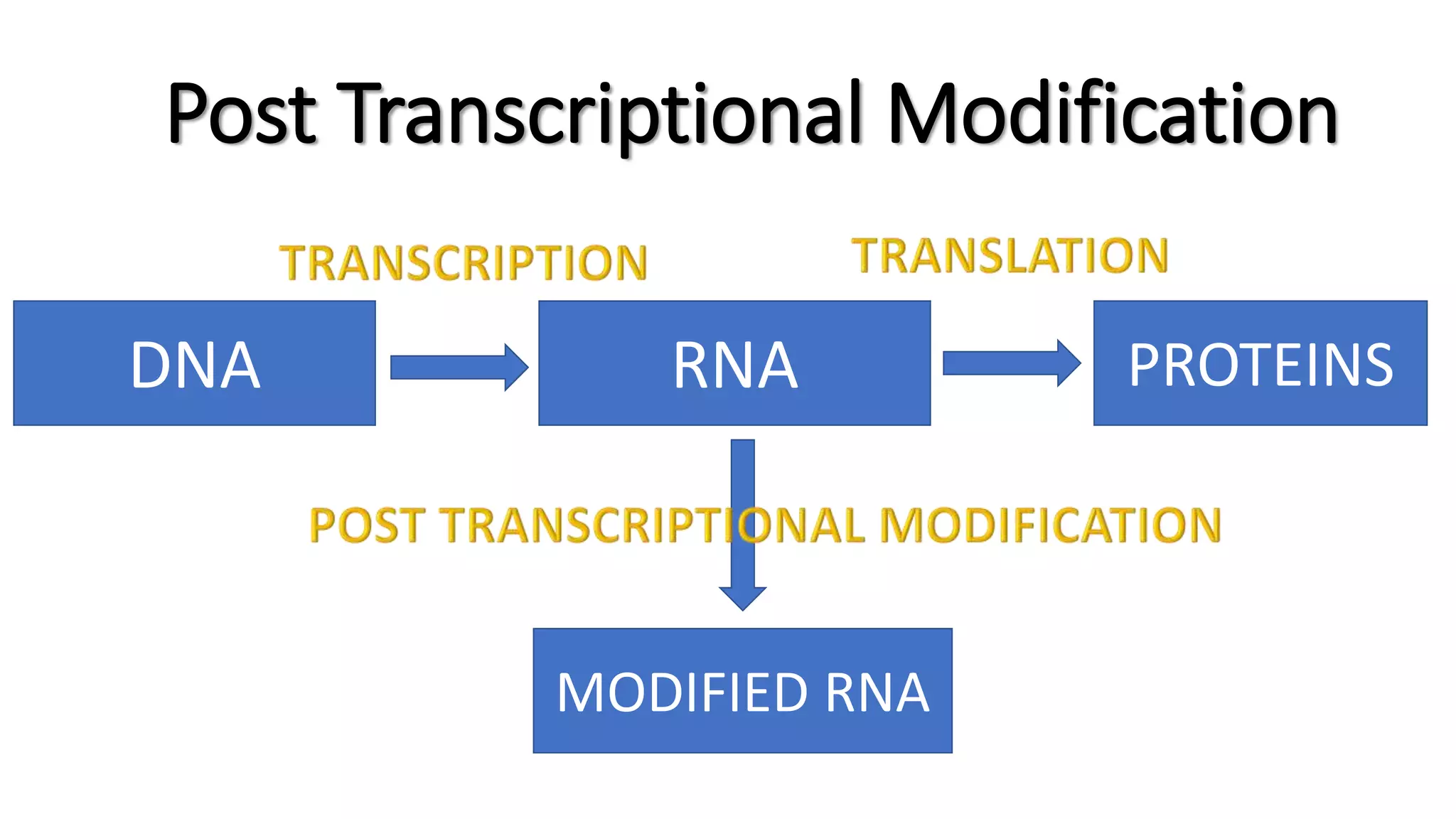
DNA RNA PROTEINS
MODIFIED RNA
Post Transcriptional Modification
• Post transcriptional modification or Co-transcriptional modification
• Chemical modification of RNA primary transcript to produce mature
functional RNA.
• Nascent RNA, also known as primary transcript, needs to be modified to become
functional tRNAs, rRNAs, and mRNA.
• Primary transcripts of mRNA are called as heterogenous nuclear RNA (hnRNA).
Post Transcriptional Modification
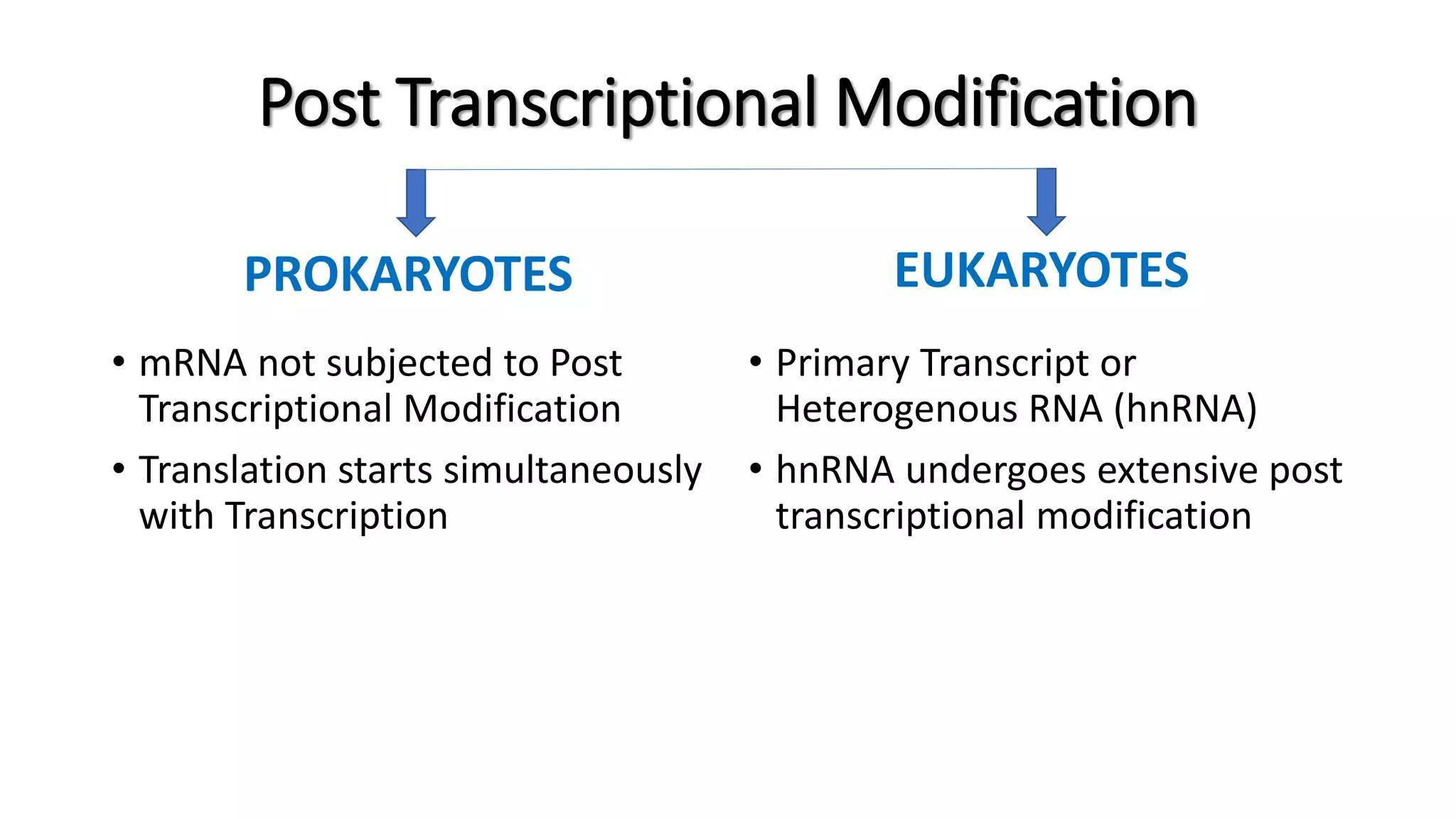
PROKARYOTES
• mRNA not subjected to Post
Transcriptional Modification
• Translation starts simultaneously
with Transcription
EUKARYOTES
• Primary Transcript or
Heterogenous RNA (hnRNA)
• hnRNA undergoes extensive post
transcriptional modification
Types of Post Transcriptional Modification
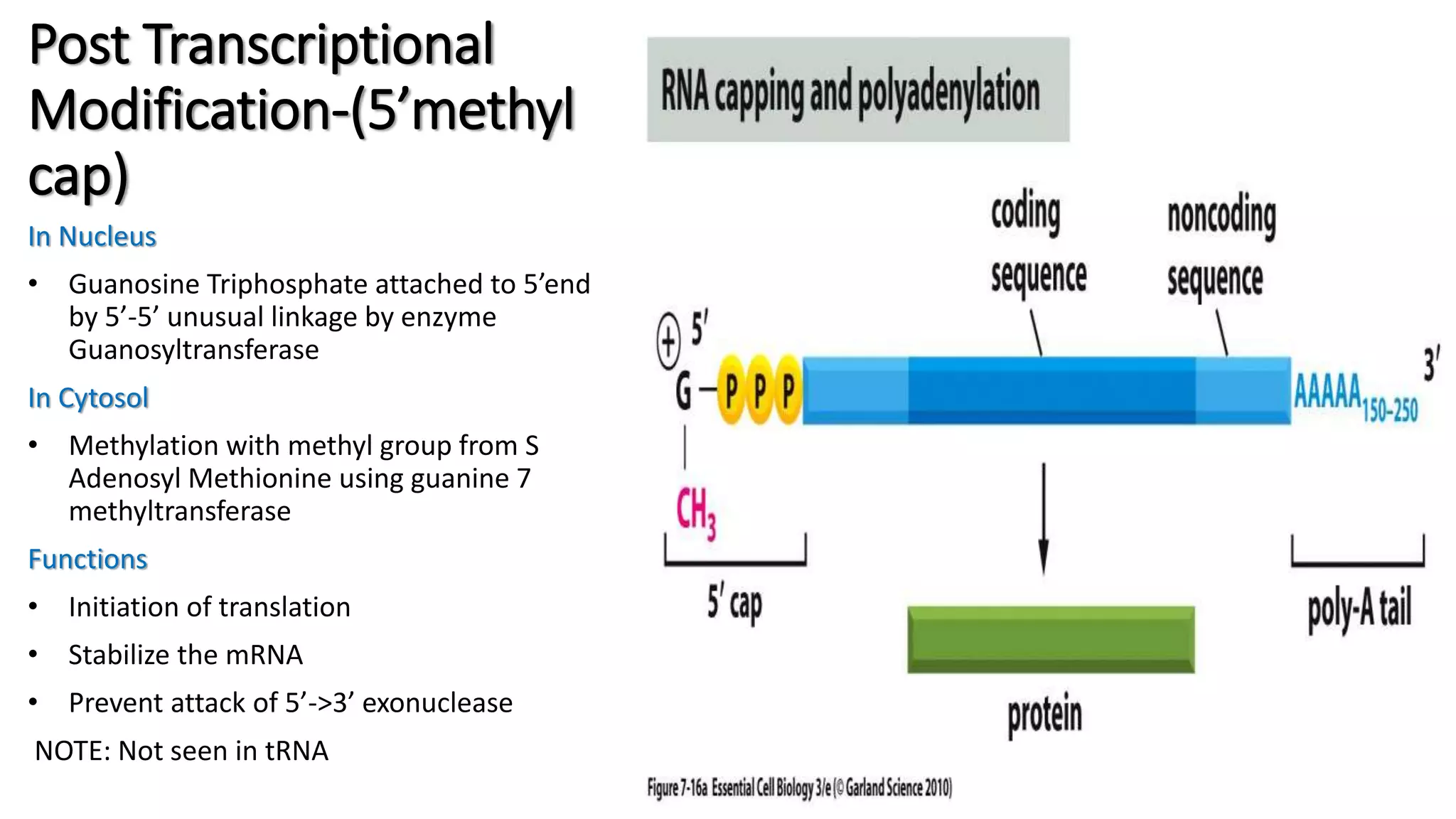
1. 7 methylguanosine capping at 5’ end
2. Addition of poly A tail at 3’ end
3. Methylations
4. Splicing
5. Alternative RNA processing
6. RNA editing
Post Transcriptional
Modification-(5’methyl
cap)
In Nucleus
• Guanosine Triphosphate attached to 5’end
by 5’-5’ unusual linkage by enzyme
Guanosyltransferase
In Cytosol
• Methylation with methyl group from S
Adenosyl Methionine using guanine 7
methyltransferase
Functions
• Initiation of translation
• Stabilize the mRNA
• Prevent attack of 5’->3’ exonuclease
NOTE: Not seen in tRNA
Post Transcriptional
Modification-(Poly A
Tail at 3’end)
In Nucleus
• Poly A Tail added at 3’end by
polyadenylate polymerase
• The length of Poly A tail can be
up to 200 adenine bases
Functions
• Poly A Tail & its binding protein PAB-1
is required for efficient initiation
of protein synthesis
• Stabilize the mRNA
• Prevent attack of 5’->3’
exonuclease
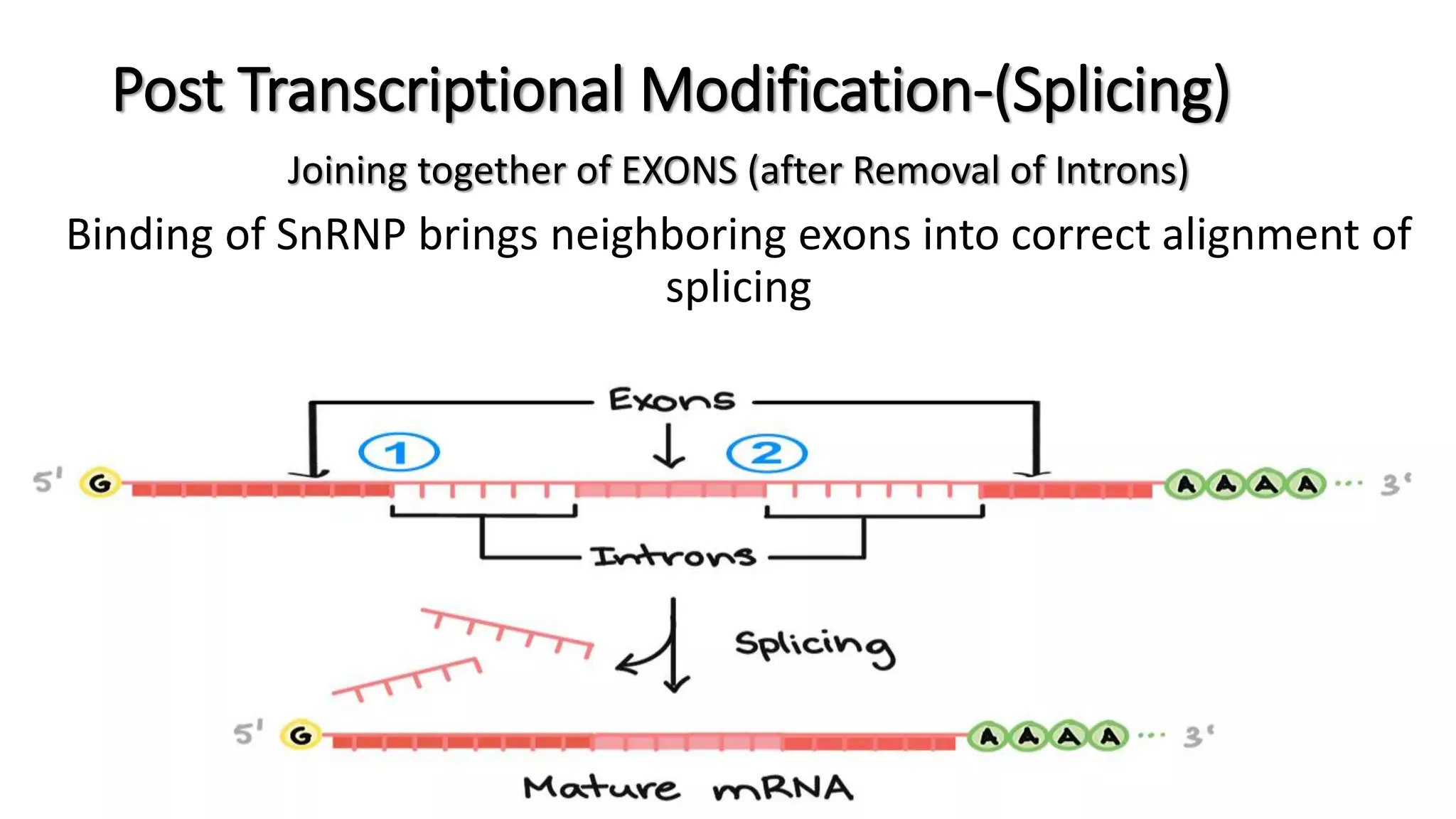
Post Transcriptional Modification-(Splicing)
Joining together of EXONS (after Removal of Introns)
Binding of SnRNP brings neighboring exons into correct alignment of
splicing
Post Transcriptional Modification-(Splicing)
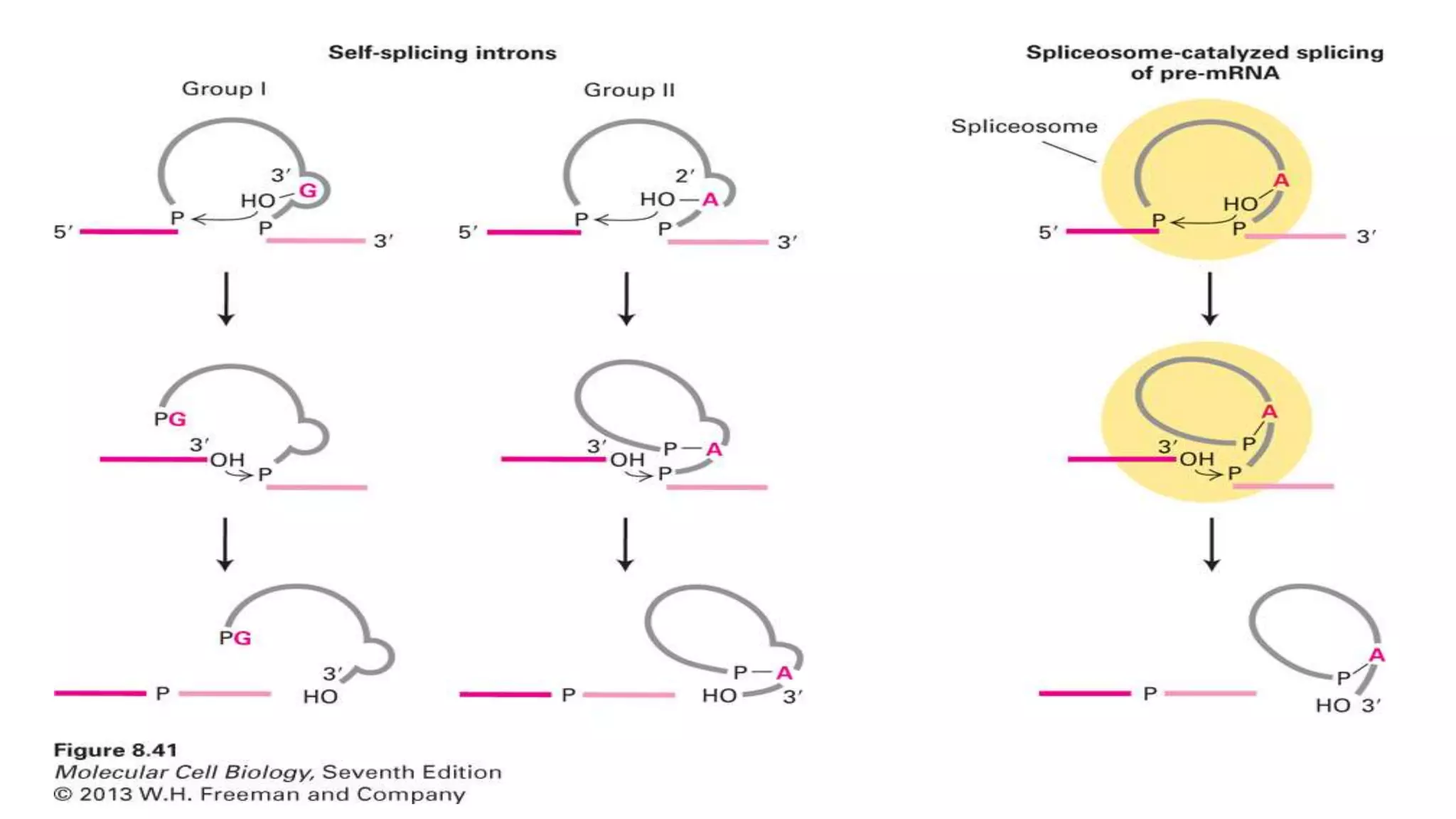
Self Splicing – Certain hnRNA has splicing activity because of Ribozyme Activity
Spliceosomes
Primary Transcript + 5snRNA (U1/ U2/ U4/ U5/ U6) & more than 60 proteins (Ribonucleoproteins or RNPs)
Small Nuclear RNA (Sn RNA)
Uracil Rich RNA which acts as Enzyme (Ribozyme). U6 is essential
U7 is SnRNA involved in production of correct 3’ ends of histone mRNA that lacks Poly A tail
SnRNP Complex (SNURPs)
SnRNA + RNP = SNURPs (Clinical Correlation :- SLE antibodies against SNURPs)
Methylation & Alternative Splicing
Methylations
• Methylation of N7 of Adenine and 2’ hydroxyl group of ribose in cytosol
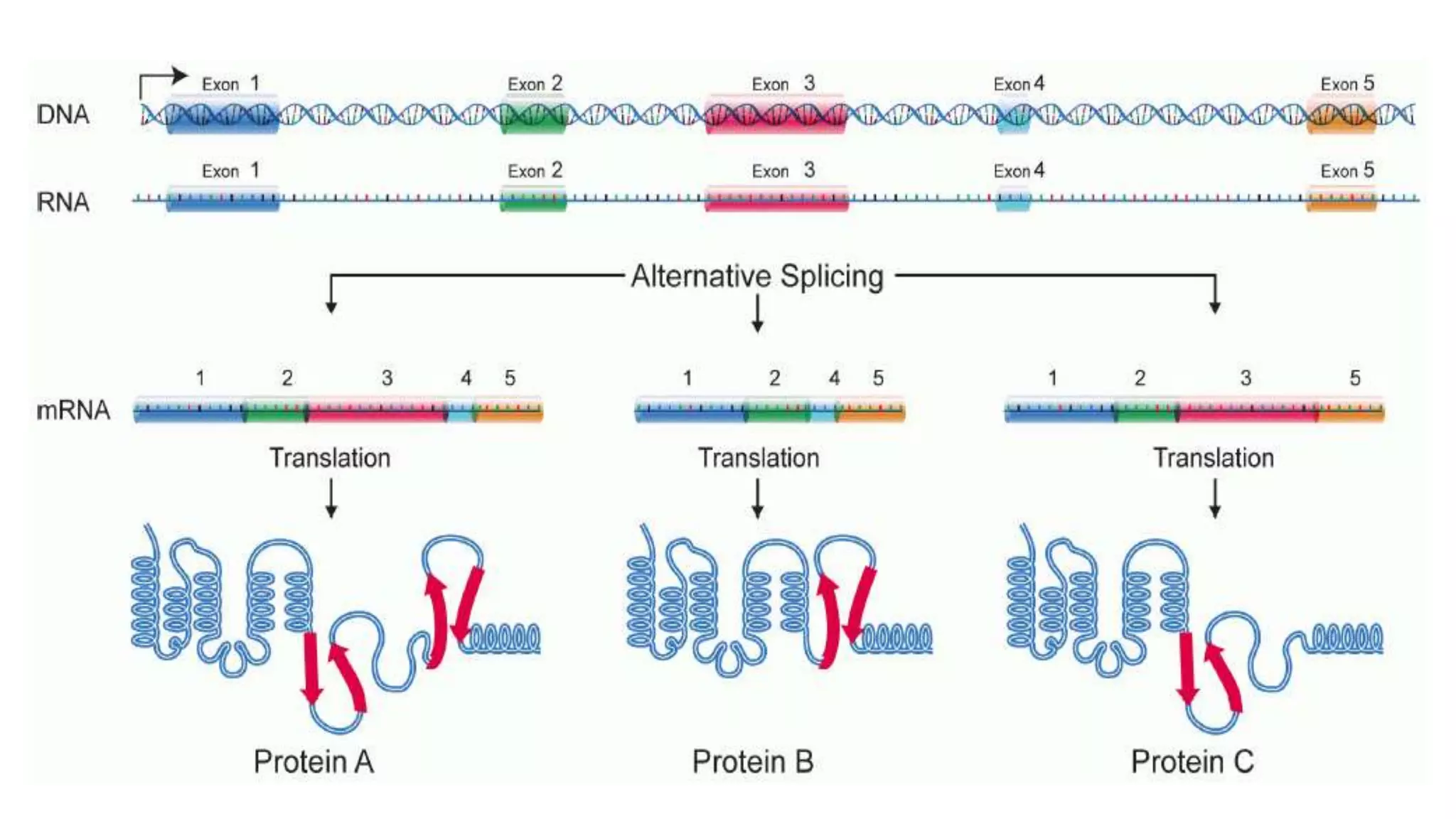
Alternative Splicing
• A mechanism of producing a diverse set of proteins from a limited set of genes
varies in different tissues.
• The pre mRNA from same gene is spliced in two or more alternative ways in
different tissues
3
2 AAUAA AAUAA 3
1 AAUAA
1 AAU
Selective Splicing –selective inclusion or exclusion of proteins
3
2 AAUAA AAUAA 2
1 3
1 AAUAA
Alternative polyadenylation –different site is used
for polyadenylation
3
2 AAUAA AAUAA 2
1 3
1 AAUAA
Alternative 5’ donor –5’ donor site of certain exons is
changed
AAUAA
3
2 AAUAA AAUAA 2
1 3
1 AAUAA
Alternative 3’ acceptor –3’ acceptor sites of certain exons
is changed
AAUAA
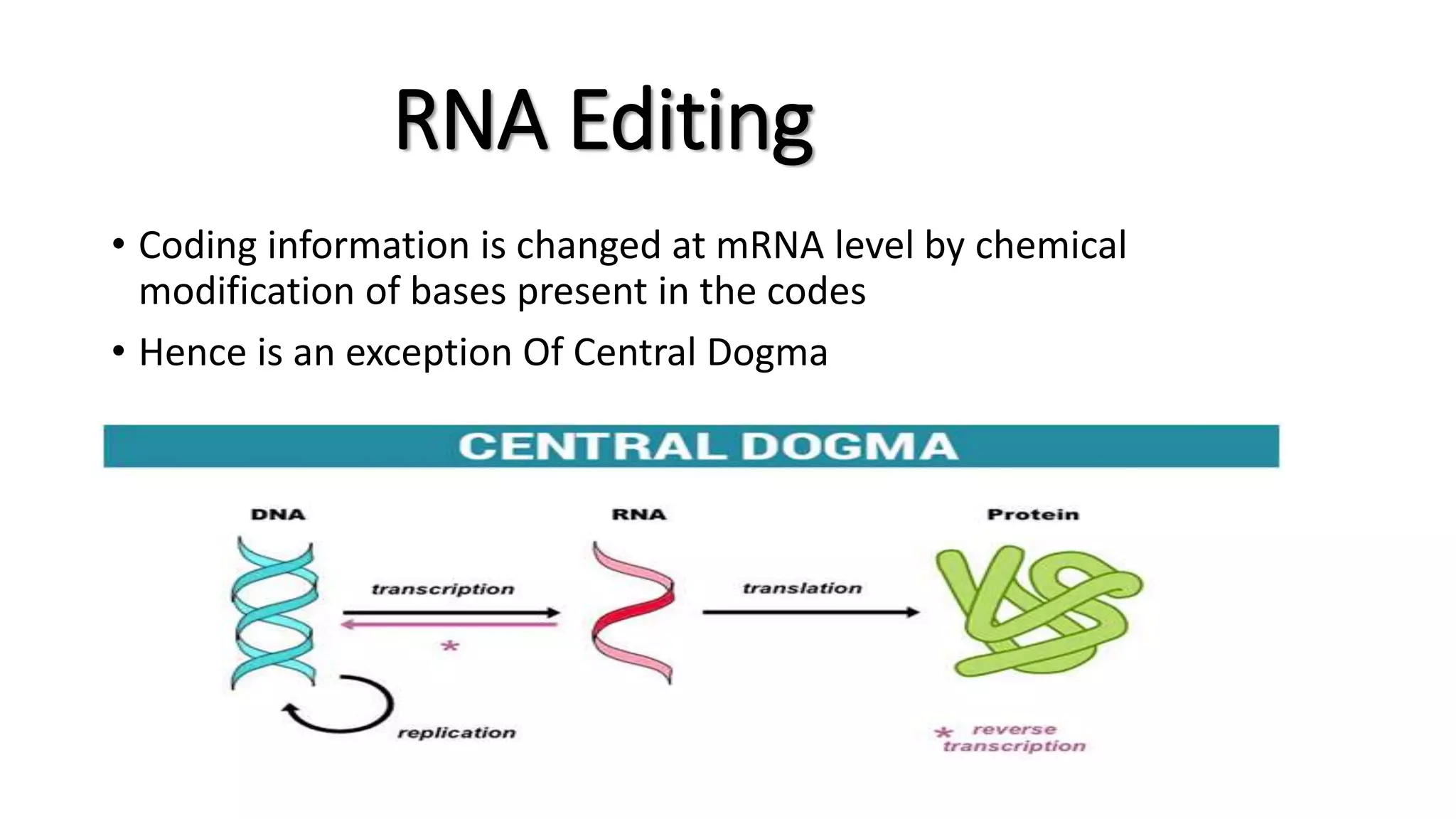
RNA Editing
• Coding information is changed at mRNA level by chemical
modification of bases present in the codes
• Hence is an exception Of Central Dogma
Post Transcriptional Modifications

Post Transcriptional Modifications

  • 1.
    POST-TRANSCRIPTIONAL MODIFICATIONS MOLECULAR BIOLOGY-II (BBC207) SRISHTI S.Id-2019008455 ROLL NO-1907143010 BSc. Hons BIOCHEMISTRY (TERM-04) SBSR, SHARDA UNIVERSITY
  • 2.
    Post Transcriptional Modification DNARNA PROTEINS MODIFIED RNA
  • 3.
    Post Transcriptional Modification •Post transcriptional modification or Co-transcriptional modification • Chemical modification of RNA primary transcript to produce mature functional RNA. • Nascent RNA, also known as primary transcript, needs to be modified to become functional tRNAs, rRNAs, and mRNA. • Primary transcripts of mRNA are called as heterogenous nuclear RNA (hnRNA).
  • 4.
    Post Transcriptional Modification PROKARYOTES •mRNA not subjected to Post Transcriptional Modification • Translation starts simultaneously with Transcription EUKARYOTES • Primary Transcript or Heterogenous RNA (hnRNA) • hnRNA undergoes extensive post transcriptional modification
  • 5.
    Types of PostTranscriptional Modification 1. 7 methylguanosine capping at 5’ end 2. Addition of poly A tail at 3’ end 3. Methylations 4. Splicing 5. Alternative RNA processing 6. RNA editing
  • 6.
    Post Transcriptional Modification-(5’methyl cap) In Nucleus •Guanosine Triphosphate attached to 5’end by 5’-5’ unusual linkage by enzyme Guanosyltransferase In Cytosol • Methylation with methyl group from S Adenosyl Methionine using guanine 7 methyltransferase Functions • Initiation of translation • Stabilize the mRNA • Prevent attack of 5’->3’ exonuclease NOTE: Not seen in tRNA
  • 7.
    Post Transcriptional Modification-(Poly A Tailat 3’end) In Nucleus • Poly A Tail added at 3’end by polyadenylate polymerase • The length of Poly A tail can be up to 200 adenine bases Functions • Poly A Tail & its binding protein PAB-1 is required for efficient initiation of protein synthesis • Stabilize the mRNA • Prevent attack of 5’->3’ exonuclease
  • 8.
    Post Transcriptional Modification-(Splicing) Joiningtogether of EXONS (after Removal of Introns) Binding of SnRNP brings neighboring exons into correct alignment of splicing
  • 10.
    Post Transcriptional Modification-(Splicing) SelfSplicing – Certain hnRNA has splicing activity because of Ribozyme Activity Spliceosomes Primary Transcript + 5snRNA (U1/ U2/ U4/ U5/ U6) & more than 60 proteins (Ribonucleoproteins or RNPs) Small Nuclear RNA (Sn RNA) Uracil Rich RNA which acts as Enzyme (Ribozyme). U6 is essential U7 is SnRNA involved in production of correct 3’ ends of histone mRNA that lacks Poly A tail SnRNP Complex (SNURPs) SnRNA + RNP = SNURPs (Clinical Correlation :- SLE antibodies against SNURPs)
  • 11.
    Methylation & AlternativeSplicing Methylations • Methylation of N7 of Adenine and 2’ hydroxyl group of ribose in cytosol Alternative Splicing • A mechanism of producing a diverse set of proteins from a limited set of genes varies in different tissues. • The pre mRNA from same gene is spliced in two or more alternative ways in different tissues
  • 12.
    3 2 AAUAA AAUAA3 1 AAUAA 1 AAU Selective Splicing –selective inclusion or exclusion of proteins
  • 13.
    3 2 AAUAA AAUAA2 1 3 1 AAUAA Alternative polyadenylation –different site is used for polyadenylation
  • 14.
    3 2 AAUAA AAUAA2 1 3 1 AAUAA Alternative 5’ donor –5’ donor site of certain exons is changed AAUAA
  • 15.
    3 2 AAUAA AAUAA2 1 3 1 AAUAA Alternative 3’ acceptor –3’ acceptor sites of certain exons is changed AAUAA
  • 17.
    RNA Editing • Codinginformation is changed at mRNA level by chemical modification of bases present in the codes • Hence is an exception Of Central Dogma