RISC / CISC
Architecture.
Overview
• CISC Architecture
• RISC Architecture
• Pipelining
• RISC vs CISC
What is CISC
• Complex Instruction Set Computer
• “High level” Instruction Set
• Executes several “low level
operations”
• Ex: load, arithmetic operation,
memory store
Features of CISC
• Instructions can operate directly on memory
• Small number of general purpose registers
• Instructions take multiple clocks to execute
• Few lines of code per operation
What is RISC?
• Reduced Instruction Set Computer
• RISC is a CPU design that recognizes only a
limited number of instructions
• Simple instructions
• Instructions are executed quickly
Features of RISC
 “Reduced” instruction set
 Executes a series of simple instruction instead of a complex
instruction
• Instructions are executed within one clock cycle
• Incorporates a large number of general registers
for arithmetic operations to avoid storing variables
on a stack in memory
• Only the load and store instructions operate
directly onto memory
• Pipelining = speed
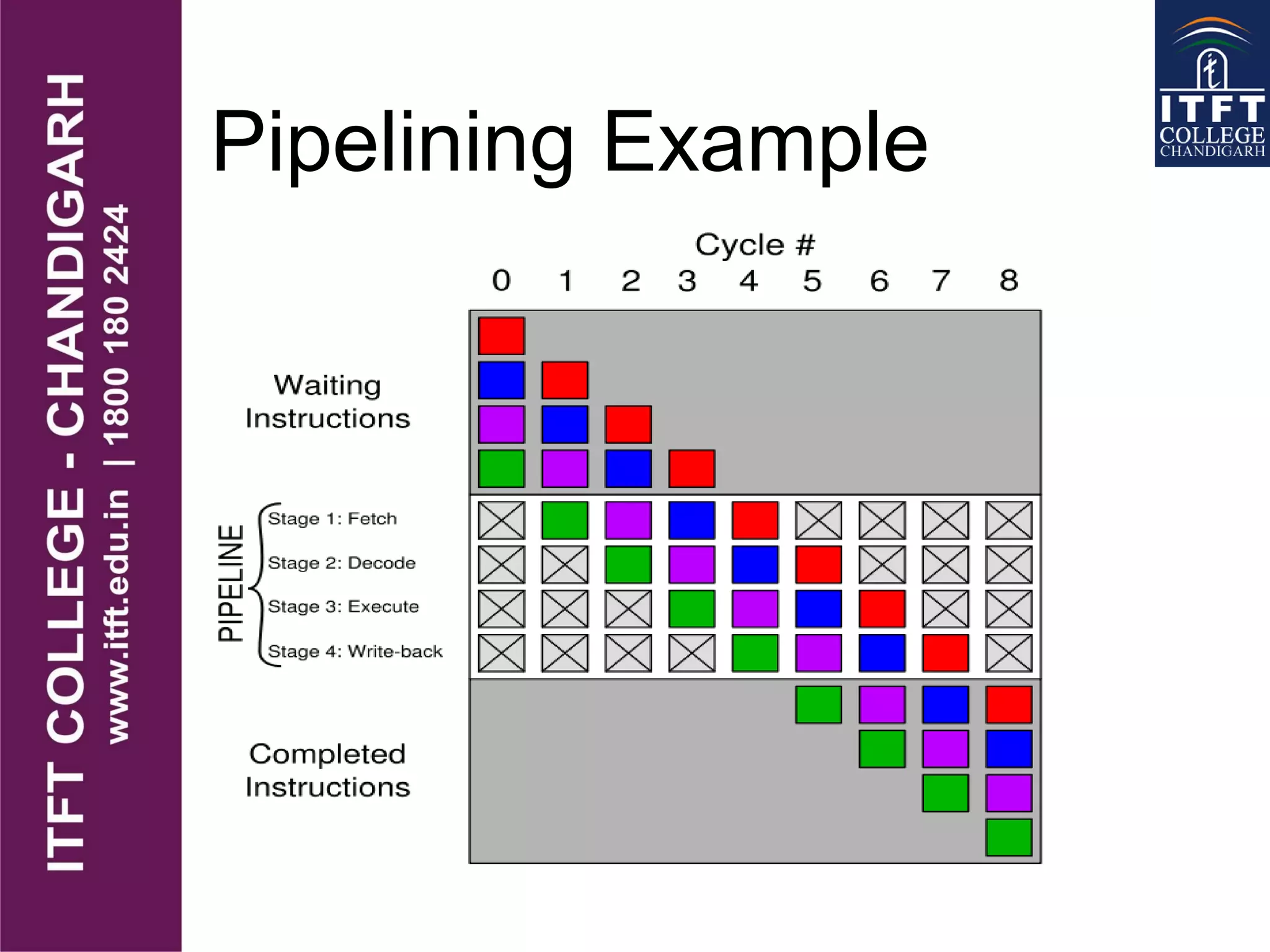
Pipelining
• “Assembly Line”
• Technique to process multiple instructions at
the same time
• Allows instructions to be executed efficiently
Stages of Pipelining
• Fetch instructions from memory
• Decode the instruction
• Execute the instruction or calculate an
address
• Access an operand in data memory
• Write the result into a register
Pipelining Example
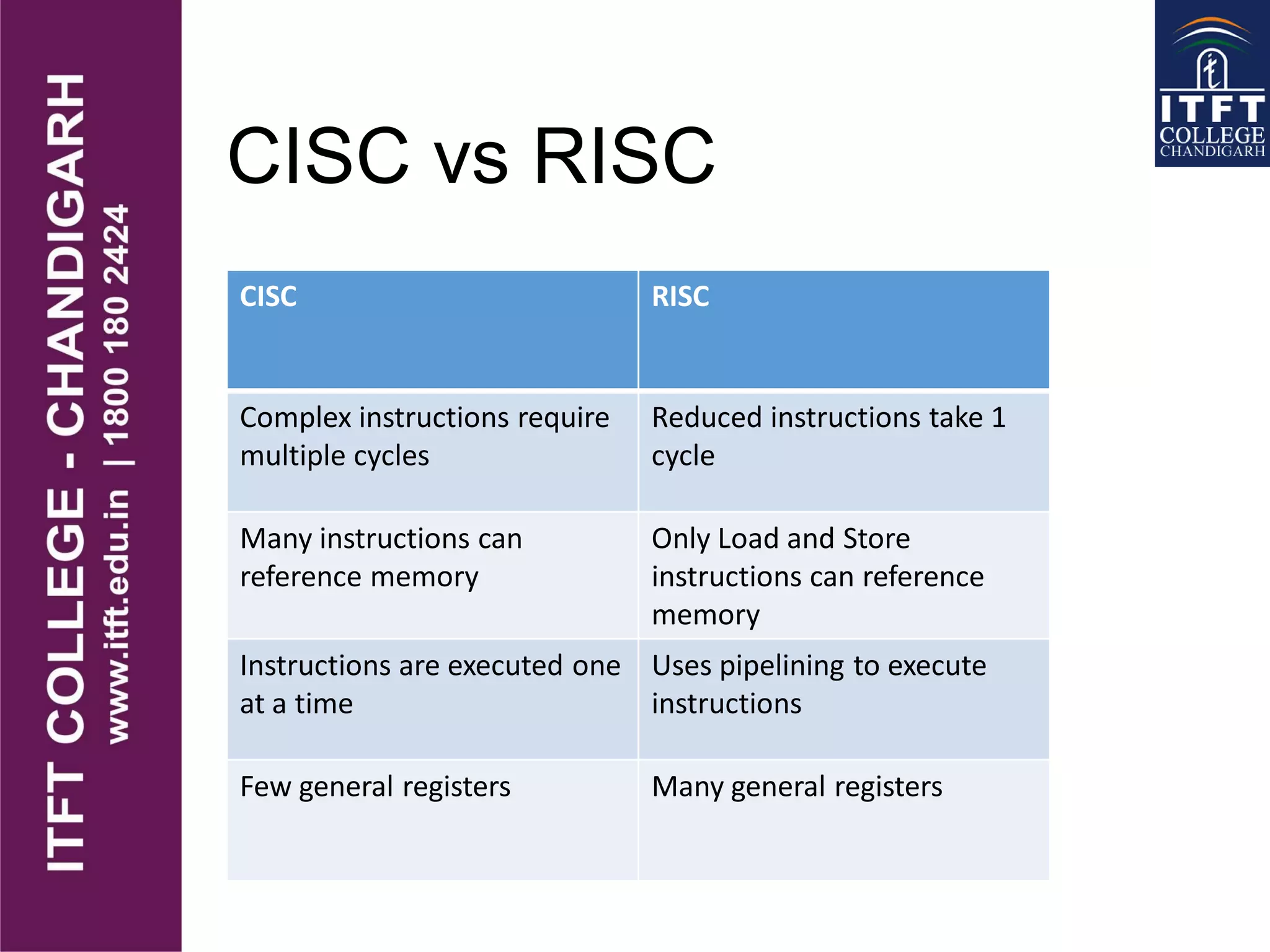
CISC vs RISC
CISC RISC
Complex instructions require
multiple cycles
Reduced instructions take 1
cycle
Many instructions can
reference memory
Only Load and Store
instructions can reference
memory
Instructions are executed one
at a time
Uses pipelining to execute
instructions
Few general registers Many general registers

ITFT_Risc

  • 1.
  • 2.
    Overview • CISC Architecture •RISC Architecture • Pipelining • RISC vs CISC
  • 3.
    What is CISC •Complex Instruction Set Computer • “High level” Instruction Set • Executes several “low level operations” • Ex: load, arithmetic operation, memory store
  • 4.
    Features of CISC •Instructions can operate directly on memory • Small number of general purpose registers • Instructions take multiple clocks to execute • Few lines of code per operation
  • 5.
    What is RISC? •Reduced Instruction Set Computer • RISC is a CPU design that recognizes only a limited number of instructions • Simple instructions • Instructions are executed quickly
  • 6.
    Features of RISC “Reduced” instruction set  Executes a series of simple instruction instead of a complex instruction • Instructions are executed within one clock cycle • Incorporates a large number of general registers for arithmetic operations to avoid storing variables on a stack in memory • Only the load and store instructions operate directly onto memory • Pipelining = speed
  • 7.
    Pipelining • “Assembly Line” •Technique to process multiple instructions at the same time • Allows instructions to be executed efficiently
  • 8.
    Stages of Pipelining •Fetch instructions from memory • Decode the instruction • Execute the instruction or calculate an address • Access an operand in data memory • Write the result into a register
  • 9.
  • 10.
    CISC vs RISC CISCRISC Complex instructions require multiple cycles Reduced instructions take 1 cycle Many instructions can reference memory Only Load and Store instructions can reference memory Instructions are executed one at a time Uses pipelining to execute instructions Few general registers Many general registers