MADE BY;
ASHISH LATWAL
CSE/40/18
RISC
RISC, or Reduced Instruction Set
Computer. is a type of microprocessor
architecture that utilizes a small, highly-
optimized set of instructions, rather than a
more specialized set of instructions often
found in other types of architectures.
HISTORY
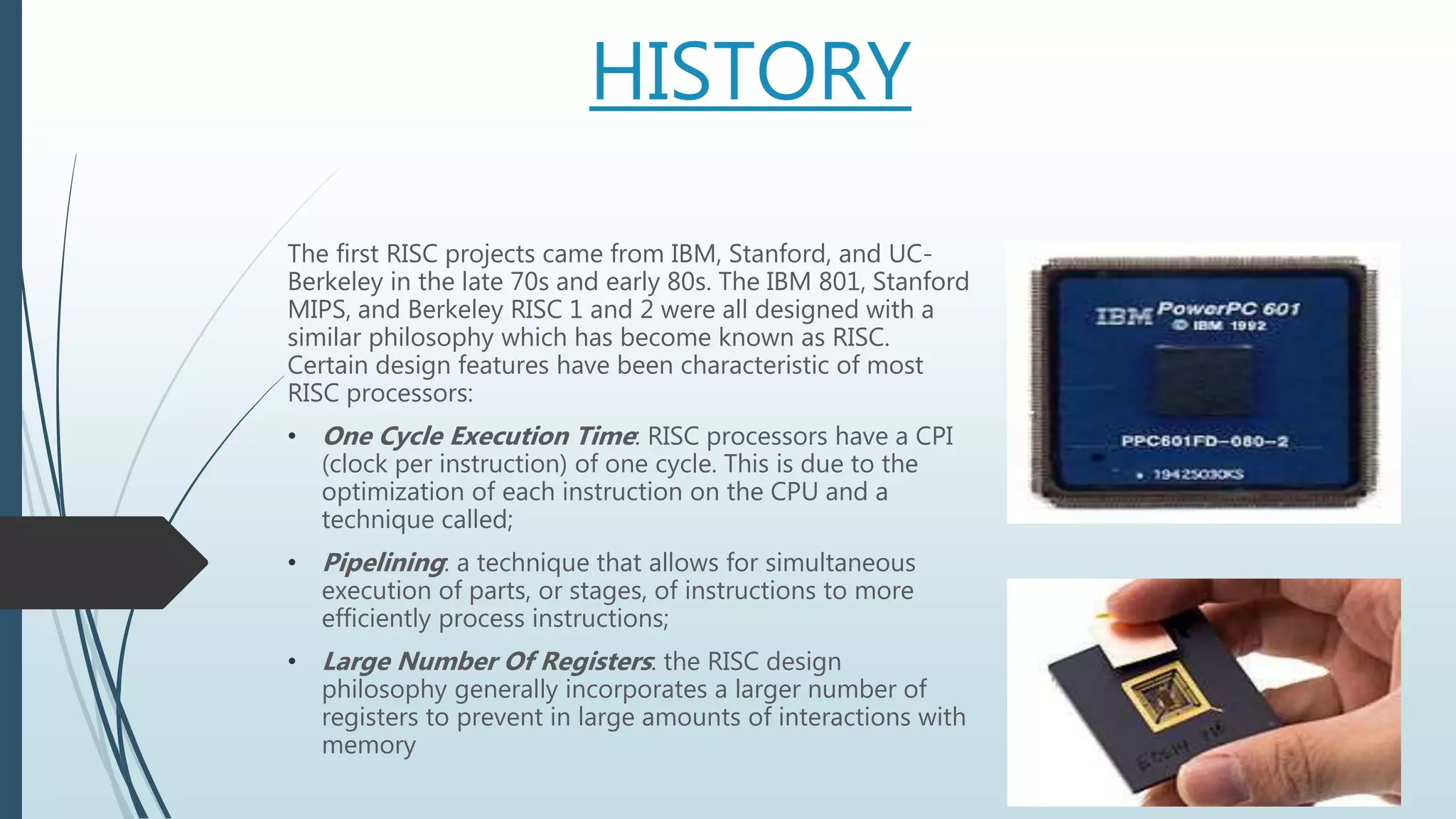
The first RISC projects came from IBM, Stanford, and UC-
Berkeley in the late 70s and early 80s. The IBM 801, Stanford
MIPS, and Berkeley RISC 1 and 2 were all designed with a
similar philosophy which has become known as RISC.
Certain design features have been characteristic of most
RISC processors:
• One Cycle Execution Time: RISC processors have a CPI
(clock per instruction) of one cycle. This is due to the
optimization of each instruction on the CPU and a
technique called;
• Pipelining: a technique that allows for simultaneous
execution of parts, or stages, of instructions to more
efficiently process instructions;
• Large Number Of Registers: the RISC design
philosophy generally incorporates a larger number of
registers to prevent in large amounts of interactions with
memory
CHARACTERISTICS
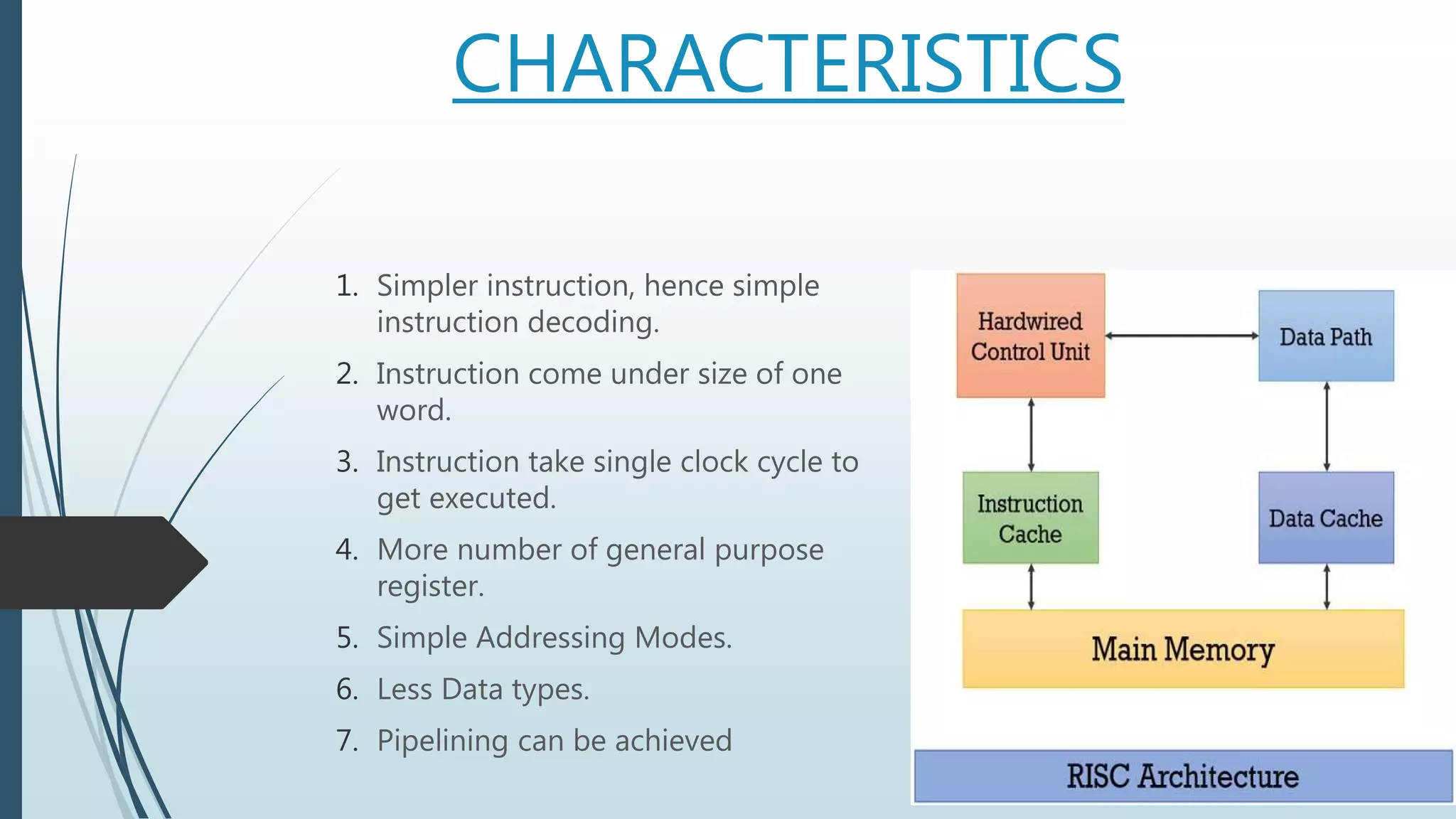
1. Simpler instruction, hence simple
instruction decoding.
2. Instruction come under size of one
word.
3. Instruction take single clock cycle to
get executed.
4. More number of general purpose
register.
5. Simple Addressing Modes.
6. Less Data types.
7. Pipelining can be achieved
BASIC RISC DESIGN PRINCIPLES
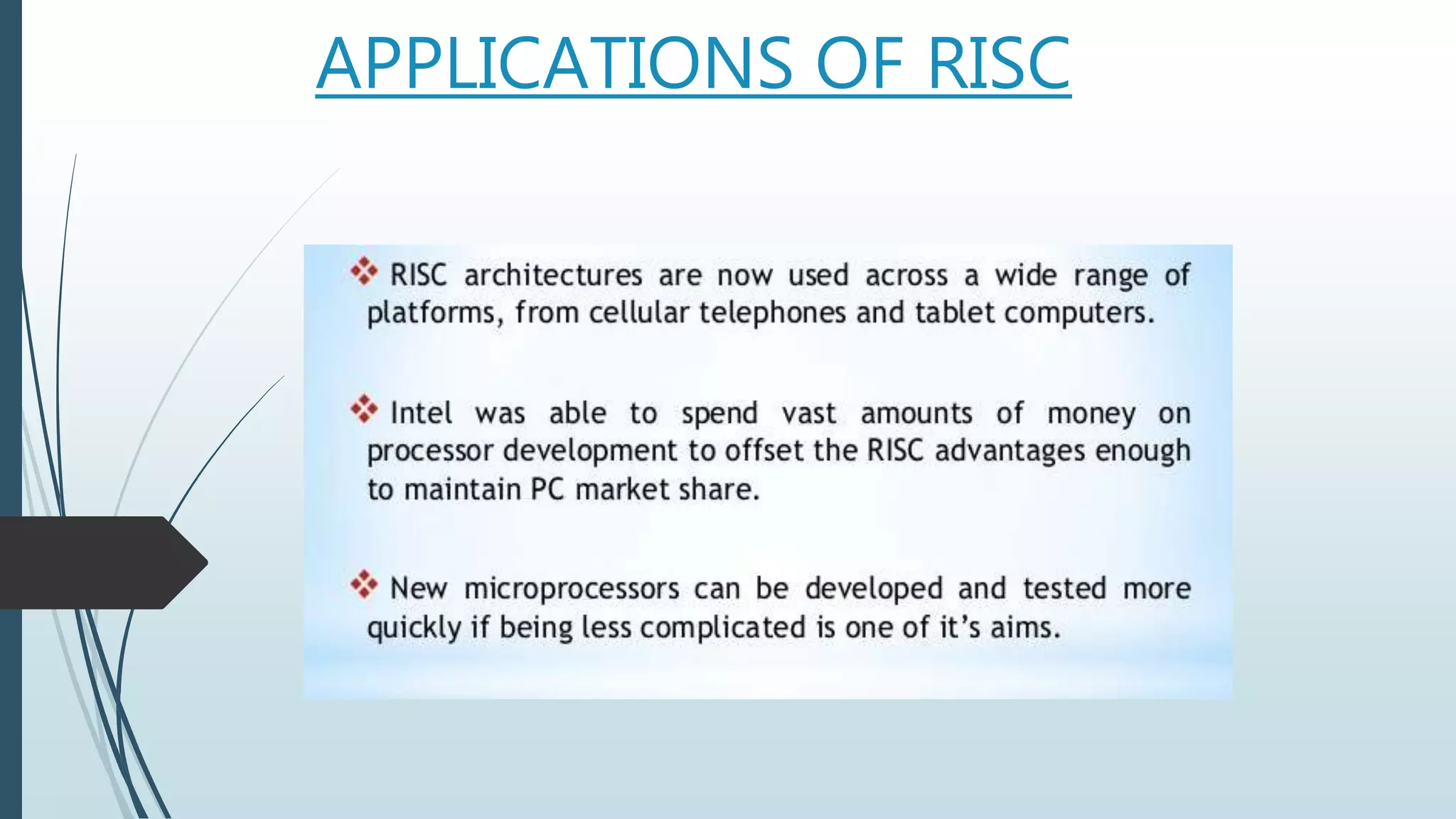
APPLICATIONS OF RISC
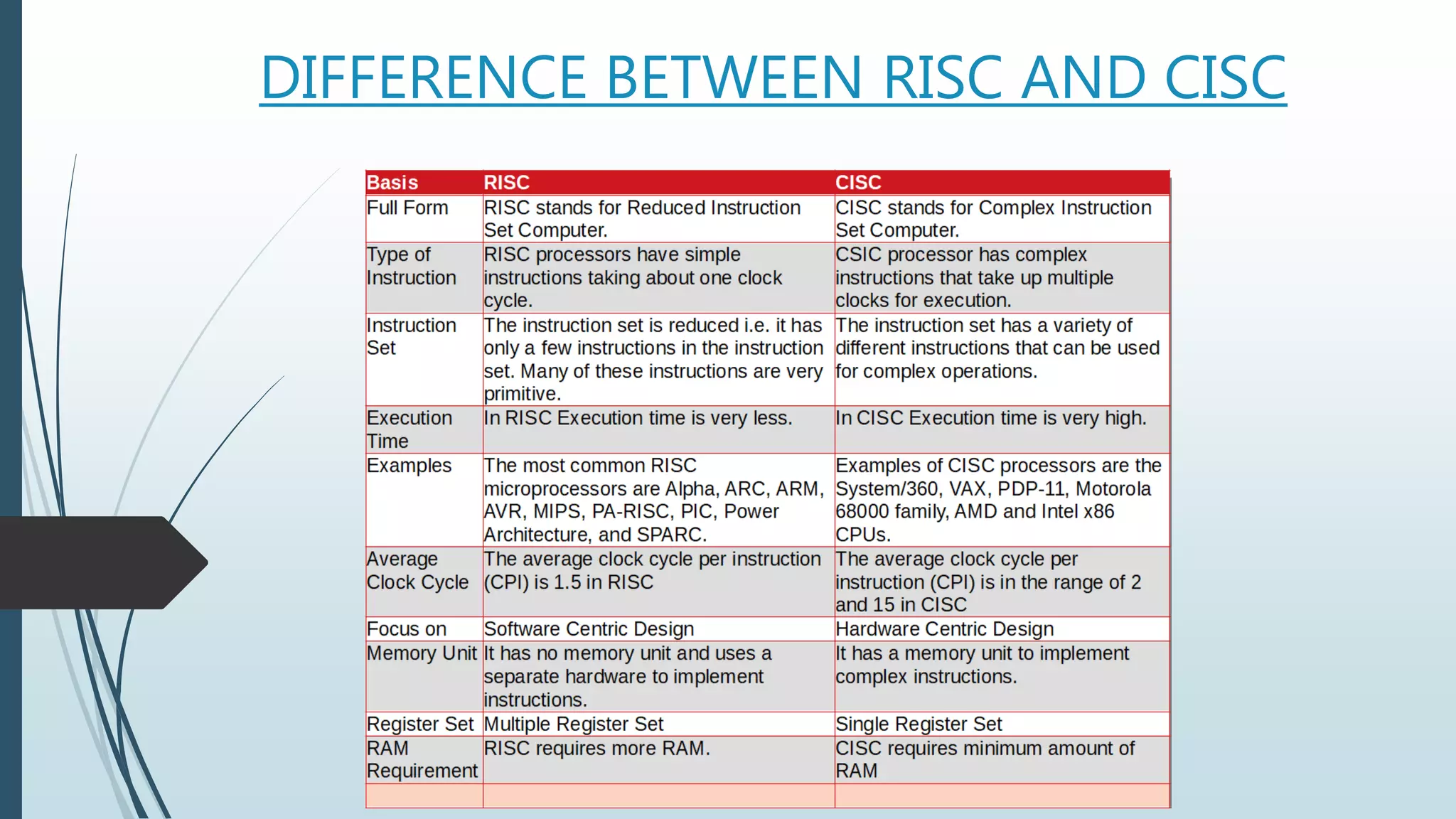
DIFFERENCE BETWEEN RISC AND CISC
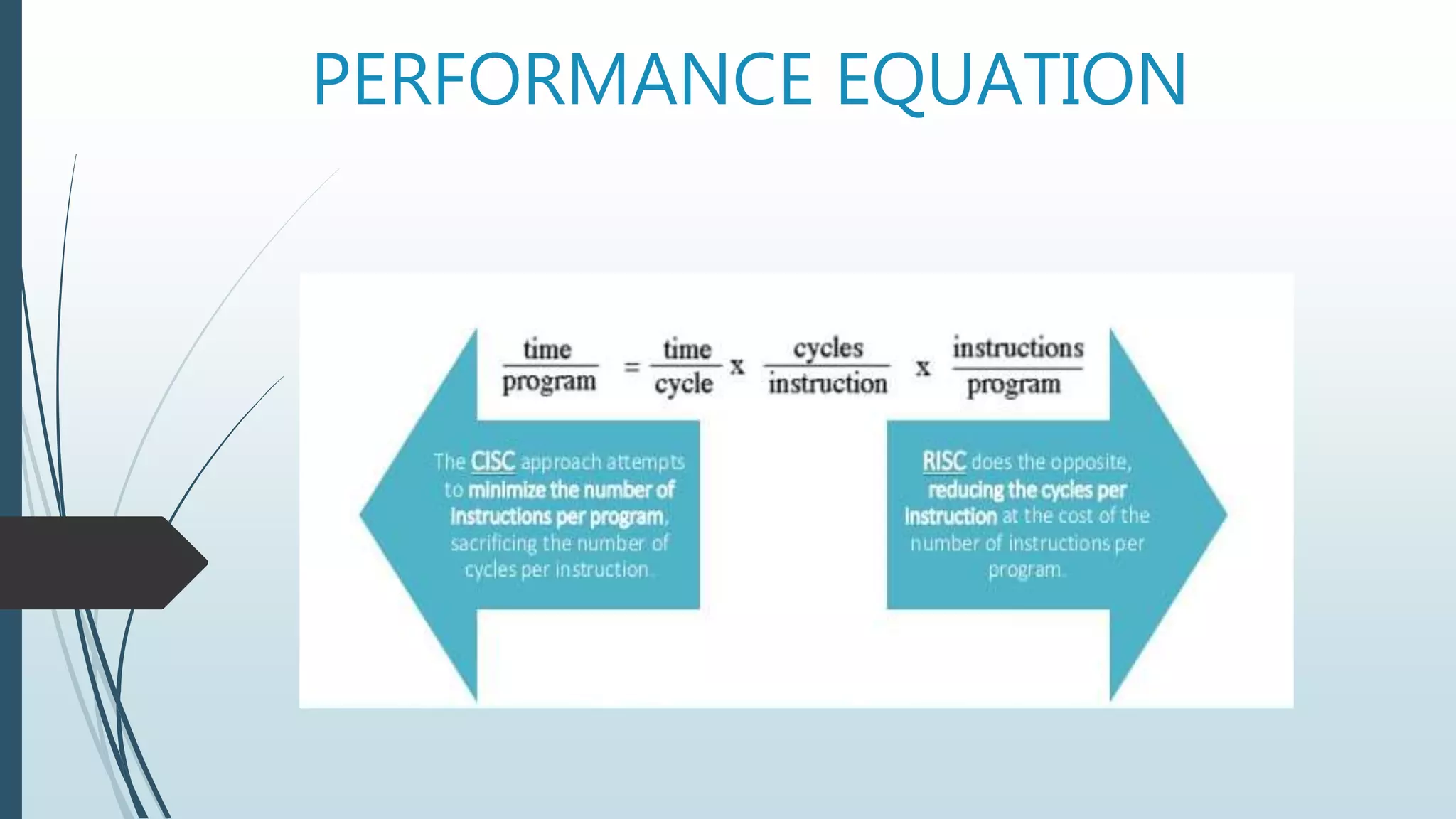
PERFORMANCE EQUATION
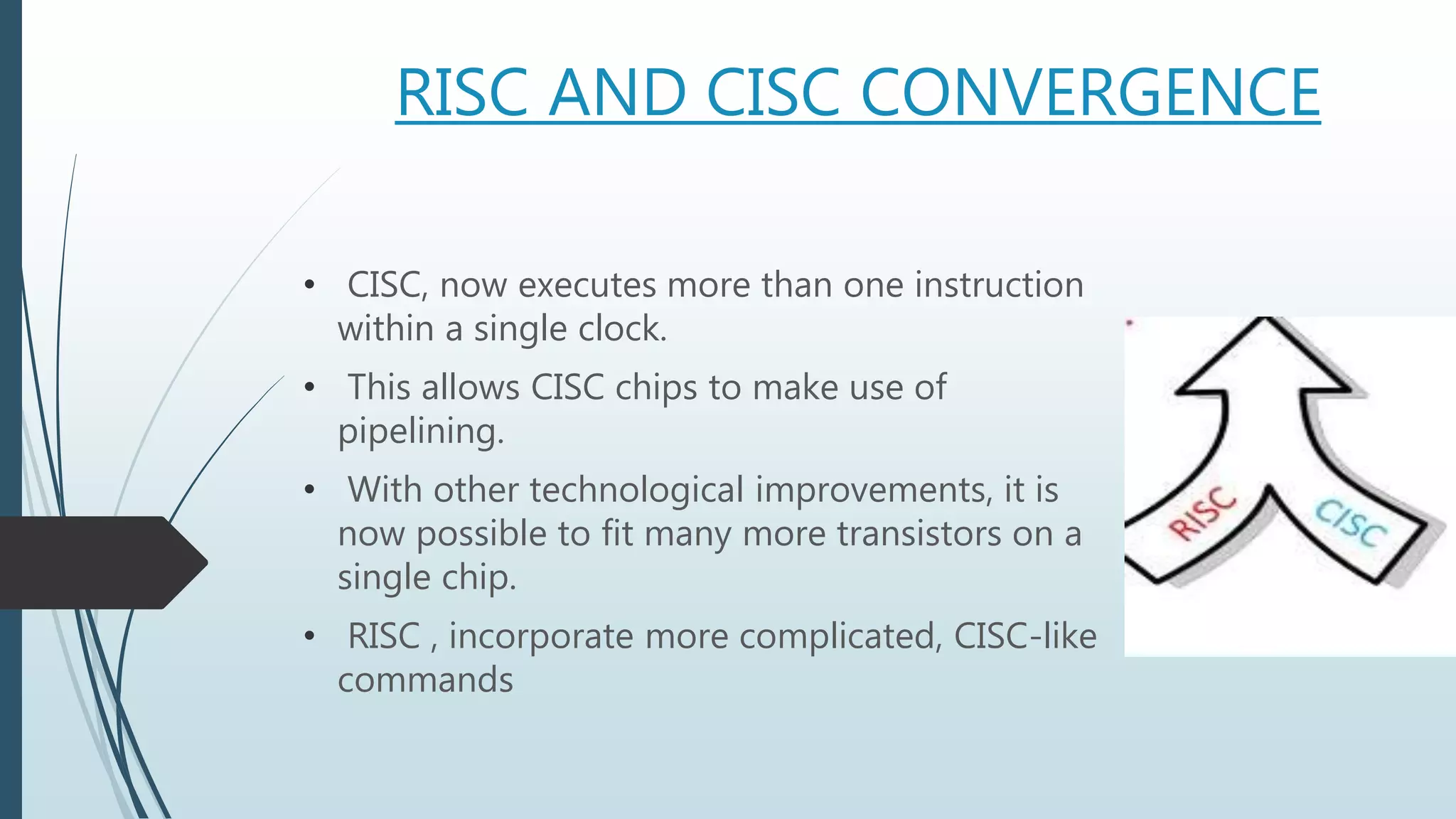
RISC AND CISC CONVERGENCE
• CISC, now executes more than one instruction
within a single clock.
• This allows CISC chips to make use of
pipelining.
• With other technological improvements, it is
now possible to fit many more transistors on a
single chip.
• RISC , incorporate more complicated, CISC-like
commands
CONCLUSION
 We are in a “ post-RISC” era, in which two styles have
become so similar that disgusting between them is no
longer relevant.
 RISC chips still retain some important traits.
• utilize uniform, single-cycle instructions.
• register-to-register, load/store architecture.
• still have a large no. of general purpose registers.

PPT ON RISC

  • 1.
  • 2.
    RISC RISC, or ReducedInstruction Set Computer. is a type of microprocessor architecture that utilizes a small, highly- optimized set of instructions, rather than a more specialized set of instructions often found in other types of architectures.
  • 3.
    HISTORY The first RISCprojects came from IBM, Stanford, and UC- Berkeley in the late 70s and early 80s. The IBM 801, Stanford MIPS, and Berkeley RISC 1 and 2 were all designed with a similar philosophy which has become known as RISC. Certain design features have been characteristic of most RISC processors: • One Cycle Execution Time: RISC processors have a CPI (clock per instruction) of one cycle. This is due to the optimization of each instruction on the CPU and a technique called; • Pipelining: a technique that allows for simultaneous execution of parts, or stages, of instructions to more efficiently process instructions; • Large Number Of Registers: the RISC design philosophy generally incorporates a larger number of registers to prevent in large amounts of interactions with memory
  • 4.
    CHARACTERISTICS 1. Simpler instruction,hence simple instruction decoding. 2. Instruction come under size of one word. 3. Instruction take single clock cycle to get executed. 4. More number of general purpose register. 5. Simple Addressing Modes. 6. Less Data types. 7. Pipelining can be achieved
  • 5.
  • 6.
  • 7.
  • 8.
  • 9.
    RISC AND CISCCONVERGENCE • CISC, now executes more than one instruction within a single clock. • This allows CISC chips to make use of pipelining. • With other technological improvements, it is now possible to fit many more transistors on a single chip. • RISC , incorporate more complicated, CISC-like commands
  • 10.
    CONCLUSION  We arein a “ post-RISC” era, in which two styles have become so similar that disgusting between them is no longer relevant.  RISC chips still retain some important traits. • utilize uniform, single-cycle instructions. • register-to-register, load/store architecture. • still have a large no. of general purpose registers.