Household Refrigerator
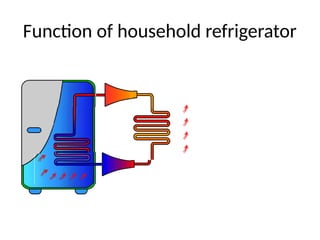
Function of household refrigerator
• The word refrigeration was derived from
L. refrigerationem "act of cooling or freezing,"
( refrigerare, from re- "again" + frigerare "make cool,").
• Refrigerator is the electric-powered household device
(cabinet) for keeping food cool.
• Fridge is a shortened and altered form of refrigerator,
perhaps influenced by Frigidaire , a popular brand
name of the appliances in early 1920s’. Frigerator is a
colloquial name for refrigerator.
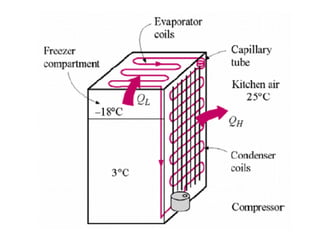
• A refrigerator maintains a temperature a few degrees above the
freezing point of water.
• Optimum temperature range for perishable food storage is 3 to 5
°C (37 to 41 °F).
• A similar device which maintains a temperature below the
freezing point of water is called a freezer.
• The capacity of a refrigerator is measured in either litres or cubic
feet.
• Typically the volume of a combined fridge-freezer is split to 100
litres (3.53 cubic feet) for the freezer and 140 litres (4.94 cubic
feet) for the refrigerator, although these values are highly variable.
• Temperature settings for refrigerator and
freezer compartments are often given
arbitrary numbers by manufacturers (for
example, 1 through 9, warmest to coldest),
but generally 3 to 5 °C (37 to 41 °F) is ideal for
the refrigerator compartment and −18 °C (-0.4
°F) for the freezer
• VAPOUR COMPRESSION CYCLE
• In 1834 an American inventor
named Jacob Perkins obtained the first patent
for a vapor-compression refrigeration system,
it used ether in a vapor compression cycle.
• Vapour compression cycle is an improved type of air refrigeration
cycle in which a suitable working substance, termed as
refrigerant, is used.
• The refrigerants generally used for this purpose are ammonia
(NH3), carbon dioxide (CO2), Freon and sulphur-dioxide (SO2).
• The refrigerant used, does not leave the system, but is circulated
throughout the system alternately condensing and evaporating.
• In evaporating, the refrigerant absorbs its latent heat from the
solution which is used for circulating it around the cold chamber
and in condensing; it gives out its latent heat to the circulating
water of the cooler.
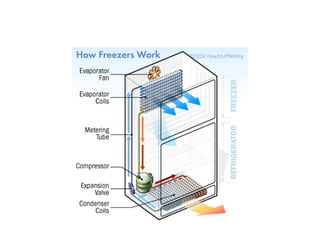
Compressor
• The low pressure and temperature vapour
refrigerant from evaporator is drawn into the
compressor through the inlet or suction valve,
where it is compressed to a high pressure and
temperature.
• This high pressure and temperature vapour
refrigerant is discharged into the condenser
through the delivery or discharge valve.
Condenser
• The condenser or cooler consists of coils of
pipe in which the high pressure and
temperature vapour refrigerant is cooled and
condensed. The refrigerant, while passing
through the condenser, gives up its latent heat
to the surrounding condensing medium which
is normally air or water.
Receiver or Reservoir
• The condensed liquid refrigerant from the
condenser is stored in a vessel known as
receiver from where it is supplied to the
evaporator through the expansion valve or
refrigerant control valve.
Expansion Valve ( Metering device or Throttling valve)
• It is also called throttle valve or refrigerant control
valve.
• The function of the expansion valve is to allow the
liquid refrigerant under high pressure and
temperature to pass at a controlled rate after
reducing its pressure and temperature.
• Some of the liquid refrigerant evaporates as it
passes through the expansion valve, but the greater
portion is vaporized in the evaporator at the low
pressure and temperature
Evaporator
• An evaporator consists of coils of pipe in which
the liquid-vapour refrigerant at low pressure
and temperature is evaporated and changed
into vapour refrigerant at low pressure and
temperature.
• In evaporating, the liquid vapour refrigerant
absorbs its latent heat of vaporization from the
medium (air, water or brine) which is to be
cooled.
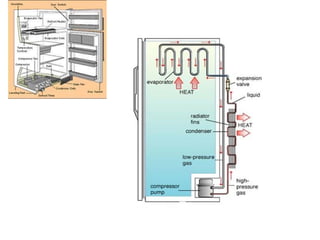
• In mechanical refrigerator:
• A gaseous refrigerant is compressed from a lower to a higher pressure. Some of the
energy supplied by the compressor transfers to the gas as heat. The figure below
shows that the gas temperature rises to 45o
C.
• The heat is removed from the system to the surroundings in a condenser by, for
example, forcing the gas through a tube exposed to room-temperature air. The
refrigerant liquifies.
• Passage of this liquid through an expansion valve lowers the pressure exerted on it by
its own vapor pressure, thereby causing some of the liquid to evaporate and cool the
remaining liquid as a result. Expansion of the gas further lowers its temperature (Joule -
Thomson Effect).
• In the evaporator the cold liquid-vapor mixture removes heat from the
surroundings as it completely vaporizes. The now-gaseous refrigerant returns to the
compressor, completing the cycle
The Thermostat
• Control of the temperature level in the household
refrigerator was accomplished by a thermostatic
mechanism.
• The function of a thermostat, or temperature
controlled switch, is to continuously monitor the
internal temperature of the refrigerator to ensure
that it doesn't get either too hot or too cold.
• In spite of its layer of insulation, the food storage
compartment continuously experiences a slow loss of
heat to the external environment.

Household refrigerator.pptxaassdffffffff

  • 1.
  • 3.
  • 6.
    • The wordrefrigeration was derived from L. refrigerationem "act of cooling or freezing," ( refrigerare, from re- "again" + frigerare "make cool,"). • Refrigerator is the electric-powered household device (cabinet) for keeping food cool. • Fridge is a shortened and altered form of refrigerator, perhaps influenced by Frigidaire , a popular brand name of the appliances in early 1920s’. Frigerator is a colloquial name for refrigerator.
  • 7.
    • A refrigeratormaintains a temperature a few degrees above the freezing point of water. • Optimum temperature range for perishable food storage is 3 to 5 °C (37 to 41 °F). • A similar device which maintains a temperature below the freezing point of water is called a freezer. • The capacity of a refrigerator is measured in either litres or cubic feet. • Typically the volume of a combined fridge-freezer is split to 100 litres (3.53 cubic feet) for the freezer and 140 litres (4.94 cubic feet) for the refrigerator, although these values are highly variable.
  • 8.
    • Temperature settingsfor refrigerator and freezer compartments are often given arbitrary numbers by manufacturers (for example, 1 through 9, warmest to coldest), but generally 3 to 5 °C (37 to 41 °F) is ideal for the refrigerator compartment and −18 °C (-0.4 °F) for the freezer
  • 9.
    • VAPOUR COMPRESSIONCYCLE • In 1834 an American inventor named Jacob Perkins obtained the first patent for a vapor-compression refrigeration system, it used ether in a vapor compression cycle.
  • 10.
    • Vapour compressioncycle is an improved type of air refrigeration cycle in which a suitable working substance, termed as refrigerant, is used. • The refrigerants generally used for this purpose are ammonia (NH3), carbon dioxide (CO2), Freon and sulphur-dioxide (SO2). • The refrigerant used, does not leave the system, but is circulated throughout the system alternately condensing and evaporating. • In evaporating, the refrigerant absorbs its latent heat from the solution which is used for circulating it around the cold chamber and in condensing; it gives out its latent heat to the circulating water of the cooler.
  • 11.
    Compressor • The lowpressure and temperature vapour refrigerant from evaporator is drawn into the compressor through the inlet or suction valve, where it is compressed to a high pressure and temperature. • This high pressure and temperature vapour refrigerant is discharged into the condenser through the delivery or discharge valve.
  • 12.
    Condenser • The condenseror cooler consists of coils of pipe in which the high pressure and temperature vapour refrigerant is cooled and condensed. The refrigerant, while passing through the condenser, gives up its latent heat to the surrounding condensing medium which is normally air or water.
  • 13.
    Receiver or Reservoir •The condensed liquid refrigerant from the condenser is stored in a vessel known as receiver from where it is supplied to the evaporator through the expansion valve or refrigerant control valve.
  • 14.
    Expansion Valve (Metering device or Throttling valve) • It is also called throttle valve or refrigerant control valve. • The function of the expansion valve is to allow the liquid refrigerant under high pressure and temperature to pass at a controlled rate after reducing its pressure and temperature. • Some of the liquid refrigerant evaporates as it passes through the expansion valve, but the greater portion is vaporized in the evaporator at the low pressure and temperature
  • 15.
    Evaporator • An evaporatorconsists of coils of pipe in which the liquid-vapour refrigerant at low pressure and temperature is evaporated and changed into vapour refrigerant at low pressure and temperature. • In evaporating, the liquid vapour refrigerant absorbs its latent heat of vaporization from the medium (air, water or brine) which is to be cooled.
  • 16.
    • In mechanicalrefrigerator: • A gaseous refrigerant is compressed from a lower to a higher pressure. Some of the energy supplied by the compressor transfers to the gas as heat. The figure below shows that the gas temperature rises to 45o C. • The heat is removed from the system to the surroundings in a condenser by, for example, forcing the gas through a tube exposed to room-temperature air. The refrigerant liquifies. • Passage of this liquid through an expansion valve lowers the pressure exerted on it by its own vapor pressure, thereby causing some of the liquid to evaporate and cool the remaining liquid as a result. Expansion of the gas further lowers its temperature (Joule - Thomson Effect). • In the evaporator the cold liquid-vapor mixture removes heat from the surroundings as it completely vaporizes. The now-gaseous refrigerant returns to the compressor, completing the cycle
  • 17.
    The Thermostat • Controlof the temperature level in the household refrigerator was accomplished by a thermostatic mechanism. • The function of a thermostat, or temperature controlled switch, is to continuously monitor the internal temperature of the refrigerator to ensure that it doesn't get either too hot or too cold. • In spite of its layer of insulation, the food storage compartment continuously experiences a slow loss of heat to the external environment.