THERMODYNAMIC PROPERTIES OF REFRIGERATOR
ADVISED BY :- DR. RAMA GAUR
• KRISHNANAND KUSHWAHA
• VIVEK SHUKLA
SCHOOL OF CHEMICAL ENGINEERING AND PHYSICAL SCIENCES,
LOVELY PROFESIONAL UNIVERSITY,
JALANDHAR (PUNJAB)
1
REFRIGERATION 2
INTRODUCTION
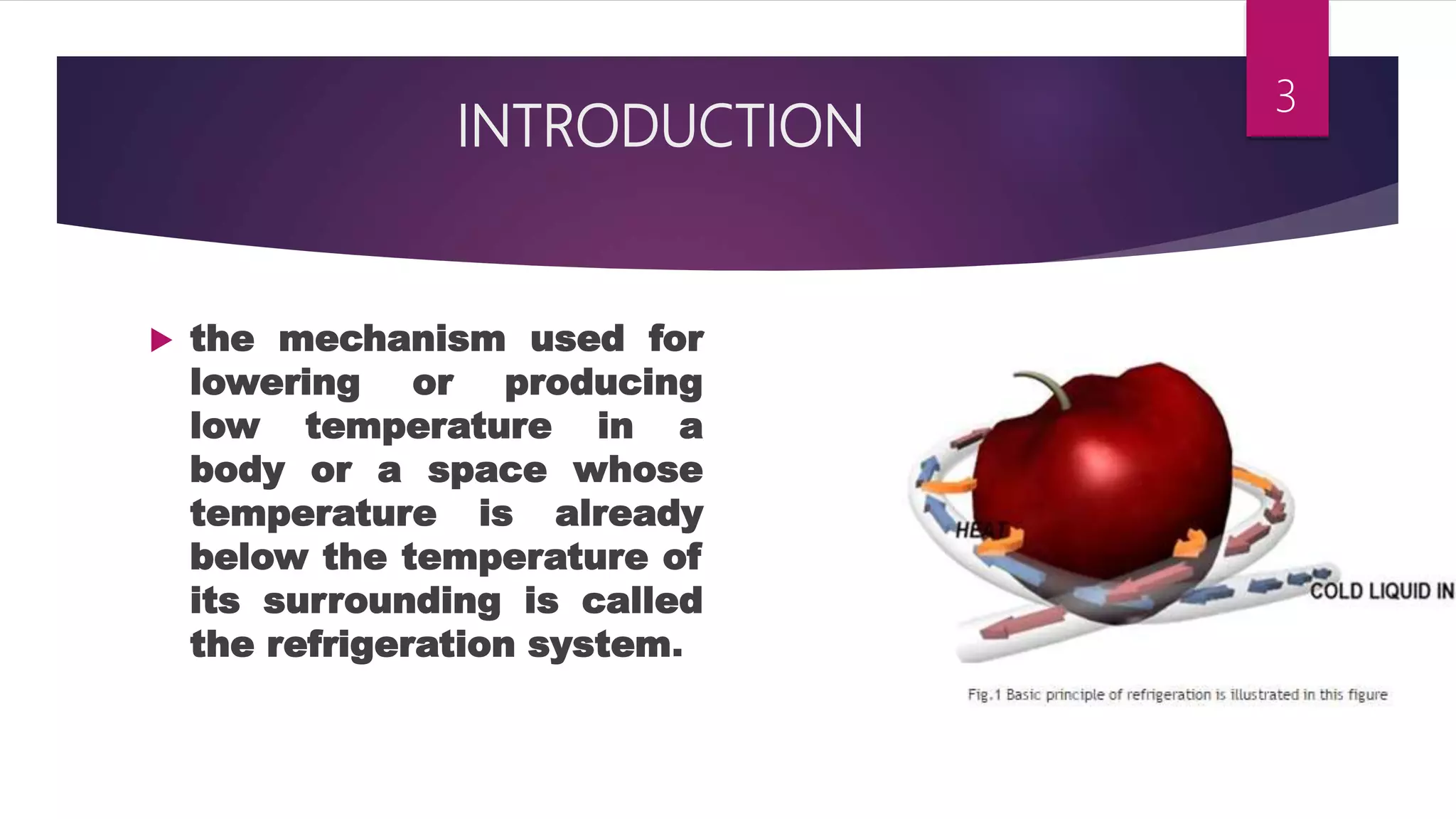
 the mechanism used for
lowering or producing
low temperature in a
body or a space whose
temperature is already
below the temperature of
its surrounding is called
the refrigeration system.
3
Components of Refrigerator & Working 4
1. Compressor
Compressor is the heart of the
refrigeration system. The power
required for transmitting heat from low
temperature space to high temperature
space is given here. When refrigerant
passes through a compressor it gets
highly compressed i.e. pressurized and
its temperature also becomes very
LOW. As it leaves the compressor,
refrigerant gets converted into the
gaseous state.
.
5
2. Condenser
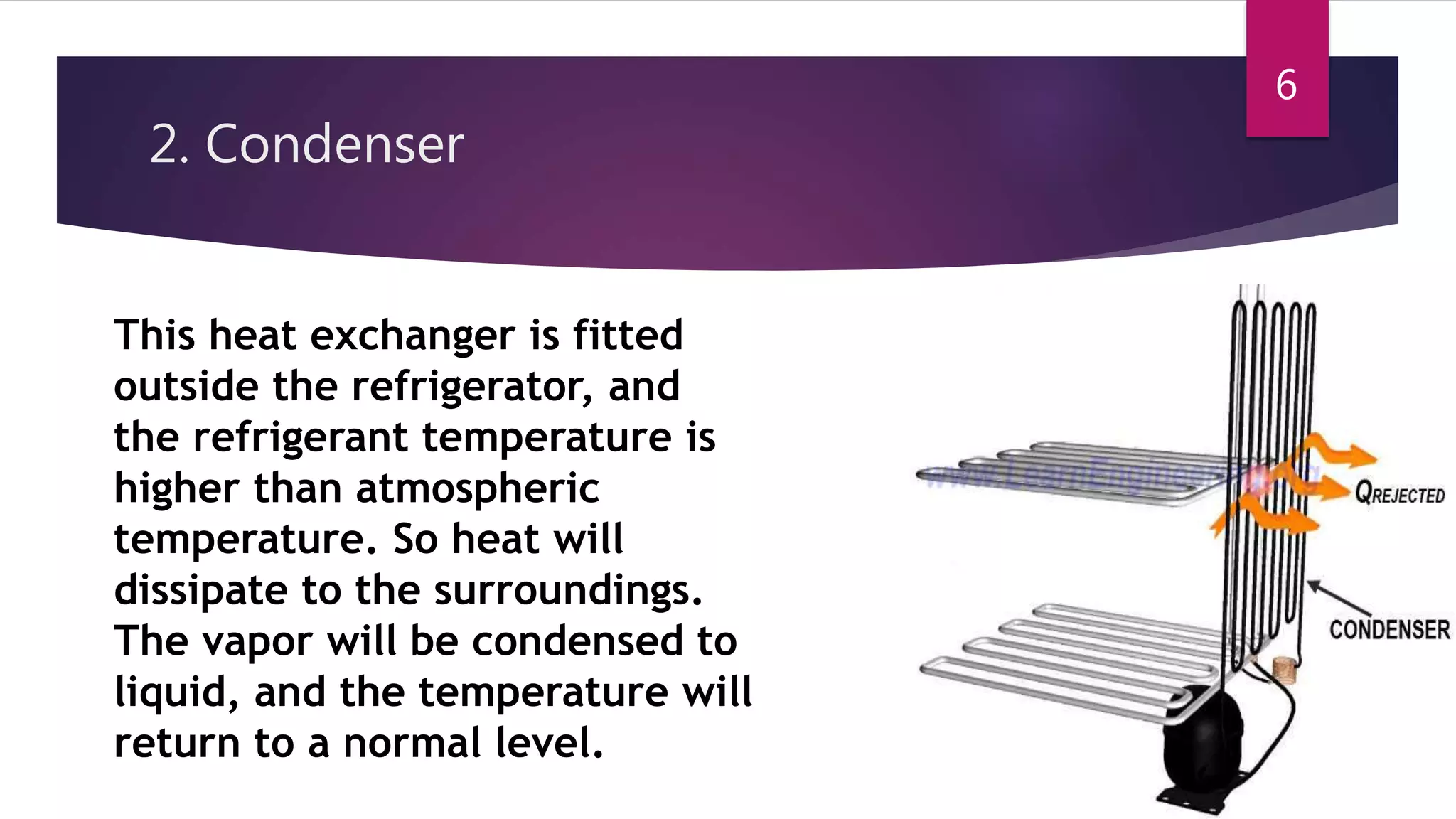
This heat exchanger is fitted
outside the refrigerator, and
the refrigerant temperature is
higher than atmospheric
temperature. So heat will
dissipate to the surroundings.
The vapor will be condensed to
liquid, and the temperature will
return to a normal level.
6
3. Expansion Valve or Throttling Device
The throttling device obstructs the
flow of liquid; cold liquid is
produced with the help of this
device. In this case, the throttling
device is a capillary tube. The
capillary tube has an approximate
length of 2 m and an inside
diameter of around 0.6 mm, so it
offers considerable resistance to
the flow.
7
4. Evaporator - Heat Absorption Process
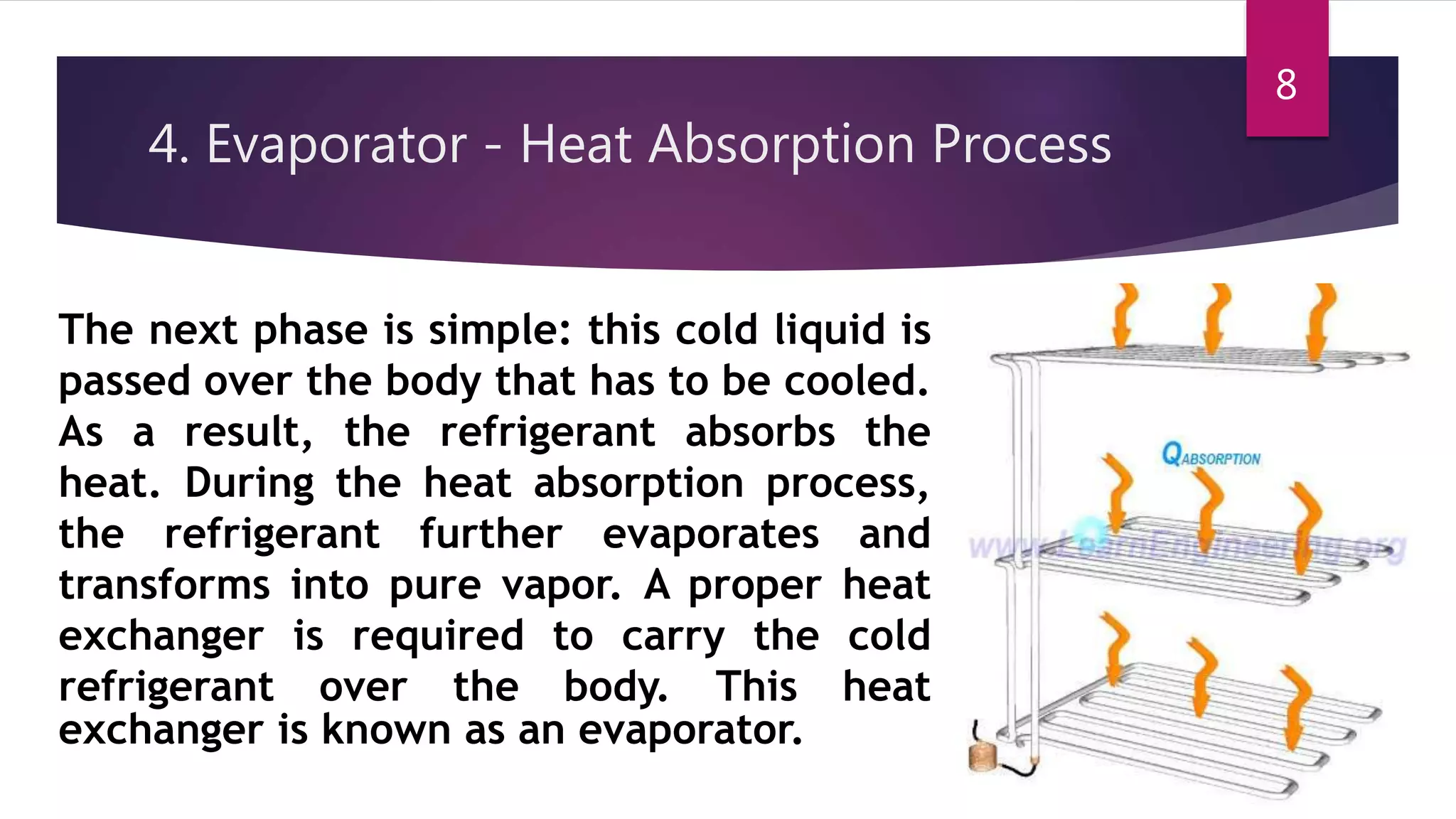
The next phase is simple: this cold liquid is
passed over the body that has to be cooled.
As a result, the refrigerant absorbs the
heat. During the heat absorption process,
the refrigerant further evaporates and
transforms into pure vapor. A proper heat
exchanger is required to carry the cold
refrigerant over the body. This heat
exchanger is known as an evaporator.
8
Refrigerants
any substance which is capable of
absorbing heat from another required
substance can be used as refrigerant.
i.e. ice, water, brine, air, etc.
9
THE BASIC PRINCIPLE OF REFRIGERATION
 Refrigeration process works on the principle of second
law of thermodynamics.
 The Second Law of Thermodynamics essentially states
that if a cold object is placed next to a hot object, the
cold object will become warmer and the hot object will
become cooler.
10
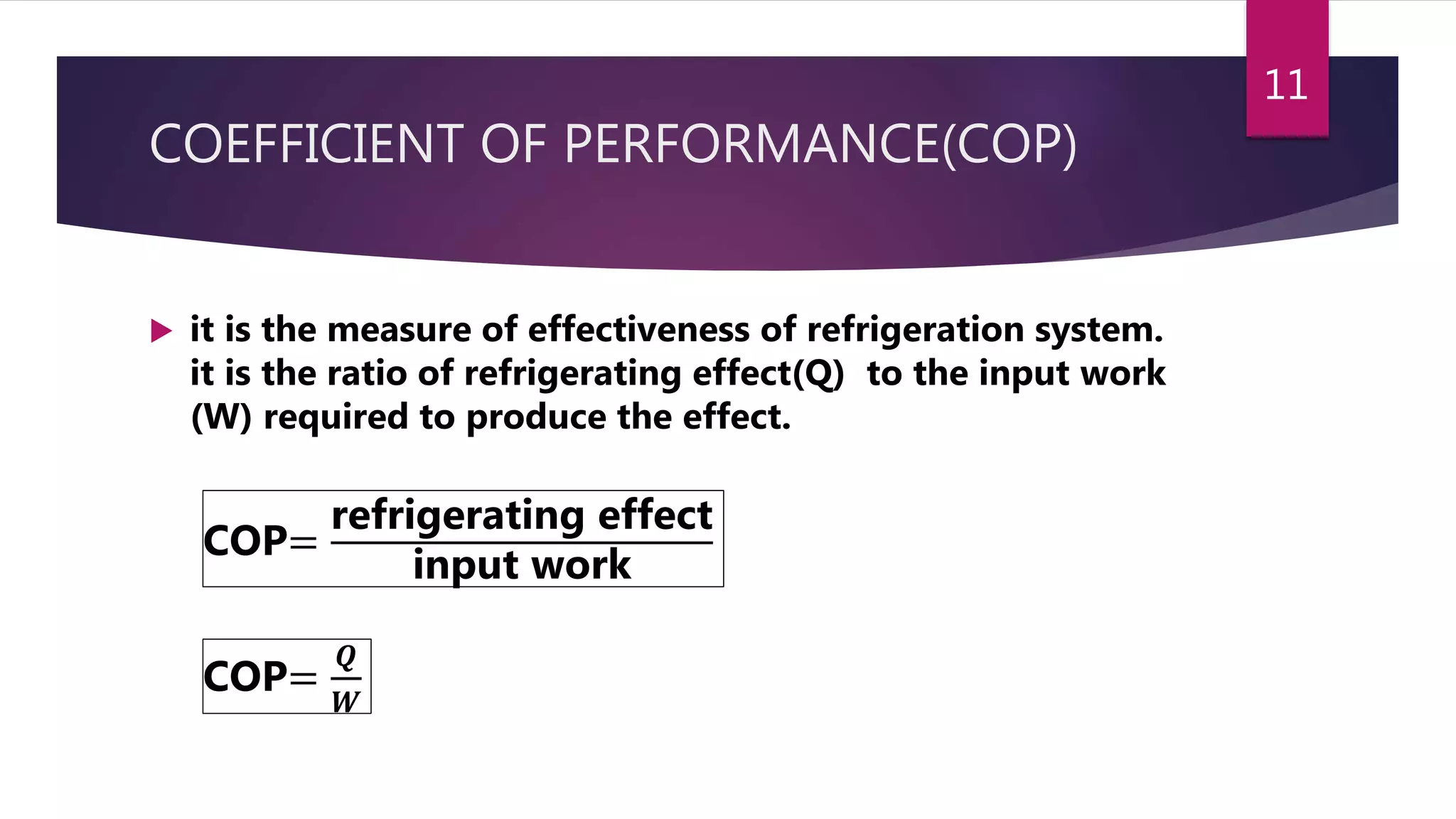
COEFFICIENT OF PERFORMANCE(COP)
 it is the measure of effectiveness of refrigeration system.
it is the ratio of refrigerating effect(Q) to the input work
(W) required to produce the effect.
COP=
refrigerating effect
input work
COP=
𝑸
𝑾
11
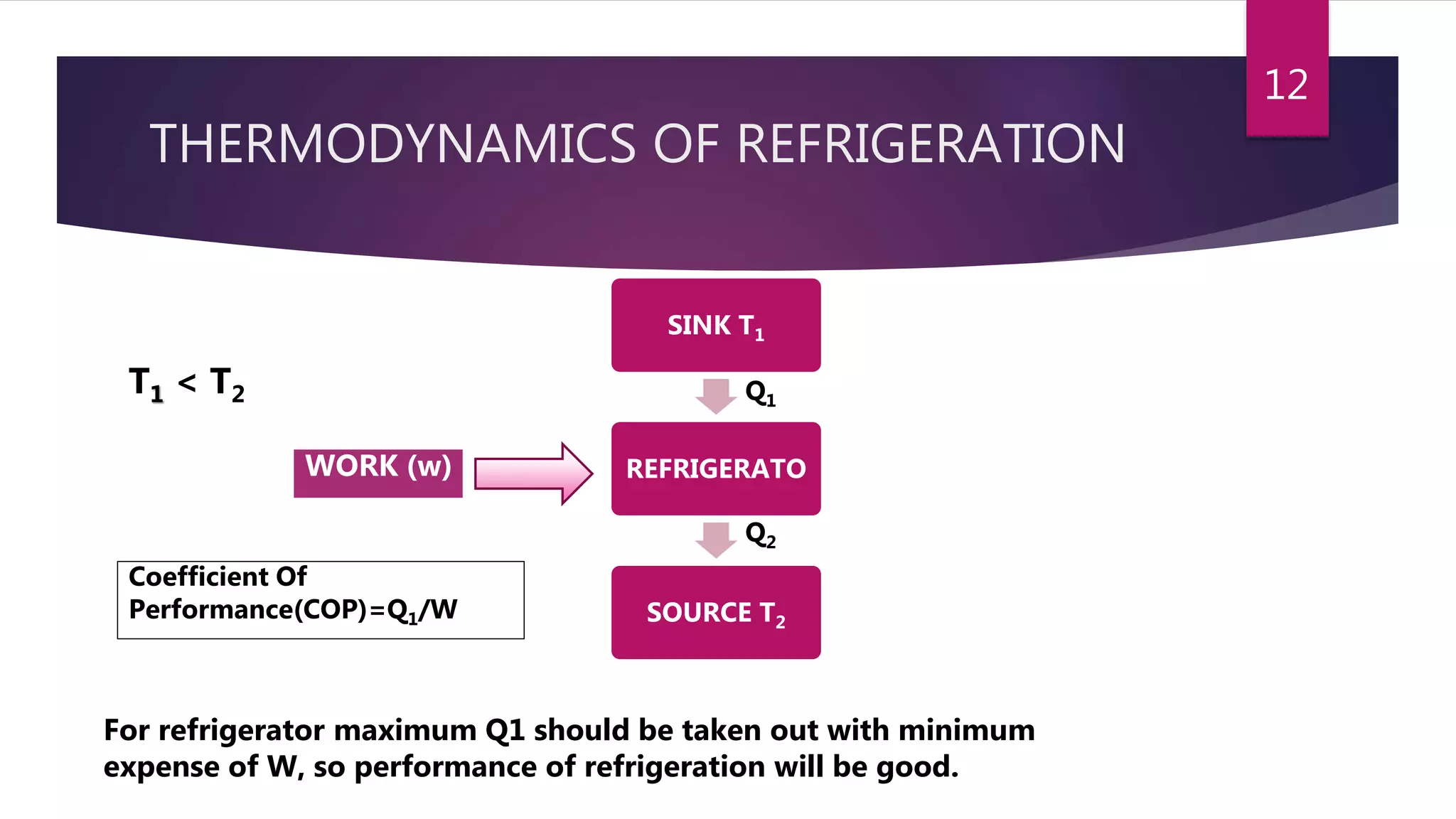
THERMODYNAMICS OF REFRIGERATION
SINK T1
REFRIGERATO
SOURCE T2
WORK (w)
Q1
Q2
T1 < T2
Coefficient Of
Performance(COP)=Q1/W
For refrigerator maximum Q1 should be taken out with minimum
expense of W, so performance of refrigeration will be good.
12
13
APPLICATION
 Ice manufacturing
 Dehumidification of air.
 Separation of gases.
 Solidification of a solute.
 Removal of Heat of Reaction.
 Preservation of Dairy Products.
 Beverages.
14
15

thermodynamic property of Refrigerator

  • 1.
    THERMODYNAMIC PROPERTIES OFREFRIGERATOR ADVISED BY :- DR. RAMA GAUR • KRISHNANAND KUSHWAHA • VIVEK SHUKLA SCHOOL OF CHEMICAL ENGINEERING AND PHYSICAL SCIENCES, LOVELY PROFESIONAL UNIVERSITY, JALANDHAR (PUNJAB) 1
  • 2.
  • 3.
    INTRODUCTION  the mechanismused for lowering or producing low temperature in a body or a space whose temperature is already below the temperature of its surrounding is called the refrigeration system. 3
  • 4.
  • 5.
    1. Compressor Compressor isthe heart of the refrigeration system. The power required for transmitting heat from low temperature space to high temperature space is given here. When refrigerant passes through a compressor it gets highly compressed i.e. pressurized and its temperature also becomes very LOW. As it leaves the compressor, refrigerant gets converted into the gaseous state. . 5
  • 6.
    2. Condenser This heatexchanger is fitted outside the refrigerator, and the refrigerant temperature is higher than atmospheric temperature. So heat will dissipate to the surroundings. The vapor will be condensed to liquid, and the temperature will return to a normal level. 6
  • 7.
    3. Expansion Valveor Throttling Device The throttling device obstructs the flow of liquid; cold liquid is produced with the help of this device. In this case, the throttling device is a capillary tube. The capillary tube has an approximate length of 2 m and an inside diameter of around 0.6 mm, so it offers considerable resistance to the flow. 7
  • 8.
    4. Evaporator -Heat Absorption Process The next phase is simple: this cold liquid is passed over the body that has to be cooled. As a result, the refrigerant absorbs the heat. During the heat absorption process, the refrigerant further evaporates and transforms into pure vapor. A proper heat exchanger is required to carry the cold refrigerant over the body. This heat exchanger is known as an evaporator. 8
  • 9.
    Refrigerants any substance whichis capable of absorbing heat from another required substance can be used as refrigerant. i.e. ice, water, brine, air, etc. 9
  • 10.
    THE BASIC PRINCIPLEOF REFRIGERATION  Refrigeration process works on the principle of second law of thermodynamics.  The Second Law of Thermodynamics essentially states that if a cold object is placed next to a hot object, the cold object will become warmer and the hot object will become cooler. 10
  • 11.
    COEFFICIENT OF PERFORMANCE(COP) it is the measure of effectiveness of refrigeration system. it is the ratio of refrigerating effect(Q) to the input work (W) required to produce the effect. COP= refrigerating effect input work COP= 𝑸 𝑾 11
  • 12.
    THERMODYNAMICS OF REFRIGERATION SINKT1 REFRIGERATO SOURCE T2 WORK (w) Q1 Q2 T1 < T2 Coefficient Of Performance(COP)=Q1/W For refrigerator maximum Q1 should be taken out with minimum expense of W, so performance of refrigeration will be good. 12
  • 13.
  • 14.
    APPLICATION  Ice manufacturing Dehumidification of air.  Separation of gases.  Solidification of a solute.  Removal of Heat of Reaction.  Preservation of Dairy Products.  Beverages. 14
  • 15.