Simple Vapour Compression
Cycle
Prepared by Kaushal Patel
Simple Vapour Compression System
• The simple vapour compression is most
popular and widely used in refrigeration and
air condition for both domestics and industrial
application.
• It is generally used for all purpose for small
domestic refrigerator to a big industrial air
conditioning plant.
• A vapour compression refrigeration system is an
improved type of refrigeration system in which a
suitable working substance, termed of
refrigerant is used. It condensed and evaporates
at temperature and pressure close to the
atmospheric condition.
• This refrigerant is usually used for
ammonia,carbon dioxide and sulphur dioxide.
VCR Cycle Advantages
• It is less smaller size for given capacity of
refrigeration.
• It has less running cost.
• The coefficient of performance is quite high.
VCR Cycle Disadvantage
• The initial cost is high.
• The prevention of leakage of refrigerant is the
major problem in VCR.
VCR Cycle Components
• Most common refrigeration cycle in use today.
• There are four principal control volumes involving
these components:
Evaporator
Compressor
Condenser
Expansion valve
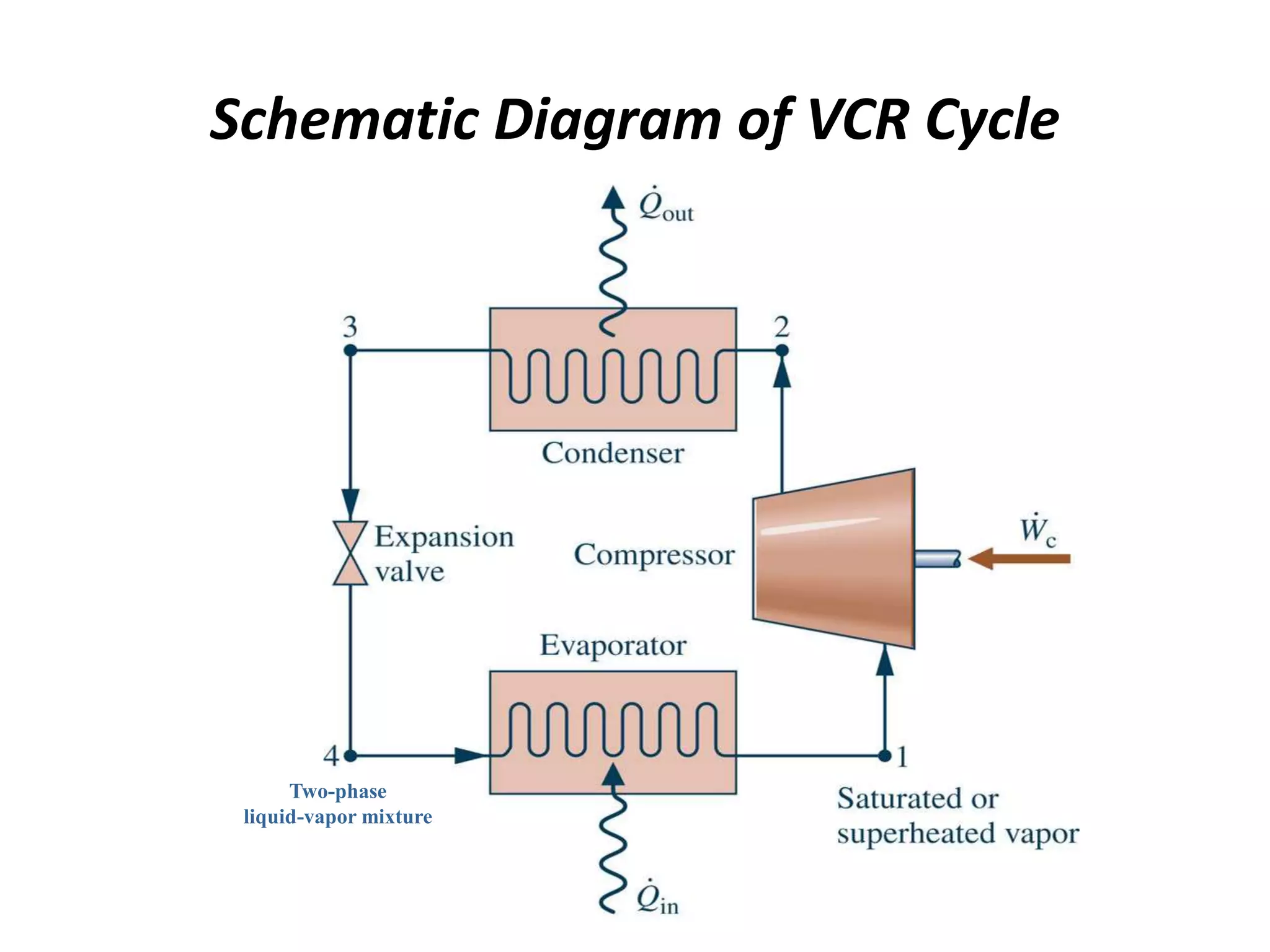
• All energy transfers by work and heat are taken as
positive in the directions of the arrows on the
schematic and energy balances are written
accordingly.
Two-phase
liquid-vapor mixture
Schematic Diagram of VCR Cycle
Processes of VCR Cycle
• Process 4-1: Two-phase liquid-vapor mixture of
refrigerant is evaporated through heat transfer
from the refrigerated space.
• Process 1-2: Vapor refrigerant is compressed to a
relatively high temperature and pressure
requiring work input.
• Process 2-3: Vapor refrigerant condenses to liquid
through heat transfer to the cooler surroundings.
• Process 3-4: Liquid refrigerant expands to the
evaporator pressure.
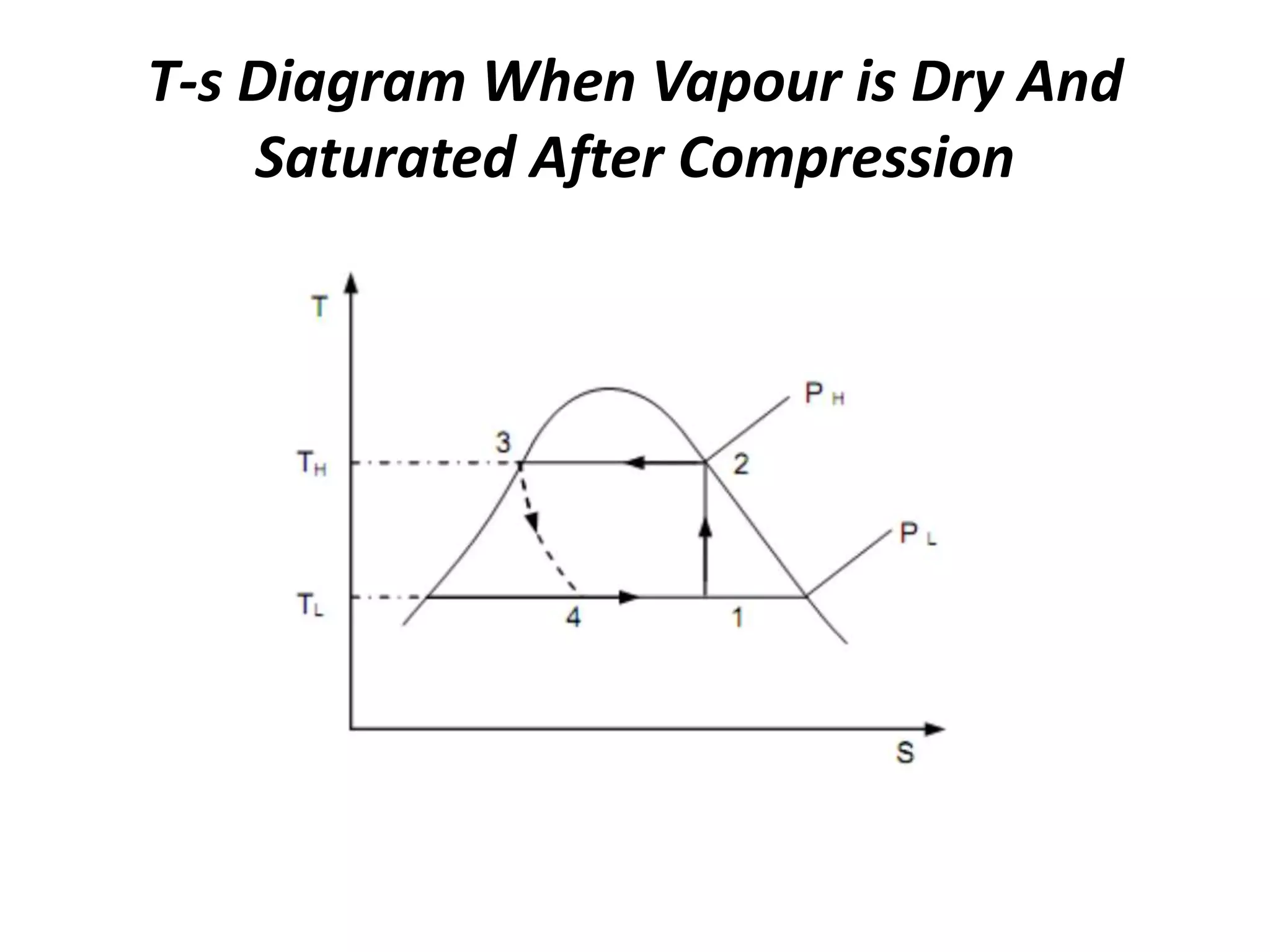
T-s Diagram When Vapour is Dry And
Saturated After Compression
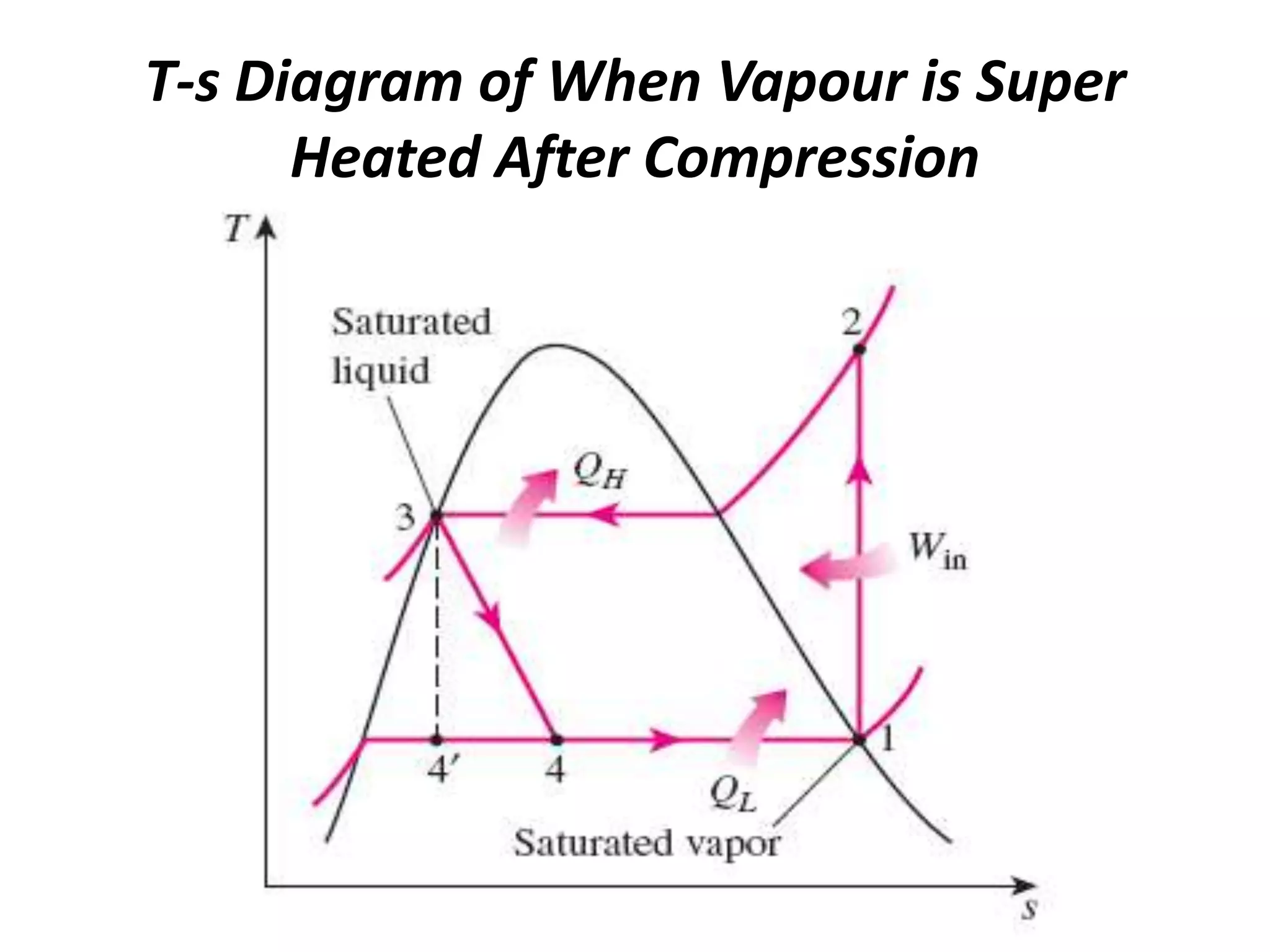
T-s Diagram of When Vapour is Super
Heated After Compression
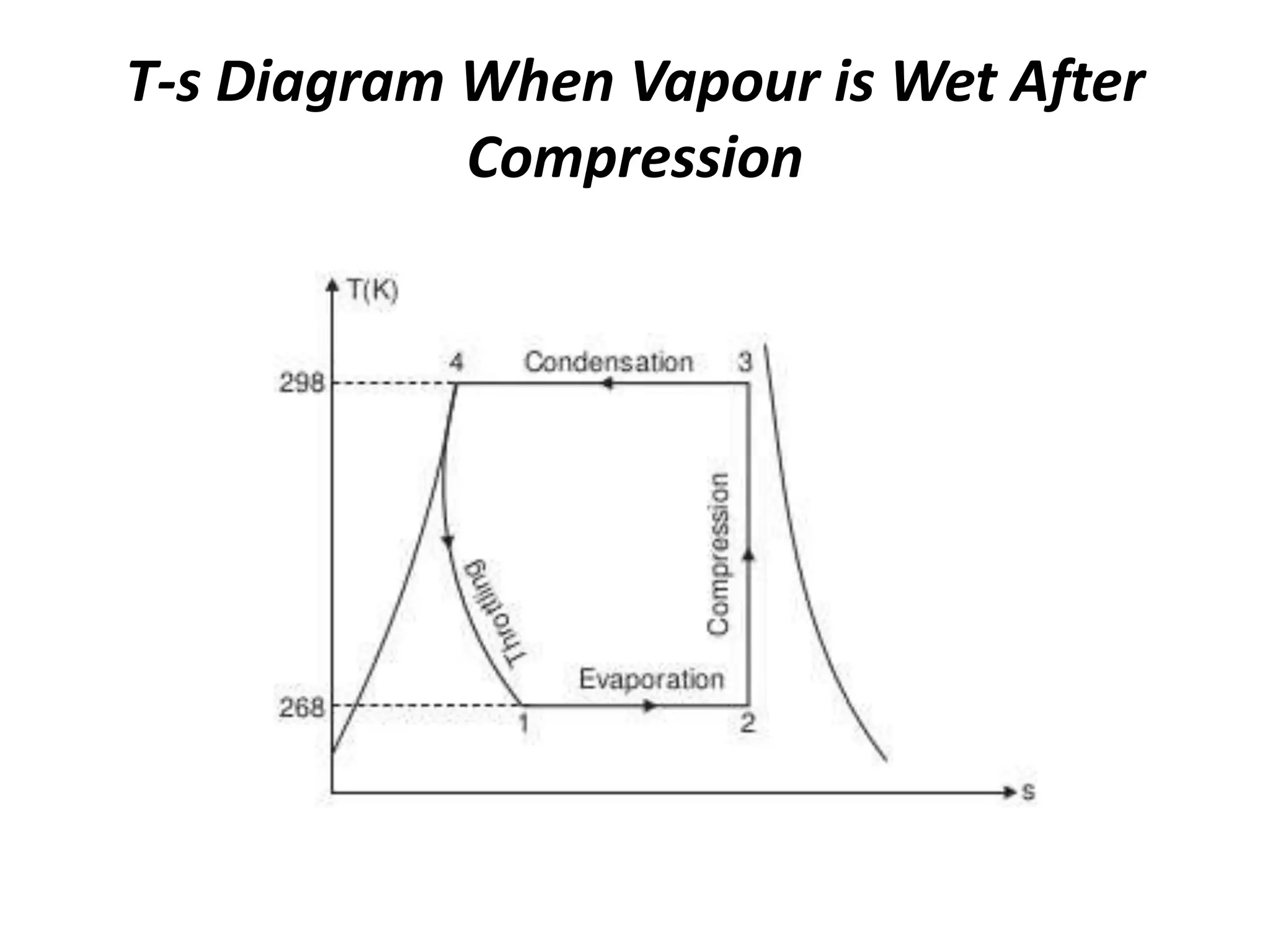
T-s Diagram When Vapour is Wet After
Compression
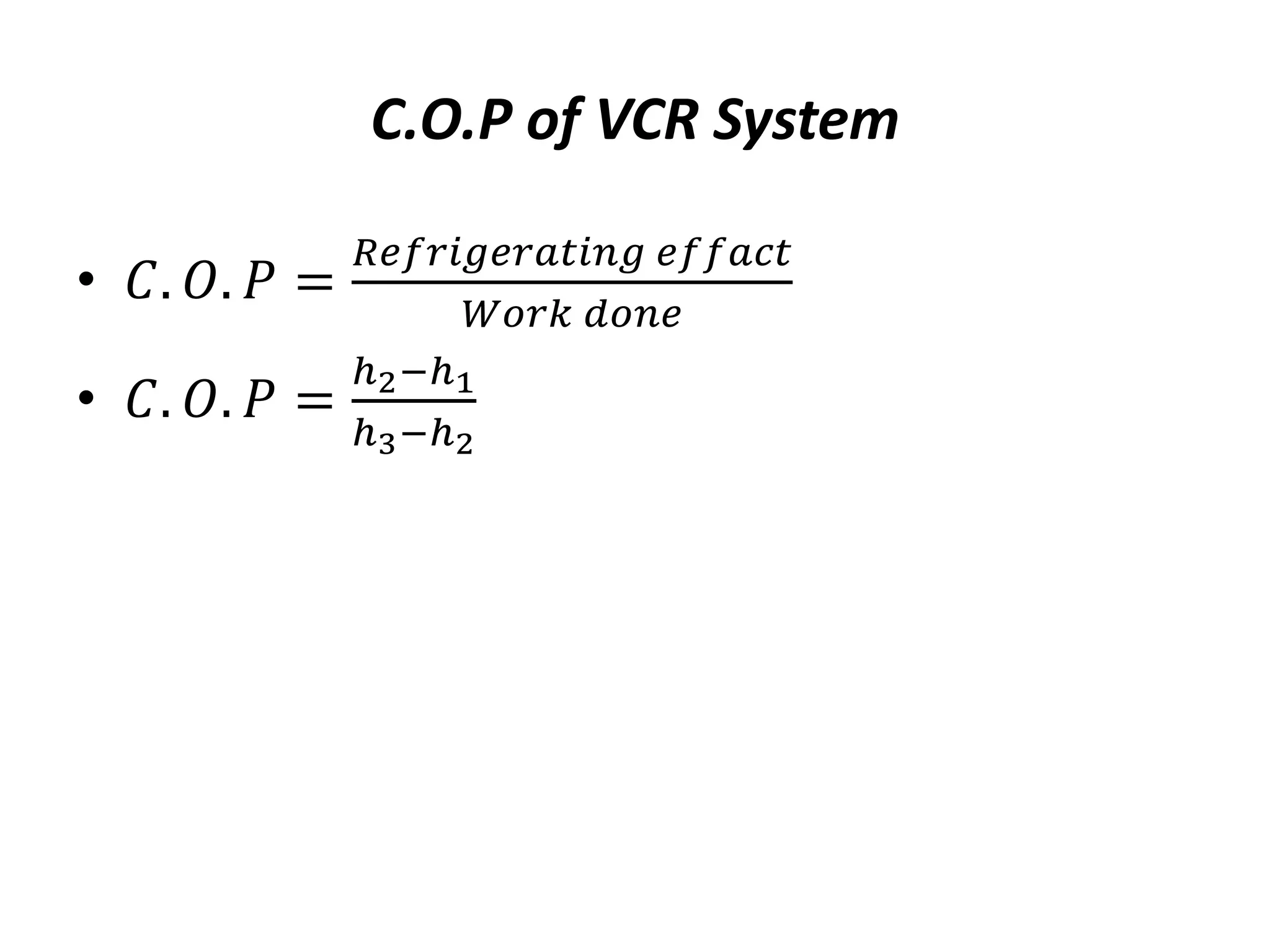
C.O.P of VCR System
• 𝐶. 𝑂. 𝑃 =
𝑅𝑒𝑓𝑟𝑖𝑔𝑒𝑟𝑎𝑡𝑖𝑛𝑔 𝑒𝑓𝑓𝑎𝑐𝑡
𝑊𝑜𝑟𝑘 𝑑𝑜𝑛𝑒
• 𝐶. 𝑂. 𝑃 =
ℎ2−ℎ1
ℎ3−ℎ2
THANK YOU

Simple vapour compression system

  • 1.
  • 2.
    Simple Vapour CompressionSystem • The simple vapour compression is most popular and widely used in refrigeration and air condition for both domestics and industrial application. • It is generally used for all purpose for small domestic refrigerator to a big industrial air conditioning plant.
  • 3.
    • A vapourcompression refrigeration system is an improved type of refrigeration system in which a suitable working substance, termed of refrigerant is used. It condensed and evaporates at temperature and pressure close to the atmospheric condition. • This refrigerant is usually used for ammonia,carbon dioxide and sulphur dioxide.
  • 4.
    VCR Cycle Advantages •It is less smaller size for given capacity of refrigeration. • It has less running cost. • The coefficient of performance is quite high.
  • 5.
    VCR Cycle Disadvantage •The initial cost is high. • The prevention of leakage of refrigerant is the major problem in VCR.
  • 6.
    VCR Cycle Components •Most common refrigeration cycle in use today. • There are four principal control volumes involving these components: Evaporator Compressor Condenser Expansion valve • All energy transfers by work and heat are taken as positive in the directions of the arrows on the schematic and energy balances are written accordingly.
  • 7.
  • 8.
    Processes of VCRCycle • Process 4-1: Two-phase liquid-vapor mixture of refrigerant is evaporated through heat transfer from the refrigerated space. • Process 1-2: Vapor refrigerant is compressed to a relatively high temperature and pressure requiring work input. • Process 2-3: Vapor refrigerant condenses to liquid through heat transfer to the cooler surroundings. • Process 3-4: Liquid refrigerant expands to the evaporator pressure.
  • 9.
    T-s Diagram WhenVapour is Dry And Saturated After Compression
  • 10.
    T-s Diagram ofWhen Vapour is Super Heated After Compression
  • 11.
    T-s Diagram WhenVapour is Wet After Compression
  • 12.
    C.O.P of VCRSystem • 𝐶. 𝑂. 𝑃 = 𝑅𝑒𝑓𝑟𝑖𝑔𝑒𝑟𝑎𝑡𝑖𝑛𝑔 𝑒𝑓𝑓𝑎𝑐𝑡 𝑊𝑜𝑟𝑘 𝑑𝑜𝑛𝑒 • 𝐶. 𝑂. 𝑃 = ℎ2−ℎ1 ℎ3−ℎ2
  • 13.