BASIC REFRIGERATION
CYCLE
Presented by
JISHNU U
S5 MECHANICAL
NO :35
INTRODUCTION
A major application area of thermodynamics is refrigeration,
which is the transfer of heat from a lower temperature region to a
higher temperature one .
Devices that produce refrigeration are called refrigerators, and
the cycles on which they operate are called refrigeration cycles.
The most frequently used refrigeration cycle is the vapour
compression refrigeration cycle in which the refrigerant is
vaporized and condensed alternately and is compressed in the
vapour phase. Another well-known refrigeration cycle is the gas
refrigeration cycle in which the refrigerant remains in the
gaseous phase throughout
PRINCIPLES OF REFRIGERATION
 Liquids absorb heat when changed from liquid to
gas(latent heat of vaporization)
 Gases give off heat when changed from gas to
liquid.(latent heat of condensation)
FOUR BASIC PROCESSES
I. 1-2 isentropic compression (in a compressor)
II. 2-3 constant pressure heat rejection ( in a condenser )
III. 3-4 isentropic expansion ( in a metering device such as
throatling valve)
IV. 4-1 constant pressure heat addition ( in a evaporator)
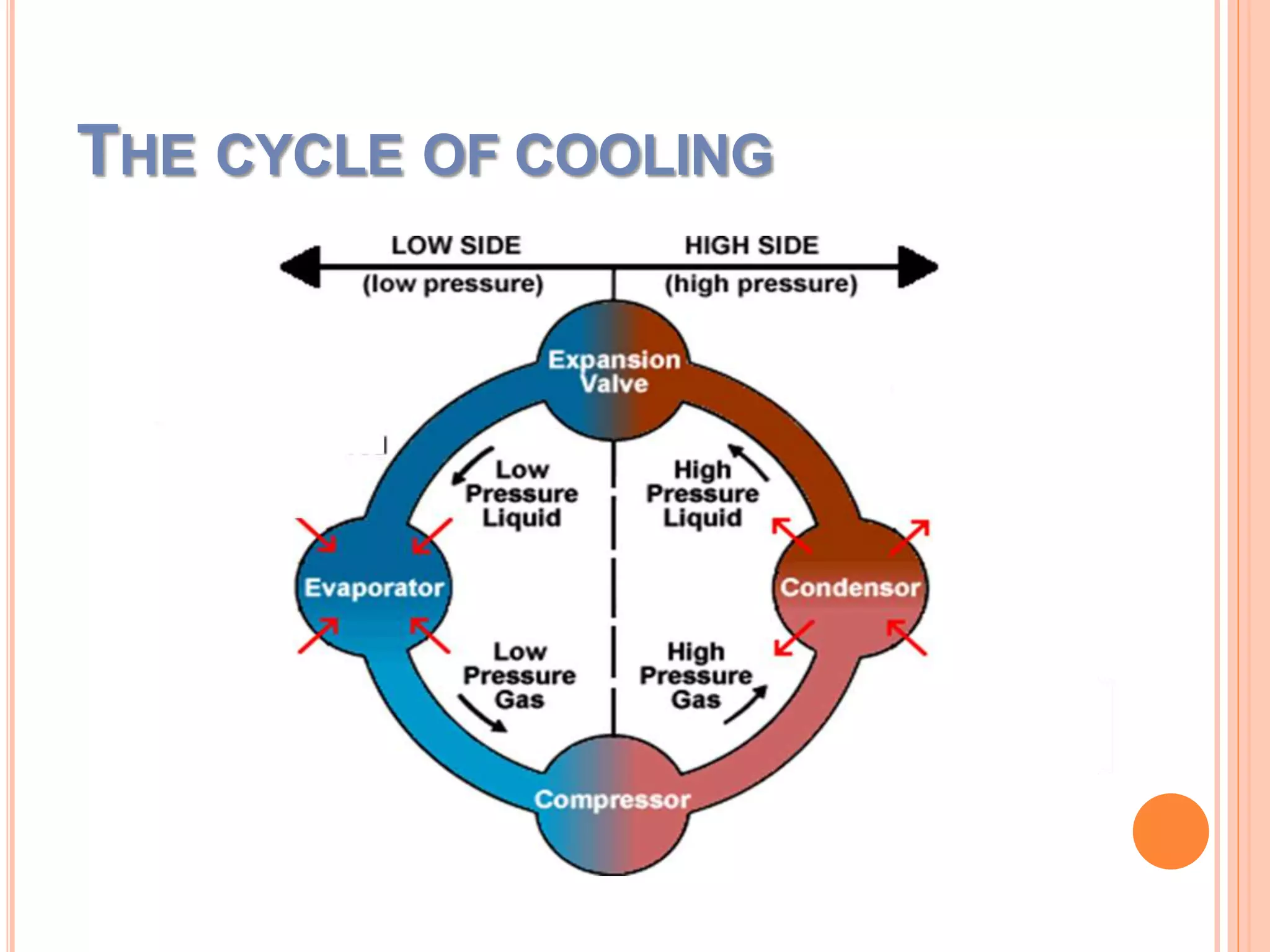
THE CYCLE OF COOLING
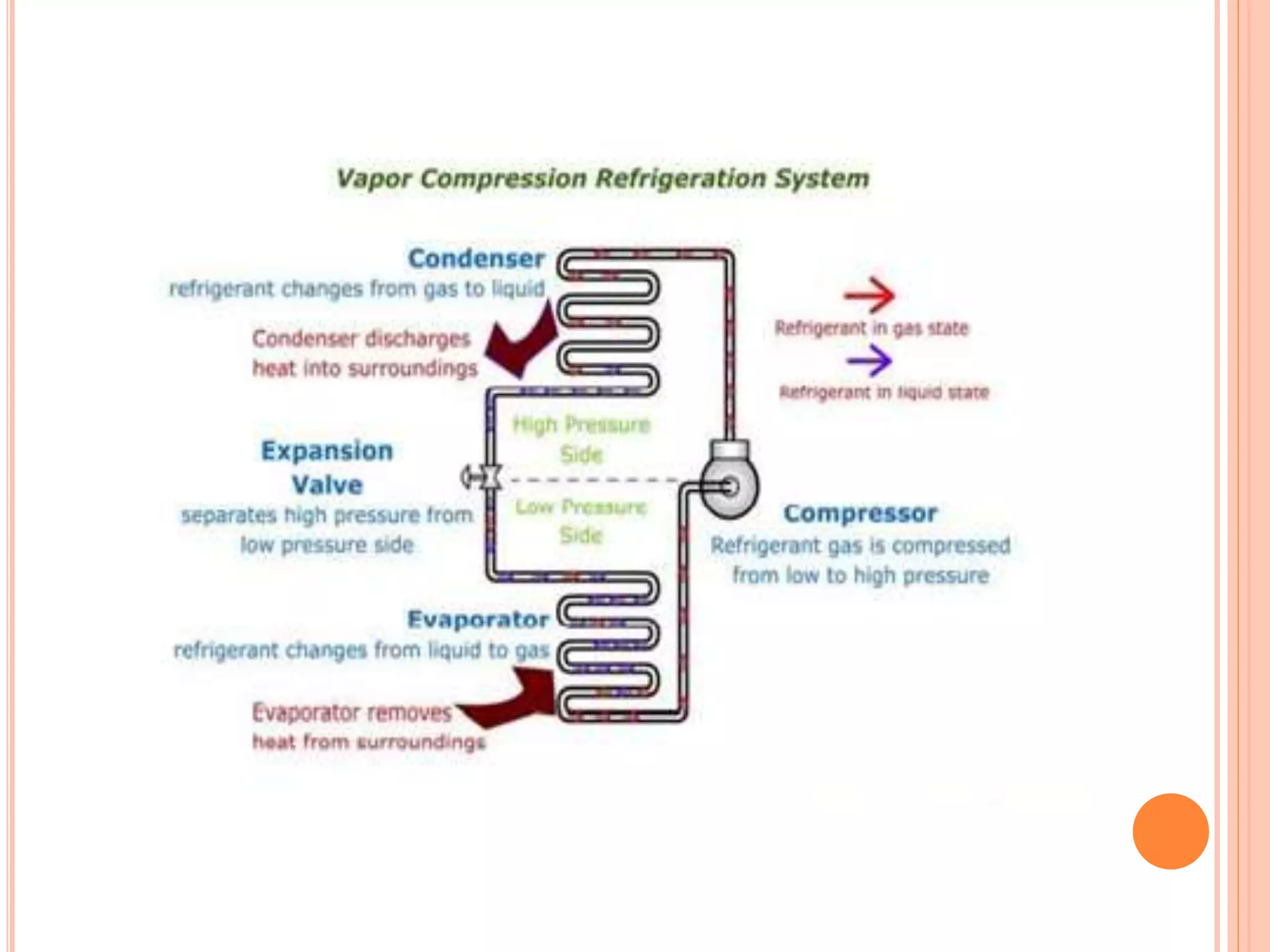
COMPRESSOR
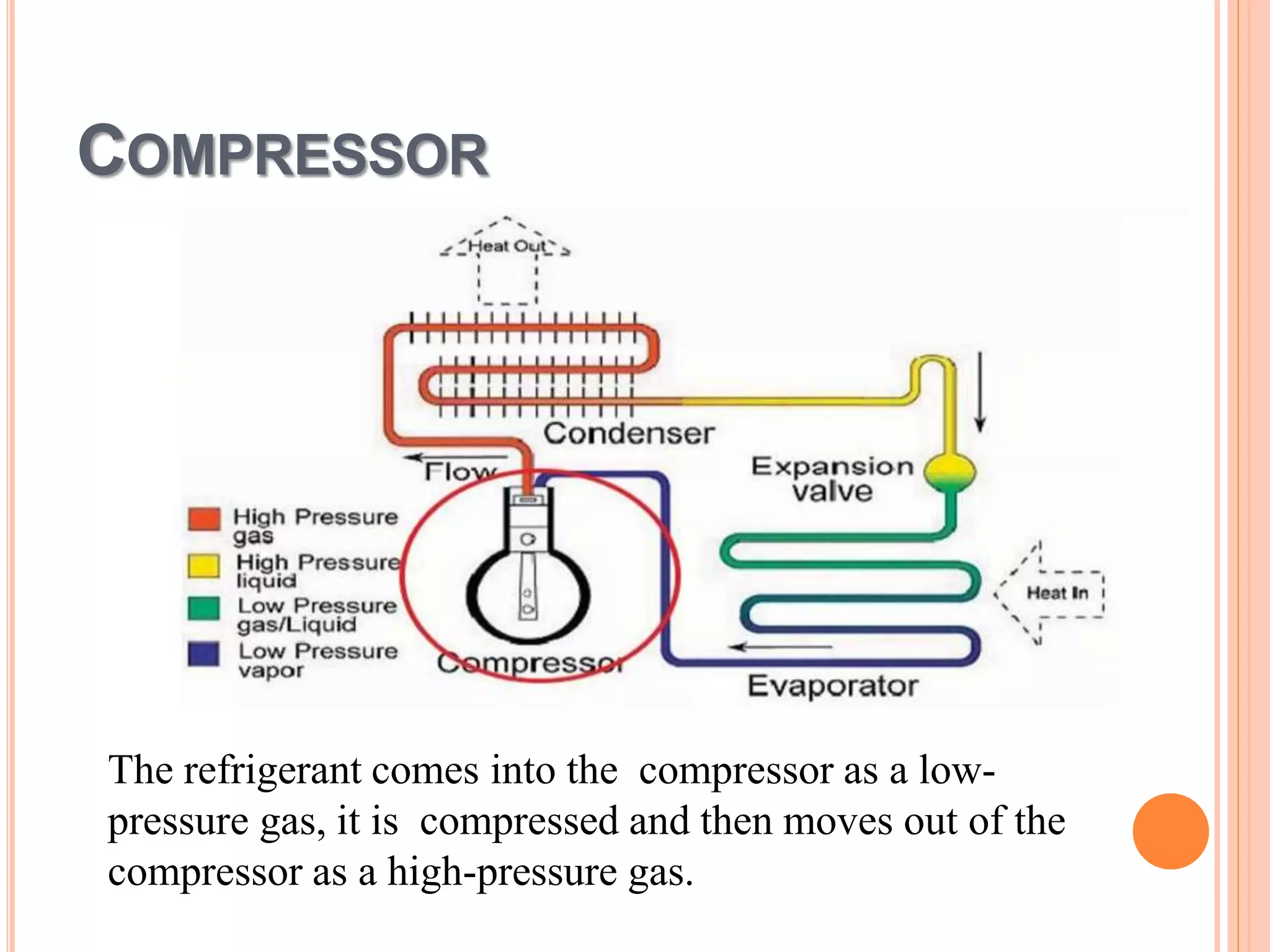
The refrigerant comes into the compressor as a low-
pressure gas, it is compressed and then moves out of the
compressor as a high-pressure gas.
CONDENSER
The gas then flows to the condenser. Here the gas
condenses to a liquid, and gives off its heat to the outside
air
EXPANSION VALVE / METERING
DEVICE
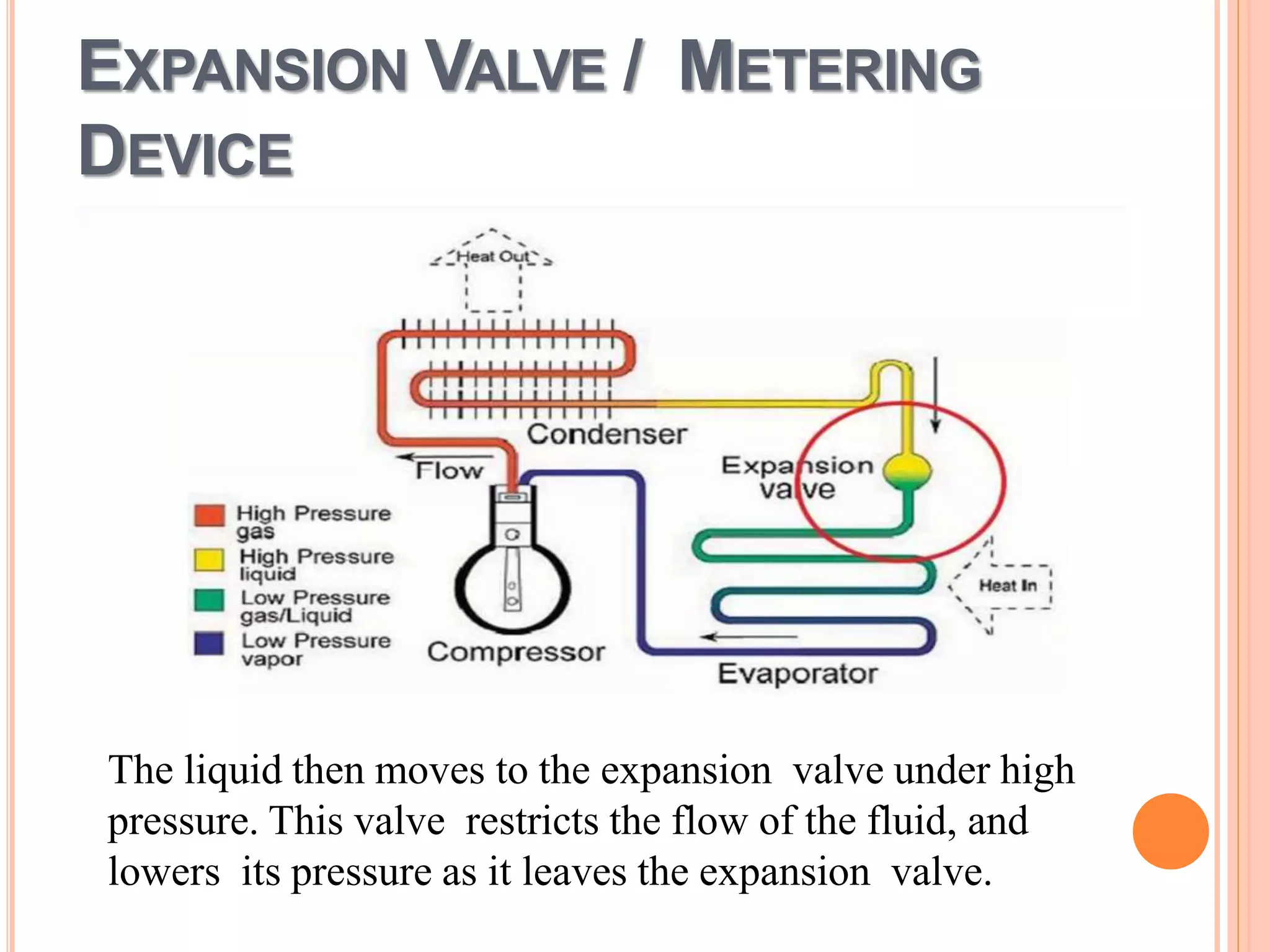
The liquid then moves to the expansion valve under high
pressure. This valve restricts the flow of the fluid, and
lowers its pressure as it leaves the expansion valve.
EVAPORATOR
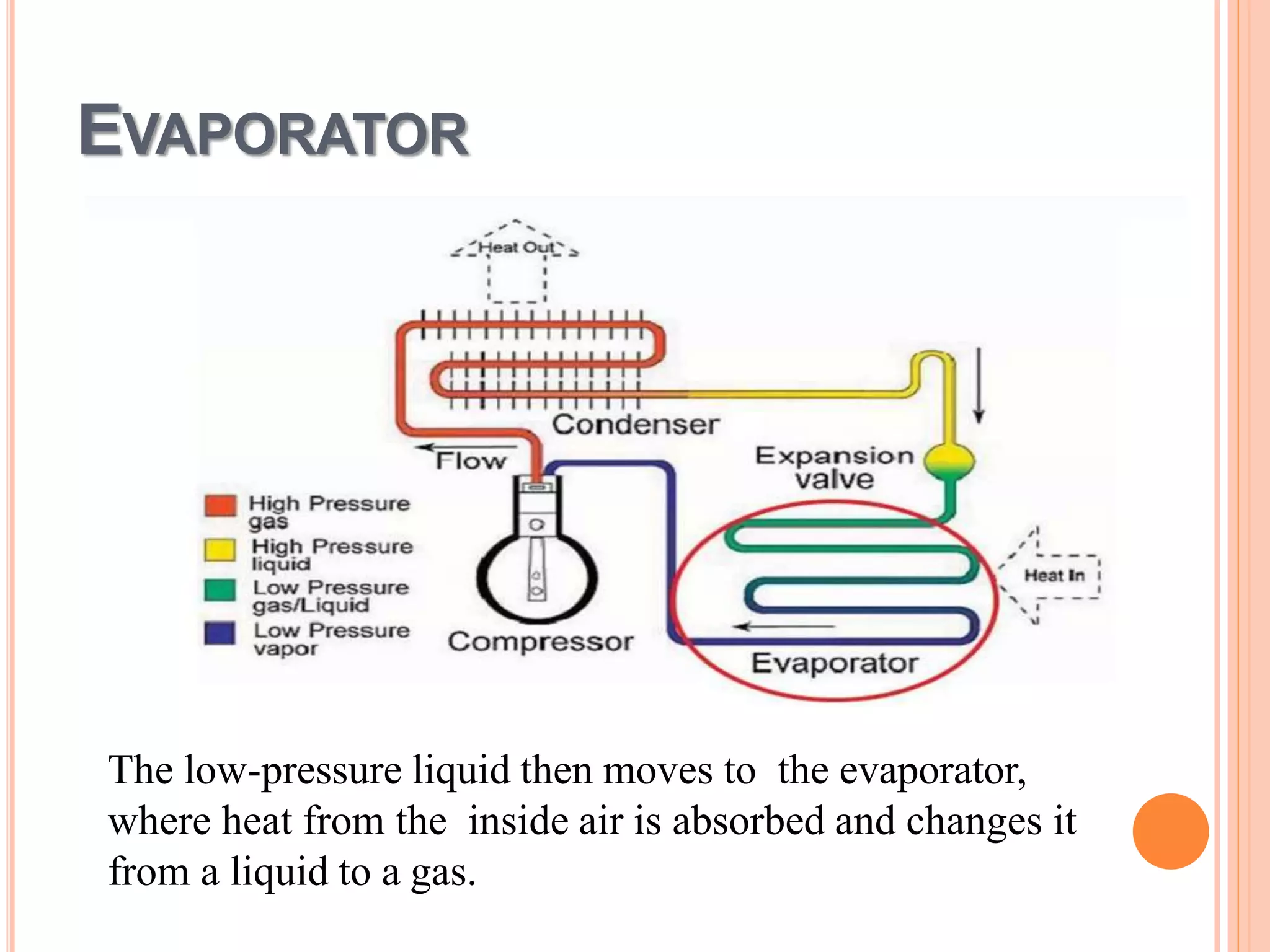
The low-pressure liquid then moves to the evaporator,
where heat from the inside air is absorbed and changes it
from a liquid to a gas.
COMPRESSOR
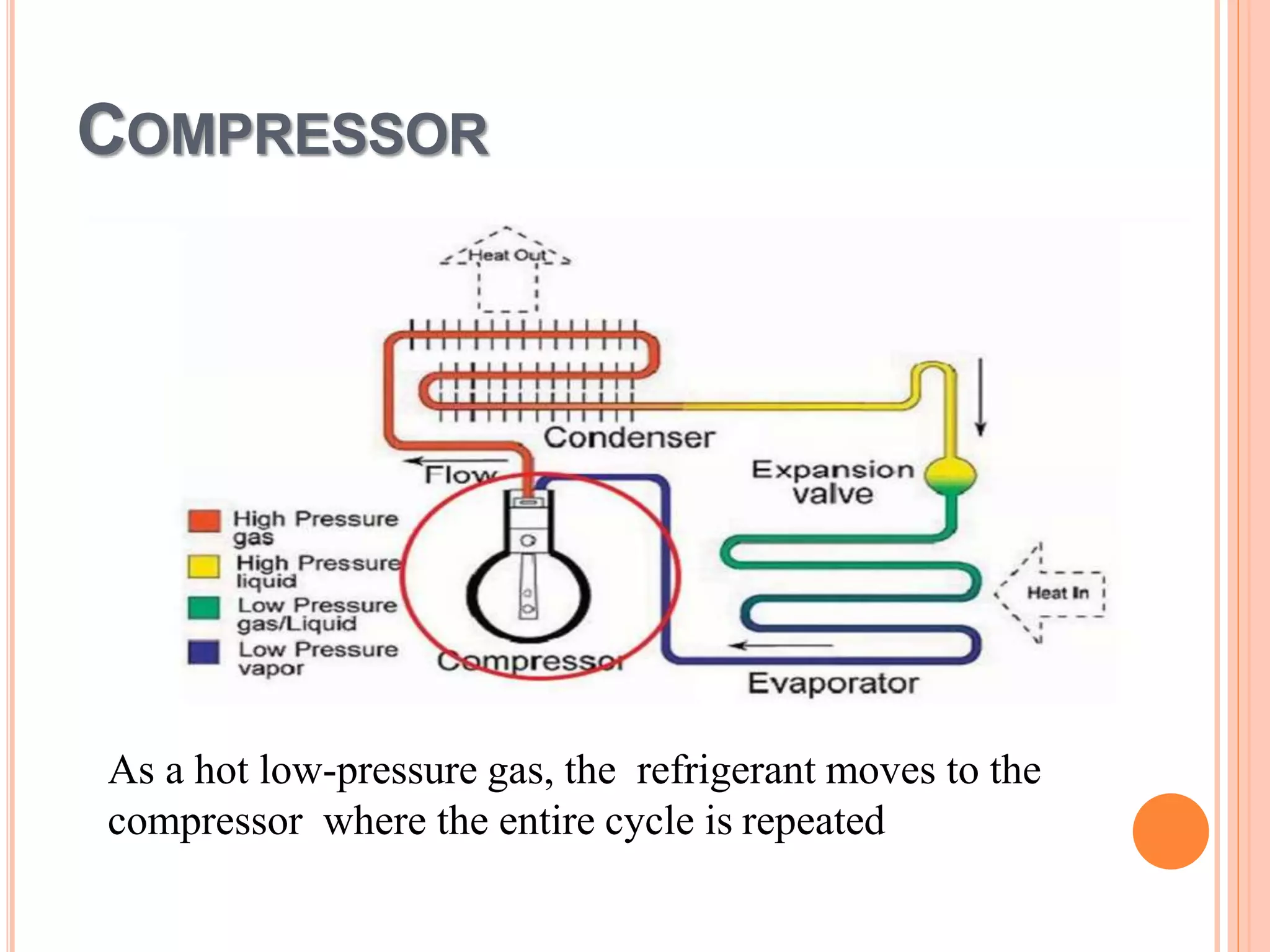
As a hot low-pressure gas, the refrigerant moves to the
compressor where the entire cycle is repeated
COEFFICIENT OF PERFORMANCE
(COP)
• The performance of refrigerators and heat pumps is
expressed
in terms of coefficient of Performance, defined as
COP = desired output / required input Or
COP = Cooling effect/ work input
= QL/Wnet,input
• A rule of thumb is that the COP improves by 2 to 4 percept for
each °C the evaporating temperature is raised or the
condensing temperature is lowered.
SELECTING THE RIGHT
REFRIGERANT
 There are several types of refrigerants such as CFCS,
ammonia, hydrocarbons,( propane, ethane, ethylene etc.),
Carbon dioxide, air( in the air conditioning of aircraft) and
even water ( in the applications above the freezing point).
 The right choice of refrigerant depends on the situation at
hand
 The industrial and heavy-commercial sectors were very
satisfied with ammonia, and still are, although ammonia is
toxic but due to its several advantages like higher COPs,
low cost, no effect on ozone etc.
Basic refrigeration cycle .

Basic refrigeration cycle .

  • 1.
  • 2.
    INTRODUCTION A major applicationarea of thermodynamics is refrigeration, which is the transfer of heat from a lower temperature region to a higher temperature one . Devices that produce refrigeration are called refrigerators, and the cycles on which they operate are called refrigeration cycles. The most frequently used refrigeration cycle is the vapour compression refrigeration cycle in which the refrigerant is vaporized and condensed alternately and is compressed in the vapour phase. Another well-known refrigeration cycle is the gas refrigeration cycle in which the refrigerant remains in the gaseous phase throughout
  • 3.
    PRINCIPLES OF REFRIGERATION Liquids absorb heat when changed from liquid to gas(latent heat of vaporization)  Gases give off heat when changed from gas to liquid.(latent heat of condensation)
  • 4.
    FOUR BASIC PROCESSES I.1-2 isentropic compression (in a compressor) II. 2-3 constant pressure heat rejection ( in a condenser ) III. 3-4 isentropic expansion ( in a metering device such as throatling valve) IV. 4-1 constant pressure heat addition ( in a evaporator)
  • 5.
    THE CYCLE OFCOOLING
  • 6.
    COMPRESSOR The refrigerant comesinto the compressor as a low- pressure gas, it is compressed and then moves out of the compressor as a high-pressure gas.
  • 7.
    CONDENSER The gas thenflows to the condenser. Here the gas condenses to a liquid, and gives off its heat to the outside air
  • 8.
    EXPANSION VALVE /METERING DEVICE The liquid then moves to the expansion valve under high pressure. This valve restricts the flow of the fluid, and lowers its pressure as it leaves the expansion valve.
  • 9.
    EVAPORATOR The low-pressure liquidthen moves to the evaporator, where heat from the inside air is absorbed and changes it from a liquid to a gas.
  • 10.
    COMPRESSOR As a hotlow-pressure gas, the refrigerant moves to the compressor where the entire cycle is repeated
  • 12.
    COEFFICIENT OF PERFORMANCE (COP) •The performance of refrigerators and heat pumps is expressed in terms of coefficient of Performance, defined as COP = desired output / required input Or COP = Cooling effect/ work input = QL/Wnet,input • A rule of thumb is that the COP improves by 2 to 4 percept for each °C the evaporating temperature is raised or the condensing temperature is lowered.
  • 13.
    SELECTING THE RIGHT REFRIGERANT There are several types of refrigerants such as CFCS, ammonia, hydrocarbons,( propane, ethane, ethylene etc.), Carbon dioxide, air( in the air conditioning of aircraft) and even water ( in the applications above the freezing point).  The right choice of refrigerant depends on the situation at hand  The industrial and heavy-commercial sectors were very satisfied with ammonia, and still are, although ammonia is toxic but due to its several advantages like higher COPs, low cost, no effect on ozone etc.