REFLECTIVE WRITING
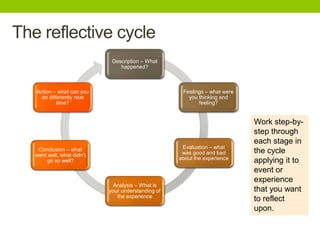
The reflective cycle
Description – What
happened?

Action – what can you
do differently next
time?

Feelings – what were
you thinking and
feeling?

Evaluation – what
was good and bad
about the experience

Conclusion – what
went well, what didn’t
go so well?

Analysis – What is
your understanding of
the experience

Work step-bystep through
each stage in
the cycle
applying it to
event or
experience
that you want
to reflect
upon.
Description – what happened?
• The first thing to do is to

describe what
happened, note this down
along with any
observations and thoughts.
• Think about and describe
the context for the event as
well as what happened.
• Remember that you are
setting the scene.
Image by distelfliege available from Flickr
Feelings – what were your reactions?
• How did you respond to the

experience at the time?
• What was your emotional
response?
• It is also worth thinking about
how you felt (in terms of
physical feelings), were you
tired, not feeling too good
, cold, hot or were you
happy, positive and in a good
mood?
Image by Lori Hutchinson available from Flickr
Evaluation- what was good and bad about
the experience?
Think about your experience
note down:
• Any good or bad points?
• What things went well?
• What things didn’t go to go
to plan?

Image by mbgrigby available at Fickr
Analysis – what is your understanding?
• What sense can you make of

the event?
• Can you unpick the experience
to make it understandable
• What was going on with other
people? How were they
reacting? You should try and
consider different viewpoints
and stand back from the
experience.
• How does the experience you
have had relate to any
background information, policy
of frameworks?
Image by jcoterhals available from Flickr
Conclusions
• What conclusions have you come to about the experience

that you have had?
• This could include observations, for example – there
wasn’t enough time, the room was uncomfortable, I hadn’t
practised enough and so on.
• What have you learned from the experience?
• What would you change or do differently next time?
Actions
• Do you need additional training or support, if so what and

who from?
• What strategies could you develop to manage a similar
situation or event?
• What are you going to do next?

Image by Nocas available from Flickr
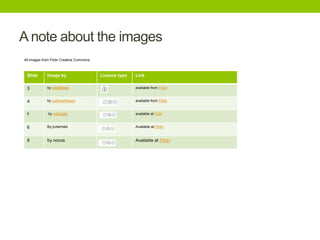
A note about the images
All images from Flickr Creative Commons

Slide

Image by

Licence type

Link

3

by distelfliege

available from Flickr

4

by Lorihutchinson

available from Flickr

5

by mbgrigby

available at Fickr

6

By jcoterhals

Available at Flickr

8

by nocos

Available at Flickr

Reflective writing

  • 1.
  • 2.
    The reflective cycle Description– What happened? Action – what can you do differently next time? Feelings – what were you thinking and feeling? Evaluation – what was good and bad about the experience Conclusion – what went well, what didn’t go so well? Analysis – What is your understanding of the experience Work step-bystep through each stage in the cycle applying it to event or experience that you want to reflect upon.
  • 3.
    Description – whathappened? • The first thing to do is to describe what happened, note this down along with any observations and thoughts. • Think about and describe the context for the event as well as what happened. • Remember that you are setting the scene. Image by distelfliege available from Flickr
  • 4.
    Feelings – whatwere your reactions? • How did you respond to the experience at the time? • What was your emotional response? • It is also worth thinking about how you felt (in terms of physical feelings), were you tired, not feeling too good , cold, hot or were you happy, positive and in a good mood? Image by Lori Hutchinson available from Flickr
  • 5.
    Evaluation- what wasgood and bad about the experience? Think about your experience note down: • Any good or bad points? • What things went well? • What things didn’t go to go to plan? Image by mbgrigby available at Fickr
  • 6.
    Analysis – whatis your understanding? • What sense can you make of the event? • Can you unpick the experience to make it understandable • What was going on with other people? How were they reacting? You should try and consider different viewpoints and stand back from the experience. • How does the experience you have had relate to any background information, policy of frameworks? Image by jcoterhals available from Flickr
  • 7.
    Conclusions • What conclusionshave you come to about the experience that you have had? • This could include observations, for example – there wasn’t enough time, the room was uncomfortable, I hadn’t practised enough and so on. • What have you learned from the experience? • What would you change or do differently next time?
  • 8.
    Actions • Do youneed additional training or support, if so what and who from? • What strategies could you develop to manage a similar situation or event? • What are you going to do next? Image by Nocas available from Flickr
  • 9.
    A note aboutthe images All images from Flickr Creative Commons Slide Image by Licence type Link 3 by distelfliege available from Flickr 4 by Lorihutchinson available from Flickr 5 by mbgrigby available at Fickr 6 By jcoterhals Available at Flickr 8 by nocos Available at Flickr