Giving and
Receiving Feedback
(A summary)
1
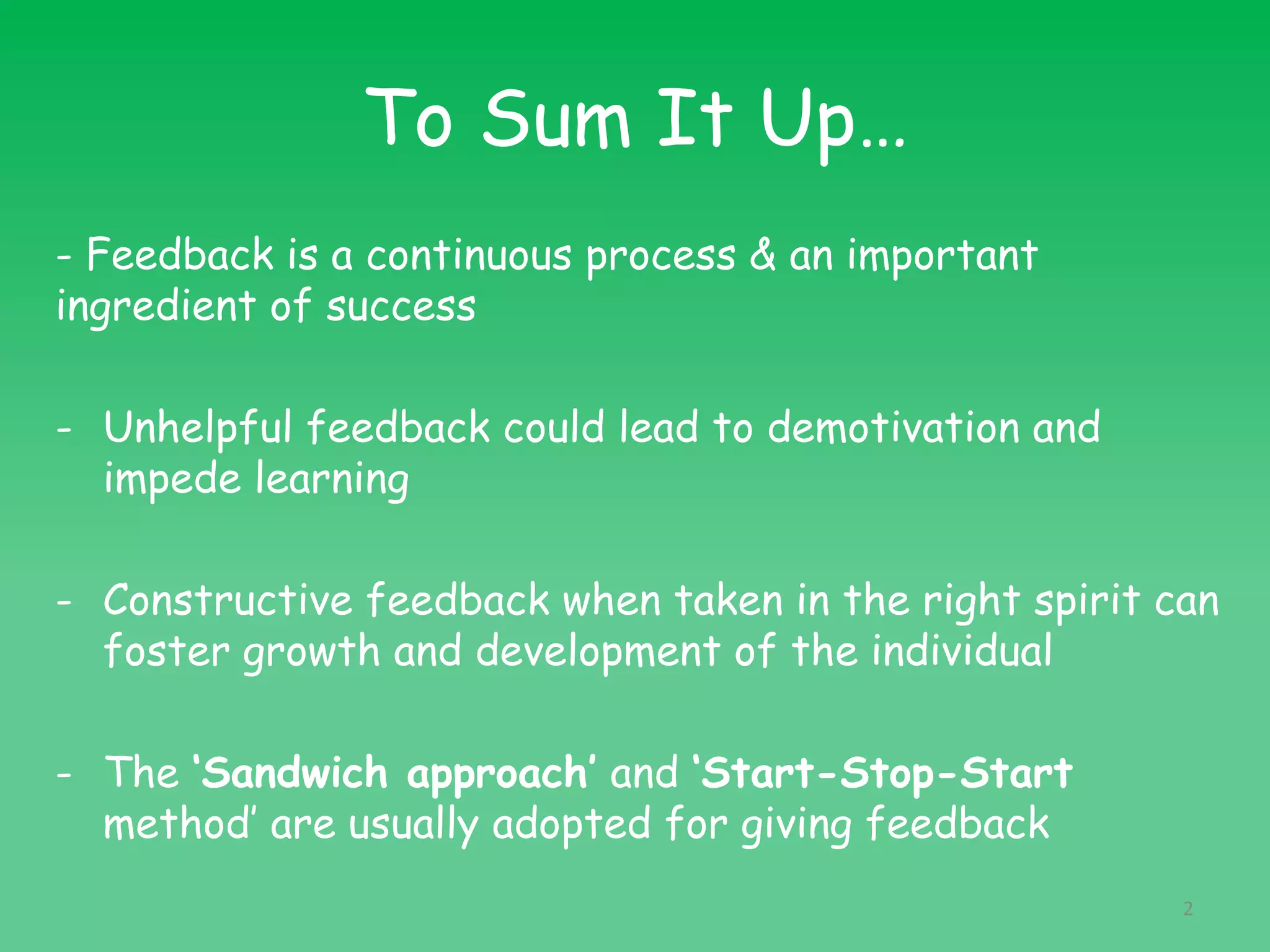
To Sum It Up…
- Feedback is a continuous process & an important
ingredient of success
- Unhelpful feedback could lead to demotivation and
impede learning
- Constructive feedback when taken in the right spirit can
foster growth and development of the individual
- The ‘Sandwich approach’ and ‘Start-Stop-Start
method’ are usually adopted for giving feedback
2
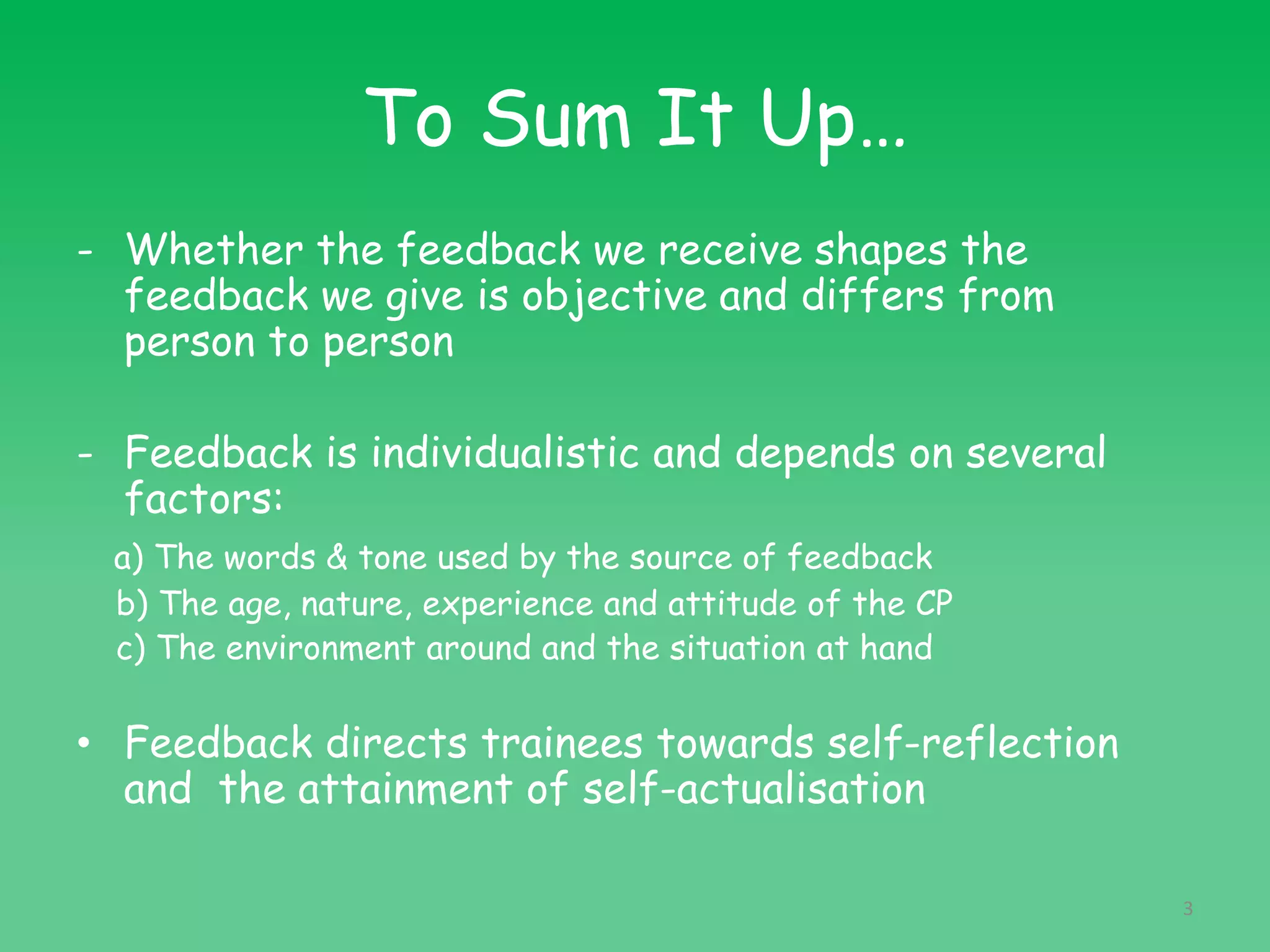
To Sum It Up…
- Whether the feedback we receive shapes the
feedback we give is objective and differs from
person to person
- Feedback is individualistic and depends on several
factors:
a) The words & tone used by the source of feedback
b) The age, nature, experience and attitude of the CP
c) The environment around and the situation at hand
• Feedback directs trainees towards self-reflection
and the attainment of self-actualisation
3
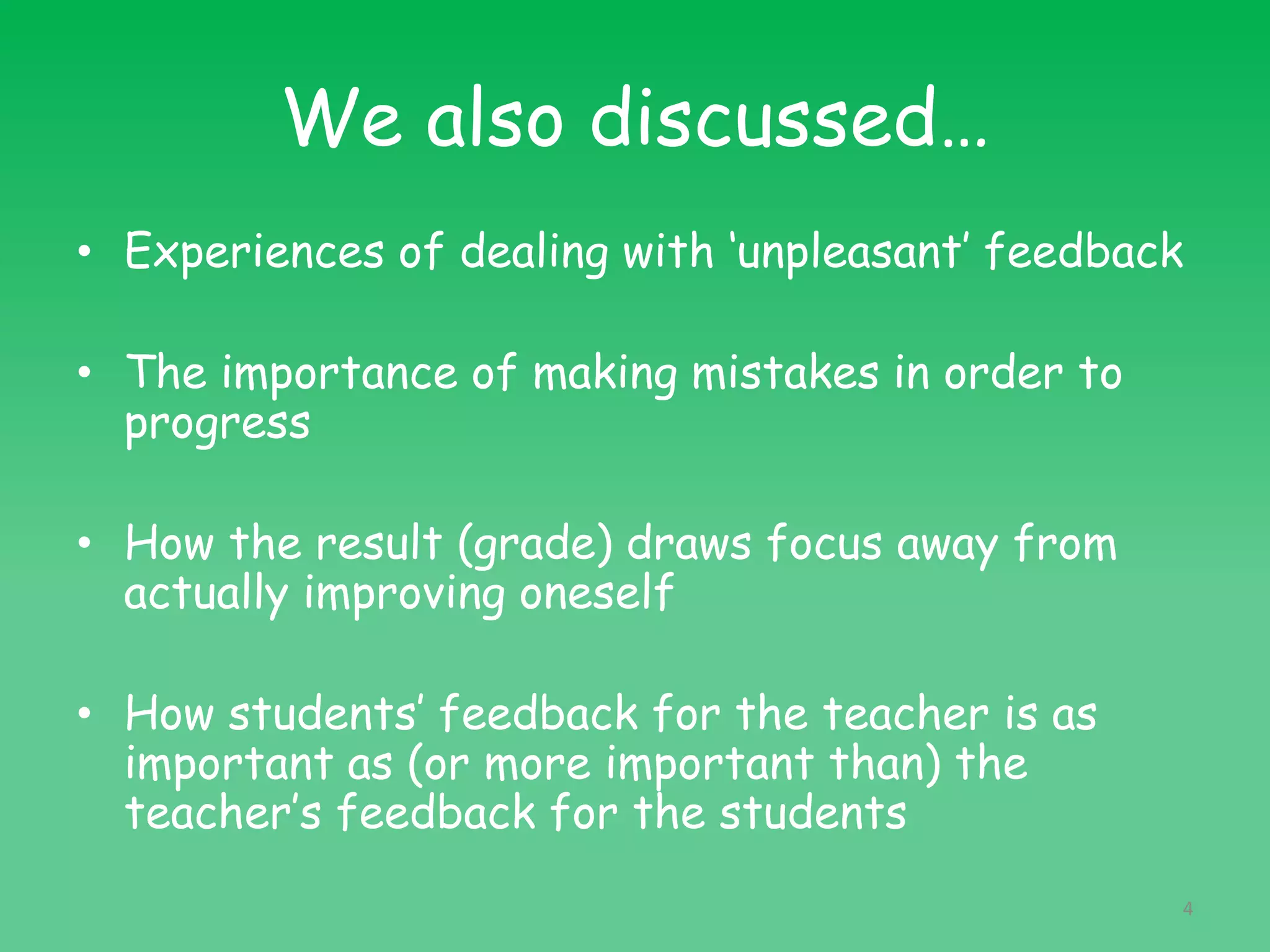
We also discussed…
• Experiences of dealing with ‘unpleasant’ feedback
• The importance of making mistakes in order to
progress
• How the result (grade) draws focus away from
actually improving oneself
• How students’ feedback for the teacher is as
important as (or more important than) the
teacher’s feedback for the students
4
We also discussed…
• How CELTA/DELTA/CISELT etc. helped CPs
understand feedback better
• The importance of perspective in giving and
receiving feedback
• How essential it is to focus on developing
strengths while attempting to eliminate
weaknesses
5
6

Summary of feedback

  • 1.
  • 2.
    To Sum ItUp… - Feedback is a continuous process & an important ingredient of success - Unhelpful feedback could lead to demotivation and impede learning - Constructive feedback when taken in the right spirit can foster growth and development of the individual - The ‘Sandwich approach’ and ‘Start-Stop-Start method’ are usually adopted for giving feedback 2
  • 3.
    To Sum ItUp… - Whether the feedback we receive shapes the feedback we give is objective and differs from person to person - Feedback is individualistic and depends on several factors: a) The words & tone used by the source of feedback b) The age, nature, experience and attitude of the CP c) The environment around and the situation at hand • Feedback directs trainees towards self-reflection and the attainment of self-actualisation 3
  • 4.
    We also discussed… •Experiences of dealing with ‘unpleasant’ feedback • The importance of making mistakes in order to progress • How the result (grade) draws focus away from actually improving oneself • How students’ feedback for the teacher is as important as (or more important than) the teacher’s feedback for the students 4
  • 5.
    We also discussed… •How CELTA/DELTA/CISELT etc. helped CPs understand feedback better • The importance of perspective in giving and receiving feedback • How essential it is to focus on developing strengths while attempting to eliminate weaknesses 5
  • 6.