
Recombinant DNA Technology
Dr Zahid Azeem
Department of Biochemitry
AJK Medical College, Muzaffarabad
Recombinant DNA Technology
Recombinant DNA technology procedures by which
DNA from different species can be isolated, cut and
spliced together -- new "recombinant " molecules are
then multiplied in quantity in populations of rapidly
dividing cells (e.g. bacteria, yeast).
Recombinant DNA Technology
The term gene cloning, recombinant DNA technology
and genetic engineering may seems similar, however
they are different techniques in Biotechnology and
they are interrelated
Recombinant DNA Technology
In the early 1970s it became possible to isolate a
specific piece of DNA out of the millions of base pairs
in a typical genome.
Recombinant DNA Technology
Currently it is relatively easy to cut out a specific
piece of DNA, produce a large number of copies ,
determine its nucleotide sequence, slightly alter it
and then as a final step transfer it back into cell in.
Recombinant DNA Technology
DNA molecules are digested with enzymes called
restriction endonucleases which reduces the size of
the fragments  Renders them more manageable for
cloning purposes
Recombinant DNA Technology
These products of digestion are inserted into a DNA
molecule called a vector  Enables desired fragment
to be replicated in cell culture to very high levels in a
given cell.
Recombinant DNA Technology
3. Introduction of recombinant DNA molecule into an
appropriate host cell
Transformation
Each cell receiving rDNA = CLONE
May have thousands of copies of rDNA molecules/cell after
DNA replication
As host cell divides, rDNA partitioned into daughter cells
Restriction Endonucleases
Endonuclease : Sequence specific nuclease that brak
the nucleic acid chains some where in the interior
rather than atb the ends of the molecules
Econuclease : Nuclease that remove the nucleotides
from the ends of the molecules
Origin and function
Bacterial origin = enzymes that cleave foreign
DNA
Named after the organism from which they were
derived
EcoRI from Escherichia coli
BamHI from Bacillus amyloliquefaciens
Protect bacteria from bacteriophage infection
Restricts viral replication
Bacterium protects it’s own DNA by methylating
those specific sequence motifs
B. Classes
Type I & III
- Cuts the DNA on both strands but at a non-specific
location at varying distances from the particular
sequence that is
 I : cleave the DNA at site located at 100 bp from
the recognition site
 III : at about 24 bp
recognized by the restriction enzyme
- Therefore random/imprecise cuts
- Not very useful for rDNA applications
Type II
- Cuts both strands of DNA within the particular
sequence restriction site )) recognized by the
restriction enzyme
- Used widely for molecular biology procedures
- DNA sequence = symmetrical
Reads the
same in the
5’ 3’
direction on
both
strands =
Palindromic
Sequence
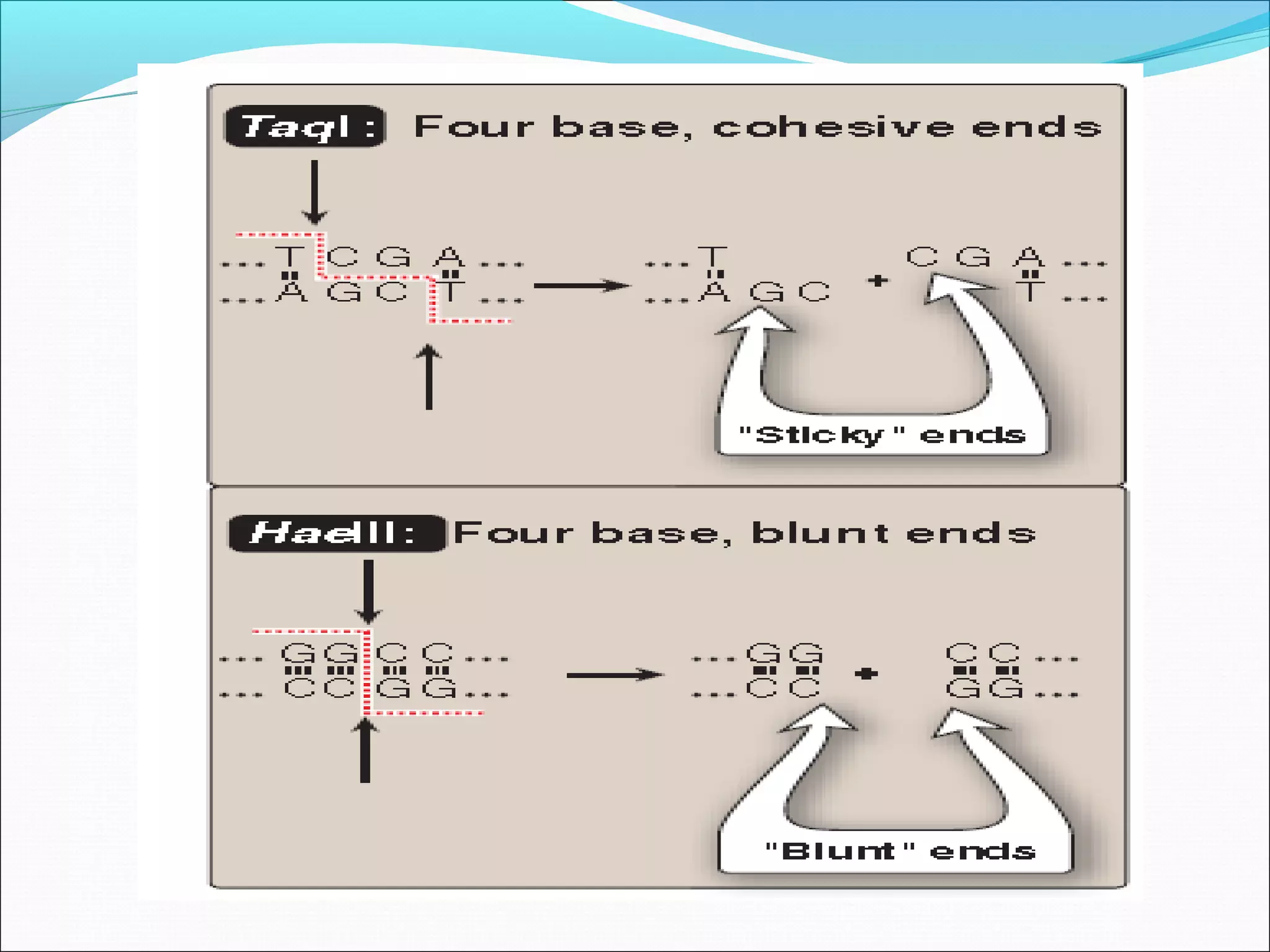
Some enzymes generate “blunt ends” (cut in
middle)
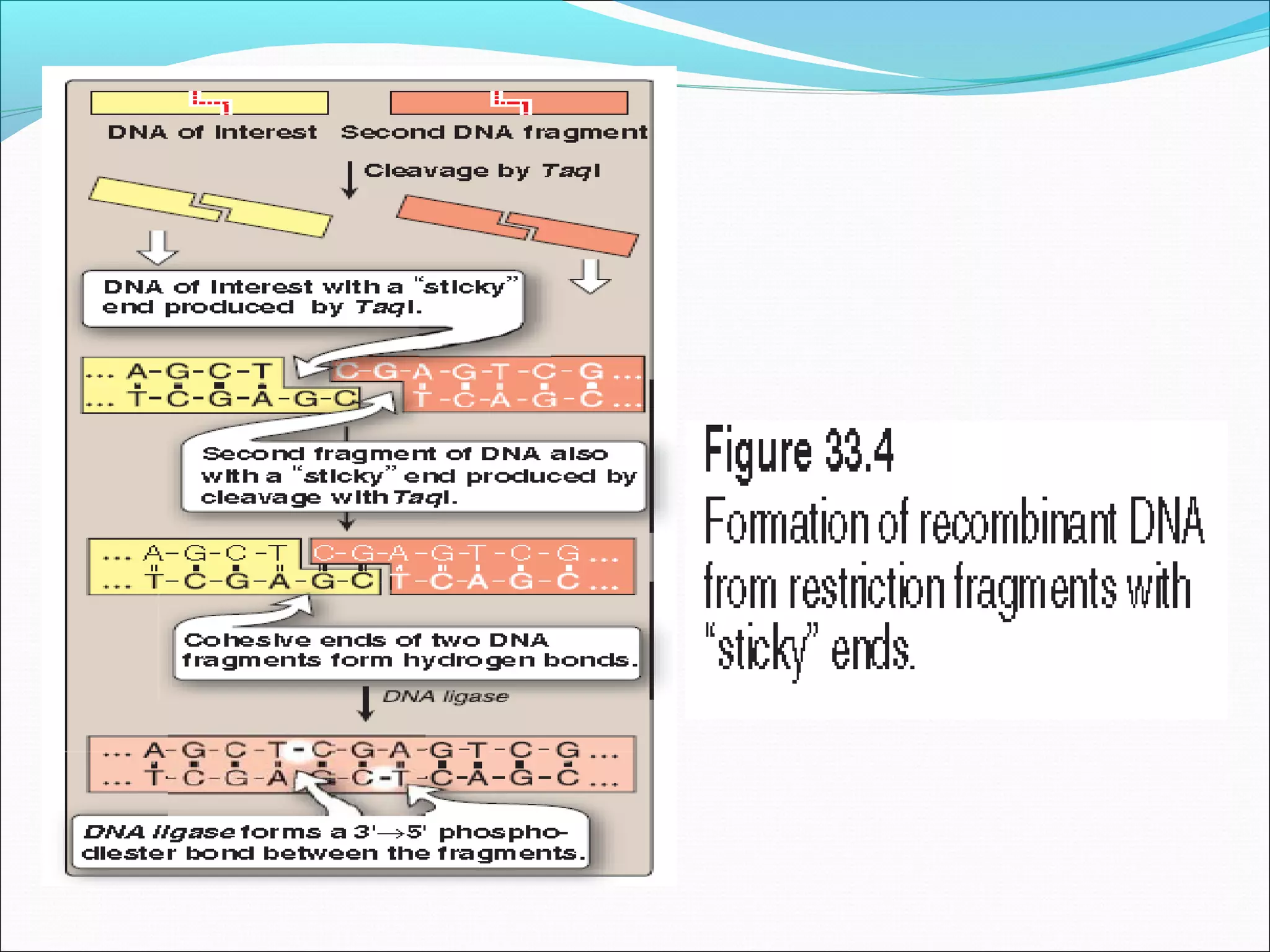
Others generate “sticky ends” (staggered cuts)
 H-bonding possible with complementary tails
 DNA ligase covalently links the two fragments together by
forming phosphodiester bonds of the phosphate-sugar
backbones
Restriction Enzymes
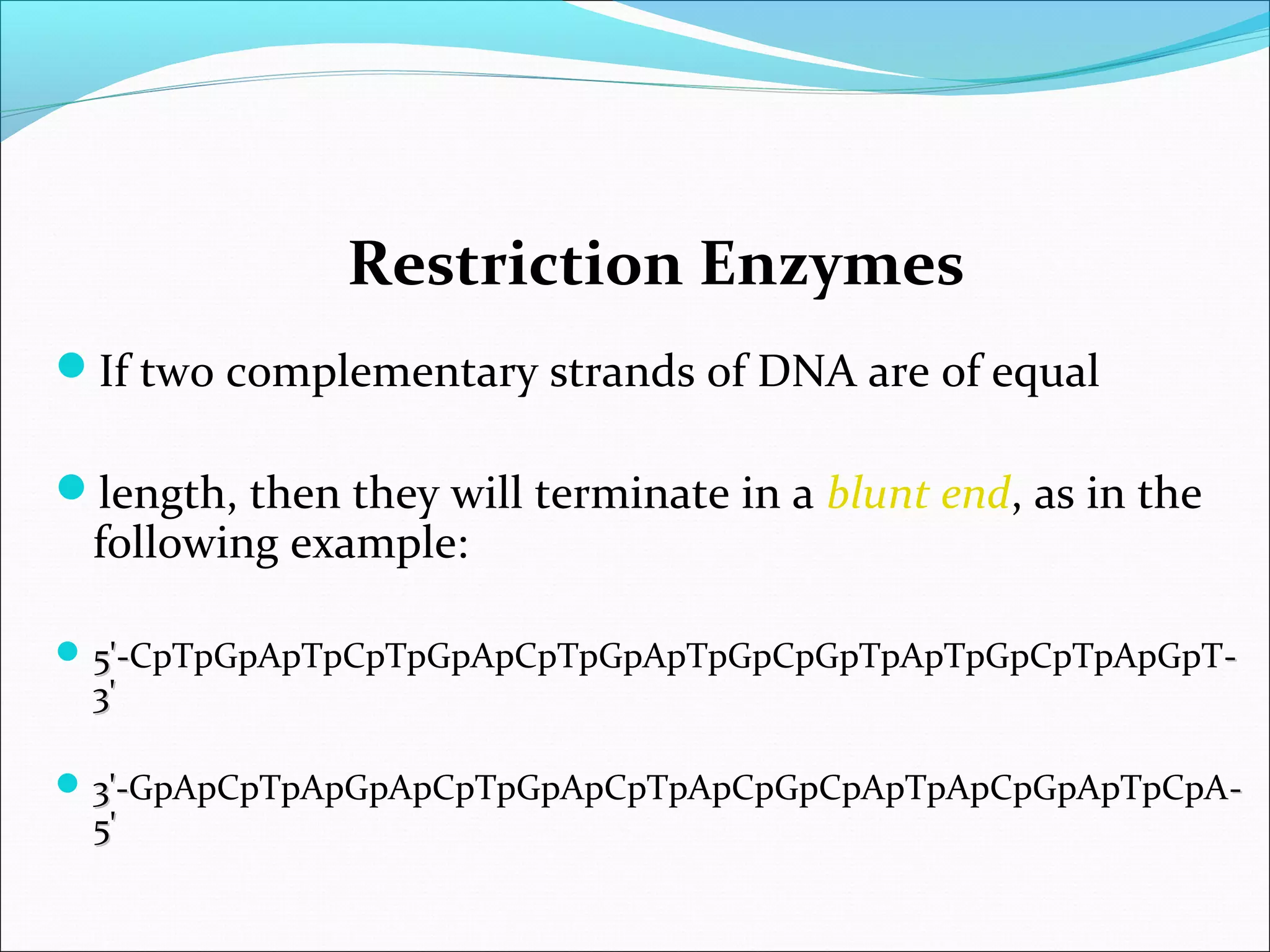
If two complementary strands of DNA are of equal
length, then they will terminate in a blunt end, as in the
following example:
 5'-5'-CpTpGpApTpCpTpGpApCpTpGpApTpGpCpGpTpApTpGpCpTpApGpT--
3'3'
 3'-3'-GpApCpTpApGpApCpTpGpApCpTpApCpGpCpApTpApCpGpApTpCpA--
5'5'
Restriction Enzymes
However, if one strand extends beyond the
complementary region, then the DNA is said to possess
an overhang:
5'-5'-ApTpCpTpGpApCpT-3'-3'
3'-3'-TpApGpApCpTpGpApCpTpApCpG-5'-5'
Restriction Enzymes
If another DNA fragment exists with a complementary
overhang, then these two overhangs will tend to
associate with each other and each strand is said to
possess a sticky end:
Restriction Enzymes
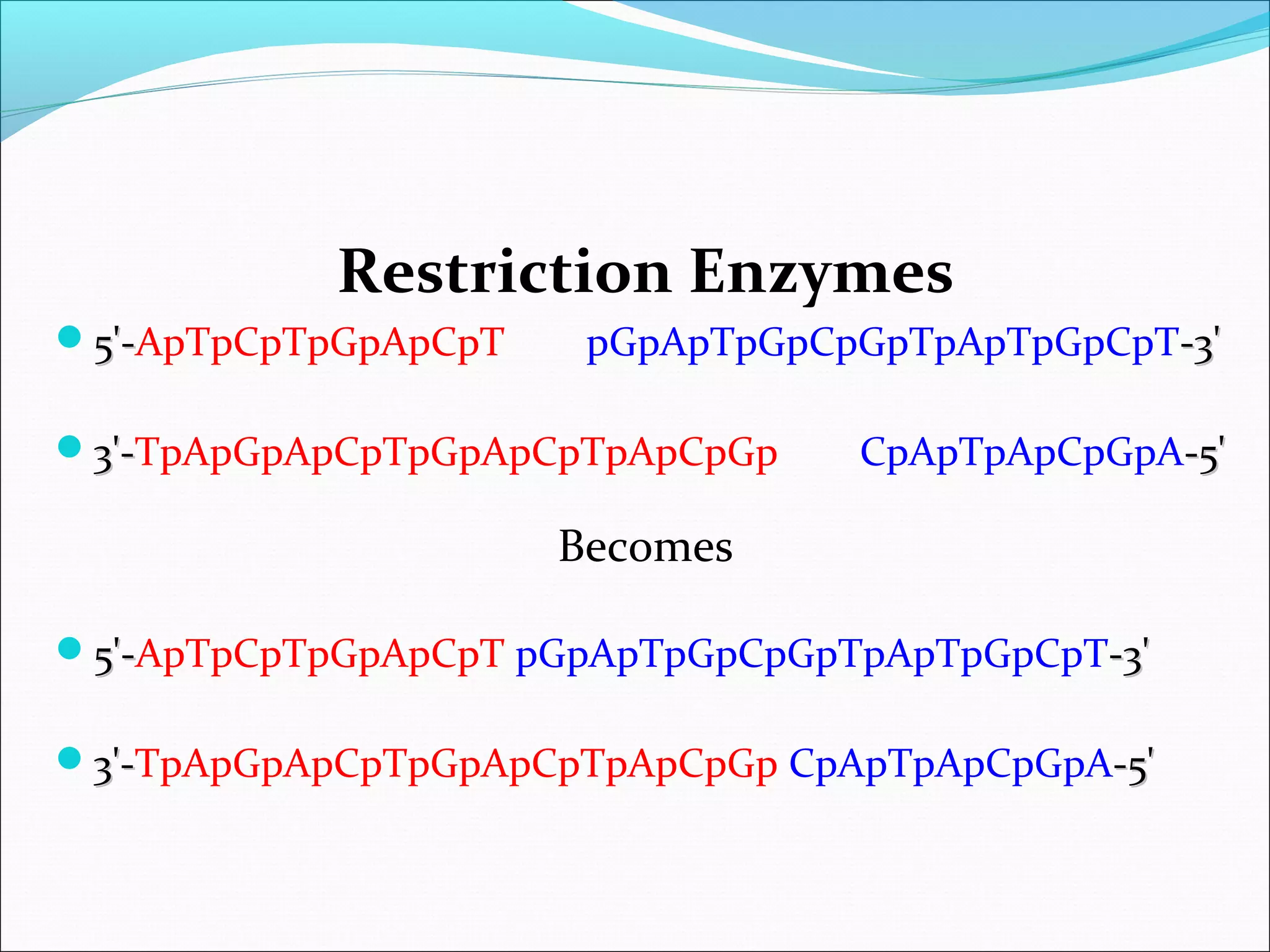
5'-5'-ApTpCpTpGpApCpT pGpApTpGpCpGpTpApTpGpCpT-3'-3'
3'-3'-TpApGpApCpTpGpApCpTpApCpGp CpApTpApCpGpA-5'-5'
Becomes
5'-5'-ApTpCpTpGpApCpT pGpApTpGpCpGpTpApTpGpCpT-3'-3'
3'-3'-TpApGpApCpTpGpApCpTpApCpGp CpApTpApCpGpA-5'-5'
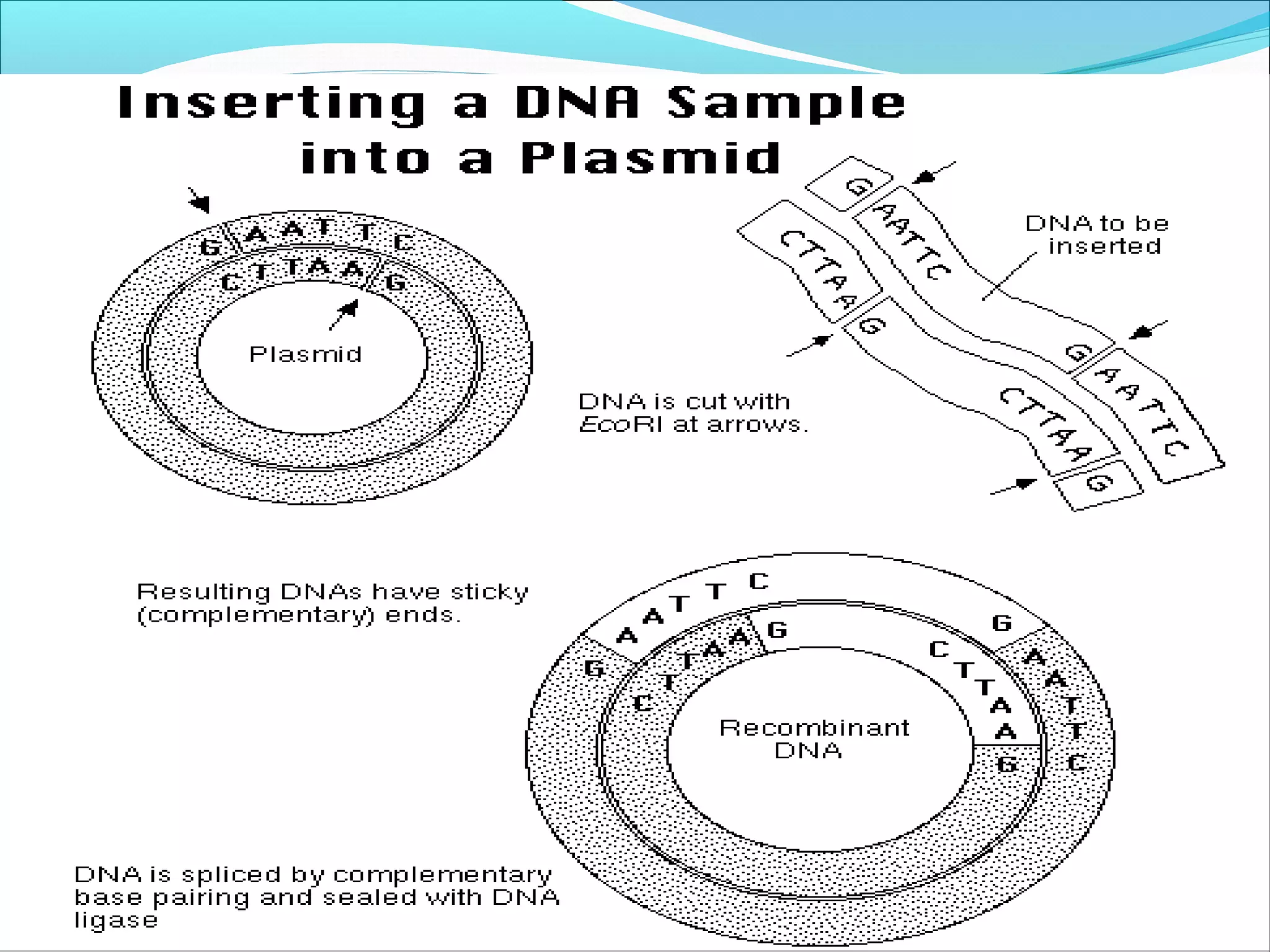
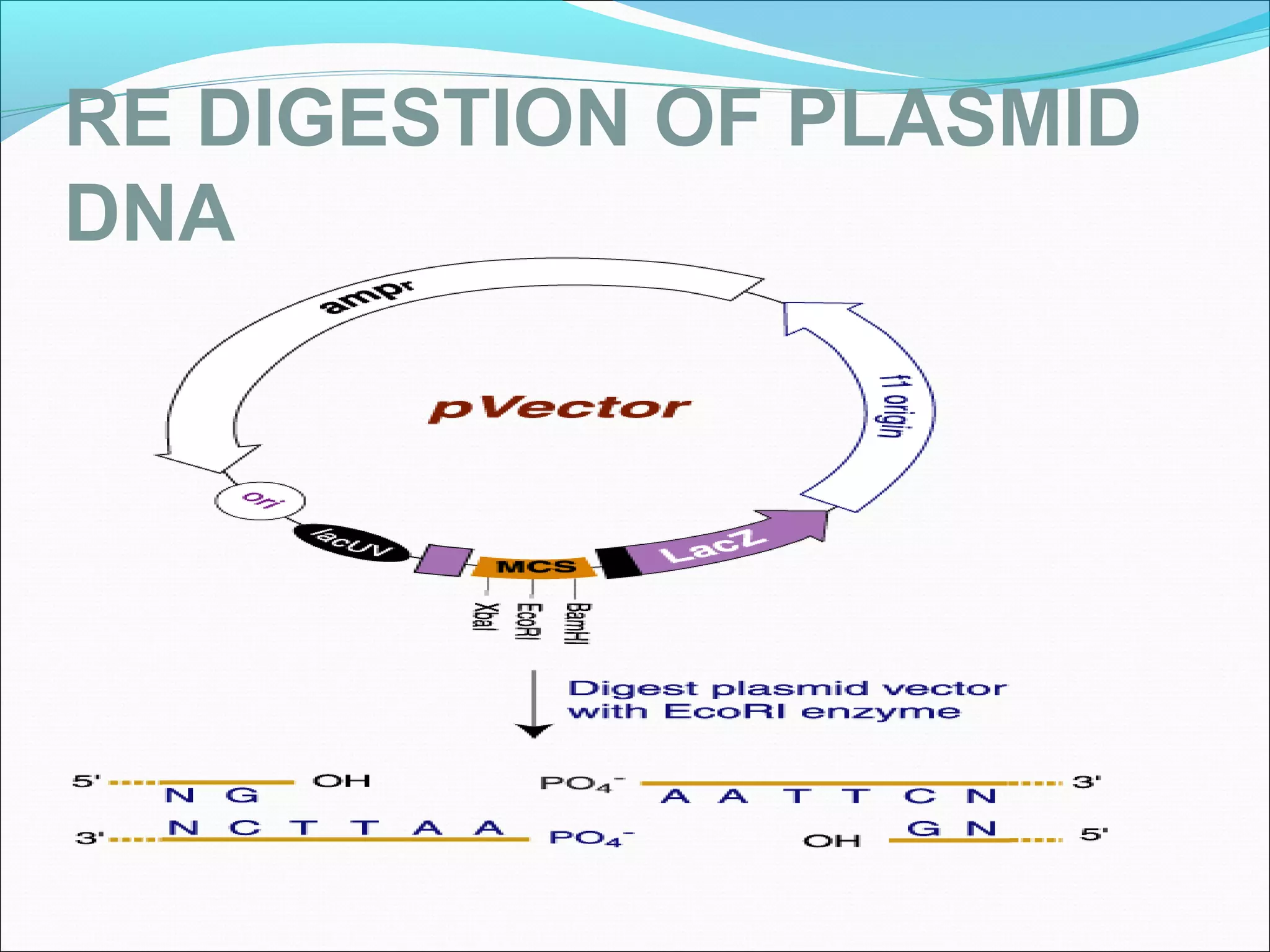
Digestion of DNA by EcoRI to produce cohesive
ends ( Fig. 3.1):
Creating recombinant DNA :
The first Recombinant DNA molecules were made by
Paul Berg at Stanford University in 1972.
In 1973 Herbert Boyer and Stanley Cohen created the
first recombinant DNA organisms.
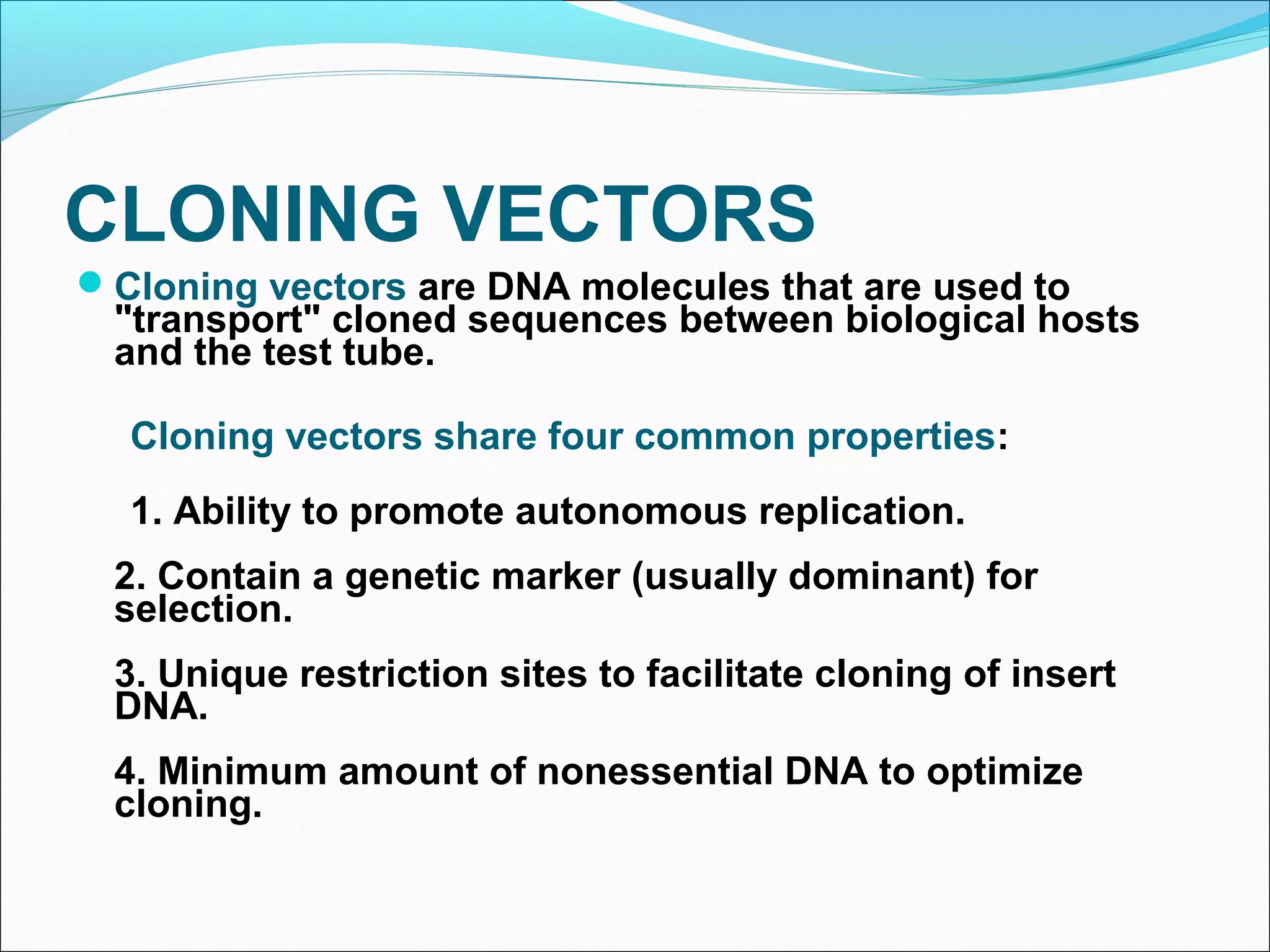
CLONING VECTORS
Cloning vectors are DNA molecules that are used to
"transport" cloned sequences between biological hosts
and the test tube.
Cloning vectors share four common properties:
1. Ability to promote autonomous replication.
2. Contain a genetic marker (usually dominant) for
selection.
3. Unique restriction sites to facilitate cloning of insert
DNA.
4. Minimum amount of nonessential DNA to optimize
cloning.
Vectors for Gene Cloning
The choice of a vector depends on the design of the
experimental system and how the cloned gene will be
screened or utilized subsequently
Most vectors contain a prokaryotic origin of
replication allowing maintenance in bacterial cells.
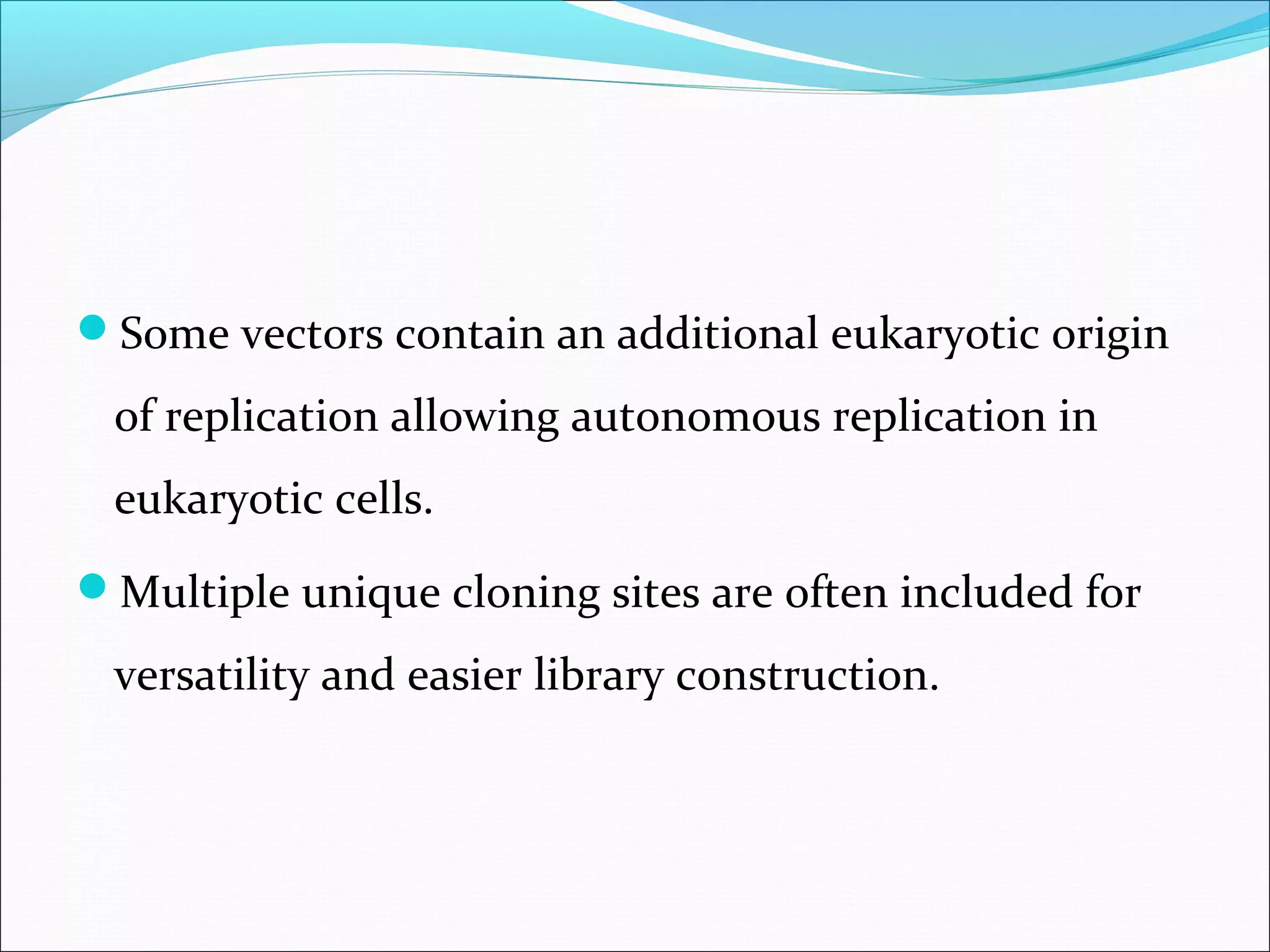
Some vectors contain an additional eukaryotic origin
of replication allowing autonomous replication in
eukaryotic cells.
Multiple unique cloning sites are often included for
versatility and easier library construction.
Plasmid vectors are ≈1.2–3kb
and contain:
replication origin (ORI)
sequence
a gene that permits selection,
Here the selective gene is
ampr; it encodes the enzyme
b-lactamase, which
inactivates ampicillin.
Recombinant DNA Technology
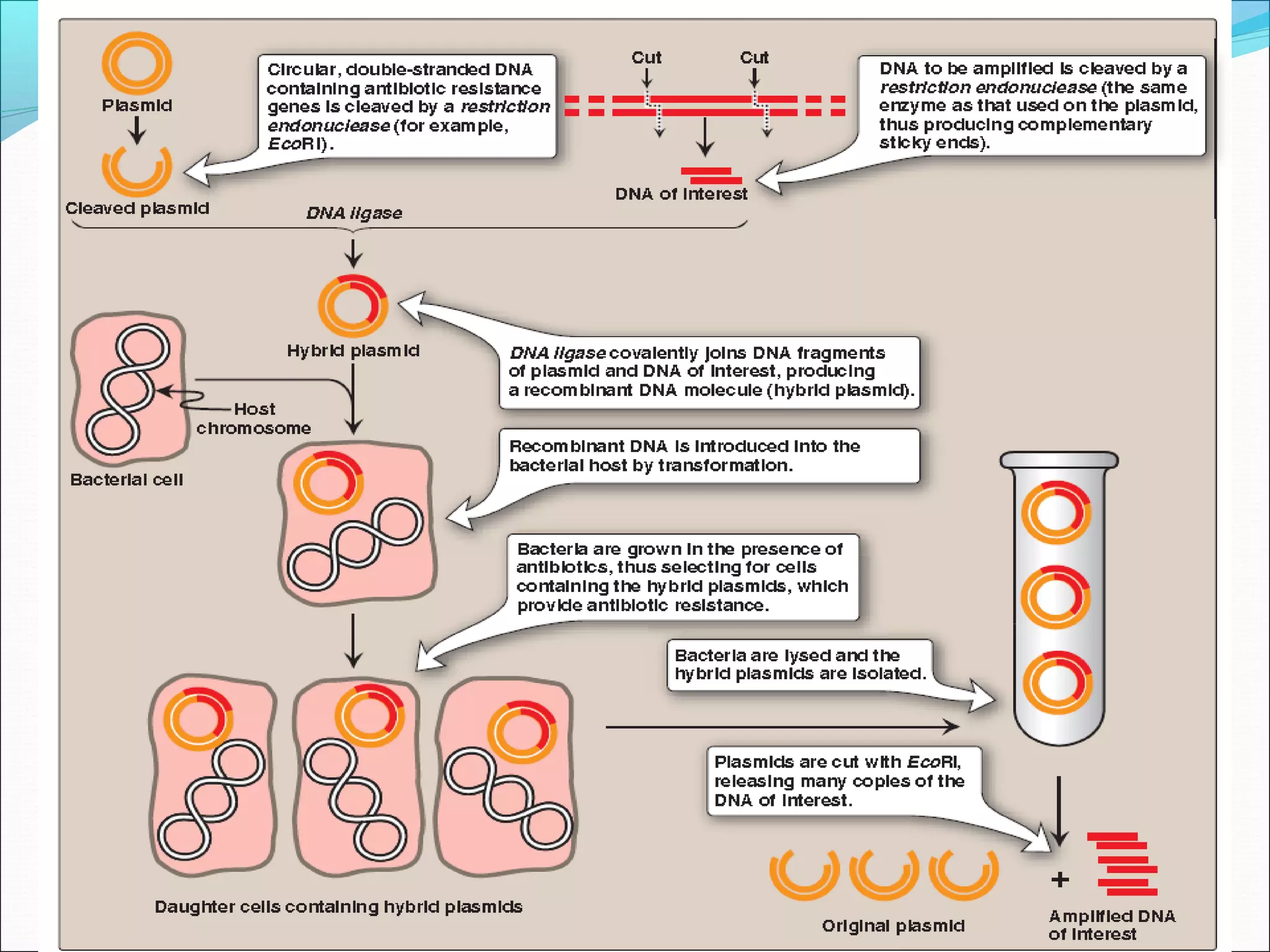
Creating Recombinant DNA (Fig 3.2):
Transformation and Antibiotic Selection
Transformation is the genetic alteration of a cell
resulting from the introduction, uptake and
expression of foreign DNA.
Transformation and Antibiotic Selection
There are more aggressive techniques for inserting
foreign DNA into eukaryotic cells. For example,
through electroporation.
Electroporation involves applying a brief
(milliseconds) pulse high voltage electricity to create
tiny holes in the bacterial cell wall that allows DNA to
enter.
Plasmids and Antibiotic resistance
Plasmids were discovered in the late sixties, and it
was quickly realized that they could be used to
amplify a gene of interest.
A plasmid containing resistance to an antibiotic
(usually ampicillin) or Tetracycline, is used as a
vector.
The gene of interest (resistant to Ampicillin) is
inserted into the vector plasmid and this newly
constructed plasmid is then put into E. coli that is
sensitive to ampicillin.
The bacteria are then spread over a plate that
contains ampicillin.
Plasmids and Antibiotic resistance
The ampicillin provides a selective pressure because
only bacteria that have acquired the plasmid can grow
on the plate.
Those bacteria which do not acquire the plasmid with
the inserted gene of interest will die.
Plasmids and Antibiotic resistance
As long as the bacteria grow in ampicillin, it will need
the plasmid to survive and it will continually replicate
it, along with the gene of interest that has been
inserted to the plasmid .
Human Gene cloning
Once inside a bacterium, the plasmid containing the
human cDNA can multiply to yield several dozen
replicas.
Examples
- pBR322
 - One of the original plasmids used
 - Two selectable markers (Amp and Tet resistance)
 - Several unique restriction sites scattered throughout
plasmid (some lie within antibiotic resistance genes = means
of screening for inserts)
 - ColE1 ORI
- pUC18
 - Derivative of pBR322
 - Advantages over pBR322:
 - Smaller – so can accommodate larger DNA fragments
during cloning (5-10kbp)
 - Higher copy # per cell (500 per cell = 5-10x more than
pBR322)
 - Multiple cloning sites clustered in same location =
“polylinker”
RE DIGESTION OF PLASMID
DNA
LIGATION OF DNA SAMPLE AND
PLASMID DNA
Polymerase Chain Reaction
In vivo
(Cloning)
In vitro
(PCR)
DNA amplification
DEFINITION
Amplification means making multiple identical copies
(replicates) of a DNA sequence.
 Why Polymerase?
 It is called “polymerase” because the only
enzyme used in this reaction is DNA
polymerase.
 Why Chain reaction?
 It is called “chain” because the products of the
first reaction become substrates of the
following one, and so on.
Method first proposed by H. G. Khorana & colleagues in 1970’s.
 15 years later the idea was independently conceived by
Karry Mullis in 1983.
 In 1989, Science magazine selected PCR as the major
scientific development and Taq DNA polymerase as the
molecule of the year.
 Karry Mullis was awarded the Noble prize for chemistry in
1993.
HISTORICAL BACKGROUND
An in vitro method for enzymatically synthesizing
defined sequences of DNA
The technique has been a revolution in molecular
biology and now is so pervasive that it is difficult to
imagine life without it.
The problem of insufficient DNA is no longer a
problem in molecular biology research or DNA-based
diagnostics.
INTRODUCTION
It’s a means of selectively amplifying a particular
segment of DNA.
The segment may represent a small part of a large
and complex mixture of DNAs:
e.g. a specific exon of a human gene.
It can be thought of as a molecular photocopier.
WHAT IS POLYMERASE CHAIN REACTION
Essential components required:
 Template DNA
 A thermostable DNA polymerase
 A pair of synthetic oligonucleotide primers.
 Divalent cations (Mg 2+
)
 dNTPs
 Buffer to maintain pH
The Basic PCR reaction
 PCR uses the enzyme DNA polymerase that directs the
synthesis of DNA from deoxynucleotide substrates on a
single-stranded DNA template
 A wide range of thermostable polymerases are available,
which vary in their fidelity, efficiency and ability to
synthesize large DNA products.
 Taq polymerase isolated from Thermus aquaticus is the
first isolated and best known enzyme.
Thermostable DNA polymerase
Taq polymerase
Source Thermus aquaticus
Activity 5’ – 3’ polymerase activity,
but lacks 3’ – 5’ exonuclease activity
(no proofreading)
Stability Half life of <5 min at 100°C, but
retains activity up to 40 min at 95°C
When greater fidelity is required, other thermostable
enzymes may have significant advantages.
 Various types
• Single or double stranded DNA
• Genomic, cloned, bacterial, viral
• RNA/cDNA
 Closed circular DNA templates are amplified
slightly less efficiently than linear ones.
 Amplification depends on the number of copies
of the target DNA seeded into the reaction.
Template DNA
Needs a pre-existing DNA to duplicate
Cannot assemble a new strand from
components
Called template DNA
Can only extend an existing piece of DNA
Called primers
Properties of DNA polymerase
3’ 5’
5’ 3’
• A pair of synthetic primers is required to prime DNA
synthesis. A forward and a reverse primer.
• Primers anneal to the flanking regions by complementary-
base pairing (G=C and A=T) using hydrogen bonding.
• The most crucial factor in PCR is the design of the
oligonucleotide primers. Careful design of primers is
required to,
 Obtain desired products in high yields.
 Suppress amplification of unwanted sequences.
 Facilitate subsequent manipulation of the amplified
product.
Oligonucleotide primers
Computer assisted design of oligonucleotide
primers
Many computer programs are available that generate
potentially specific primers whose melting
temperatures have been calculated.
• GeneFisher Interactive Primer Design Tool
• OligoAnalyzer
• Oligocalc
• PCR Optimization Program Helper
• Webprimer
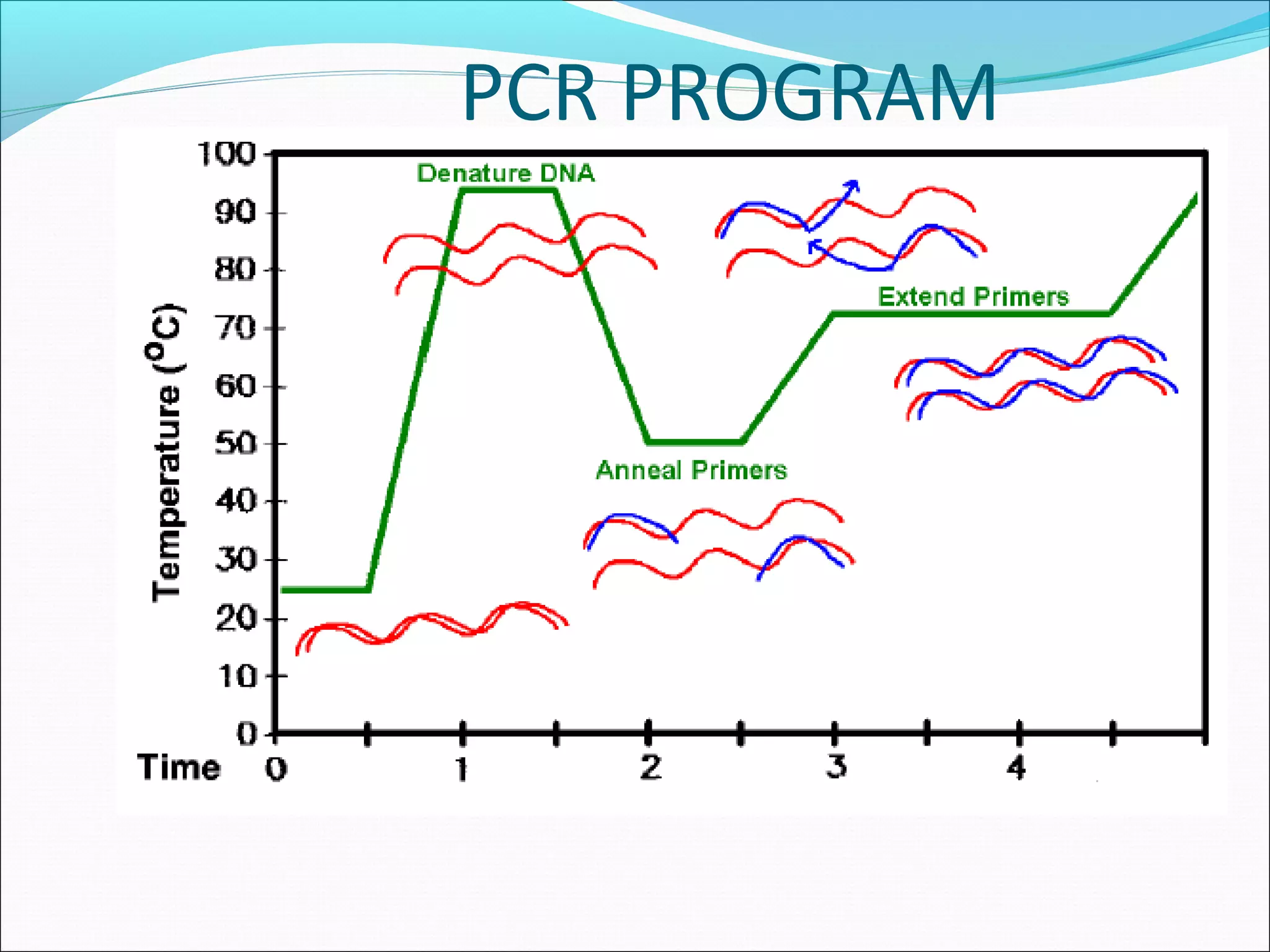
The PCR usually consists of a series of 30 to 35 cycles. Most commonly,
PCR is carried out in three steps, often preceded by one temperature
hold at the start and followed by one hold at the end. A typical PCR
cycle has following steps
Denaturation (94-95°C, for ~ 30 s)
The template is denatured by heat
Annealing (55-60°C, for ~ 30 s)
Annealing of oligonucleotide primers to single stranded target
sequences
Elongation (72°C)
Extension of annealed primers by a thermostable polymerase
Programming PCR reactions
PCR PROGRAM
Minute amounts of DNA template may be used from as little
as a single cell.
DNA degraded to fragments only a few hundred base pairs in
length can serve as effective templates for amplification.
Large numbers of copies of specific DNA sequences can be
amplified simultaneously with multiplex PCR reactions.
Contaminant DNA, such as fungal and bacterial sources, will
not amplify because human-specific primers are used.
Commercial kits are now available for easy PCR reaction
setup and amplification.
Advantages of PCR
 Generation of probes
 Generation of cDNA libraries
 Production of DNA for sequencing
 Analysis of mutations
 Diagnosis of monogenic diseases (single gene disorders)
 PCR use in Pre-implantation Genetic Diagnosis (PGD).
 PCR in forensic science
 Comparison of gene expression
 Cloning novel members of protein families using
homology PCR
 Detection of bacteria and viruses
Applications of PCR
The speedspeed and easeease of use, sensitivitysensitivity, specificityspecificity and robustnessrobustness
of PCR has revolutionised molecular biology and made PCR the
most widely used and powerful technique with great spectrum of
research and diagnostic applications.
It enables the scientist to quickly replicate DNA and RNA on the
benchtop.
PCR and its related applications are rapid and convenient
alternatives to traditional methods such as southern / northern
blotting and molecular cloning.
Conclusion….
THE END

Recombination Technology

  • 1.
    Recombinant DNA Technology DrZahid Azeem Department of Biochemitry AJK Medical College, Muzaffarabad
  • 2.
    Recombinant DNA Technology RecombinantDNA technology procedures by which DNA from different species can be isolated, cut and spliced together -- new "recombinant " molecules are then multiplied in quantity in populations of rapidly dividing cells (e.g. bacteria, yeast).
  • 3.
    Recombinant DNA Technology Theterm gene cloning, recombinant DNA technology and genetic engineering may seems similar, however they are different techniques in Biotechnology and they are interrelated
  • 4.
    Recombinant DNA Technology Inthe early 1970s it became possible to isolate a specific piece of DNA out of the millions of base pairs in a typical genome.
  • 5.
    Recombinant DNA Technology Currentlyit is relatively easy to cut out a specific piece of DNA, produce a large number of copies , determine its nucleotide sequence, slightly alter it and then as a final step transfer it back into cell in.
  • 6.
    Recombinant DNA Technology DNAmolecules are digested with enzymes called restriction endonucleases which reduces the size of the fragments  Renders them more manageable for cloning purposes
  • 7.
    Recombinant DNA Technology Theseproducts of digestion are inserted into a DNA molecule called a vector  Enables desired fragment to be replicated in cell culture to very high levels in a given cell.
  • 8.
    Recombinant DNA Technology 3.Introduction of recombinant DNA molecule into an appropriate host cell Transformation Each cell receiving rDNA = CLONE May have thousands of copies of rDNA molecules/cell after DNA replication As host cell divides, rDNA partitioned into daughter cells
  • 9.
    Restriction Endonucleases Endonuclease :Sequence specific nuclease that brak the nucleic acid chains some where in the interior rather than atb the ends of the molecules Econuclease : Nuclease that remove the nucleotides from the ends of the molecules
  • 10.
    Origin and function Bacterialorigin = enzymes that cleave foreign DNA Named after the organism from which they were derived EcoRI from Escherichia coli BamHI from Bacillus amyloliquefaciens Protect bacteria from bacteriophage infection Restricts viral replication Bacterium protects it’s own DNA by methylating those specific sequence motifs
  • 11.
    B. Classes Type I& III - Cuts the DNA on both strands but at a non-specific location at varying distances from the particular sequence that is  I : cleave the DNA at site located at 100 bp from the recognition site  III : at about 24 bp recognized by the restriction enzyme - Therefore random/imprecise cuts - Not very useful for rDNA applications
  • 12.
    Type II - Cutsboth strands of DNA within the particular sequence restriction site )) recognized by the restriction enzyme - Used widely for molecular biology procedures - DNA sequence = symmetrical
  • 13.
    Reads the same inthe 5’ 3’ direction on both strands = Palindromic Sequence
  • 14.
    Some enzymes generate“blunt ends” (cut in middle) Others generate “sticky ends” (staggered cuts)  H-bonding possible with complementary tails  DNA ligase covalently links the two fragments together by forming phosphodiester bonds of the phosphate-sugar backbones
  • 16.
    Restriction Enzymes If twocomplementary strands of DNA are of equal length, then they will terminate in a blunt end, as in the following example:  5'-5'-CpTpGpApTpCpTpGpApCpTpGpApTpGpCpGpTpApTpGpCpTpApGpT-- 3'3'  3'-3'-GpApCpTpApGpApCpTpGpApCpTpApCpGpCpApTpApCpGpApTpCpA-- 5'5'
  • 17.
    Restriction Enzymes However, ifone strand extends beyond the complementary region, then the DNA is said to possess an overhang: 5'-5'-ApTpCpTpGpApCpT-3'-3' 3'-3'-TpApGpApCpTpGpApCpTpApCpG-5'-5'
  • 18.
    Restriction Enzymes If anotherDNA fragment exists with a complementary overhang, then these two overhangs will tend to associate with each other and each strand is said to possess a sticky end:
  • 19.
    Restriction Enzymes 5'-5'-ApTpCpTpGpApCpT pGpApTpGpCpGpTpApTpGpCpT-3'-3' 3'-3'-TpApGpApCpTpGpApCpTpApCpGpCpApTpApCpGpA-5'-5' Becomes 5'-5'-ApTpCpTpGpApCpT pGpApTpGpCpGpTpApTpGpCpT-3'-3' 3'-3'-TpApGpApCpTpGpApCpTpApCpGp CpApTpApCpGpA-5'-5'
  • 20.
    Digestion of DNAby EcoRI to produce cohesive ends ( Fig. 3.1):
  • 21.
    Creating recombinant DNA: The first Recombinant DNA molecules were made by Paul Berg at Stanford University in 1972. In 1973 Herbert Boyer and Stanley Cohen created the first recombinant DNA organisms.
  • 23.
    CLONING VECTORS Cloning vectorsare DNA molecules that are used to "transport" cloned sequences between biological hosts and the test tube. Cloning vectors share four common properties: 1. Ability to promote autonomous replication. 2. Contain a genetic marker (usually dominant) for selection. 3. Unique restriction sites to facilitate cloning of insert DNA. 4. Minimum amount of nonessential DNA to optimize cloning.
  • 24.
    Vectors for GeneCloning The choice of a vector depends on the design of the experimental system and how the cloned gene will be screened or utilized subsequently Most vectors contain a prokaryotic origin of replication allowing maintenance in bacterial cells.
  • 25.
    Some vectors containan additional eukaryotic origin of replication allowing autonomous replication in eukaryotic cells. Multiple unique cloning sites are often included for versatility and easier library construction.
  • 26.
    Plasmid vectors are≈1.2–3kb and contain: replication origin (ORI) sequence a gene that permits selection, Here the selective gene is ampr; it encodes the enzyme b-lactamase, which inactivates ampicillin.
  • 28.
    Recombinant DNA Technology CreatingRecombinant DNA (Fig 3.2):
  • 30.
    Transformation and AntibioticSelection Transformation is the genetic alteration of a cell resulting from the introduction, uptake and expression of foreign DNA.
  • 31.
    Transformation and AntibioticSelection There are more aggressive techniques for inserting foreign DNA into eukaryotic cells. For example, through electroporation. Electroporation involves applying a brief (milliseconds) pulse high voltage electricity to create tiny holes in the bacterial cell wall that allows DNA to enter.
  • 32.
    Plasmids and Antibioticresistance Plasmids were discovered in the late sixties, and it was quickly realized that they could be used to amplify a gene of interest. A plasmid containing resistance to an antibiotic (usually ampicillin) or Tetracycline, is used as a vector.
  • 33.
    The gene ofinterest (resistant to Ampicillin) is inserted into the vector plasmid and this newly constructed plasmid is then put into E. coli that is sensitive to ampicillin. The bacteria are then spread over a plate that contains ampicillin.
  • 34.
    Plasmids and Antibioticresistance The ampicillin provides a selective pressure because only bacteria that have acquired the plasmid can grow on the plate. Those bacteria which do not acquire the plasmid with the inserted gene of interest will die.
  • 35.
    Plasmids and Antibioticresistance As long as the bacteria grow in ampicillin, it will need the plasmid to survive and it will continually replicate it, along with the gene of interest that has been inserted to the plasmid .
  • 36.
    Human Gene cloning Onceinside a bacterium, the plasmid containing the human cDNA can multiply to yield several dozen replicas.
  • 37.
    Examples - pBR322  -One of the original plasmids used  - Two selectable markers (Amp and Tet resistance)  - Several unique restriction sites scattered throughout plasmid (some lie within antibiotic resistance genes = means of screening for inserts)  - ColE1 ORI
  • 38.
    - pUC18  -Derivative of pBR322  - Advantages over pBR322:  - Smaller – so can accommodate larger DNA fragments during cloning (5-10kbp)  - Higher copy # per cell (500 per cell = 5-10x more than pBR322)  - Multiple cloning sites clustered in same location = “polylinker”
  • 39.
    RE DIGESTION OFPLASMID DNA
  • 40.
    LIGATION OF DNASAMPLE AND PLASMID DNA
  • 41.
  • 42.
    In vivo (Cloning) In vitro (PCR) DNAamplification DEFINITION Amplification means making multiple identical copies (replicates) of a DNA sequence.
  • 43.
     Why Polymerase? It is called “polymerase” because the only enzyme used in this reaction is DNA polymerase.  Why Chain reaction?  It is called “chain” because the products of the first reaction become substrates of the following one, and so on.
  • 44.
    Method first proposedby H. G. Khorana & colleagues in 1970’s.  15 years later the idea was independently conceived by Karry Mullis in 1983.  In 1989, Science magazine selected PCR as the major scientific development and Taq DNA polymerase as the molecule of the year.  Karry Mullis was awarded the Noble prize for chemistry in 1993. HISTORICAL BACKGROUND
  • 45.
    An in vitromethod for enzymatically synthesizing defined sequences of DNA The technique has been a revolution in molecular biology and now is so pervasive that it is difficult to imagine life without it. The problem of insufficient DNA is no longer a problem in molecular biology research or DNA-based diagnostics. INTRODUCTION
  • 46.
    It’s a meansof selectively amplifying a particular segment of DNA. The segment may represent a small part of a large and complex mixture of DNAs: e.g. a specific exon of a human gene. It can be thought of as a molecular photocopier. WHAT IS POLYMERASE CHAIN REACTION
  • 47.
    Essential components required: Template DNA  A thermostable DNA polymerase  A pair of synthetic oligonucleotide primers.  Divalent cations (Mg 2+ )  dNTPs  Buffer to maintain pH The Basic PCR reaction
  • 48.
     PCR usesthe enzyme DNA polymerase that directs the synthesis of DNA from deoxynucleotide substrates on a single-stranded DNA template  A wide range of thermostable polymerases are available, which vary in their fidelity, efficiency and ability to synthesize large DNA products.  Taq polymerase isolated from Thermus aquaticus is the first isolated and best known enzyme. Thermostable DNA polymerase
  • 49.
    Taq polymerase Source Thermusaquaticus Activity 5’ – 3’ polymerase activity, but lacks 3’ – 5’ exonuclease activity (no proofreading) Stability Half life of <5 min at 100°C, but retains activity up to 40 min at 95°C When greater fidelity is required, other thermostable enzymes may have significant advantages.
  • 50.
     Various types •Single or double stranded DNA • Genomic, cloned, bacterial, viral • RNA/cDNA  Closed circular DNA templates are amplified slightly less efficiently than linear ones.  Amplification depends on the number of copies of the target DNA seeded into the reaction. Template DNA
  • 51.
    Needs a pre-existingDNA to duplicate Cannot assemble a new strand from components Called template DNA Can only extend an existing piece of DNA Called primers Properties of DNA polymerase 3’ 5’ 5’ 3’
  • 52.
    • A pairof synthetic primers is required to prime DNA synthesis. A forward and a reverse primer. • Primers anneal to the flanking regions by complementary- base pairing (G=C and A=T) using hydrogen bonding. • The most crucial factor in PCR is the design of the oligonucleotide primers. Careful design of primers is required to,  Obtain desired products in high yields.  Suppress amplification of unwanted sequences.  Facilitate subsequent manipulation of the amplified product. Oligonucleotide primers
  • 53.
    Computer assisted designof oligonucleotide primers Many computer programs are available that generate potentially specific primers whose melting temperatures have been calculated. • GeneFisher Interactive Primer Design Tool • OligoAnalyzer • Oligocalc • PCR Optimization Program Helper • Webprimer
  • 55.
    The PCR usuallyconsists of a series of 30 to 35 cycles. Most commonly, PCR is carried out in three steps, often preceded by one temperature hold at the start and followed by one hold at the end. A typical PCR cycle has following steps Denaturation (94-95°C, for ~ 30 s) The template is denatured by heat Annealing (55-60°C, for ~ 30 s) Annealing of oligonucleotide primers to single stranded target sequences Elongation (72°C) Extension of annealed primers by a thermostable polymerase Programming PCR reactions
  • 56.
  • 57.
    Minute amounts ofDNA template may be used from as little as a single cell. DNA degraded to fragments only a few hundred base pairs in length can serve as effective templates for amplification. Large numbers of copies of specific DNA sequences can be amplified simultaneously with multiplex PCR reactions. Contaminant DNA, such as fungal and bacterial sources, will not amplify because human-specific primers are used. Commercial kits are now available for easy PCR reaction setup and amplification. Advantages of PCR
  • 58.
     Generation ofprobes  Generation of cDNA libraries  Production of DNA for sequencing  Analysis of mutations  Diagnosis of monogenic diseases (single gene disorders)  PCR use in Pre-implantation Genetic Diagnosis (PGD).  PCR in forensic science  Comparison of gene expression  Cloning novel members of protein families using homology PCR  Detection of bacteria and viruses Applications of PCR
  • 59.
    The speedspeed andeaseease of use, sensitivitysensitivity, specificityspecificity and robustnessrobustness of PCR has revolutionised molecular biology and made PCR the most widely used and powerful technique with great spectrum of research and diagnostic applications. It enables the scientist to quickly replicate DNA and RNA on the benchtop. PCR and its related applications are rapid and convenient alternatives to traditional methods such as southern / northern blotting and molecular cloning. Conclusion….
  • 60.