RAYNAUD’S PHENOMENON
Dr. Saima Mustafa(pt)
RAYNAUD’S PHENOMENON
• Raynaud’s phenomenon is a problem that causes decreased blood flow to the
fingers. In some cases, it also causes less blood flow to the ears, toes, nipples,
knees, or nose. This happens due to spasms of blood vessels in those areas. The
spasms happen in response to cold, stress, or emotional upset.
• Raynaud’s can occur on its own, known as primary form. Or it may happen along
with other diseases, known as secondary form.
• The primary form of Raynaud’s is the most common type. It often begins between
ages 15 and 25. It’s less severe than secondary Raynaud’s.
RAYNAUD’S PHENOMENON
The diseases most often linked with Raynaud’s are autoimmune or
connective tissue diseases such as:
¶ Lupus (systemic lupus erythematous) ¶ Scleroderma
¶ Rheumatoid arthritis
¶ Occlusive vascular disease, such as atherosclerosis
¶ Polymyositis ¶ Thyroid disorders ¶ Pulmonary
hypertension
WHAT CAUSES RAYNAUD’S PHENOMENON?
• The exact cause of Raynaud’s is unknown. It is possible that some blood
disorders may cause Raynaud’s by increasing the blood thickness. This may
happen due to excess platelets or red blood cells. Or special receptors in the
blood that control the narrowing of the blood vessels may be more sensitive.
WHO IS AT RISK FOR RAYNAUD’S
PHENOMENON?
• Certain factors can increase your risk of developing the condition, such as:
A connective tissue or autoimmune disease
Chemical exposure
Cigarette smoking
Injury or trauma
Repetitive actions, such as typing or use of tools that vibrate like a jack hammer
Side effects from certain medicines.
WHAT ARE THE SYMPTOMS OF RAYNAUD’S
PHENOMENON?
• Symptoms can occur a bit differently in each person. Common symptoms
include:
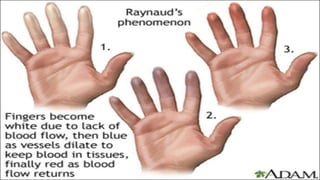
Fingers that turn pale or white then blue when exposed to cold, or during stress or
emotional upset, then red when the hands are warmed
Hands that may become swollen and painful when warmed
Sores on the finger pads develop, in severe cases
Gangrene in the fingers that causes infection or needs amputation, this is rare
HOW IS RAYNAUD’S PHENOMENON
DIAGNOSED?
• The process starts with a medical history and a physical exam. Your healthcare
provider may give you a cold challenge test. This is done to see the color
changes in the hands and fingers. During the test, your hands are exposed to
cold. Your healthcare provider may also look at the tiny blood vessels in your
fingernails with a microscope. Adults who start to have Raynaud’s phenomenon
after age 35 may be tested for an underlying disease. You may have blood tests
to see if your condition is primary or secondary.
HOW IS RAYNAUD’S PHENOMENON
TREATED?
Treatment will depend on your symptoms, your age, and your general health. It will also depend on how
severe the condition is. There is no cure for Raynaud’s phenomenon, but it can be managed with proper
treatment.
• Treatment may include:
• Avoiding exposure to cold
Keeping warm with gloves, socks, scarf, and a hat
Stopping smoking
Wearing finger guards over fingers with sores
Avoiding trauma or vibrations to the hand (such as with vibrating tools)
Taking blood pressure medicines during the winter months to help reduce constriction of the blood
vessels
WHAT ARE THE COMPLICATIONS OF
RAYNAUD’S PHENOMENON?
• In rare cases, sores on finger pads may occur. These sores may progress to
gangrene. In rare cases, gangrene may lead to finger amputation.
KEY POINTS ABOUT RAYNAUD’S
PHENOMENON
• Raynaud’s phenomenon is a disorder that causes decreased blood flow to the
fingers. In some cases, it also causes less blood flow to the ears, toes, nipples,
knees, or nose.
Spasms of blood vessels happen in response to cold, stress, or emotional upset.
Secondary causes of Raynaud’s include lupus, scleroderma, and other diseases.
Symptoms of Raynaud’s include fingers that turn pale or white then blue when
exposed to cold, or during stress or emotional upset. They then red when the
hands are warmed.
Managing Raynaud’s includes avoiding cold, dressing warmly, and stopping
smoking.
Raynauds phenomena

Raynauds phenomena

  • 1.
  • 2.
    RAYNAUD’S PHENOMENON • Raynaud’sphenomenon is a problem that causes decreased blood flow to the fingers. In some cases, it also causes less blood flow to the ears, toes, nipples, knees, or nose. This happens due to spasms of blood vessels in those areas. The spasms happen in response to cold, stress, or emotional upset. • Raynaud’s can occur on its own, known as primary form. Or it may happen along with other diseases, known as secondary form. • The primary form of Raynaud’s is the most common type. It often begins between ages 15 and 25. It’s less severe than secondary Raynaud’s.
  • 4.
    RAYNAUD’S PHENOMENON The diseasesmost often linked with Raynaud’s are autoimmune or connective tissue diseases such as: ¶ Lupus (systemic lupus erythematous) ¶ Scleroderma ¶ Rheumatoid arthritis ¶ Occlusive vascular disease, such as atherosclerosis ¶ Polymyositis ¶ Thyroid disorders ¶ Pulmonary hypertension
  • 5.
    WHAT CAUSES RAYNAUD’SPHENOMENON? • The exact cause of Raynaud’s is unknown. It is possible that some blood disorders may cause Raynaud’s by increasing the blood thickness. This may happen due to excess platelets or red blood cells. Or special receptors in the blood that control the narrowing of the blood vessels may be more sensitive.
  • 6.
    WHO IS ATRISK FOR RAYNAUD’S PHENOMENON? • Certain factors can increase your risk of developing the condition, such as: A connective tissue or autoimmune disease Chemical exposure Cigarette smoking Injury or trauma Repetitive actions, such as typing or use of tools that vibrate like a jack hammer Side effects from certain medicines.
  • 7.
    WHAT ARE THESYMPTOMS OF RAYNAUD’S PHENOMENON? • Symptoms can occur a bit differently in each person. Common symptoms include: Fingers that turn pale or white then blue when exposed to cold, or during stress or emotional upset, then red when the hands are warmed Hands that may become swollen and painful when warmed Sores on the finger pads develop, in severe cases Gangrene in the fingers that causes infection or needs amputation, this is rare
  • 8.
    HOW IS RAYNAUD’SPHENOMENON DIAGNOSED? • The process starts with a medical history and a physical exam. Your healthcare provider may give you a cold challenge test. This is done to see the color changes in the hands and fingers. During the test, your hands are exposed to cold. Your healthcare provider may also look at the tiny blood vessels in your fingernails with a microscope. Adults who start to have Raynaud’s phenomenon after age 35 may be tested for an underlying disease. You may have blood tests to see if your condition is primary or secondary.
  • 9.
    HOW IS RAYNAUD’SPHENOMENON TREATED? Treatment will depend on your symptoms, your age, and your general health. It will also depend on how severe the condition is. There is no cure for Raynaud’s phenomenon, but it can be managed with proper treatment. • Treatment may include: • Avoiding exposure to cold Keeping warm with gloves, socks, scarf, and a hat Stopping smoking Wearing finger guards over fingers with sores Avoiding trauma or vibrations to the hand (such as with vibrating tools) Taking blood pressure medicines during the winter months to help reduce constriction of the blood vessels
  • 10.
    WHAT ARE THECOMPLICATIONS OF RAYNAUD’S PHENOMENON? • In rare cases, sores on finger pads may occur. These sores may progress to gangrene. In rare cases, gangrene may lead to finger amputation.
  • 11.
    KEY POINTS ABOUTRAYNAUD’S PHENOMENON • Raynaud’s phenomenon is a disorder that causes decreased blood flow to the fingers. In some cases, it also causes less blood flow to the ears, toes, nipples, knees, or nose. Spasms of blood vessels happen in response to cold, stress, or emotional upset. Secondary causes of Raynaud’s include lupus, scleroderma, and other diseases. Symptoms of Raynaud’s include fingers that turn pale or white then blue when exposed to cold, or during stress or emotional upset. They then red when the hands are warmed. Managing Raynaud’s includes avoiding cold, dressing warmly, and stopping smoking.