By
IQRA ASLAM
.
• pattern of inheritance ……..single phenotypic
trait is governed by more than one pair of
genes.
• formation of many possible genotypes
• wide range of phenotypes.
• trait is called polygenic or multifactor trait and
metric traits
• the pattern of inheritance is called polygenic
or quantitative inheritance and cumulative
gene action
Cont….
• do not show clear cut differences between
individuals
• forms a spectrum of phenotypes which blend
• imperceptivity from one type to another to
cause continuous variations.
Examples
• Height
• Weight
• Eye colour
• Yield (bu/A) in crops
• Growth rate in farm animals
• IQ
Multiple Factor Hypothesis
• Each gene with a small effect along with a few
or many other genes exerting a slight effect on
the phenotype are segregating to produce
quantitative variation
• contributing, effective or active alleles
• non-contributing, non-effectiveor null alleles.
CHARACTERISTICS OF MULTIPLE
GENES
• Each contributing allele in the series of multiple genes
produces an equal effect.
• Effects of each contributing allele are cumulative or
additive.
• There is no dominance, rather, there exist pairs of
contributing and non-contributing alleles.
• There is no epistasis (masking of the phenotypes)
among genes at different loci.
• There is no linkage involved.
• The environmental conditions have considerable
effect on the phenotypic expression of poly- genes for
the quantitative traits.
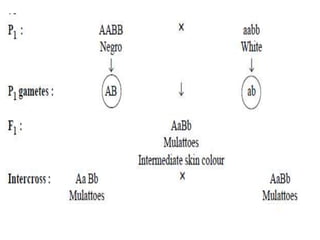
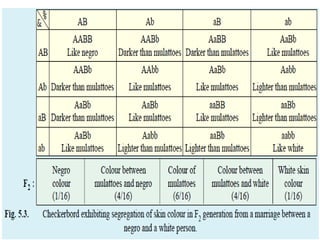
Skin colour
• Davenport (1913) in Jamaica.
• two pairs of genes, A-a and B-b cause the
difference in skin pigmentation between negro
and caucasian people.
• genes were found to affect the character in
additive fashion.
• a true negro has four dominant genes, AABB,
• and a white has four recessive genes aabb.
• The F1 offspring will have intermediate skin
colour (mulatto).
• mulattoes produces a wide variety of skin colour
in the offspring
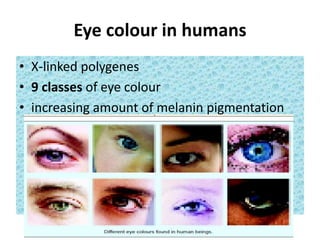
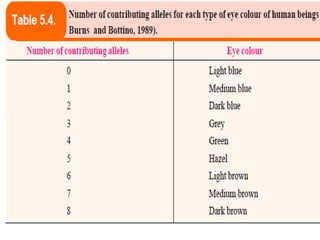
Eye colour in humans
• X-linked polygenes
• 9 classes of eye colour
• increasing amount of melanin pigmentation
Qunatative inheritance by iqra aslam

Qunatative inheritance by iqra aslam

  • 1.
  • 2.
    . • pattern ofinheritance ……..single phenotypic trait is governed by more than one pair of genes. • formation of many possible genotypes • wide range of phenotypes. • trait is called polygenic or multifactor trait and metric traits • the pattern of inheritance is called polygenic or quantitative inheritance and cumulative gene action
  • 3.
    Cont…. • do notshow clear cut differences between individuals • forms a spectrum of phenotypes which blend • imperceptivity from one type to another to cause continuous variations.
  • 4.
    Examples • Height • Weight •Eye colour • Yield (bu/A) in crops • Growth rate in farm animals • IQ
  • 5.
    Multiple Factor Hypothesis •Each gene with a small effect along with a few or many other genes exerting a slight effect on the phenotype are segregating to produce quantitative variation • contributing, effective or active alleles • non-contributing, non-effectiveor null alleles.
  • 6.
    CHARACTERISTICS OF MULTIPLE GENES •Each contributing allele in the series of multiple genes produces an equal effect. • Effects of each contributing allele are cumulative or additive. • There is no dominance, rather, there exist pairs of contributing and non-contributing alleles. • There is no epistasis (masking of the phenotypes) among genes at different loci. • There is no linkage involved. • The environmental conditions have considerable effect on the phenotypic expression of poly- genes for the quantitative traits.
  • 7.
    Skin colour • Davenport(1913) in Jamaica. • two pairs of genes, A-a and B-b cause the difference in skin pigmentation between negro and caucasian people. • genes were found to affect the character in additive fashion. • a true negro has four dominant genes, AABB, • and a white has four recessive genes aabb. • The F1 offspring will have intermediate skin colour (mulatto). • mulattoes produces a wide variety of skin colour in the offspring
  • 10.
    Eye colour inhumans • X-linked polygenes • 9 classes of eye colour • increasing amount of melanin pigmentation