CHAPTER 9  PATTERNS OF INHERITANCE  (GENETICS) I. The Foundation of Genetics II. Basic Terminology III. Modern Principles of Inheritance IV. Solving Genetics Problems A. Monohybrid Cross V. Sex-Determination and Sex-Linked Traits VI. Non-Mendelian Patterns of Inheritance VII. Human Genetic Disorders/Conditions VIII. How Phenotypes are Affected by  Non-genetic Factors (Environment)
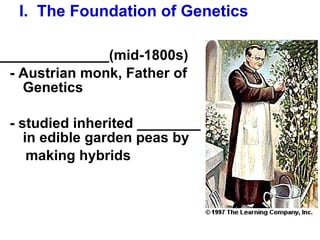
I.  The Foundation of Genetics   ______________(mid-1800s) - Austrian monk, Father of Genetics - studied inherited ________ in edible garden peas by making hybrids
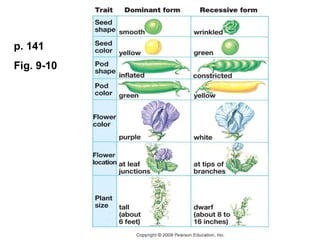
p. 141 Fig. 9-10
1884 – Mendel died 1900s – his work was  _________________  by Carl Correns Hugo de Vries  Erich Tshermak II. Basic Terminology
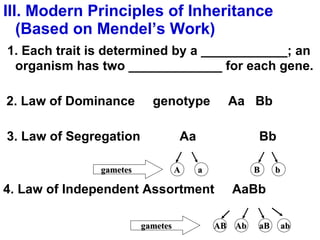
III. Modern Principles of Inheritance (Based on Mendel’s Work) 1. Each trait is determined by a ____________; an organism has two _____________   for each gene. 2. Law of Dominance  genotype  Aa  Bb 3. Law of Segregation  Aa  Bb 4. Law of Independent Assortment  AaBb A a B b Ab aB ab AB gametes gametes
IV. Solving Genetics Problems A. Monohybrid Cross
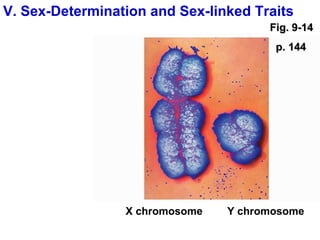
V. Sex-Determination and Sex-linked Traits X chromosome Y chromosome Fig. 9-14 p. 144
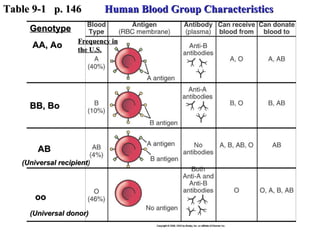
VI. Non-Mendelian Patterns of Inheritance A. Multiple Alleles and Co-dominance e.g., human blood types
Genotype AA, Ao BB, Bo AB oo (Universal donor) Frequency in the U.S. (Universal recipient ) Table 9-1  p. 146 Human Blood Group Characteristics
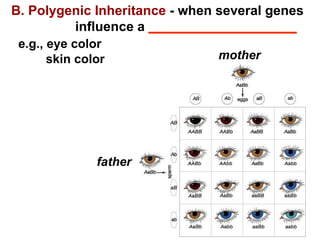
B. Polygenic Inheritance  - when several genes  influence a  ____________________ e.g., eye color skin color father mother
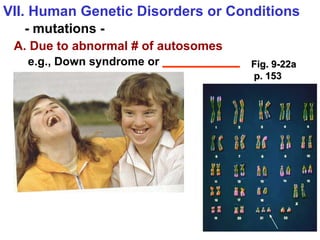
VII. Human Genetic Disorders or Conditions - mutations - A. Due to abnormal # of autosomes e.g., Down syndrome or  ____________ Fig. 9-22a p. 153
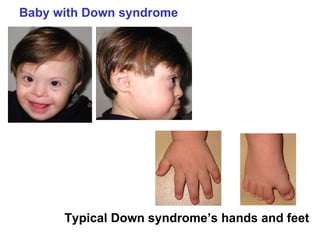
Baby with Down syndrome Typical Down syndrome’s hands and feet
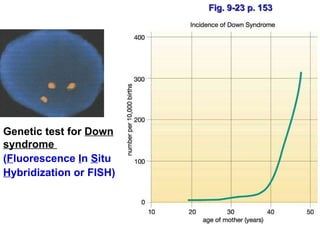
Genetic test for  Down syndrome  ( F luorescence  I n  S itu  H ybridization or FISH) Fig. 9-23 p. 153
Why are there 3 copies of chromosome # 21? ________________________:   - the failure of chromatids to separate  during anaphase II
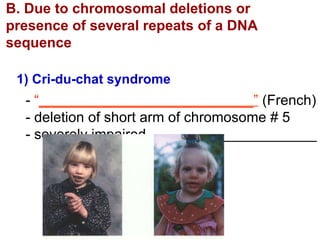
B. Due to chromosomal deletions or presence of several repeats of a DNA sequence 1) Cri-du-chat syndrome -  “ ___________________________”  (French) - deletion of short arm of chromosome # 5 - severely impaired _____________________
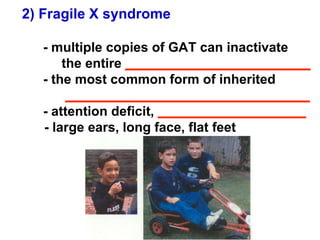
2) Fragile X syndrome - multiple copies of GAT can inactivate    the entire  _________________________ - the most common form of inherited   _________________________________ - attention deficit,  ____________________ - large ears, long face, flat feet
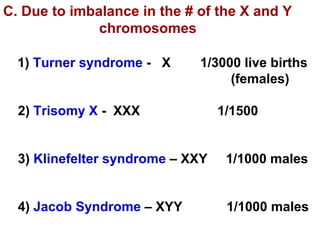
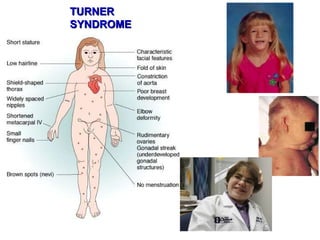
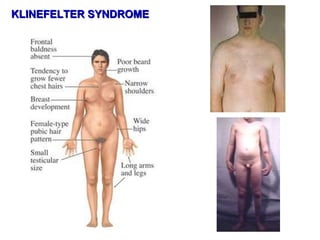
C. Due to imbalance in the # of the X and Y chromosomes 1)  Turner syndrome  -  X  1/3000 live births   (females) 2)  Trisomy X  -  XXX  1/1500 3)  Klinefelter syndrome  – XXY  1/1000 males 4)  Jacob Syndrome  – XYY  1/1000 males
TURNER SYNDROME
KLINEFELTER SYNDROME
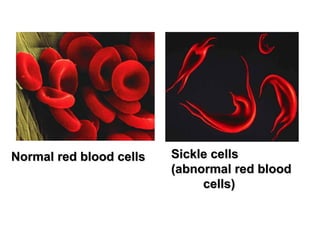
D. Due to single gene mutations or defects 1) Due to  X-linked recessive  alleles   a) hemophilia   b) red-green colorblindness   c) Duchenne muscular dystrophy   d) cleft palate 2) Due to  autosomal  gene defects (recessive)   a) sickle cell anemia - abnormal  ____________________
Normal red blood cells Sickle cells  (abnormal red blood  cells)
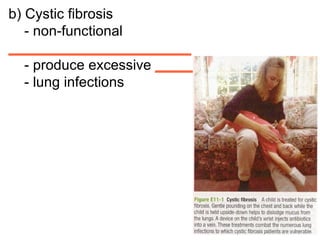
b) Cystic fibrosis - non-functional  _______________________ - produce excessive  _______________ - lung infections
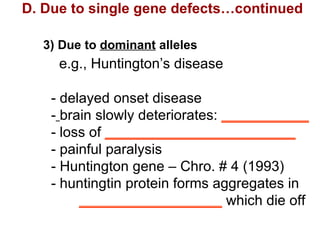
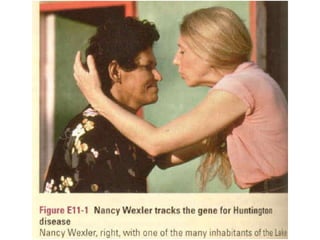
D. Due to single gene defects…continued 3) Due to  dominant  alleles   e.g., Huntington’s disease   - delayed onset disease   -   brain slowly deteriorates:  ___________     - loss of  ________________________     - painful paralysis     - Huntington gene – Chro. # 4 (1993)   - huntingtin protein forms aggregates in   __________________  which die off
 
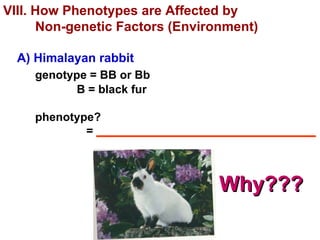
VIII. How Phenotypes are Affected by  Non-genetic Factors (Environment) A) Himalayan rabbit genotype = BB or Bb   B = black fur phenotype?   =  __________________________________ Why???
- enzyme producing black pigment -  ______________   at 93 ° F (34 ° C) B) Colors of pea flowers -  ________________________________________ C) Height -  _________________________________ D) Skin color -  ________________________________ E) Intelligence F) Susceptibility to cancer

Chapter 9 genetics handout fall 2011

  • 1.
    CHAPTER 9 PATTERNS OF INHERITANCE (GENETICS) I. The Foundation of Genetics II. Basic Terminology III. Modern Principles of Inheritance IV. Solving Genetics Problems A. Monohybrid Cross V. Sex-Determination and Sex-Linked Traits VI. Non-Mendelian Patterns of Inheritance VII. Human Genetic Disorders/Conditions VIII. How Phenotypes are Affected by Non-genetic Factors (Environment)
  • 2.
    I. TheFoundation of Genetics ______________(mid-1800s) - Austrian monk, Father of Genetics - studied inherited ________ in edible garden peas by making hybrids
  • 3.
  • 4.
    1884 – Mendeldied 1900s – his work was _________________ by Carl Correns Hugo de Vries Erich Tshermak II. Basic Terminology
  • 5.
    III. Modern Principlesof Inheritance (Based on Mendel’s Work) 1. Each trait is determined by a ____________; an organism has two _____________ for each gene. 2. Law of Dominance genotype Aa Bb 3. Law of Segregation Aa Bb 4. Law of Independent Assortment AaBb A a B b Ab aB ab AB gametes gametes
  • 6.
    IV. Solving GeneticsProblems A. Monohybrid Cross
  • 7.
    V. Sex-Determination andSex-linked Traits X chromosome Y chromosome Fig. 9-14 p. 144
  • 8.
    VI. Non-Mendelian Patternsof Inheritance A. Multiple Alleles and Co-dominance e.g., human blood types
  • 9.
    Genotype AA, AoBB, Bo AB oo (Universal donor) Frequency in the U.S. (Universal recipient ) Table 9-1 p. 146 Human Blood Group Characteristics
  • 10.
    B. Polygenic Inheritance - when several genes influence a ____________________ e.g., eye color skin color father mother
  • 11.
    VII. Human GeneticDisorders or Conditions - mutations - A. Due to abnormal # of autosomes e.g., Down syndrome or ____________ Fig. 9-22a p. 153
  • 12.
    Baby with Downsyndrome Typical Down syndrome’s hands and feet
  • 13.
    Genetic test for Down syndrome ( F luorescence I n S itu H ybridization or FISH) Fig. 9-23 p. 153
  • 14.
    Why are there3 copies of chromosome # 21? ________________________: - the failure of chromatids to separate during anaphase II
  • 15.
    B. Due tochromosomal deletions or presence of several repeats of a DNA sequence 1) Cri-du-chat syndrome - “ ___________________________” (French) - deletion of short arm of chromosome # 5 - severely impaired _____________________
  • 16.
    2) Fragile Xsyndrome - multiple copies of GAT can inactivate the entire _________________________ - the most common form of inherited _________________________________ - attention deficit, ____________________ - large ears, long face, flat feet
  • 17.
    C. Due toimbalance in the # of the X and Y chromosomes 1) Turner syndrome - X 1/3000 live births (females) 2) Trisomy X - XXX 1/1500 3) Klinefelter syndrome – XXY 1/1000 males 4) Jacob Syndrome – XYY 1/1000 males
  • 18.
  • 19.
  • 20.
    D. Due tosingle gene mutations or defects 1) Due to X-linked recessive alleles a) hemophilia b) red-green colorblindness c) Duchenne muscular dystrophy d) cleft palate 2) Due to autosomal gene defects (recessive) a) sickle cell anemia - abnormal ____________________
  • 21.
    Normal red bloodcells Sickle cells (abnormal red blood cells)
  • 22.
    b) Cystic fibrosis- non-functional _______________________ - produce excessive _______________ - lung infections
  • 23.
    D. Due tosingle gene defects…continued 3) Due to dominant alleles e.g., Huntington’s disease - delayed onset disease - brain slowly deteriorates: ___________ - loss of ________________________ - painful paralysis - Huntington gene – Chro. # 4 (1993) - huntingtin protein forms aggregates in __________________ which die off
  • 24.
  • 25.
    VIII. How Phenotypesare Affected by Non-genetic Factors (Environment) A) Himalayan rabbit genotype = BB or Bb B = black fur phenotype? = __________________________________ Why???
  • 26.
    - enzyme producingblack pigment - ______________ at 93 ° F (34 ° C) B) Colors of pea flowers - ________________________________________ C) Height - _________________________________ D) Skin color - ________________________________ E) Intelligence F) Susceptibility to cancer

Editor's Notes

  • #9 Figure: 11-10 Title: Incomplete dominance. Caption: The inheritance of flower color in snapdragons is an example of incomplete dominance. (In such cases, we use capital letters for both alleles, here R and R '.) Heterozygtes ( RR ') have pink flowers, whereas the homozygotes are red ( RR ) or white ( R ' R ').
  • #22 Figure: 11-15a Title: Sickle-cell anemia. Caption: (a) Normal red blood cells are disc-shaped with indented centers. (b) The red blood cells of a person with sickle-cell anemia become sickled.