HEREDITY 
Chapter 5
• Heredity is the passing of traits from parent to 
offspring 
• Genetics is the science that studies how traits are 
inherited 
• Alleles are the different forms of a trait that a gene 
may have. 
– alleles determine traits 
– A gene is a section of DNA on a chromosome
• Gregor Mendel is known 
as the father of genetics 
– in 1856, Mendel 
experimented with 
pea plants using the 
scientific method 
– he traced one trait of the plants through 
several generations
• An organism that always produces the same traits 
generation after generation is called a purebred. 
• A hybrid receives different information (different 
alleles) for a trait from each parent
B 
Purebred Labrador Retrievers Purebred Standard Poodles 
<- < Hybrid Labradoodles
DOMINANT AND RECESSIVE ALLELES: 
• A dominant trait covers over (or dominates) 
another form of the trait 
• Recessive describes a trait that is covered over, or 
dominated, by another form of the trait 
- a recessive trait seems to disappear in an 
organism
• A Punnett Square is a tool used to predict results in 
genetics. 
- In a Punnett Square, letters represent dominant 
and recessive alleles 
- Capital letters represent dominant alleles; 
lowercase letters represent recessive alleles 
• The letters in a Punnet Square are a form of code 
- they show the genotype, or genetic makeup of 
an organism
This Punnet Square shows the genotype for the height 
of an organism
This Punnett Square shows the genotype for eye color
• A phenotype is the outward appearance and 
behavior of an organism as a result of its 
genotype. 
- for example, if you have blue eyes, the 
phenotype for your eye color is blue
https://www.23andme.com/gen101/phenotype/
• An organism with two alleles that are the same is 
homozygous. 
- on a P.Sq, they are represented with the same 
form of the same letter. Ex: TT or tt 
• An organism that has two different alleles for a 
trait is called heterozygous 
- represented using different forms of the 
letter on a P.Sq. EX: Tt
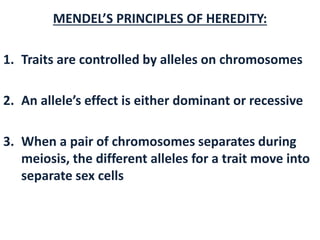
MENDEL’S PRINCIPLES OF HEREDITY: 
1. Traits are controlled by alleles on chromosomes 
2. An allele’s effect is either dominant or recessive 
3. When a pair of chromosomes separates during 
meiosis, the different alleles for a trait move into 
separate sex cells
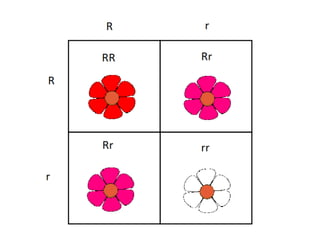
• Incomplete dominance refers to the production of 
a phenotype that is intermediate (“mid-way”) 
between two homozygous parents. The dominant 
trait is then incomplete. 
- For example, if crossing a red flower and a white 
flower produces a pink flower, the red trait is 
present, but does not completely dominate
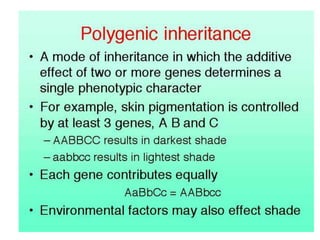
• Polygenic inheritance occurs when a group of gene 
pairs acts together to produce a trait 
- In humans, eye color, skin shade, hair color, height, 
etc… all are results of polygenic inheritance 
Punnett Square for possible skin shades
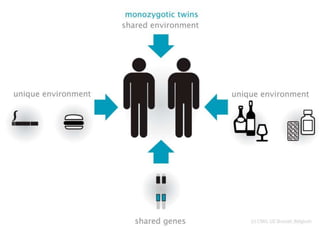
• Environmental factors that effect genes may be 
internal or external 
- Internal influences include chemicals in the body 
- External influences include the living conditions 
and habits of the organism (smoking, diet, etc)
• A mutation is a permanent change in a gene or 
chromosome 
• Mutations are a result of errors in copying DNA 
• One common chromosome disorder in humans 
is Down Syndrome 
• Down syndrome results when three copies of 
chromosome #21 are made, instead of two 
copies
• A recessive genetic disorder is caused by a 
recessive gene 
- This means that the parent who carries the gene 
for the disorder does not have the disorder, but 
can pass it on to their offspring 
- Cystic fibrosis is a common recessive genetic 
disorder
• Some inherited conditions are linked with the X and 
Y chromosomes, which determine gender of 
offspring 
• These are called sex-linked disorders, because they 
are caused by sex-linked genes. 
• Color blindness is a sex-linked disorder
• A tool used for tracing a trait through the 
generations of a family is called a pedigree 
• Pedigree is used to determine patterns of 
inheritance 
• This helps geneticists to predict the probability 
that a baby may be born with a specific trait 
– Diseases and disorders; traits in animal 
breeding
Heredit yscience ch5

Heredit yscience ch5

  • 1.
  • 2.
    • Heredity isthe passing of traits from parent to offspring • Genetics is the science that studies how traits are inherited • Alleles are the different forms of a trait that a gene may have. – alleles determine traits – A gene is a section of DNA on a chromosome
  • 3.
    • Gregor Mendelis known as the father of genetics – in 1856, Mendel experimented with pea plants using the scientific method – he traced one trait of the plants through several generations
  • 5.
    • An organismthat always produces the same traits generation after generation is called a purebred. • A hybrid receives different information (different alleles) for a trait from each parent
  • 6.
    B Purebred LabradorRetrievers Purebred Standard Poodles <- < Hybrid Labradoodles
  • 7.
    DOMINANT AND RECESSIVEALLELES: • A dominant trait covers over (or dominates) another form of the trait • Recessive describes a trait that is covered over, or dominated, by another form of the trait - a recessive trait seems to disappear in an organism
  • 9.
    • A PunnettSquare is a tool used to predict results in genetics. - In a Punnett Square, letters represent dominant and recessive alleles - Capital letters represent dominant alleles; lowercase letters represent recessive alleles • The letters in a Punnet Square are a form of code - they show the genotype, or genetic makeup of an organism
  • 10.
    This Punnet Squareshows the genotype for the height of an organism
  • 11.
    This Punnett Squareshows the genotype for eye color
  • 12.
    • A phenotypeis the outward appearance and behavior of an organism as a result of its genotype. - for example, if you have blue eyes, the phenotype for your eye color is blue
  • 13.
  • 14.
    • An organismwith two alleles that are the same is homozygous. - on a P.Sq, they are represented with the same form of the same letter. Ex: TT or tt • An organism that has two different alleles for a trait is called heterozygous - represented using different forms of the letter on a P.Sq. EX: Tt
  • 15.
    MENDEL’S PRINCIPLES OFHEREDITY: 1. Traits are controlled by alleles on chromosomes 2. An allele’s effect is either dominant or recessive 3. When a pair of chromosomes separates during meiosis, the different alleles for a trait move into separate sex cells
  • 16.
    • Incomplete dominancerefers to the production of a phenotype that is intermediate (“mid-way”) between two homozygous parents. The dominant trait is then incomplete. - For example, if crossing a red flower and a white flower produces a pink flower, the red trait is present, but does not completely dominate
  • 18.
    • Polygenic inheritanceoccurs when a group of gene pairs acts together to produce a trait - In humans, eye color, skin shade, hair color, height, etc… all are results of polygenic inheritance Punnett Square for possible skin shades
  • 21.
    • Environmental factorsthat effect genes may be internal or external - Internal influences include chemicals in the body - External influences include the living conditions and habits of the organism (smoking, diet, etc)
  • 23.
    • A mutationis a permanent change in a gene or chromosome • Mutations are a result of errors in copying DNA • One common chromosome disorder in humans is Down Syndrome • Down syndrome results when three copies of chromosome #21 are made, instead of two copies
  • 25.
    • A recessivegenetic disorder is caused by a recessive gene - This means that the parent who carries the gene for the disorder does not have the disorder, but can pass it on to their offspring - Cystic fibrosis is a common recessive genetic disorder
  • 26.
    • Some inheritedconditions are linked with the X and Y chromosomes, which determine gender of offspring • These are called sex-linked disorders, because they are caused by sex-linked genes. • Color blindness is a sex-linked disorder
  • 27.
    • A toolused for tracing a trait through the generations of a family is called a pedigree • Pedigree is used to determine patterns of inheritance • This helps geneticists to predict the probability that a baby may be born with a specific trait – Diseases and disorders; traits in animal breeding