Quinolones and
flouroquinolones
By = Dr.Ishfaq Ahmad
Quinolones and
Fluoroquinolones
The quinolones are a family of synthetic
broadspectrum antibacterial drugs.
Quinolones, and derivatives, have
also been isolated from natural sources,
such as plants, animals and bacteria.
Quinolones exert their antibacterial effect
by preventing bacterial DNA from
unwinding and duplicating.
Broader spectrum, better safety profile
Nalidixic acid is predecessor of all
flouroquinolones
Wide clinical applications
Closely tied to clostridium difficile
infection and spread of antimicrobial
resistance in many organisms
Unfavourable effects of
flouroquinolones on the induction and
spread of antimicrobial resistance is
referred as collateral damage
Difference between Quinolones
and Fluoroquinolones:
Quinolones such as Nalidixic
acid has only limited spectrum
against some Gram negative
organism.
Fluorinated analogues such as
Fluoroquinolones have much
broader activity against
microorganisms.
Why they are preferred Drugs??
Good oral absorption
Deeper penetration into the body so
they have good activity against
Intracellular microorganisms such as
Chlamydia, Mycobacterium
tuberculosis, Legionella, Brucella etc.
Broad spectrum
Safer drugs
High potency
Fluoroquinolones: MOA
The fluoroquinolones enter the bacterium
by passive diffusion through water-filled
protein channels (porins) in the outer
membrane.
Once inside the cell, FQs inhibit the
replication of bacterial DNA by interfering
with the action of DNA gyrase
(topoisomerase II) and topoisomerase IV
during bacterial growth and reproduction.
Fluoroquinolones
Inhibition of DNA gyrase II by FQs
prevent the relaxation of positively
supercoiled DNA that is required for
normal transcription and replication of
bacteria.
Inhibition of topoisomerase IV
interferes with the separation of
replicated chromosomal DNA into
respective daughter cells during cell
division.
*withdrawn from the market in
1999
Generation Drug Names Spectrum
1st
nalidixic acid
cinoxacin
Gram- but not
Pseudomonas species
2nd
norfloxacin
ciprofloxacin
enoxacin
ofloxacin
Gram- (including
Pseudomonas species),
some Gram+ (S.
aureus) and some
atypicals
3rd
levofloxacin
sparfloxacin
gemifloxacin
Same as 2nd generation
with extended Gram+
and atypical coverage
4th
Moxifloxacin
*trovafloxacin
Same as 3rd generation
with broad anaerobic
coverage
Fluoroquinolones
First-generation quinolones
cinoxacin, nalidixic acid
These quinolones targeted gram
negative organisms including
Escherichia coli, Klebsiella and
Proteus species.
Fluoroquinolones 1st Gen.
Nalidixic acid was once the most
commonly used preparation, but
poor tissue and serum
concentrations now limit its use to
the treatment of simple urinary
tract infections.
Its utility is also limited due to its
short half-life , narrow spectrum of
activity and the rapid development
of bacterial resistance.
Fluoroquinolones
Second-generation
Fluoroquinolones
Ciprofloxacin, Enoxacin,
Lomefloxacin, Ofloxacin and
Norfloxacin.
They exhibit good activity
against gram-negative bacilli
and moderate-to-good activity
against Staphylococcus
species.
Fluoroquinolones 2nd Gen.
Ciprofloxacin and Ofloxacin have good
tissue penetration and reach macrophages
and polymorphonuclear leukocytes,
making them useful beyond the treatment
of urinary tract infections.
Their activity against Legionella
pneumophila is good.
Activity against Chlamydia pneumoniae
and Mycoplasma pneumoniae is more
variable.
Ciprofloxacin is also commonly used to
treat typhoid fever.
Fluoroquinolones 2nd Gen.
 Norfloxacin
Least potent fluoroquinolone
 Norfloxacin is a
"second-generation" quinoline
carboxylic acid antimicrobial agent
It is primarily indicated in urinary
tract infections and gonorrhea.
The ophthalmic solution may be
used in the treatment of
conjunctivitis.
Fluoroquinolones 2nd Gen.
Clinical uses:
ciprofloxacin and Ofloxacin are
effective in treating
(1) urinary tract infections caused by
susceptible organisms,
(2) respiratory tract infections caused
by susceptible gram negative
organisms.
(3) skin and soft-tissue infections
(4) osteomyelitis (ciprofloxacin only)
(5) typhoid fever
Fluoroquinolones
Third-generation fluoroquinolones
 Levofloxacin , Sparfloxacin ,
Ripafloxacin have expanded
coverage against streptococci and
atypical organisms.
 These fluoroquinolones are
useful in treating patients with
community acquired pneumonia,
acute sinusitis and acute
exacerbations of chronic
bronchitis and skin infection.
Fluoroquinolones
Fourth-generation fluoroquinolones
Clinafloxacin, Gatifloxacin,
Moxifloxacin and Trovafloxacin
add a significant anaerobic
coverage.
A long half-life allows once-daily
dosage, and extensive hepatic
metabolism makes dose adjustment
unnecessary in patients with renal
disease.
Fluoroquinolones 4th Gen.
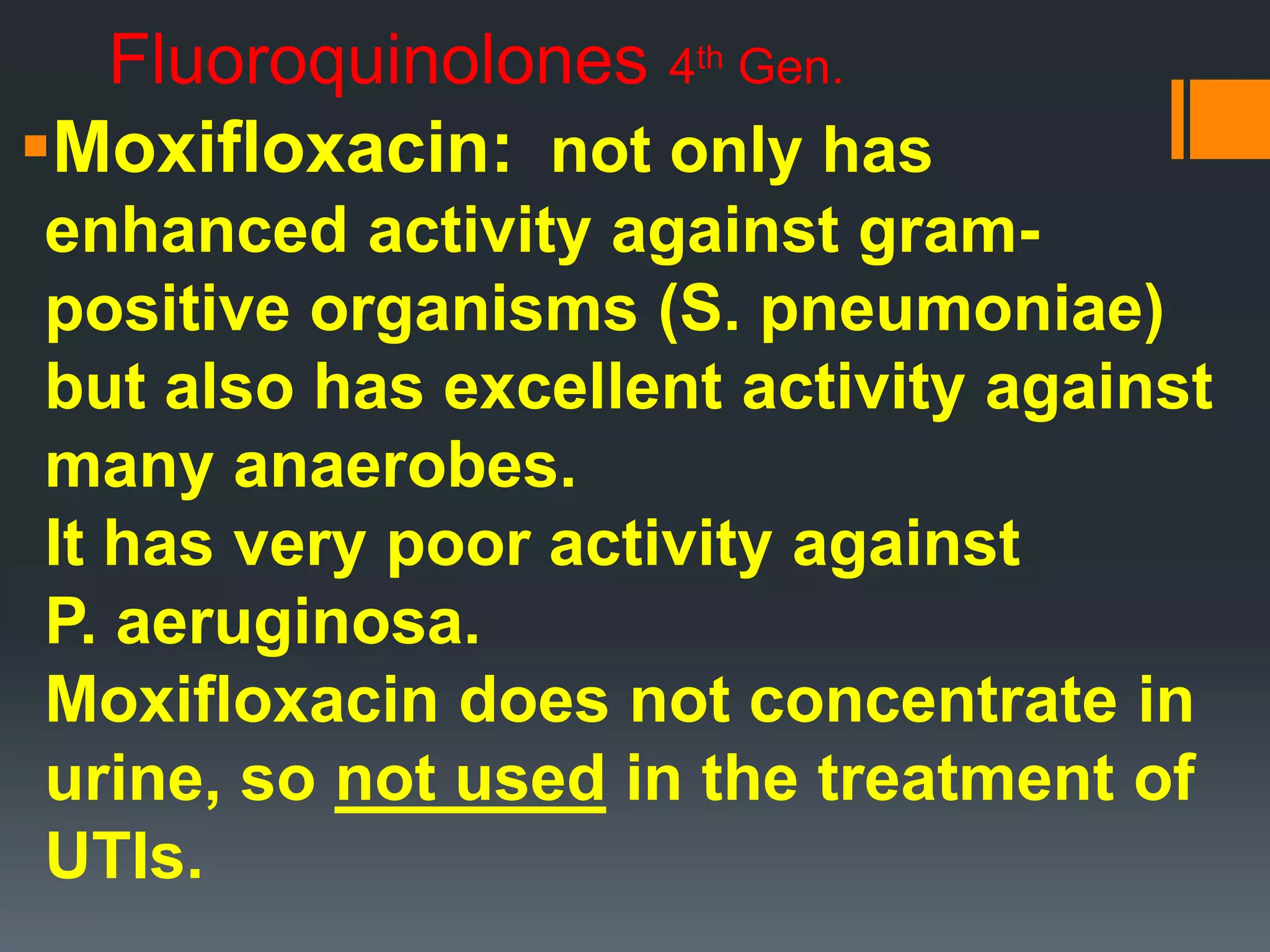
Moxifloxacin: not only has
enhanced activity against gram-
positive organisms (S. pneumoniae)
but also has excellent activity against
many anaerobes.
It has very poor activity against
P. aeruginosa.
Moxifloxacin does not concentrate in
urine, so not used in the treatment of
UTIs.
Fluoroquinolones 4th Gen.
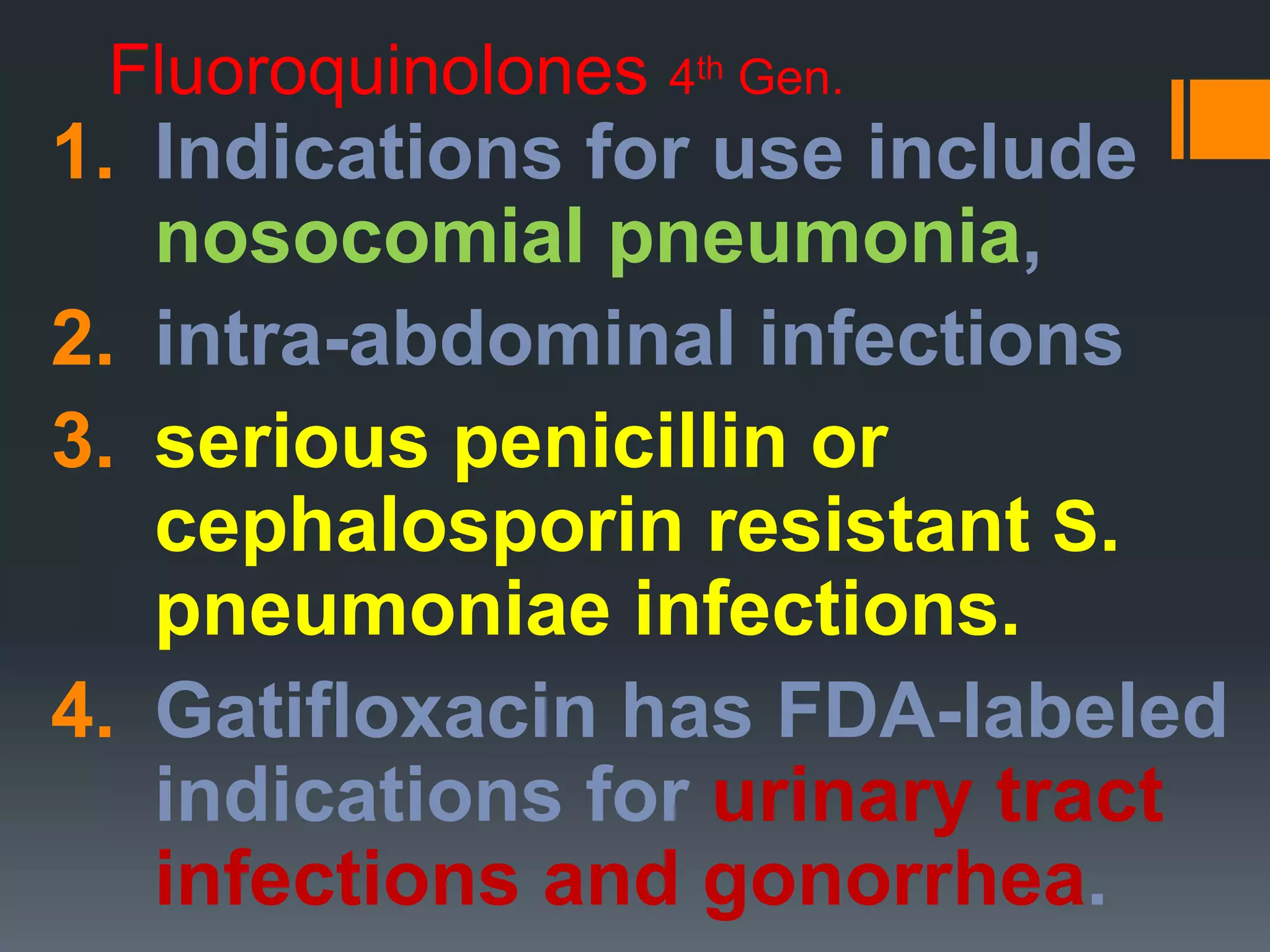
1. Indications for use include
nosocomial pneumonia,
2. intra-abdominal infections
3. serious penicillin or
cephalosporin resistant S.
pneumoniae infections.
4. Gatifloxacin has FDA-labeled
indications for urinary tract
infections and gonorrhea.
Fluoroquinolones
Resistance:
With the introduction of
fluoroquinolones , there
was optimism that
resistance would not
develop.
 However, it emerged due
to chromosomal
mutations.
. The mechanisms
responsible for this
resistance include the
following.
Altered target:
Mutations in the bacterial DNA
gyrase and Topoisomerase IV
have developed a decreased
affinity for fluoroquinolones.
Resistance is frequently
associated with mutations in
both gyrase and topoisomerase
IV.
Resistance:
Resistance:
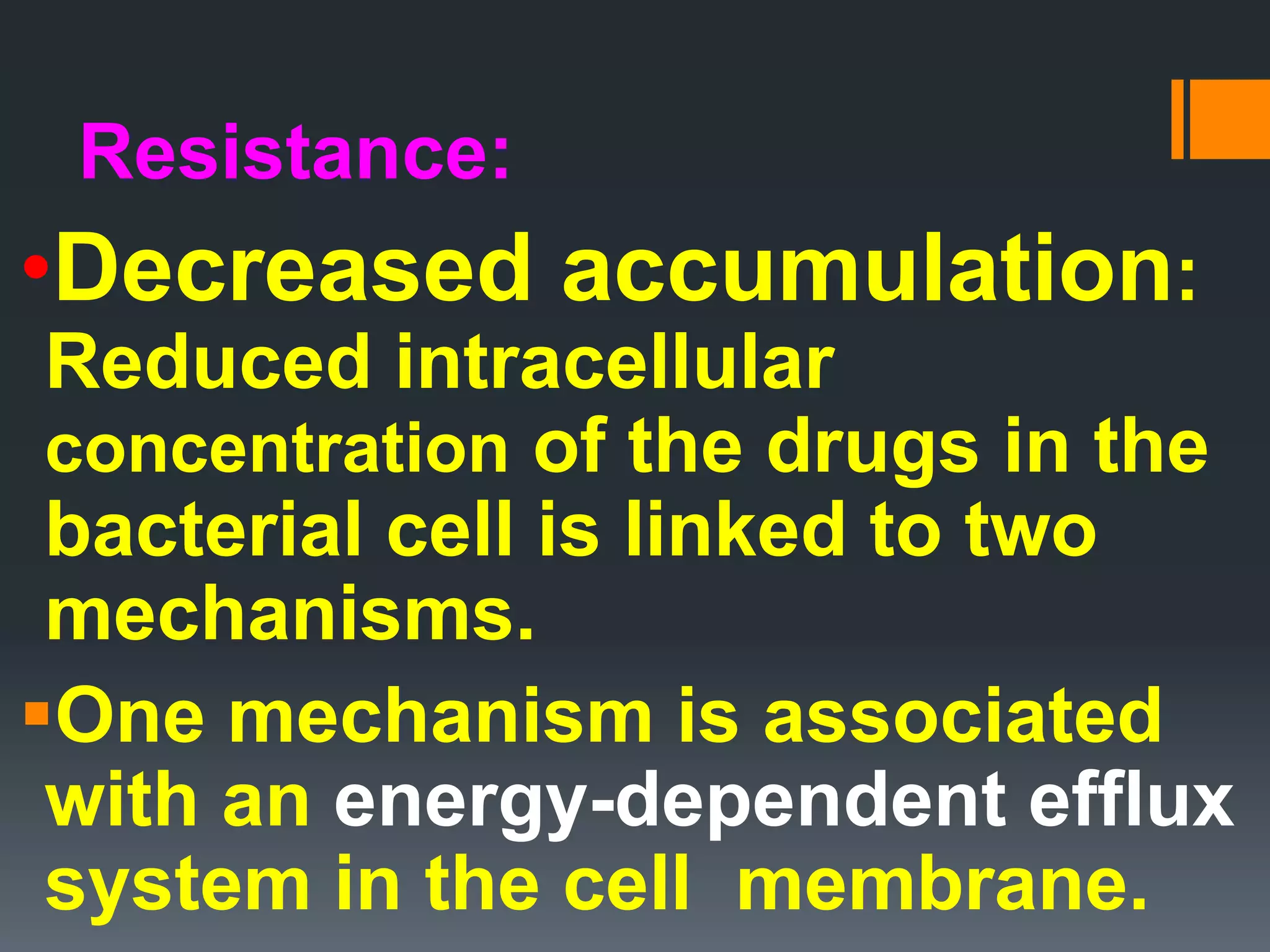
•Decreased accumulation:
Reduced intracellular
concentration of the drugs in the
bacterial cell is linked to two
mechanisms.
One mechanism is associated
with an energy-dependent efflux
system in the cell membrane.
The other mechanism
involves a decreased
number of porins in the
outer membrane of the
resistant cell, thereby
impairing access of the
drugs to the intracellular
topoisomerases.
Resistance:
Fluoroquinolones
Absorption:
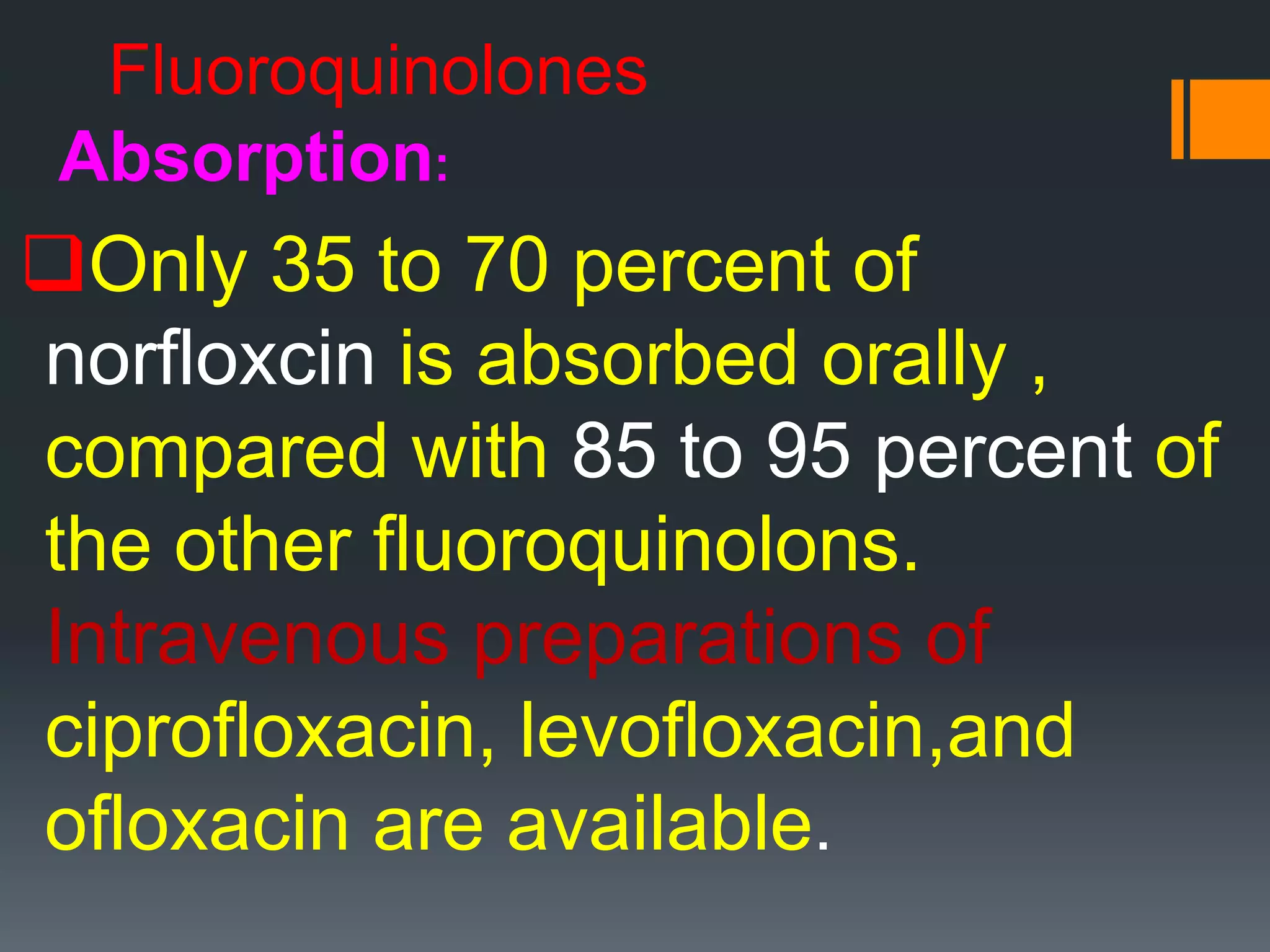
Only 35 to 70 percent of
norfloxcin is absorbed orally ,
compared with 85 to 95 percent of
the other fluoroquinolons.
Intravenous preparations of
ciprofloxacin, levofloxacin,and
ofloxacin are available.
Absorption:
Ingestion of the fluoroquinolones with
sucralfate, antacids or dietary supplements
containing iron or zinc can interfere with the
absorption of these drugs.
Calcium and other divalent cations also
interfere with the absorption of these
agents.
The fluoroquinolones with the longest half-
lives (levofloxacin and moxifloxacin)
permit once-daily dosing.
Distribution
 All the fluoroquinolones distribute
well into all tissues and body fluids.
•Levels are high in bone, urine, kidney,
and prostatic tissue
Concentrations in lungs exceed those
in serum.
•Penetration into cerebrospinal fluid is
low.
Elimination
•The fluoroquinolones also accumulate
in macrophages and
polymorphonuclear leukocytes,
• thus effective against intracellular
organisms such as Legionella
pneumophilia.
•They are excreted by the renal route.
•Moxifloxacin is excreted primarily by
the liver, thus no dose adjustment
Adverse drug reactions:
Gastrointestinal system:
Nausea
Vomiting
Gastric distress
 Adverse reactions
Central nervous system :
headache
dizziness
light-headedness.
Thus, patients with CNS
disorders, such as epilepsy,
should be treated cautiously
with these drugs.
Adverse reactions
Connective tissue problems:
 should be avoided in pregnancy,
nursing mothers, children under 18
years of age,
because articular cartilage erosion
(arthropathy) occurs in immature
experimental animals.
Fluoroquinolones can infrequently
cause ruptured tendons in patients over
60 years of age.
Adverse reactions
Phototoxicity:
Patients taking fluoroquinolones
are advised to avoid excessive
sunlight and to apply
sunscreens.
Contraindications:
Quinolones are contraindicated if a
patient has epilepsy
QT prolongation
CNS lesions or CNS inflammation
or the patient has suffered a stroke.
Contraindicated in pregnancy
unless no other safe alternative
antibiotic exists.
 Contraindications:
Contraindicated in children due
to the risks of damage to the
musculoskeletal system.
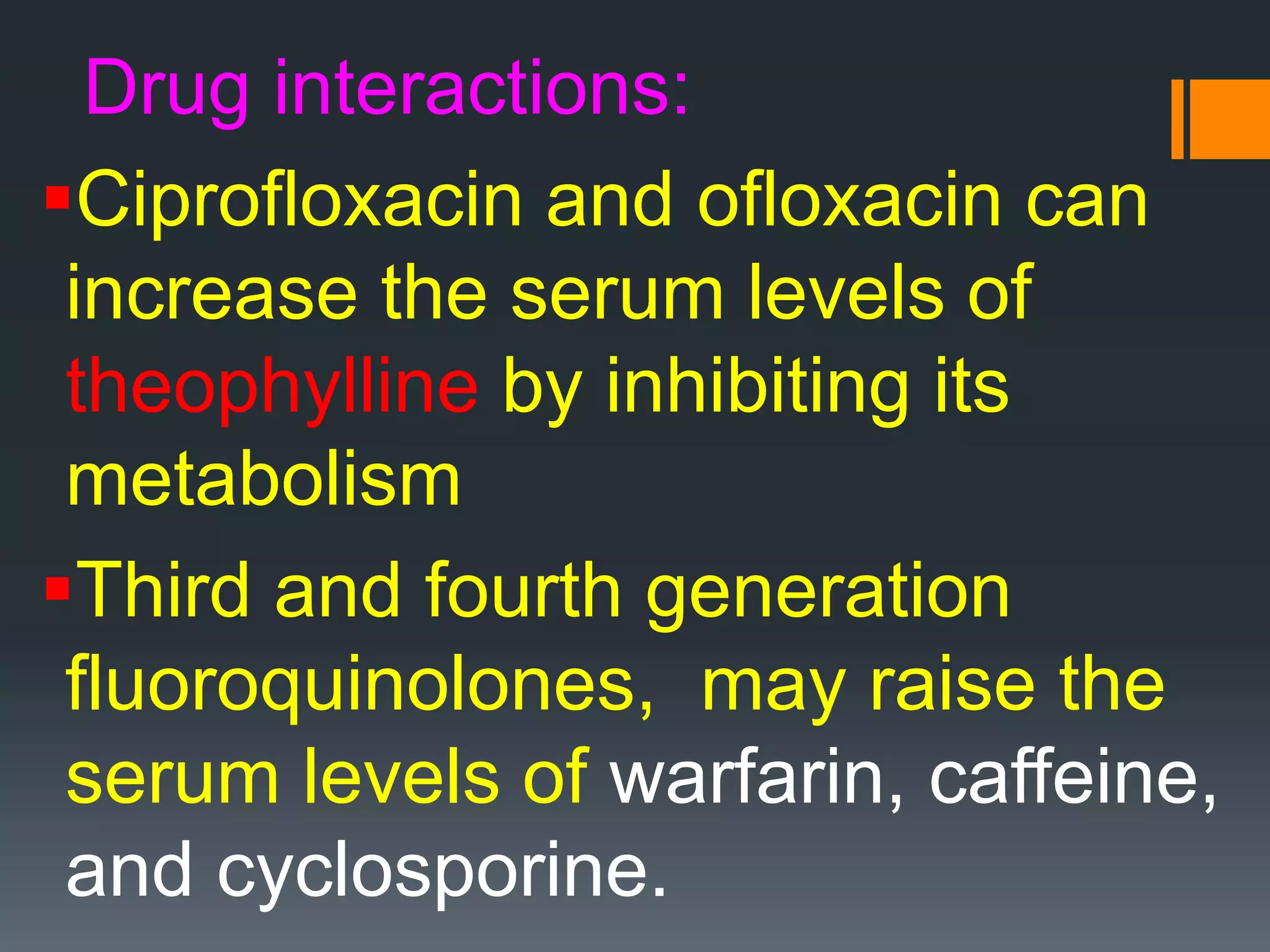
Drug interactions:
Ciprofloxacin and ofloxacin can
increase the serum levels of
theophylline by inhibiting its
metabolism
Third and fourth generation
fluoroquinolones, may raise the
serum levels of warfarin, caffeine,
and cyclosporine.
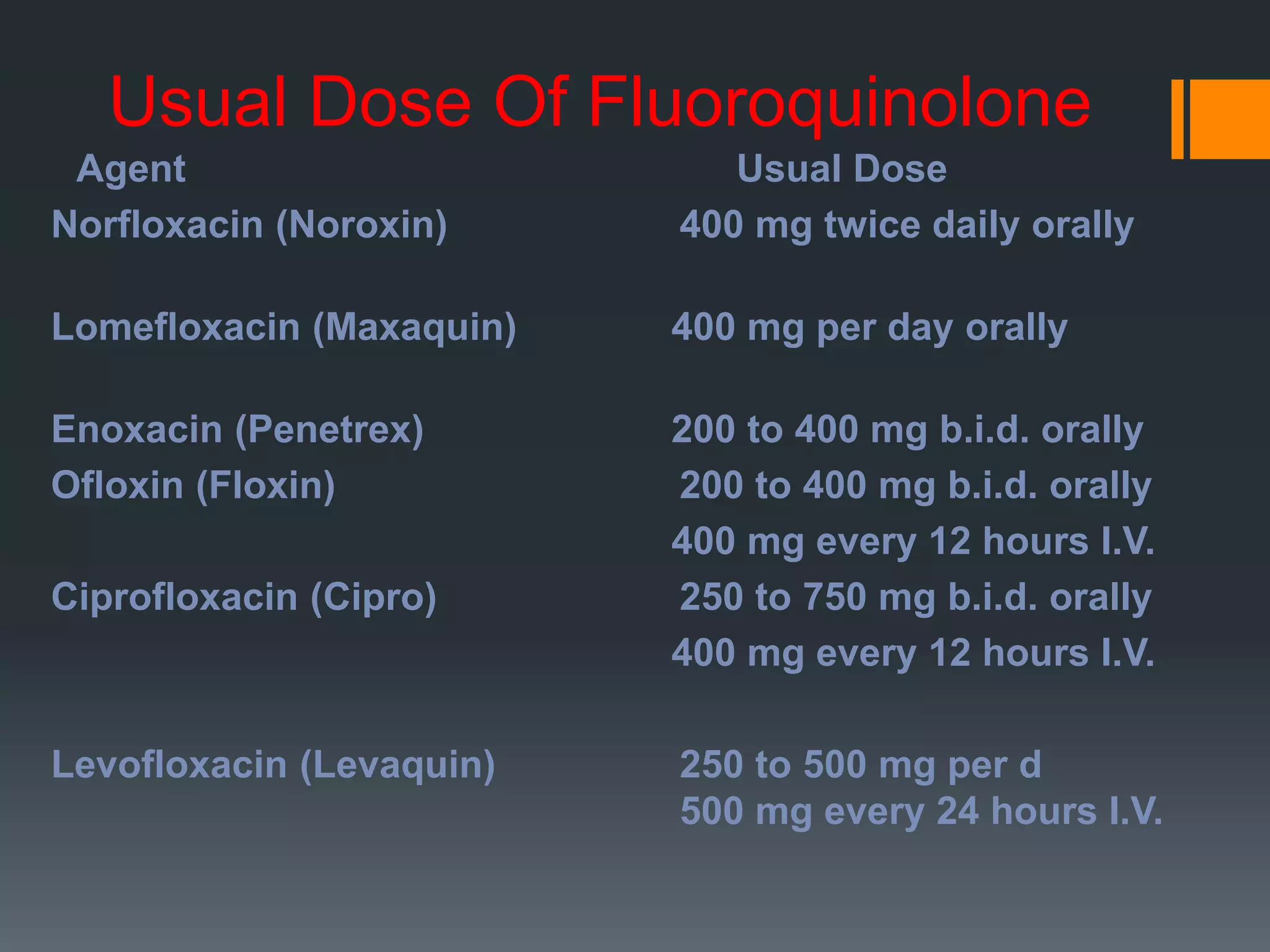
Usual Dose Of Fluoroquinolone
Agent Usual Dose
Norfloxacin (Noroxin) 400 mg twice daily orally
Lomefloxacin (Maxaquin) 400 mg per day orally
Enoxacin (Penetrex) 200 to 400 mg b.i.d. orally
Ofloxin (Floxin) 200 to 400 mg b.i.d. orally
400 mg every 12 hours I.V.
Ciprofloxacin (Cipro) 250 to 750 mg b.i.d. orally
400 mg every 12 hours I.V.
Levofloxacin (Levaquin) 250 to 500 mg per d
500 mg every 24 hours I.V.
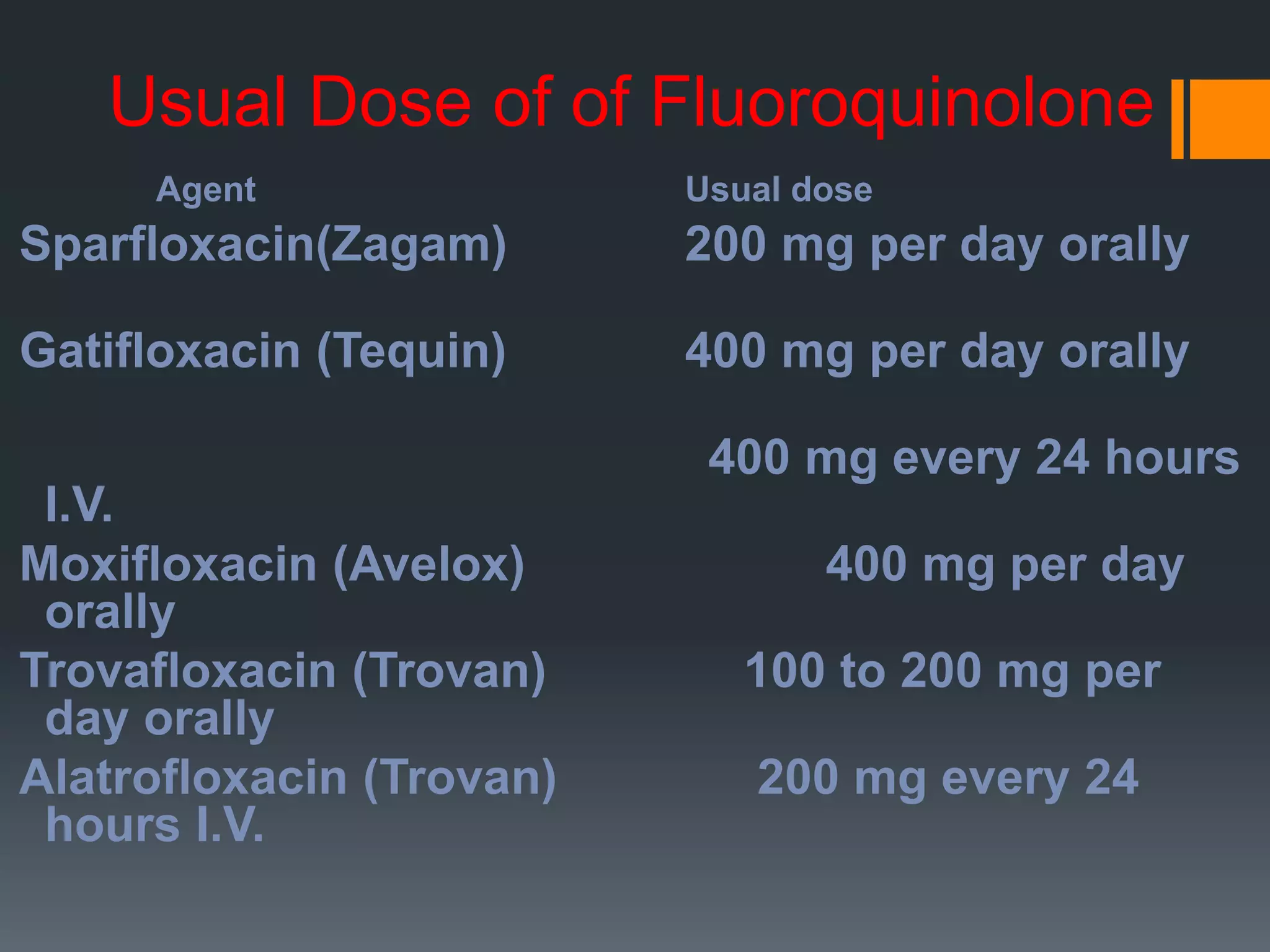
Usual Dose of of Fluoroquinolone
Agent Usual dose
Sparfloxacin(Zagam) 200 mg per day orally
Gatifloxacin (Tequin) 400 mg per day orally
400 mg every 24 hours
I.V.
Moxifloxacin (Avelox) 400 mg per day
orally
Trovafloxacin (Trovan) 100 to 200 mg per
day orally
Alatrofloxacin (Trovan) 200 mg every 24
hours I.V.
 THANK YOU

Fluoroquinolones

  • 1.
  • 2.
    Quinolones and Fluoroquinolones The quinolonesare a family of synthetic broadspectrum antibacterial drugs. Quinolones, and derivatives, have also been isolated from natural sources, such as plants, animals and bacteria. Quinolones exert their antibacterial effect by preventing bacterial DNA from unwinding and duplicating.
  • 3.
    Broader spectrum, bettersafety profile Nalidixic acid is predecessor of all flouroquinolones Wide clinical applications Closely tied to clostridium difficile infection and spread of antimicrobial resistance in many organisms Unfavourable effects of flouroquinolones on the induction and spread of antimicrobial resistance is referred as collateral damage
  • 4.
    Difference between Quinolones andFluoroquinolones: Quinolones such as Nalidixic acid has only limited spectrum against some Gram negative organism. Fluorinated analogues such as Fluoroquinolones have much broader activity against microorganisms.
  • 5.
    Why they arepreferred Drugs?? Good oral absorption Deeper penetration into the body so they have good activity against Intracellular microorganisms such as Chlamydia, Mycobacterium tuberculosis, Legionella, Brucella etc. Broad spectrum Safer drugs High potency
  • 6.
    Fluoroquinolones: MOA The fluoroquinolonesenter the bacterium by passive diffusion through water-filled protein channels (porins) in the outer membrane. Once inside the cell, FQs inhibit the replication of bacterial DNA by interfering with the action of DNA gyrase (topoisomerase II) and topoisomerase IV during bacterial growth and reproduction.
  • 7.
    Fluoroquinolones Inhibition of DNAgyrase II by FQs prevent the relaxation of positively supercoiled DNA that is required for normal transcription and replication of bacteria. Inhibition of topoisomerase IV interferes with the separation of replicated chromosomal DNA into respective daughter cells during cell division.
  • 8.
    *withdrawn from themarket in 1999 Generation Drug Names Spectrum 1st nalidixic acid cinoxacin Gram- but not Pseudomonas species 2nd norfloxacin ciprofloxacin enoxacin ofloxacin Gram- (including Pseudomonas species), some Gram+ (S. aureus) and some atypicals 3rd levofloxacin sparfloxacin gemifloxacin Same as 2nd generation with extended Gram+ and atypical coverage 4th Moxifloxacin *trovafloxacin Same as 3rd generation with broad anaerobic coverage
  • 9.
    Fluoroquinolones First-generation quinolones cinoxacin, nalidixicacid These quinolones targeted gram negative organisms including Escherichia coli, Klebsiella and Proteus species.
  • 10.
    Fluoroquinolones 1st Gen. Nalidixicacid was once the most commonly used preparation, but poor tissue and serum concentrations now limit its use to the treatment of simple urinary tract infections. Its utility is also limited due to its short half-life , narrow spectrum of activity and the rapid development of bacterial resistance.
  • 11.
    Fluoroquinolones Second-generation Fluoroquinolones Ciprofloxacin, Enoxacin, Lomefloxacin, Ofloxacinand Norfloxacin. They exhibit good activity against gram-negative bacilli and moderate-to-good activity against Staphylococcus species.
  • 12.
    Fluoroquinolones 2nd Gen. Ciprofloxacinand Ofloxacin have good tissue penetration and reach macrophages and polymorphonuclear leukocytes, making them useful beyond the treatment of urinary tract infections. Their activity against Legionella pneumophila is good. Activity against Chlamydia pneumoniae and Mycoplasma pneumoniae is more variable. Ciprofloxacin is also commonly used to treat typhoid fever.
  • 13.
    Fluoroquinolones 2nd Gen. Norfloxacin Least potent fluoroquinolone  Norfloxacin is a "second-generation" quinoline carboxylic acid antimicrobial agent It is primarily indicated in urinary tract infections and gonorrhea. The ophthalmic solution may be used in the treatment of conjunctivitis.
  • 14.
    Fluoroquinolones 2nd Gen. Clinicaluses: ciprofloxacin and Ofloxacin are effective in treating (1) urinary tract infections caused by susceptible organisms, (2) respiratory tract infections caused by susceptible gram negative organisms. (3) skin and soft-tissue infections (4) osteomyelitis (ciprofloxacin only) (5) typhoid fever
  • 15.
    Fluoroquinolones Third-generation fluoroquinolones  Levofloxacin, Sparfloxacin , Ripafloxacin have expanded coverage against streptococci and atypical organisms.  These fluoroquinolones are useful in treating patients with community acquired pneumonia, acute sinusitis and acute exacerbations of chronic bronchitis and skin infection.
  • 16.
    Fluoroquinolones Fourth-generation fluoroquinolones Clinafloxacin, Gatifloxacin, Moxifloxacinand Trovafloxacin add a significant anaerobic coverage. A long half-life allows once-daily dosage, and extensive hepatic metabolism makes dose adjustment unnecessary in patients with renal disease.
  • 17.
    Fluoroquinolones 4th Gen. Moxifloxacin:not only has enhanced activity against gram- positive organisms (S. pneumoniae) but also has excellent activity against many anaerobes. It has very poor activity against P. aeruginosa. Moxifloxacin does not concentrate in urine, so not used in the treatment of UTIs.
  • 18.
    Fluoroquinolones 4th Gen. 1.Indications for use include nosocomial pneumonia, 2. intra-abdominal infections 3. serious penicillin or cephalosporin resistant S. pneumoniae infections. 4. Gatifloxacin has FDA-labeled indications for urinary tract infections and gonorrhea.
  • 19.
    Fluoroquinolones Resistance: With the introductionof fluoroquinolones , there was optimism that resistance would not develop.  However, it emerged due to chromosomal mutations. . The mechanisms responsible for this resistance include the following.
  • 20.
    Altered target: Mutations inthe bacterial DNA gyrase and Topoisomerase IV have developed a decreased affinity for fluoroquinolones. Resistance is frequently associated with mutations in both gyrase and topoisomerase IV. Resistance:
  • 21.
    Resistance: •Decreased accumulation: Reduced intracellular concentrationof the drugs in the bacterial cell is linked to two mechanisms. One mechanism is associated with an energy-dependent efflux system in the cell membrane.
  • 22.
    The other mechanism involvesa decreased number of porins in the outer membrane of the resistant cell, thereby impairing access of the drugs to the intracellular topoisomerases. Resistance:
  • 23.
    Fluoroquinolones Absorption: Only 35 to70 percent of norfloxcin is absorbed orally , compared with 85 to 95 percent of the other fluoroquinolons. Intravenous preparations of ciprofloxacin, levofloxacin,and ofloxacin are available.
  • 24.
    Absorption: Ingestion of thefluoroquinolones with sucralfate, antacids or dietary supplements containing iron or zinc can interfere with the absorption of these drugs. Calcium and other divalent cations also interfere with the absorption of these agents. The fluoroquinolones with the longest half- lives (levofloxacin and moxifloxacin) permit once-daily dosing.
  • 25.
    Distribution  All thefluoroquinolones distribute well into all tissues and body fluids. •Levels are high in bone, urine, kidney, and prostatic tissue Concentrations in lungs exceed those in serum. •Penetration into cerebrospinal fluid is low.
  • 27.
    Elimination •The fluoroquinolones alsoaccumulate in macrophages and polymorphonuclear leukocytes, • thus effective against intracellular organisms such as Legionella pneumophilia. •They are excreted by the renal route. •Moxifloxacin is excreted primarily by the liver, thus no dose adjustment
  • 28.
    Adverse drug reactions: Gastrointestinalsystem: Nausea Vomiting Gastric distress
  • 29.
     Adverse reactions Centralnervous system : headache dizziness light-headedness. Thus, patients with CNS disorders, such as epilepsy, should be treated cautiously with these drugs.
  • 30.
    Adverse reactions Connective tissueproblems:  should be avoided in pregnancy, nursing mothers, children under 18 years of age, because articular cartilage erosion (arthropathy) occurs in immature experimental animals. Fluoroquinolones can infrequently cause ruptured tendons in patients over 60 years of age.
  • 31.
    Adverse reactions Phototoxicity: Patients takingfluoroquinolones are advised to avoid excessive sunlight and to apply sunscreens.
  • 32.
    Contraindications: Quinolones are contraindicatedif a patient has epilepsy QT prolongation CNS lesions or CNS inflammation or the patient has suffered a stroke. Contraindicated in pregnancy unless no other safe alternative antibiotic exists.
  • 33.
     Contraindications: Contraindicated inchildren due to the risks of damage to the musculoskeletal system.
  • 34.
    Drug interactions: Ciprofloxacin andofloxacin can increase the serum levels of theophylline by inhibiting its metabolism Third and fourth generation fluoroquinolones, may raise the serum levels of warfarin, caffeine, and cyclosporine.
  • 35.
    Usual Dose OfFluoroquinolone Agent Usual Dose Norfloxacin (Noroxin) 400 mg twice daily orally Lomefloxacin (Maxaquin) 400 mg per day orally Enoxacin (Penetrex) 200 to 400 mg b.i.d. orally Ofloxin (Floxin) 200 to 400 mg b.i.d. orally 400 mg every 12 hours I.V. Ciprofloxacin (Cipro) 250 to 750 mg b.i.d. orally 400 mg every 12 hours I.V. Levofloxacin (Levaquin) 250 to 500 mg per d 500 mg every 24 hours I.V.
  • 36.
    Usual Dose ofof Fluoroquinolone Agent Usual dose Sparfloxacin(Zagam) 200 mg per day orally Gatifloxacin (Tequin) 400 mg per day orally 400 mg every 24 hours I.V. Moxifloxacin (Avelox) 400 mg per day orally Trovafloxacin (Trovan) 100 to 200 mg per day orally Alatrofloxacin (Trovan) 200 mg every 24 hours I.V.
  • 37.